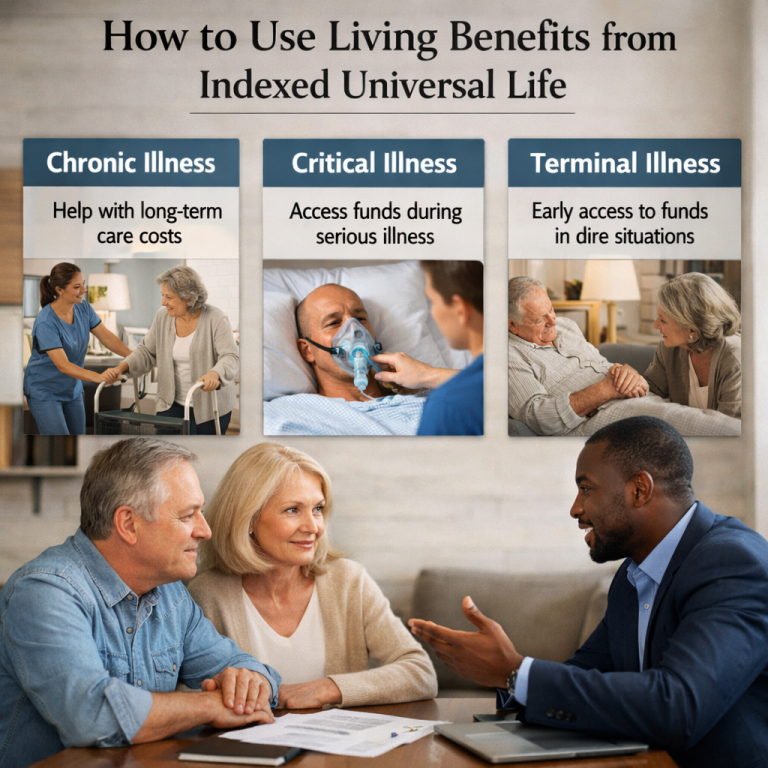

Understanding life insurance with chronic illness rider: A comprehensive guide for homeowners, teachers, and small business owners
Picture this: you’ve just received a diagnosis that will change the way you think about the future. Suddenly, the idea of paying a mortgage or sending kids to college feels a lot more stressful. That gut‑wrenching feeling is exactly why many families start looking at life insurance with a chronic illness rider.
Unlike a standard term policy that only pays out when you die, a chronic illness rider lets you tap into a portion of the death benefit while you’re still alive—if you’re diagnosed with a qualifying condition that limits your daily activities. Think of it as a financial safety net that helps cover medical bills, home modifications, or even that long‑overdue vacation you’ve been postponing because of treatment costs.
Real‑world example: Sarah, a teacher from Ohio, was diagnosed with multiple sclerosis two years after buying a term policy. Thanks to the chronic illness rider, she was able to withdraw enough to fund a home‑based physical therapy setup, avoiding expensive out‑of‑pocket costs and keeping her family’s budget on track.
Another scenario: the Patel family, small‑business owners, added a rider to their indexed universal life (IUL) policy. When the father’s rheumatoid arthritis flared, they used the rider to cover a joint replacement surgery, preserving cash flow for the business and preventing a loan default.
So, how does this actually work? First, check if your insurer offers a chronic illness rider and understand the definition of “chronic” they use—most define it as a condition that prevents you from performing at least two activities of daily living (ADLs) such as bathing, dressing, or walking. Next, compare the cost: riders typically add 10‑20% to the premium, but the trade‑off is having immediate access to funds when you need them most.
Want to see how a living‑benefits rider can boost an IUL policy? How to Use Living Benefits Rider on Indexed Universal Life Insurance Policy for Enhanced Financial Security breaks down the mechanics and shows you how to balance cash value growth with protection.
And remember, staying active can actually help lower the likelihood of a chronic diagnosis. Exploring wellness resources like Fitness and Wellness Starts Here | Athlemove can support healthier habits, potentially reducing future premium hikes.
Bottom line: a chronic illness rider transforms a traditional life‑insurance contract into a flexible tool that safeguards both your health and your wallet. Take a moment now to review your current policy, ask your agent about rider options, and calculate whether the added premium fits your budget. It’s a small step that could make a huge difference when life throws a curveball.
TL;DR
Life insurance with chronic illness rider lets you tap into a portion of your death benefit while you’re still living, covering medical bills, home adaptations, and everyday expenses as a flexible safety net.
Review your current policy, ask your agent about adding the rider, and calculate the 10‑20% premium increase to ensure it fits your budget and protects your family’s future.
What is a Chronic Illness Rider?
Okay, let’s break it down. A chronic illness rider is an add‑on to your life‑insurance contract that turns a portion of the death benefit into a living benefit when you’re diagnosed with a condition that limits daily activities.
Think of it like a safety valve. Your policy still protects your loved ones after you’re gone, but if you can’t bathe, dress, or get around on your own, the rider lets you tap into, say, 10‑20% of that death benefit while you’re still alive.
How does it actually work?
First, the insurer defines what counts as “chronic.” Most use the two‑activity rule: you must be unable to perform at least two activities of daily living (ADLs). Once that trigger is met, you submit a claim, the insurer verifies the diagnosis, and then you receive a lump‑sum or periodic payments.
Those funds can cover anything from expensive home‑care services to a wheelchair, or even the cost of retrofitting your house with grab bars and a stairlift.
Why might you need it?
Imagine you’re a teacher who’s just been diagnosed with early‑stage Parkinson’s. Your salary stays the same, but medical bills start piling up. The chronic illness rider can bridge that gap, so you don’t have to dip into retirement savings or take out a high‑interest loan.
Or picture a small‑business owner whose arthritis flares up, forcing you to take time off. The rider’s payout can keep cash flow steady, protecting both the business and your family’s financial security.
Does it sound too good to be true? It’s not a free lunch—adding the rider usually bumps your premium by about 10‑20%, but that extra cost is often worth the peace of mind.
Staying active can lower the odds
Here’s a thought: staying active can sometimes delay the onset of chronic conditions. If you’re looking for reliable workout gear, Fit Core Supply offers equipment that’s easy on joints and perfect for home use. Even a modest routine can make a difference.
And if a condition does develop, you might need to modify your home. That’s where smart design comes in. Marisgraph specializes in accessible home layouts, helping you create a space that works with your new needs rather than against them.
So, what should you ask your agent?
- What specific conditions qualify for the rider?
- How much of the death benefit can I access?
- What is the exact premium increase?
- Are there any caps or limits on the payouts?
Getting clear answers now saves headaches later.
Watch the short video above for a visual walkthrough of how a chronic illness rider is triggered and paid out.
Bottom line: a chronic illness rider transforms a traditional life‑insurance policy into a flexible financial tool that supports you when you need it most. It’s not just about protecting a death benefit—it’s about safeguarding your quality of life today.
Living Benefits and Indexed Universal Life (IUL)
When you add a chronic‑illness rider to an IUL, you’re not just buying a death benefit—you’re creating a flexible financial toolbox you can reach into while you’re still alive. That’s the core idea behind living benefits: the same policy that protects your loved ones can also fund a hospital stay, home‑care equipment, or even a weekend getaway to recharge when life throws a curveball.
Think about Maria, a freelance graphic designer who was diagnosed with early‑stage Parkinson’s at 48. She already had an IUL with a chronic‑illness rider because her agent suggested it during a routine policy review. When her neurologist confirmed she could no longer write for more than two hours a day, Maria filed a claim. Within weeks she received a lump‑sum payment that covered a home‑office ergonomic makeover and a few months of specialized therapy. Her death benefit dropped by the same amount, but she kept her business running and avoided dipping into retirement savings.
Why does this matter for an IUL specifically? Unlike term life, an IUL builds cash value over time, indexed to market performance but protected by a zero‑floor guarantee. The rider taps into that death benefit, not the cash‑value account, so you preserve the policy’s growth potential. In practice, you get the best of both worlds: a living benefit when you need it and a tax‑advantaged growth engine for the future.
How the rider works inside an IUL
1. Buy the rider early. Most carriers require the rider to be attached before any qualifying condition arises. Adding it during the initial application usually costs an extra 10‑20% of the base premium.
2. Meet the ADL trigger. Your doctor must certify that you can’t perform at least two of the six standard activities of daily living (bathing, dressing, eating, toileting, transferring, continence). Once the insurer verifies this, the claim moves forward.
3. Choose a payout option. You can take a lump sum, a series of monthly payments, or a hybrid approach. The amount you receive directly reduces the death benefit, so you’ll want to calculate how much you need now versus what you want to leave behind.
4. File the claim. Submit the medical statement, a completed claim form, and any required proof of expenses. Most carriers process living‑benefit claims within 30‑45 days.
Real‑world numbers you can relate to
According to a case study from F&G Life, policyholders who exercised a chronic‑illness rider on their IUL accessed an average of 30% of their death benefit, enough to cover a six‑month period of home health care or costly medication regimens (source: how living benefits can help in case of chronic, terminal or critical illness). Those same families reported feeling less pressure to withdraw from retirement accounts, preserving their long‑term wealth.
Another example from Capital for Life highlights a family that used a long‑term‑care rider (often paired with an IUL) to fund a nursing‑home stay that would have otherwise cost over $100,000 per year (source: life insurance with long‑term care rider). While that article focuses on a separate rider, the principle is the same: you’re leveraging life‑insurance equity to cover expenses that health insurance won’t.
Actionable checklist for adding the rider
Step 1 – Review your current IUL. Pull your policy illustration and see how much death benefit you have left after accounting for any cash‑value loans.
Step 2 – Run the numbers. Use a simple spreadsheet: list the premium increase, estimate the percentage of death benefit you might need for a chronic condition, and compare that to your existing emergency fund.
Step 3 – Talk to a specialist. A Life Care Benefit Services advisor can walk you through the rider’s cost structure and help you model scenarios (e.g., Parkinson’s, rheumatoid arthritis, early‑stage dementia).
Step 4 – File the rider attachment. Complete the rider endorsement, sign the additional premium schedule, and keep a copy of the rider language for future reference.
Step 5 – Keep documentation ready. Store your doctor’s ADL assessment, claim forms, and receipts in a dedicated folder so you can act quickly if a qualifying event occurs.
Tips to maximize the benefit
• Don’t wait for a crisis. Adding the rider while you’re healthy locks in the lower premium and avoids medical underwriting later.
• Consider a partial claim. You can withdraw just enough to cover immediate costs and leave the rest of the death benefit intact for heirs.
• Coordinate with other assets. If you have a 401(k) or IRA, use the rider first to keep those retirement accounts growing tax‑deferred.
• Review annually. As your cash value grows, you may be able to increase the rider limit without a huge premium jump.
In short, pairing a chronic‑illness rider with an Indexed Universal Life policy turns a static death benefit into a living‑benefit engine. It gives you financial breathing room when you need it most, while still preserving the legacy you intend to leave.
Chronic Illness Rider vs Standard Life Insurance: Comparison
When you start looking at life insurance with chronic illness rider, the first thing that hits you is the trade‑off: you’re buying extra flexibility now in exchange for a smaller payout later. That can feel odd at first—why would you want to shrink the death benefit?
But think about it like a safety net that’s already woven into your policy. A standard term or whole life plan only pays out when you pass away. If a chronic condition knocks you off your feet, that money stays locked away, and you’re left covering costs out of pocket.
With the rider attached, you get a living benefit the moment you can’t perform two Activities of Daily Living (ADLs). Suddenly, the policy becomes a cash source for home modifications, medication, or even a short break to recharge. It’s like turning a “just in case” plan into a “now if needed” tool.
So, how do the two options really stack up? Let’s break it down side by side.
Key comparison points
| Feature | Chronic Illness Rider | Standard Life Insurance |
|---|---|---|
| Trigger for payout | Qualified chronic condition limiting ≥2 ADLs | Only death of the insured |
| Premium impact | Typically +10‑20% of base premium | Base premium only |
| Effect on death benefit | Reduced by amount withdrawn | Full amount paid to beneficiaries |
| Flexibility of use | Cash can cover medical, home, lifestyle needs | Cash only available after death |
| Tax treatment | Generally tax‑free payout | Tax‑free death benefit to heirs |
Notice the biggest difference is the “when” you can actually touch the money. The rider turns a future‑only promise into a present‑day option, while the standard policy remains a pure protection tool.
Another thing to weigh is cost. Adding the rider usually bumps your premium by about a tenth to a fifth, depending on age, health, and the carrier. That’s why many families run a quick cost‑vs‑benefit spreadsheet before they sign. If you have a solid emergency fund, you might decide the extra premium isn’t worth it. If you’re living paycheck‑to‑paycheck, that extra cash flow could be a lifesaver.
What about the impact on your heirs? Every dollar you pull out reduces the death benefit dollar‑for‑dollar. In practice, most people only tap 20‑30% of the benefit, leaving enough for loved ones. It’s a balancing act—protecting yourself now while still leaving a legacy.
And here’s a subtle but important point: the rider must be attached before a qualifying condition shows up. If you wait until after a diagnosis, you’ll be denied. That’s why the smartest move is to add it while you’re still healthy, locking in the lower premium and avoiding medical underwriting later.
Does this really make sense for you? Ask yourself: Do I have a chronic condition in my family history? Could I afford a sudden, sizable expense without dipping into retirement savings? If the answer is “yes” to either, the rider likely adds meaningful protection.
Finally, remember that riders aren’t one‑size‑fits‑all. Guardian Life points out that riders are optional provisions you can tailor to your needs, much like adding features to a new car Guardian Life explains how riders work. Some carriers even bundle an accelerated benefit rider at no extra cost, while others charge a modest fee.
Bottom line: standard life insurance gives you a clean, full‑amount death benefit. A chronic illness rider adds a living‑benefit layer that can smooth out the financial bumps of a serious health change, at the price of a higher premium and a reduced final payout. Weigh the trade‑offs, run the numbers, and decide which version fits your family’s risk tolerance and cash‑flow reality.
Step-by-Step: Adding a Chronic Illness Rider to Your Policy
Alright, you’ve decided that a life insurance with chronic illness rider might be the safety net you need. The good news? Adding the rider is a straightforward process—think of it as a few extra steps on your existing application, not a whole new policy.
Here’s the mental checklist before we dive into the paperwork: you’re healthy right now, you understand the extra premium, and you know the ADL definition your insurer uses. Got that? Great, let’s walk through each move.
Step 1 – Confirm Rider Availability
First, pick up the phone or log into your insurer’s portal and ask, “Do you offer a chronic illness rider for my current policy?” Most carriers say yes, but the wording can differ. Write down the exact name of the rider, the cost multiplier (usually 10‑20% more), and any waiting‑period rules. If the answer is no, you might need to switch to a carrier that does—something your Life Care Benefit Services advisor can help you sort.
Step 2 – Gather the Needed Info
Next, gather the basics the insurer will request: your policy number, current premium schedule, and a short health questionnaire confirming you have no qualifying condition today. It’s a good moment to pull your most recent medical exam results—just to prove you’re still in the clear. Having these docs handy speeds up the endorsement.
Step 3 – Fill Out the Rider Endorsement
Now you’ll receive a rider endorsement form. It looks a lot like a mini‑application: you sign, you agree to the extra premium, and you acknowledge that the rider will reduce the death benefit if you ever tap it. Read the fine print—some policies let you claim a percentage of the benefit, others require a lump‑sum. Choose the option that matches your cash‑flow needs.
Step 4 – Pay the Additional Premium
Once the endorsement is signed, the insurer will issue a new premium bill. Most companies let you add the amount to your regular payment schedule, but you can also pay it up front if you prefer. Set a reminder in your calendar so the extra charge never surprises you.
Step 5 – Keep Documentation Organized
After everything’s processed, you’ll get a confirmation page showing the rider is attached. Save a digital copy in a folder labeled “Insurance Riders” and keep a printed copy in your safe‑deposit box. Also, stash the doctor’s ADL assessment template the insurer provides—when the time comes, you’ll thank yourself for having it ready.

Seeing the rider attached on your policy illustration can make the protection feel real. That visual cue reminds you that you’ve turned a future‑only promise into a living‑benefit tool you can actually use.
So, what happens when you actually need to make a claim?
Step 6 – File a Claim When Needed
When a chronic condition limits two or more ADLs, call your insurer right away. They’ll ask for a physician’s statement that spells out which activities you can’t do. Submit the claim form, attach the medical note, and choose how you want the money—lump sum, monthly payouts, or a hybrid. Most carriers aim to process the claim within 30‑45 days, so you’ll have cash when you need it most.
A quick tip: if you have other assets like a 401(k) or emergency fund, use the rider first. It preserves those accounts for long‑term growth while still covering immediate expenses.
Finally, schedule an annual review. As your policy’s cash value grows or your family’s needs shift, you might want to adjust the rider limit or explore additional riders, such as long‑term‑care or accelerated death benefit. A brief check‑in with your Life Care Benefit Services advisor keeps everything aligned with your financial plan.
Ready to add the chronic illness rider? Give us a call today or schedule a free consultation, and we’ll walk you through the exact paperwork for your situation.
Using the Rider for Mortgage Protection and Small Business Owners
Imagine the night you get a call that your mortgage payment is due, but a chronic illness has knocked you out of work. That panic is exactly why many homeowners and entrepreneurs add a chronic‑illness rider to their life insurance. It gives you a safety valve that can keep the lights on and the business running while you focus on recovery.
Why the rider matters for a mortgage
Most Group Term Life policies pay a lump‑sum only when you die. A rider turns a slice of that benefit into a living benefit you can draw on as soon as you can’t perform two Activities of Daily Living (ADLs). The money is tax‑free and can be spread over four years, which is often enough to cover a mortgage shortfall, refinance fees, or a temporary rent‑to‑own bridge.
WAEPA notes that the rider can pay up to 50% of the group term life benefit, with a maximum of $500,000, directly to the insured for up to four years according to WAEPA. For a typical $300,000 mortgage, even a $150,000 payout can keep you from defaulting.
Small‑business owners: protecting cash flow
Running a storefront, a consulting firm, or a family‑run restaurant means your personal income and the business’s operating budget are often intertwined. If you become chronically ill, you might lose the ability to manage payroll, negotiate with suppliers, or even walk the shop floor. The rider can act like a “business‑continuity grant” without having to take out a high‑interest loan.
Take the case of Luis, a coffee‑shop owner in Texas. When a severe back injury limited his mobility, he tapped the rider for $80,000. He used half to hire a temporary manager and the rest to cover the next three months of lease payments. The shop stayed open, his staff kept their jobs, and he avoided the costly “closed‑door” insurance claim that would have hurt his credit.
Another example: Priya runs a freelance web‑design studio. After a diagnosis of early‑stage multiple sclerosis, she accessed the rider to fund a home office renovation—adjustable desk, voice‑control software, and a backup internet line. The one‑time expense was $12,000, but it let her keep billing clients without interruption.
Actionable steps to lock in the protection
1. Review your current death benefit. Pull your policy illustration and note the total amount. Calculate 40‑50% of that number—that’s roughly the maximum you could draw for mortgage or business needs.
2. Ask your advisor to add the rider now. The rider must be attached before a qualifying condition appears. Adding it while you’re healthy locks in the lower premium and avoids medical underwriting later.
3. Set up a dedicated “rider fund” folder. Keep the doctor’s ADL assessment form, the rider endorsement, and any claim receipts together. When a claim is needed, you’ll have everything at your fingertips.
4. Run a cash‑flow scenario. Use a simple spreadsheet: list your monthly mortgage payment, expected business expenses, and the rider payout you’d receive. Model how long the payout would sustain you. This exercise often reveals that a partial claim (e.g., 25% of the benefit) is enough to bridge the gap.
5. Coordinate with other assets. If you have an emergency fund or a line of credit, let the rider be the first line of defense. That preserves those assets for long‑term growth or future emergencies.
Tips to maximize value
- Don’t wait for a crisis. Adding the rider early secures the lower cost.
- Consider a partial claim strategy—take only what you need now, leave the rest for heirs.
- Review the rider limit annually. As your home equity grows or your business expands, you may want to increase the coverage.
- Talk to a tax professional. While the payout is generally tax‑free, it could affect Medicaid eligibility if you’re already receiving government benefits.
Bottom line: whether you’re protecting the roof over your family’s head or the storefront that fuels your livelihood, a chronic‑illness rider turns a traditional life‑insurance policy into a flexible financial lifeline. It’s a modest premium increase that can mean the difference between keeping your home and walking away.
Ready to see how much coverage you’d need? Call Life Care Benefit Services today for a free, no‑obligation review and get the rider attached before you need it.
Expert Video: Choosing the Right Chronic Illness Rider
We know the idea of a chronic‑illness rider can feel fuzzy, especially when you’re juggling a mortgage, a business, or a family budget. That’s why we created a short, no‑fluff video that walks you through exactly how to pick the rider that fits your life.
What the video covers
First, the expert explains the three core pieces you need to understand: the rider’s trigger (the ADL definition), the premium bump, and the payout options (lump‑sum vs. monthly). You’ll see a real‑world claim example—think of it like watching a friend explain how they used the rider to fund a home‑care setup after a diagnosis.
Next, the video breaks down the “cost‑vs‑benefit” calculator we use at Life Care Benefit Services. It shows you, in plain numbers, how a 10‑15% premium increase can translate into tens of thousands of dollars when you need it most.
Step‑by‑step walk‑through
Step 1 – Identify your ADL risk. Watch the part where we ask you to picture everyday tasks—bathing, dressing, walking. If a family history or a recent health scare makes you think “what if I can’t do two of those?” you’ve got a signal to start.
Step 2 – Match the rider to your policy type. The video shows a side‑by‑side of term, whole, and IUL policies. You’ll see why an IUL often gives you the most flexibility because the rider taps the death benefit, not the cash‑value account.
Step 3 – Run the numbers. Pause at the calculator screen. Enter your current death benefit, estimate a 20‑30% withdrawal, and watch the premium line shift. That visual helps you decide if the extra cost fits your budget.
Step 4 – Compare carriers. We walk you through a quick checklist: does the insurer require a waiting period? What’s the maximum percentage you can claim? Which carriers let you adjust the rider limit later?
Step 5 – Get the paperwork ready. The video points out the exact forms you’ll need: the rider endorsement, a doctor’s ADL statement template, and a simple claim form. Having those on hand means you won’t scramble when a claim becomes real.
Key questions to ask yourself while watching
Do you have a solid emergency fund, or would the rider be your first line of defense? How long could you sustain mortgage payments without that extra cash?
What’s the maximum payout you’d need for a home‑care renovation or a short‑term business bridge? Write that number down before the video ends.
Is your current policy already “rider‑ready,” or will you need to attach a new endorsement? The video flags the red‑alert signs where insurers say “no” after a diagnosis.
Take action today
After you hit “play,” grab a notebook and fill out the quick checklist we display on screen. Then, schedule a free, no‑obligation video call with a Life Care Benefit Services advisor. We’ll review your answers, run a personalized cost model, and attach the rider while you’re still healthy—locking in the lowest premium.
Remember, the rider is only powerful if it’s in place before a condition shows up. The video’s final tip is simple: don’t wait for a crisis. Click the “Book a Consultation” button now, and let’s turn that safety net into a living benefit you can actually use.
FAQ
What exactly is a life insurance with chronic illness rider and how does it work?
In plain terms, a chronic‑illness rider is an add‑on to your regular life‑insurance policy that lets you tap into a portion of the death benefit while you’re still alive—once a qualified condition limits two or more Activities of Daily Living. You pay an extra premium (usually 10‑20% of the base cost), and if a doctor confirms the trigger, the insurer releases a lump‑sum or scheduled payments. The amount you take out simply reduces the eventual death benefit for your heirs.
When should I consider adding the rider to my policy?
If you’ve got a solid emergency fund but worry about a sudden, high‑cost health event—think home‑care equipment, a mortgage shortfall, or a business cash‑flow gap—it’s a good sign. Also, if you have a family history of conditions that affect mobility or cognition, adding the rider while you’re still healthy locks in a lower premium and avoids medical underwriting later. A quick “what‑if” worksheet can help you see whether the extra cost fits your budget.
How much will the chronic illness rider increase my premium?
Most carriers charge roughly an additional 10‑20% on top of your base premium, but the exact number depends on your age, health, policy type, and the rider limit you choose. For example, on a $500,000 whole‑life policy a 12% rider bump might add $30‑$50 per month. It’s worth running a side‑by‑side quote so you can compare the cost against the potential cash you’d receive if you ever need it.
Will the rider affect my cash‑value growth in an IUL?
No, the rider draws from the death benefit, not the cash‑value account. That means the indexed growth and tax‑advantaged accumulation inside an IUL stay intact. You preserve the policy’s market‑linked upside while gaining a living‑benefit safety net. Just remember that each dollar you withdraw reduces the death benefit dollar‑for‑dollar, so you’ll want to model how much you might need now versus what you want to leave behind.
What documentation do I need to file a claim?
First, a physician’s statement confirming you can’t perform at least two of the six standard ADLs (bathing, dressing, eating, toileting, transferring, continence). Then the carrier’s claim form, which you can usually download from the insurer’s portal, and any receipts or invoices that show how you plan to use the funds. Keeping a dedicated “rider folder” with these items speeds up approval—most insurers aim to pay out within 30‑45 days.
Can I take only part of the rider benefit?
Absolutely. Many policies let you claim a percentage of the available amount, so you could take just enough to cover a six‑month mortgage shortfall and leave the rest for your heirs. This partial‑claim strategy is popular because it balances immediate cash flow needs with preserving a legacy. Just be sure the rider language you sign specifies whether partial withdrawals are permitted.
How often should I review my chronic illness rider?
Treat it like an annual health check‑up. Once a year, pull your policy illustration, confirm the rider limit still matches your current debt, mortgage, or business exposure, and see if your cash‑value growth allows you to increase the limit without a huge premium jump. If you’ve paid down a mortgage or expanded your business, you might adjust the rider amount up or down accordingly. A quick call with your Life Care Benefit Services advisor can make sure everything stays aligned.
Conclusion & Next Steps
By now you’ve seen how a life insurance with chronic illness rider can turn a traditional death‑only policy into a living‑benefit safety net. It’s not just a piece of paperwork; it’s a proactive step that protects your mortgage, your business, and your peace of mind when health challenges strike.
So, what’s the next move? First, pull your most recent policy illustration and check the rider limit. Does it cover the debt you’d need to replace if you couldn’t work? If you’re unsure, grab a notebook and sketch a quick cash‑flow scenario – a few minutes now can save months of stress later.
Next, schedule a free, no‑obligation consultation with a Life Care Benefit Services advisor. They’ll walk you through the exact premium impact, walk you through the rider endorsement, and help you file the paperwork while you’re still healthy. Remember, the rider must be attached before a qualifying condition appears.
Finally, set a reminder on your calendar for an annual rider review. Life changes, mortgages get paid down, and businesses grow; a quick check each year ensures the coverage stays aligned with your goals.
Ready to lock in that extra layer of protection? Call us today or request a quote online – let’s make sure your life insurance with chronic illness rider works for you, not the other way around.