
Small Business Group Health Insurance Plans: 7 Essential Options for Employers
Ever stared at a stack of insurance paperwork and felt the same mix of hope and overwhelm that comes when you’re trying to protect your team without breaking the bank?
If you’re a small business owner, that feeling is probably all too familiar, especially when you hear the buzz about “small business group health insurance plans” and wonder if it’s really doable for a crew of ten or twenty.
Here’s what I mean: those plans aren’t just for giant corporations with sprawling HR departments. They’re built to be flexible, cost-effective, and surprisingly simple to set up when you have the right partner guiding you.
Think about the last time you hired a new employee and tried to convince them that your small firm could still offer solid health coverage. That moment of doubt is exactly why a tailored group plan can become your secret hiring weapon.
And the best part? You don’t have to navigate the maze alone. Life Care Benefit Services works with over 50 top-rated carriers, so you get choices that fit your budget, your industry, and even the specific health needs of your team.
So, what should you do next? Start by asking yourself three quick questions: Do I have enough employees to qualify? What level of coverage will keep my staff healthy and happy? And, most importantly, which provider can give me the peace of mind that comes with solid, affordable coverage?
Take a minute now to jot those answers down, then reach out for a free, no-obligation quote. A quick conversation can reveal how a small business group health insurance plan could lower your costs, boost morale, and protect the future of the people you rely on every day.
When you’re ready, schedule a quick call with our friendly advisors—they’ll walk you through every step, from eligibility checks to selecting the perfect plan for your unique team dynamics.
TL;DR
Small business group health insurance plans let you protect your team, attract talent, and keep costs manageable, even with just a handful of employees.
Partner with Life Care Benefit Services to compare carriers, get a free quote, and quickly secure affordable coverage that boosts morale and safeguards your company’s future.
1. Affordable PPO Plans for Small Teams
When you’re hunting for a health plan that won’t eat up your payroll, the first thing most owners ask is: can we get a PPO without a corporate‑size budget? The short answer is yes – and the trick is picking the right mix of features that keep premiums low while still giving your crew the freedom to see any doctor.
Here are five quick‑fire options that tend to fit small teams (5‑25 employees) without breaking the bank.
1️⃣ Basic PPO with a High Deductible
Think of it as a “pay‑as‑you‑go” model. Premiums stay modest because you share more of the cost up front, but once the deductible’s met the plan swings open and covers 80‑90% of in‑network services. It’s perfect if your team is generally healthy and you want the flexibility to keep a wide network of doctors.
2️⃣ Tiered Network PPO
These plans charge less for visits to “preferred” providers while still letting you go elsewhere at a higher cost‑share. It nudges employees toward cost‑effective care without locking them out of choice – a win‑win for morale and the bottom line.
3️⃣ Employer‑Sponsored HSA‑Compatible PPO
Pair a high‑deductible PPO with a Health Savings Account (HSA). The employer can contribute a modest amount each year, and employees get tax‑free dollars to cover out‑of‑pocket expenses. It feels like a perk because the money is theirs to spend, but it also cushions the impact of higher deductibles.
Wondering how to set one of these up without drowning in paperwork? How Small Businesses Can Secure Affordable Group Health Insurance Without Breaking the Bank walks you through the exact steps, from eligibility checks to final enrollment.
4️⃣ Co‑Pay PPO with Wellness Incentives
Some carriers lower monthly premiums in exchange for modest co‑pays (e.g., $20 for a primary‑care visit) and offer cash‑back rewards for hitting wellness goals like annual physicals or flu shots. Employees love the tangible savings, and you get a healthier workforce – which often translates into lower claims.
5️⃣ Regional PPO with Shared Risk Pools
In certain states, insurers offer “community‑rated” PPOs where a group of small businesses bands together to negotiate better rates. The risk is spread across multiple employers, so you benefit from the bargaining power of a larger pool without the administrative headache.
So, how do you know which flavor fits your team? Start by asking: Do we have a lot of families with kids who need regular pediatric visits? Or is most of the staff single and mainly using tele‑health? Answering that helps you decide between a high‑deductible model and a co‑pay structure.
And here’s a practical tip: use employee‑experience benchmarks to see how adding a PPO moves the needle on retention. Platforms like Benchmarcx let you compare before‑and‑after metrics, so you can prove the ROI of your new benefit to stakeholders.
Another angle worth exploring is AI‑driven benefits administration. Tools from Assistaix can automate enrollment, answer policy questions in real time, and even flag eligibility for subsidies, freeing up your HR time for the stuff that really matters.
Below is a quick visual recap of the five options – keep it handy when you’re chatting with your broker.
Take a moment to watch the video; it breaks down the cost‑vs‑benefit trade‑offs in plain language, so you can walk away with a clear shortlist.

2. High-Deductible Health Plans (HDHP) with HSAs
Ever wonder why some small businesses swear by a plan that looks cheap on the paycheck but packs a punch when it comes to tax savings? That’s the magic of a High‑Deductible Health Plan paired with a Health Savings Account.
1️⃣ Low premiums keep your cash flow happy
HDHPs usually have the lowest monthly premium of any group option. For a tight‑budget team, that means you can offer coverage without blowing the payroll budget.
And because the deductible is higher, the insurer can afford to keep those premiums down. It’s a trade‑off that works especially well when you have younger, relatively healthy staff.
2️⃣ The HSA is a tax‑free savings super‑tool
When you pair an HDHP with an HSA, both you and your employees get a triple‑tax advantage: contributions are pre‑tax, growth isn’t taxed, and withdrawals for qualified medical expenses are tax‑free.
Think about it like a personal health‑care piggy bank that you can roll over year after year. No “use‑it‑or‑lose‑it” pressure.
3️⃣ Employees stay engaged with their own health spending
Because the money sits in an account they own, workers tend to shop smarter, compare prices, and avoid unnecessary tests. That behavioral shift can actually lower your overall claims.
In fact, Anthem notes that HDHPs with HSAs help employees feel more in control of their health costs while still getting 100 % in‑network preventive care coverage.
4️⃣ Flexibility for future hiring or scaling
If you add a new teammate next quarter, the HSA rolls with the plan – no renegotiating of premium tiers, just a simple increase in the contribution limit if needed.
That kind of scalability is gold for a growing small business that doesn’t want to revisit the entire benefits package every time the headcount shifts.
5️⃣ You can still add “extras” without breaking the bank
Many carriers let you tack on dental, vision, or even telehealth add‑ons to an HDHP. The extra cost is usually modest because the base premium is already low.
And if you qualify for the Small Business Health Care Tax Credit, those add‑ons could be partially reimbursed, making the whole package even sweeter.
So, how do you actually get an HDHP with an HSA set up for your team?
Quick checklist
- Confirm the plan meets IRS HDHP definition (minimum $1,600 deductible for individuals, $3,200 for families in 2025).
- Make sure the HSA is administered by a reputable custodian – many banks and credit unions offer zero‑fee options.
- Check that your carrier provides 100 % coverage for preventive services, as Anthem does for small‑business plans.
- Run the numbers: compare the premium savings against the expected out‑of‑pocket cost for your typical employee profile.
- Communicate the HSA benefits clearly – a short video can do wonders.
Here’s a short clip that walks you through the basics of HSAs and why they’re a win‑win for small teams.
After you’ve watched, grab a simple spreadsheet and plug in your numbers. If the monthly premium drops by even $20 per employee, that’s $600 a year saved on a ten‑person team – money you can redirect to a coffee fund or a quarterly team outing.
Finally, remember that an HDHP isn’t a “set‑and‑forget” solution. Review claims data each quarter, adjust contribution limits, and keep the conversation alive. When your crew sees the HSA balance grow, they’ll actually thank you for the choice.
The federal marketplace even provides a quick guide for small employers looking at HDHPs and HSAs, so you can verify eligibility and compare costs. Check it out on HealthCare.gov’s small‑business section.
Ready to explore HDHP options that fit your budget and culture? Schedule a free consultation with Life Care Benefit Services today and let us match you with a plan that balances low cost, high flexibility, and real tax benefits.
3. Tiered Network Plans: Balancing Choice and Cost
Ever feel like you’re stuck between giving your team the freedom to pick any doctor and keeping the premium line from blowing up? That’s the exact tension tiered network plans try to solve. They let you dial the level of choice up or down, so you pay for exactly what your crew needs.
1️⃣ Tiered PPO – Freedom with a price tag you control
A Preferred Provider Organization (PPO) gives employees a massive network and the ability to see specialists without a referral. The “tiered” part means you can pick a basic level with lower premiums or a premium‑plus tier that adds extra out‑of‑network coverage. Small teams love this because the basic tier still covers most local doctors while saving you dollars.
Blue Shield points out that tiered PPO options let businesses “fit every budget” while still delivering “reliable coverage, robust benefits, and dedicated support” according to Blue Shield’s small‑business overview.
2️⃣ Tiered HMO – Streamlined care for tighter budgets
Health Maintenance Organizations (HMOs) pair every employee with an in‑network primary care provider (PCP) who coordinates specialist referrals. The tiered structure works the same way: a core HMO plan covers essential services at the lowest cost, and an upgraded tier adds things like telehealth or broader specialist access.
Because HMOs limit care to a network, the premiums stay low – perfect if most of your staff live in the same city and you want predictable costs.
3️⃣ Bundle dental, vision, and even life insurance
One of the smartest ways to stretch a tiered plan is to stack in dental and vision. When you bundle, the per‑person cost drops compared to buying each piece separately. Employees also appreciate having their kids’ pediatric dental covered, which can be a deciding factor when they compare job offers.
Covered California notes that “bundling dental and vision coverage to a medical plan saves money” and even includes pediatric coverage as a standard feature as highlighted on the Covered California small‑business page.
4️⃣ Flexible employee contributions – let staff share the cost they’re comfortable with
Most tiered plans let you set a baseline employer contribution and let employees pick a higher or lower share. That way a junior developer who’s just starting out can opt for the basic tier, while a senior manager who values wider choice can bump up their coverage.
Giving this flexibility not only keeps your budget in check but also sends a clear message: “We trust you to choose what works for you.” It’s a subtle morale boost that often translates into higher retention.
5️⃣ Quick decision checklist – keep it simple
- Identify the core network you need – PPO for broad choice, HMO for cost certainty.
- Match the tier level to your budget ceiling (basic vs. premium‑plus).
- Ask if bundling dental/vision would save money and add value for families.
- Set a default employer contribution, then let employees adjust.
- Run a side‑by‑side quote for at least two carriers to confirm you’re getting the best tiered mix.
Another perk you might not think about is the admin dashboard many carriers provide. With an online portal you can add new hires, track enrollment, and pull reports in a few clicks – no spreadsheet gymnastics required. That kind of automation frees up time to focus on growing your business instead of wrestling with paperwork. And because the portal integrates with most payroll systems, you’ll never miss a contribution deadline.
Ready to see a tiered plan in action for your company? Schedule a free consultation with Life Care Benefit Services, and we’ll walk you through the numbers, the networks, and the right tier for your team’s unique needs.
4. Comparison Table: Key Features Across Top Plans
Alright, let’s cut through the jargon and get you a clear snapshot of what the most common small business group health insurance plans actually look like. Think of this as your cheat‑sheet before you start juggling spreadsheets.
First, a quick reality check: only about half of small firms actually sponsor health benefits, and most of those stick to a single managed‑care option according to recent KFF research. That means you’ve got a pretty focused market to choose from, and the differences boil down to network freedom, premium cost, and how the cost‑sharing is split.
What to look for at a glance
Below is a no‑fluff table that lines up the three “big‑players” most small businesses consider: a tiered PPO, a tiered HMO, and a High‑Deductible Health Plan (HDHP) with an HSA. Scan it, then we’ll unpack each row with a few bite‑size tips.
| Plan Type | Network Flexibility | Typical Premium Range (per employee) | Cost‑Sharing Highlights |
|---|---|---|---|
| Tiered PPO | Broad network; out‑of‑network option at higher cost | $350‑$550 | Copays $20‑$30; deductible $500‑$1,000; out‑of‑network 20% coinsurance |
| Tiered HMO | In‑network only; PCP coordinates referrals | $300‑$480 | Copays $10‑$20; deductible often $0; no out‑of‑network coverage |
| HDHP + HSA | In‑network only for most services; high deductible before coinsurance kicks in | $250‑$420 | Deductible $1,600‑$3,200 (individual/family); 20% coinsurance after deductible; HSA tax‑free savings |
Notice how the premium numbers shift? A PPO gives you choice but costs a bit more, while an HDHP is the cheapest on paper—but remember that high deductible can be a shock if you don’t have an HSA funded.
Tiered PPO – the “big‑company feel” for small teams
If your crew likes the freedom to see specialists without a referral, the PPO is the go‑to. The tiered structure lets you start with a basic network that still covers most local doctors, then upgrade to a premium‑plus tier if you have a few power‑users who need broader out‑of‑network access.
Pro tip: ask the carrier if they bundle dental or vision into the same tier. Those add‑ons often shave 5‑10% off the total cost compared to buying them separately.
Tiered HMO – predictability on a shoestring budget
When cash flow is tight, the HMO’s lower premiums and flat copays can be a lifesaver. Because you’re locked into an in‑network PCP, you’ll see fewer surprise bills. It works especially well if most of your employees live in the same metro area and share a handful of primary doctors.
One trick small owners love: let employees pick their own PCP within the network. That keeps the plan cheap while still giving a personal touch.
HDHP + HSA – the tax‑savvy, low‑premium option
Here’s where the numbers get interesting. The federal government encourages HDHPs by allowing a triple‑tax‑advantaged HSA. In New Mexico, the state’s Health Care Affordability Fund is even offering a 10‑15% premium reduction for qualifying small group plans this year as part of the Premium Relief Initiative. That can push an already‑low premium into truly affordable territory.
Just make sure the deductible aligns with your team’s health profile. Young, relatively healthy staff often welcome the trade‑off, while families with kids may prefer a lower deductible.
How to use the table in your decision‑making process
1. Identify which feature matters most to your people – freedom, predictability, or tax savings.
2. Match that priority to the column that stands out in the table.
3. Run a side‑by‑side quote for at least two carriers in the same tier. The numbers can vary by 10‑20% depending on the carrier’s network contracts.
4. Check for any state‑level premium relief programs like the one in New Mexico – they can tilt the scales in favor of a higher‑tier plan without breaking the budget.
5. Finally, involve a few team members in a quick poll. When people feel they helped pick the plan, adoption and satisfaction jump.
Bottom line: the comparison table gives you a visual shortcut, but the real decision hinges on what your employees value most and whether any local premium‑reduction programs apply. Grab a coffee, pull up the table, and start narrowing down the options. You’ll be surprised how fast the “right” plan emerges.
5. Telehealth-Integrated Plans for Remote Workforces
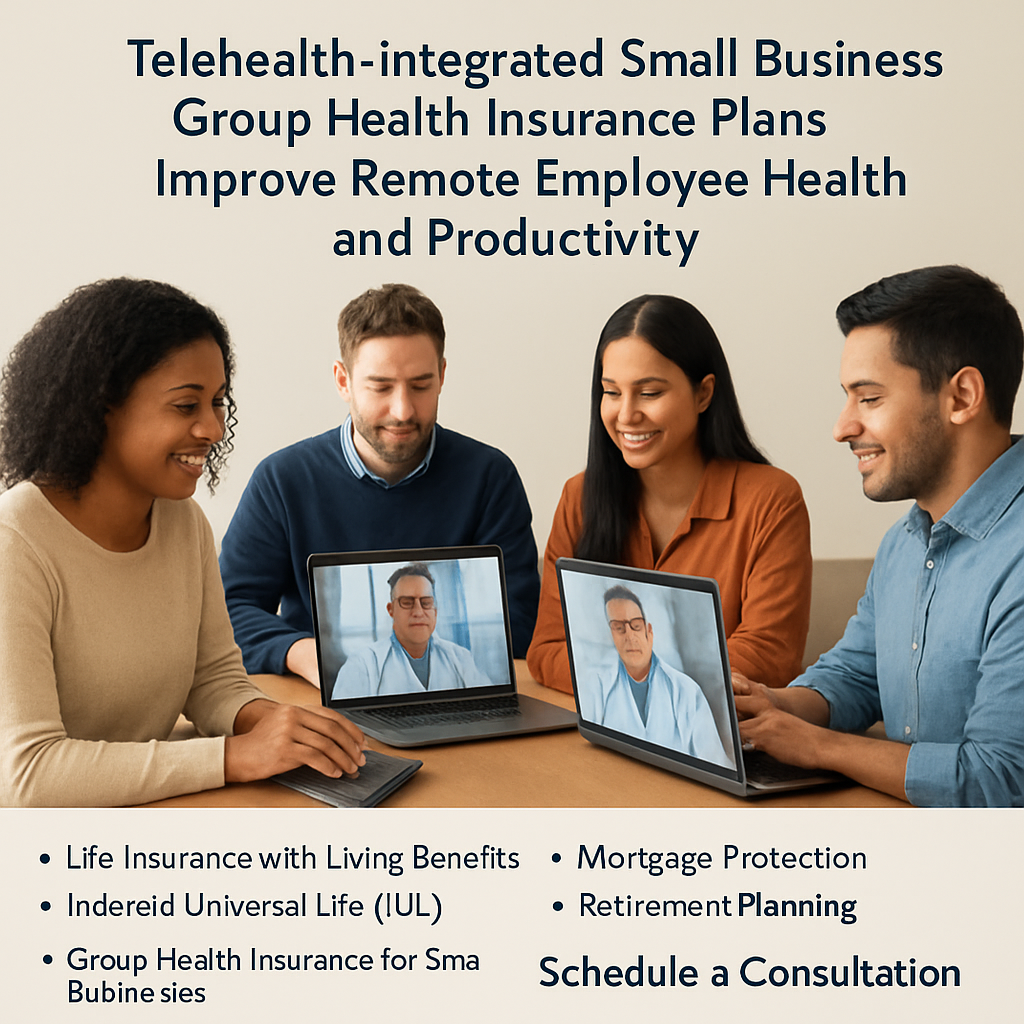
When your team is scattered across coffee shops, home offices, or a rented co‑working space, the old “walk‑in‑the‑clinic” model just doesn’t cut it. That’s why many small business owners are leaning into telehealth‑integrated plans – they keep costs low, boost access, and feel surprisingly personal.
1️⃣ Telehealth as a core benefit, not an afterthought
Think about the last time you tried to schedule a pediatrician appointment for a sick kid while juggling a deadline. The stress is real. With a telehealth‑enabled plan, employees can hop on a video call in ten minutes, get a prescription sent straight to their pharmacy, and get back to work (or bedtime stories) without the commute.
According to Cigna’s small‑business offering, members get “full suite of telehealth options” and 24/7 live customer service, which translates to fewer missed workdays and lower out‑of‑pocket costsCigna’s small‑business telehealth overview.
2️⃣ Real‑world example: A boutique marketing firm
Sarah runs a six‑person agency that shifted to fully remote in 2022. She added a telehealth rider to their group PPO and saw a 30% drop in claims related to urgent care visits within the first year. Employees reported higher satisfaction because they could see a clinician from their kitchen without taking an hour off.
Key takeaway: even a modest telehealth add‑on can generate measurable savings when your workforce is already remote.
3️⃣ Actionable steps to embed telehealth
- Audit your current plan – does it already include virtual visits? If not, ask your carrier for a telehealth rider.
- Set a clear communication plan. Send a short “how‑to” video showing employees where to find the telehealth app, what devices work, and how to submit a claim.
- Create a “virtual care policy” that outlines acceptable use (e.g., routine check‑ups, mental‑health counseling, prescription renewals) to avoid surprise costs.
- Track utilization for three months. If usage is low, host a Q&A session with the telehealth provider to demystify the process.
These steps keep the rollout simple and give you data to negotiate better rates next renewal.
4️⃣ Boosting mental‑health support remotely
Remote work can feel isolating. Many telehealth platforms now bundle behavioral health clinicians, self‑service tools, and employee assistance programs. Oscar’s blog notes that virtual care “helps small‑business owners and employees save time & money” while also providing mental‑health resources that are easy to accessOscar’s virtual‑care benefits for small teams.
For example, a remote tech startup added a weekly “virtual mindfulness hour” through their telehealth portal. Within two months, sick‑day usage dropped by 12% and employee engagement scores rose.
5️⃣ Checklist for a telehealth‑ready plan
Before you sign off, run through this quick list:
- Does the plan include video visits for primary care, urgent care, and specialist consults?
- Is there 24/7 access, so night‑shifts aren’t left out?
- Are mental‑health services covered without a separate deductible?
- Can you integrate the telehealth portal with your payroll or HRIS for seamless enrollment?
- Do you have clear, written guidance for employees?
Cross‑checking these items will keep surprise out‑of‑pocket costs from sneaking up on you.
Bottom line: telehealth isn’t a “nice‑to‑have” fluff; it’s a cost‑controlling, morale‑boosting engine for any remote‑first small business.
Ready to level up? Pull your current plan documents, ask your broker for a telehealth rider, and start a pilot with a handful of teammates. In a few weeks you’ll see how quickly virtual care becomes the new normal for your crew.
Deep Dive: How to Evaluate Employee Needs When Choosing a Plan
Ever sat down with your team and thought, “What do they really need to stay healthy and productive?” That moment of recognition is the first clue that a one‑size‑fits‑all plan probably won’t cut it.
1️⃣ Ask the right questions, not just the usual checkbox
Start a quick pulse survey. Ask things like, “Do you prefer video visits or in‑person appointments?” and “How important is mental‑health coverage to you?” You’ll be surprised how many folks mention “easy‑to‑use portal” over fancy network size.
Tip: keep the survey under five questions. People actually finish it, and you get clean data you can compare side‑by‑side.
2️⃣ Map out usage patterns
Pull the last 12 months of claims (or ask your broker for a de‑identified summary). Look for spikes in urgent‑care visits, prescription fills, or mental‑health counseling. Those patterns tell you whether a high‑deductible plan with an HSA makes sense, or if you need a lower‑deductible PPO that covers frequent visits.
According to Association Health Plans’ recent survey, small firms that tap into larger risk pools see premium drops of up to 18 % because they can match large‑company usage trends.
3️⃣ Consider work‑style realities
If half your crew is remote, 24/7 virtual access becomes a non‑negotiable. On the flip side, a shop floor with shift workers might need after‑hours urgent‑care coverage.
IBX highlights that “behavioral health services” and “fast access within 1‑2 days” are top‑rated features for employee satisfaction in mixed‑location teams.
4️⃣ Build a simple decision matrix
Create a three‑column table: “Employee Need,” “Plan Feature,” “Fit Score (1‑5).” Plug in survey results, usage data, and work‑style notes. The highest total score points you to the plan that aligns with real needs, not just marketing hype.
And don’t forget to involve a few team members in the review. When they see their input shaping the final choice, adoption jumps.
5️⃣ Test before you fully commit
Run a pilot with a handful of volunteers. Give them access to the shortlisted plan and track satisfaction, claim frequency, and any hidden costs.
After a month, ask the pilot group: “What’s working? What’s missing?” Use those insights to fine‑tune the final rollout.
6️⃣ Turn findings into a clear employee guide
Summarize the chosen plan’s key benefits in a one‑page cheat sheet. Use plain language—no insurance jargon. Include “how‑to” steps for enrolling, finding a provider, and using tele‑health tools.
That guide becomes the bridge between the data you collected and the everyday experience of every employee.
Bottom line: evaluating employee needs isn’t a one‑off questionnaire; it’s a loop of listening, analyzing, testing, and communicating. When you follow this loop, the plan you pick feels tailor‑made, and your team actually uses it.
Conclusion
We’ve walked through the why, the what, and the how of small business group health insurance plans, so you probably feel a mix of relief and maybe a little nervousness about the next step.
Does it feel overwhelming to pick a plan? Trust that the loop we built—survey, compare, pilot, guide—takes the guesswork out of the equation.
Here’s the quick takeaway: pick the coverage that matches your team’s health habits, budget, and work‑style; run a tiny pilot; give everyone a one‑page cheat sheet; and then roll it out with confidence.
Remember, the best plan isn’t the cheapest on paper; it’s the one your people actually use, because they see the value every time they schedule a tele‑visit or pick up a prescription.
So, what’s the first thing you can do right now? Grab a coffee, open that survey template we mentioned, and ask your crew what matters most—network freedom, low premiums, or HSA perks.
Once you have those answers, let Life Care Benefit Services pull side‑by‑side quotes and help you stitch together a custom guide. A quick call today can turn all that planning into a simple, actionable roadmap.
Bottom line: with the right data, a modest pilot, and clear communication, small business group health insurance plans become a talent magnet, not a headache. Ready to get started?
FAQ
What exactly are small business group health insurance plans?
They’re coverage packages that let you, as a small‑business owner, pool your employees together to buy health insurance as a single group. Because the risk is shared, you often get better rates and richer benefits than you’d find buying individual plans. Think of it as a team jersey – everyone gets the same protection, and the cost per person drops. That way you can focus on growing your business instead of worrying about medical bills.
Do I need a minimum number of employees to qualify?
Most carriers set the bar at 2‑5 employees, but the sweet spot is usually 5‑50. If you have just a couple of staff, you can still qualify, though the premium might be a bit higher. The key is to confirm the carrier’s eligibility rules and ask your broker to run a quick side‑by‑side quote.
How does the tax credit for small businesses work?
If your payroll is under $50,000 and you have fewer than 25 full‑time equivalents, you could claim up to a 50% credit on premiums. The credit applies to the portion you pay for coverage, not the employee’s share. It’s worth running the numbers with your accountant to see if you qualify and how much you could save.
What should I look for in the network of a group plan?
Start by listing the doctors and hospitals your team already uses. Then compare that list against the plan’s in‑network directory. A good fit will cover at least 80% of those providers and still offer some out‑of‑network options for flexibility. Don’t forget to check telehealth availability if you have remote workers.
Quick tip
Pull a simple spreadsheet of your top three providers and verify they’re in the network before you sign.
Can I add dental and vision to the same group plan?
Absolutely. Many carriers bundle dental and vision as add‑ons, which usually cost less than buying separate policies. Bundling can simplify administration and give your staff a “whole‑person” benefits package that feels more valuable. Ask your broker to include those riders in the quote so you can compare total cost.
How do I keep the enrollment process painless?
Use an online portal that lets employees sign up with a few clicks and upload documents instantly. Send a short, friendly email with step‑by‑step screenshots, then host a quick 15‑minute Q&A call. A clear cheat sheet that explains copays, deductibles, and how to use telehealth can cut confusion in half.
What’s the best way to evaluate if the plan is actually being used?
Track key metrics like claim frequency, preventive‑care visits, and employee satisfaction surveys each quarter. If you see low utilization, consider adding incentives such as a wellness stipend or expanding telehealth options. Regularly reviewing the data lets you tweak the plan before renewal and ensures you’re getting real value.
Should I run a pilot before rolling out the full plan?
Running a small pilot with a handful of volunteers is a smart move. It lets you test the enrollment flow, gauge employee sentiment, and spot any hidden costs. After a month, gather feedback, adjust the benefits mix if needed, and then launch company‑wide with confidence.