

Ever walked into a church office and watched the pastor wrestle with the same insurance headache you see on any small nonprofit’s bulletin board? You’re not alone.
Group health insurance for churches might sound like a niche buzzword, but at its core it’s about protecting the people who spend their lives serving others. Think about the choir director who stays late rehearsing, the youth minister driving kids to soccer practice, and the administrative staff juggling budgets and bake sales. If one of them gets sick, the whole congregation feels the ripple.
What’s tricky is that churches aren’t typical employers. They often have part‑time staff, volunteers, and a tight budget that can make standard commercial plans feel out of reach. That’s why many end up overpaying for individual policies or, worse, leaving their team uninsured.
In our experience at Life Care Benefit Services, we’ve seen how a tailored group plan can slash costs while delivering the same comprehensive coverage you’d expect from a big‑company plan. It’s not magic – it’s about pooling risk among like‑minded organizations and leveraging the tax‑advantaged status many faith‑based groups enjoy.
So, how do you know if a group plan is right for your church? First, look at the membership size. Even a small congregation of 15 to 20 employees can qualify for a group rate that beats the individual market. Second, consider the flexibility you need – some carriers let you add volunteers or seasonal staff without a massive premium jump.
And here’s a quick sanity check: are you currently paying more than $500 per month for a single employee’s health coverage? If the answer is yes, a group solution is probably worth exploring.
Stick with us, and we’ll walk through the key steps to evaluate options, compare carriers, and make the enrollment process as smooth as a Sunday sermon. Let’s dive in and make sure your church’s caring mission is backed by caring coverage.
TL;DR
If your church is paying over $500 per month for a single employee’s health plan, a group health insurance for churches can cut costs while giving the whole staff coverage.
We’ll walk you through sizing your team, comparing carriers, and enrolling, so you can protect ministry without breaking the budget.
Understanding Group Health Insurance Basics for Churches
When you first hear “group health insurance for churches,” it can feel like a buzzword tossed around conference tables, but at its core it’s just a way to spread risk among like‑minded ministries so you don’t have to shoulder a sky‑high premium alone.
Eligibility is surprisingly simple: any faith‑based organization that pays payroll taxes for at least one full‑time or part‑time employee can form a group. Even a modest staff of 12‑15 people—think pastor, youth leader, music director, and office assistant—meets the threshold for most carriers. The key is that the group is treated as a single “employer” for underwriting, which usually shaves 10‑30 % off the per‑person cost compared with buying individual plans.
Because churches are often exempt from certain taxes, the premiums you pay can sometimes be deducted as a business expense, further lowering the net out‑of‑pocket amount. That’s why we always suggest sitting down with your accountant early on; the savings can be enough to fund a new ministry or upgrade your worship tech.
Flexibility is another big win. Many carriers let you add seasonal staff—like a summer camp counselor—or volunteers who receive a stipend, without a massive premium jump. This means you can protect the people who show up every Sunday and the ones who only appear a few weeks a year, all under the same policy.
So, how do you actually start the process?
Step‑by‑Step: Building Your Group
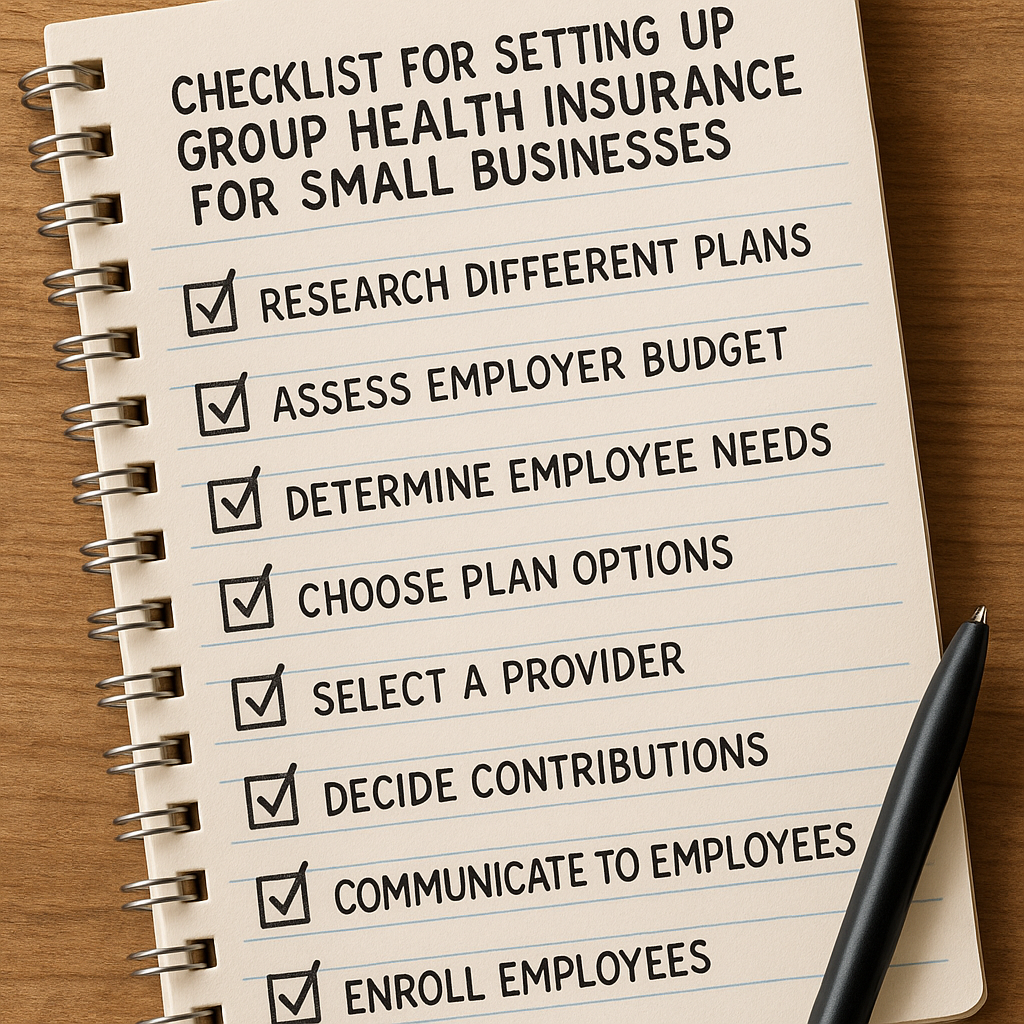
1️⃣ Take inventory of everyone you’d like covered. Include full‑time, part‑time, and any paid volunteers. Write down their age range, typical hours, and whether they’re eligible for a spousal rider. This snapshot will be the foundation of your quote.
2️⃣ Gather basic financials. Carriers usually ask for payroll totals and a brief description of your organization’s mission. It sounds formal, but the data helps them price the risk fairly.
3️⃣ Request quotes from at least three reputable carriers. Because we partner with over 50 top‑rated insurers, we can pull side‑by‑side comparisons that show which plan gives the best balance of premiums, deductibles, and network breadth.
Need a visual walk‑through? The short video below walks you through the quote‑request portal step by step.
While you’re watching, keep a notebook handy. Jot down any questions about dependent coverage or prescription drug tiers—those details often get lost in the fine print.
Seeing the numbers on paper can make the decision feel less abstract.
One thing many first‑time buyers overlook is the “stop‑loss” provision. Think of it as a safety net: if a claim exceeds a predetermined amount, the insurer steps in to cover the excess. For churches, this can protect against an unexpected high‑cost surgery that would otherwise drain the budget.
Another tip: ask about “wellness incentives.” Some plans reward groups that hit preventive‑care milestones—like annual physicals or flu shots—with lower premiums the following year. It’s a win‑win: healthier staff and a lighter bill.
If you’re curious about how wellness programs can be tailored for ministry staff, the resources at XLR8 Well showcase simple, faith‑friendly health challenges that integrate smoothly with group plans.
When it comes time to distribute enrollment packets, clear, professional‑looking forms make a big impression. Services like Jiffy Print Online can print custom brochures and ID cards quickly, so your team feels valued from day one.
Bottom line: group health insurance for churches isn’t a mystery reserved for mega‑megachurches. By understanding eligibility, leveraging tax deductions, and following a straightforward quote process, you can secure comprehensive coverage that fits your ministry’s budget and mission. Ready to take the next step? Grab your staff list, set up a quick call with a trusted broker, and watch the cost savings roll in.
Evaluating Eligibility and Coverage Options
When you start looking at group health insurance for churches, the first question that pops up is usually, “Do we even qualify?” It feels a bit like waiting for the communion wafer to rise – you hope it’s there, but you need a clear sign.
Most carriers set the bar low enough that even a modest ministry can jump in. The sweet spot is usually two or more paid staff members who work at least 20 hours a week. That could be your part‑time youth leader, the worship tech volunteer who gets a stipend, or a full‑time administrator. If you’ve got a handful of folks on payroll, you’re probably eligible.
Step 1: Verify Minimum Employee Count
Grab your staff list and count anyone who receives a regular paycheck. Volunteers who aren’t paid usually don’t count, unless you decide to add them for a modest extra premium. Many providers, like GuideStone, require at least two covered employees and a 50% contribution toward employee‑only costs.
Actionable tip: Create a simple spreadsheet with columns for name, weekly hours, and salary. Highlight anyone hitting the 20‑hour threshold. If you fall short, consider consolidating part‑time roles or bringing a seasonal staffer on board for the enrollment window.
Step 2: Assess Salary Thresholds for Tax Credits
Even if you meet the headcount, the Small Business Health Care Tax Credit can sweeten the deal. The credit applies when the average employee wage is under $57,000 and you cover at least half of the premium. It can offset up to 50% of your costs.
Real‑world example: A midsize church in Ohio with 12 employees averaged $45,000 in wages. By contributing 60% of the premium, they claimed a 45% credit, shaving roughly $1,200 off their annual bill.
Quick check: Add up all employee wages, divide by headcount, and compare to $57,000. If you’re under, you’re likely eligible for the credit.
Step 3: Choose the Right Plan Type
Now that eligibility is clear, the next puzzle is matching a plan to your ministry’s budget and care philosophy. Here are the common buckets you’ll encounter:
- Comprehensive PPO – Unlimited doctor choice, higher premium but predictable out‑of‑pocket costs.
- Access EPO – Lower premium, network‑only care. Good if most staff live locally and you don’t need out‑of‑network flexibility.
- High‑Deductible HDHP + HSA – Pair with a Health Savings Account. Ideal for younger staff who can afford a higher deductible in exchange for tax‑free savings.
- Protection Plan – Bare‑bones coverage for employees who only need occasional visits.
Tip: Ask your carrier for a side‑by‑side comparison that breaks down monthly premium, deductible, and out‑of‑pocket maximums. Seeing the numbers side‑by‑side often reveals the sweet spot faster than a sales pitch.
Step 4: Run a Cost‑Benefit Simulation
Take the plan options you like and run a quick simulation. Multiply the monthly premium by 12, add an estimate for employer contribution, then subtract any potential tax credit. Compare that total to what you’re currently paying for individual policies.
Example: A small church was paying $600 per month for a single employee’s individual plan. A group PPO option cost $450 per employee per month, with the church covering 60% of the premium. After the tax credit, the net cost dropped to $280 per employee per month – a 53% savings.
Step 5: Vet the Carrier’s Support for Faith‑Based Organizations
Not all carriers treat churches the same. Look for providers that have a dedicated ministry support team, understand the nuances of volunteer staffing, and can handle seasonal fluctuations without penalizing you.
One practical way to test this is to ask for a “service level agreement” that outlines response times for claim issues. A carrier that promises 24‑hour claim acknowledgment and has a track record of quick resolutions is worth a deeper look.
Step 6: Lock In Your Enrollment Window
Most church plans open twice a year – typically in November and May. Mark those dates on your calendar now, and give yourself at least 30 days to gather paperwork, compare quotes, and answer staff questions.
Pro tip: Set a reminder in your church’s shared Google Calendar and assign a volunteer “insurance champion” to keep the process moving. That person can also serve as the point of contact for the carrier.
Putting It All Together
By walking through these steps, you’ll turn a vague idea of eligibility into a concrete plan that fits your budget and mission. If you need a broader view of how group plans work for small businesses, check out our Group Health Insurance for Small & Mid‑Size Businesses guide – the principles are the same, just tweaked for a church’s unique structure.
And don’t forget the bigger picture: pairing your health plan with a wellness partner can improve outcomes and lower claims. XLR8well offers proactive health programs that dovetail nicely with any group plan, helping staff stay healthy and engaged.
Finally, for a spiritual perspective on caring for your team, Rev Dr Boudreau writes about aligning health benefits with a church’s mission, reminding us that true stewardship includes physical well‑being.
Take the next step today: run that eligibility checklist, run the numbers, and schedule a call with a broker who understands ministry life. You’ll be surprised how quickly the puzzle pieces fall into place.
How to Enroll Your Congregation (Video Walkthrough)
Okay, you’ve just hit play on that enrollment walkthrough video. What you’re seeing on screen is the same step‑by‑step map we use with dozens of churches, only it’s now visual. Let’s turn those moving pictures into real‑world action.
1. Pause, Take Notes, and Map the Timeline
When the video mentions the enrollment window – usually a 30‑day period in November or May – hit pause. Jot down the exact start and end dates. For many Episcopal Church plans, the official dates look a lot like what the Church Pension Group outlines: a renewal selection deadline around mid‑September, followed by an open enrollment window from mid‑October to early November.(source)
Write those dates into your church’s shared calendar right now. Set a reminder a week before the deadline so you’re not scrambling at the last minute.
2. Gather Your Staff Roster
Open a simple spreadsheet – name, weekly hours, salary, and whether they’re full‑time or part‑time. If anyone works 20+ hours a week, they count toward eligibility. Volunteers don’t have to be in the list unless you plan to add them for a small extra premium.
Tip: color‑code anyone who hits the 20‑hour threshold. That visual cue makes it easy to see who qualifies at a glance.
3. Pull Your Current Coverage Info
Before you compare quotes, have your existing policy details handy: premiums, deductibles, out‑of‑pocket max, and any employer contributions you already make. This snapshot will help you see the real savings when you switch to a group plan.
And if you’re not sure where to find those numbers, the Texas health‑insurance guide reminds folks that “health insurance protects you before you get hurt or sick” and suggests checking your current policy documents for those figures.(source)
4. Invite Your Insurance Champion
Remember the volunteer you called “insurance champion” earlier? Bring them into this step. Assign them to be the point person for the carrier’s broker and to keep the spreadsheet updated. A quick weekly check‑in (maybe over coffee after service) keeps momentum going.
5. Reach Out to Your Broker
Now that you have the dates, staff list, and current coverage data, fire off an email or a call to your broker – Life Care Benefit Services can help you pull quotes from several faith‑friendly carriers. Let them know the enrollment window you captured from the video so they can line up the paperwork in time.
Ask for a side‑by‑side comparison that breaks down monthly premium, employer contribution, deductible, and any tax‑credit potential. Seeing the numbers side‑by‑side is what usually clinches the decision.
6. Review the Plan Options Together
Schedule a brief meeting with your leadership team (maybe after the Sunday service). Walk through the comparison sheet, point out where a group PPO offers network freedom versus an EPO’s lower premium. Highlight any HSA‑eligible high‑deductible plans if your staff is younger and can benefit from tax‑free savings.
Encourage questions. If someone wonders, “Will my spouse stay in‑network?” – that’s the perfect moment to pull the plan’s provider list and show it on screen.
7. Complete the Online Enrollment Forms
Most carriers use a secure portal. Log in, upload your staff roster, and confirm each employee’s elected coverage level. Double‑check spelling – a typo in an email address can cause a claim to get lost.
Submit the forms before the deadline you noted in step 1. You’ll usually get an automated confirmation email; save that in a folder named “Group Health – 2026” for future reference.
8. Communicate the Final Plan to Your Team
Send a friendly email (or a printed flyer for those who prefer paper) that explains the new plan, the effective date, and where they can find their personal login info. Include a short FAQ – “What if I want to add my spouse later?” – to pre‑empt common questions.
Wrap it up with a quick reminder: the enrollment window closes on the date you captured from the video, so act now.
9. Celebrate the Milestone
Once everything’s submitted, take a moment to thank the insurance champion, the broker, and anyone who helped gather data. Maybe treat the staff to a modest coffee gathering – it reinforces that you care about their well‑being, both health‑wise and spiritually.
That’s the whole process, broken down from the video you just watched. You’ve turned a screen‑share into a concrete plan that protects your congregation’s staff and keeps the ministry focused on what matters most.
Comparing Plans: Cost, Benefits, and Provider Networks
When you’re juggling payroll, ministry programs, and a Sunday service, the last thing you want is a health plan that feels like a mystery. You’ve probably heard the buzz about group health insurance for churches, but how do you actually know which option gives you the best bang for your buck?
Let’s break it down together. We’ll look at the numbers that matter, the benefit designs that fit different staff sizes, and the provider networks that keep your team close to the care they need.
Premiums, deductibles, and out‑of‑pocket costs
First, stare at the premium. A typical small‑church plan might sit somewhere between $350 and $650 per employee per month, depending on the design. That sounds like a lot until you remember an individual policy can cost $1,200 or more for the same coverage.
Deductibles and out‑of‑pocket maximums are the next piece of the puzzle. A lower premium usually means a higher deductible, which can sting if someone needs care early in the year.
Does a higher deductible make sense for your team? If most of your staff are young, healthy adults, a high‑deductible health plan (HDHP) paired with a Health Savings Account (HSA) can be a smart way to keep costs down while still offering solid protection.
Benefit design: PPO, EPO, or HDHP?
Here’s a quick cheat sheet that shows how the three most common plan types stack up. The numbers are averages from several faith‑based carriers, including the data you’ll find in the GuideStone church health plan handout. Your actual quote will vary, but the pattern holds true across the board.
| Plan Type | Typical Monthly Premium (per employee) | Network Flexibility | Out‑of‑Pocket Max |
|---|---|---|---|
| PPO | $450‑$650 | Nationwide, any in‑network doctor; out‑of‑network allowed (higher cost) | $5,000‑$7,000 |
| EPO | $380‑$540 | Regional network only; no out‑of‑network coverage | $4,500‑$6,500 |
| HDHP + HSA | $350‑$500 | Limited network, but lower premiums; tax‑advantaged HSA for medical expenses | $6,500‑$8,500 |
Notice the trade‑offs? The PPO gives you freedom to see any specialist, but you pay more each month. The EPO trims the premium by locking you into a regional list of providers – perfect if most of your staff live and work in the same metro area. The HDHP offers the lowest premiums, but you’ll need to budget for that higher deductible – that’s where the HSA shines, letting you set aside pre‑tax dollars to cover qualified expenses.
Which one feels right for your congregation? Imagine a small rural church where the nearest hospital is 30 minutes away. An EPO that contracts with that hospital and a few local clinics could keep costs predictable while still covering emergencies.
Provider networks that matter to ministries
Now, let’s talk about the actual doctors and hospitals. A plan’s “network” is the list of providers who have agreed to the insurer’s rates. If a plan’s network skips the clinic where your youth‑director gets her regular check‑up, you’ll be paying out‑of‑pocket – and that’s a frustration you can avoid.
Here’s a quick checklist to audit a network before you sign:
- Pull a list of in‑network primary care physicians and see if any staff members already have a relationship.
- Verify that the nearest urgent‑care center and the main hospital are in‑network.
- Check for specialist coverage that matches your team’s needs – think mental‑health counselors for pastoral care staff.
- Ask the carrier if they offer a “network‑extension” option for nearby providers that aren’t on the core list.
For churches that already use the Church Pension Group (CPG) platform, you can request a Summary of Benefits and Coverage (SBC) at any time – free of charge – and see exactly which providers are covered. The CPG site even offers translations in Spanish, Chinese, Tagalog, and more, so you can share the details with a diverse staff (Church Pension Group health plan resources).
Does your network cover the pediatrician your church’s children‑ministry volunteers rely on? If not, you might be looking at a hidden cost that could outweigh a lower premium.
Crunching the numbers: a simple cost‑benefit simulation
Take the three plan types from the table and plug them into a quick spreadsheet. Multiply the monthly premium by 12, add the employer contribution (say you cover 60 % of the premium), and then subtract any eligible Small Business Health Care Tax Credit – up to 50 % of the contribution if you meet the wage and employee‑count thresholds.
For example, a 12‑person church choosing an EPO at $460 per employee per month would see an annual premium of $55,680. Covering 60 % brings the employer cost to $33,408. If the average staff wage is $45,000 and you qualify for a 45 % tax credit, that’s another $7,500 saved, leaving a net cost of roughly $25,900.
Compare that to a PPO with a $620 premium: the net cost jumps to about $34,500 after the same credit. The HDHP looks cheapest on paper ($30,000 net), but remember the higher deductible could hit staff unexpectedly if someone needs surgery.
So, what should you do next? Pull your payroll data, run the three scenarios, and see which net number aligns with your budget and your team’s risk tolerance.
In short, the best plan for a church isn’t the one with the lowest headline premium – it’s the one that balances affordable monthly costs, predictable out‑of‑pocket exposure, and a provider network that actually serves the people walking through your doors each Sunday.
Maximizing Tax Advantages and Financial Planning
Picture this: you’ve just crunched the numbers for three plan scenarios, and the net cost looks decent—but you haven’t yet tapped the tax side of the equation. That’s the sweet spot where a church can turn a good deal into a great one.
First, let’s talk about the Small Business Health Care Tax Credit. If your average staff wage is under $57,000 and you cover at least 50% of the premium, the IRS will credit up to 50% of that contribution. In plain language, every dollar you put toward employee premiums could be coming back to you as a tax refund.
So, how do you capture it?
Step 1: Gather Salary Data
Pull your most recent payroll report. Add up every employee’s annual salary, divide by headcount, and see if you land under $57K. If you’re close, consider adjusting contribution percentages for the upcoming enrollment window – a small bump can push you over the threshold.
Tip: A quick spreadsheet with columns for “Name,” “Hours,” “Salary,” and “Eligibility” does the trick in under five minutes.
Step 2: Calculate Your Employer Contribution
Decide how much of the premium you’ll cover. Remember, the credit is based on the amount you actually contribute, not the total premium. If you can afford 60% instead of 50%, the credit scales up accordingly.
Imagine a 12‑person church paying $460 per employee per month. Covering 60% means you contribute $276 per person. Multiply that by 12 months and 12 employees, and you’ve got $39,744 of contributions. The credit could knock off roughly $19,872 – a massive cash‑flow boost.
Step 3: Factor in Health Reimbursement Arrangements (HRAs)
HRAs, especially Qualified Small Employer HRAs (QSEHRAs), let you reimburse staff for individual plan premiums tax‑free. The beauty is you set the annual allowance – there’s no hard ceiling, so you can match your budget.
Because the reimbursement is tax‑free, your church saves on payroll taxes, and employees get more buying power for their health needs. The Take Command guide on health insurance for churches walks through the mechanics in plain language.
Step 4: Align HRA Contributions with the Tax Credit
Here’s a practical trick: treat your HRA allowance as part of the employer contribution when you run the tax‑credit calculator. That way you’re not double‑counting, but you’re still leveraging every dollar of tax‑advantaged money.
For example, if you allocate $3,000 per employee via a QSEHRA and also cover 60% of a $460 premium, the combined contribution is $5,760 per person annually. The credit applies to the $5,760, not just the premium portion.
Step 5: Plan for Deductibles and Out‑of‑Pocket Maxes
Higher‑deductible plans (HDHPs) lower premiums, but they raise the amount employees pay before insurance kicks in. Pair an HDHP with a Health Savings Account (HSA) – contributions are pre‑tax, and unused funds roll over year‑to‑year.
If your staff is young and generally healthy, this combo can shave another 10‑15% off your overall cost while still giving them a safety net for unexpected events.
Step 6: Build a Year‑Round Financial Calendar
Mark the enrollment windows (usually November and May) on your church’s shared calendar. Then, schedule a “Benefits Review” 90 days before each window. Use that meeting to verify salary averages, update HRA limits, and run the tax‑credit calculator one more time.
Having a repeatable process means you won’t scramble at the last minute, and you’ll capture every available tax benefit year after year.
Step 7: Keep Documentation Clean
Save the IRS Form 8941 (Small Business Health Care Tax Credit) and any HRA settlement statements in a dedicated folder. When tax season rolls around, you’ll have everything you need to claim the credit without digging through piles of paperwork.
And if you ever wonder, “Did we miss something?” – a quick glance at those files usually reveals a missed opportunity, like an unused portion of the HRA that could be rolled into next year’s budget.
In practice, churches that blend the Small Business Tax Credit with a well‑designed QSEHRA see net savings of 20‑35% compared to traditional group plans. That extra cash can go toward mission projects, community outreach, or even a modest staff raise – all without breaking the budget.
Bottom line: tax advantages aren’t a side note; they’re a core piece of the financial puzzle. By treating the credit, HRA, and deductible strategy as an integrated system, you turn “affordable coverage” into “affordable and fiscally smart coverage.”
Ready to put the numbers together? Grab your payroll spreadsheet, set a reminder for the next enrollment window, and let the tax‑saving calculations guide your decision.
That’s the kind of financial planning that lets your church focus on ministry, not math.
Common Challenges and Solutions for Churches
When you first look at group health insurance for churches, the paperwork can feel like a mountain you weren’t expecting to climb.
Does the plan even cover part‑time staff or volunteers? That’s the question that keeps many pastors up at night.
Below we break down the most common roadblocks and, more importantly, the practical steps you can take right now.
Eligibility confusion
Many churches assume they need a big staff to qualify, but most carriers set the bar at just two paid employees working 20 hours a week. If you’ve got a part‑time youth leader and an admin assistant, you’re already in the game.
The trick is to map every paycheck – even stipends – onto a simple spreadsheet. Highlight anyone who crosses the 20‑hour threshold; that visual cue often clears the doubt in one quick glance.
If you fall short, consider bundling seasonal staff into a single “temporary” employee record for the enrollment window. It’s a legal shortcut that many small ministries use without raising a red flag.
Missing the Small Business Health Care Tax Credit
It’s easy to overlook the credit because the calculation lives in a different IRS form than your payroll software. In reality, if your average wage is under $57,000 and you cover at least half of the premium, the credit can offset up to 50 % of what you spend.
What we’ve seen work best is to run the credit calculator right after you’ve drafted your budget. Plug in the premium you expect to pay, the contribution you plan to make, and watch the potential savings appear. Those dollars can then be redirected to a mission project or a modest staff raise.
The KFF overview of private health‑insurance regulation reminds us that the tax exclusion for employer‑paid premiums is a core piece of the federal framework, reinforcing why the credit is worth chasing KFF’s policy brief.
Plan‑type paralysis
PPO, EPO, HDHP… the alphabet soup can freeze decision‑making. The rule of thumb is to match the plan’s cost structure to your staff’s health‑care usage patterns.
If most of your team is younger and generally healthy, a high‑deductible plan paired with an HSA often yields the lowest premium. Older staff or those with chronic conditions usually benefit from a PPO that offers out‑of‑network freedom.
Create a three‑column grid: monthly premium, expected out‑of‑pocket max, and network coverage. Fill in the numbers for each option your broker provides, then rank them by the metric that matters most to your ministry – whether that’s cash flow, predictability, or provider access.
Network gaps that bite
Imagine your youth director needs a specialist who isn’t in‑network – the bill suddenly spikes and morale takes a hit. That scenario is more common than you think.
Before you sign, pull the carrier’s provider directory and cross‑check it with the doctors your staff already trusts. Ask the broker for a “network‑extension” clause if a key clinic is missing; many faith‑focused carriers will accommodate a modest add‑on fee.
A quick audit checklist saves you from surprise claims: primary‑care doctors, urgent‑care centers, the nearest hospital, and any mental‑health counselors your pastoral staff might rely on.
Keeping the paperwork from becoming a ministry drain
Enrollment windows open twice a year, and the forms can look like a sermon outline written in legalese. The biggest relief comes from assigning a single “insurance champion” – often a detail‑oriented volunteer or office manager – to own the process.
Give that person a shared Google Sheet, a deadline reminder in the church calendar, and a short script for answering staff questions. When the champion sends a one‑page summary to the board, everyone knows the numbers, the deadline, and the next step.
If you’re already working with Life Care Benefit Services, they can provide a ready‑made enrollment portal that pulls employee data straight from your payroll export, cutting manual entry by half.
So, what’s the takeaway? Most of the headaches around group health insurance for churches boil down to three simple habits: (1) map eligibility early, (2) run the tax‑credit calculator before you lock in premiums, and (3) verify the network against real‑world staff needs. Adopt those habits, and the “complex” plan becomes a predictable, budget‑friendly part of your ministry’s stewardship.
FAQ
What is group health insurance for churches and how does it differ from individual coverage?
Group health insurance for churches is a pooled plan that covers all eligible staff under one contract, rather than each person buying a policy on their own. Because the risk is shared, premiums are usually lower and the paperwork is centralized. In practice you get a single enrollment portal, a unified benefits summary, and often better bargaining power with carriers than a solo employee could ever achieve.
Who qualifies for a church’s group plan? Do part‑time staff count?
Most carriers set the bar at two paid employees working at least 20 hours a week, so even a modest ministry can qualify. Part‑time leaders, worship techs who receive a stipend, or an admin assistant all count as long as they receive a regular paycheck. If you have volunteers you love, you can add them for a small extra premium, but they’re not required for eligibility.
How can a small ministry afford the premiums? Are tax credits really worth it?
Look at the Small Business Health Care Tax Credit – if the average staff wage is under $57,000 and you cover at least half of the premium, the IRS may refund up to 50 % of that contribution. In our experience that credit can shave a few thousand dollars off an annual bill, turning a seemingly pricey plan into a budget‑friendly option. Pair the credit with a modest employer contribution and you often stay well within your stewardship goals.
What should I look for in the provider network? Any red flags?
First, verify that the nearest urgent‑care, primary‑care doctor, and any specialist your pastoral staff relies on are in‑network. Then, scan the directory for hospitals within a reasonable drive – a 30‑minute radius is a good rule of thumb. Red flags include a network that skips local clinics, out‑of‑network penalties that double the cost, or a lack of mental‑health counselors for your counseling team.
What is the enrollment timeline and how do I avoid missing it?
Most church plans open twice a year – typically in November and May – and the window lasts about 30 days. Mark those dates on your shared calendar now, set a reminder a week before, and assign a single “insurance champion” to keep the spreadsheet updated. A quick weekly check‑in (maybe over coffee after service) keeps everyone on track and prevents the last‑minute scramble.
Can we include volunteers or seasonal workers in the coverage?
Volunteers who don’t receive a paycheck usually aren’t counted, but you can choose to add them for a modest premium bump if you want to extend benefits. Seasonal workers can be grouped into a single “temporary” employee record for the enrollment window – that’s a legal shortcut many small ministries use without raising any red flags. It’s a nice way to show you value everyone who serves.
What role does an ‘insurance champion’ play and how do we set one up?
The insurance champion is the go‑to person who owns the timeline, the staff roster, and the carrier communication. Pick someone detail‑oriented – often an office manager or a trusted volunteer. Give them a shared Google Sheet, a deadline reminder in the church calendar, and a short script for answering staff questions. When they send a one‑page summary to the board, everyone knows the numbers, the deadline, and the next step.
Conclusion
We’ve walked through everything from eligibility basics to tax‑credit tricks, and you now have a clear roadmap for getting group health insurance for churches without the usual headaches.
So, what’s the next step? Pull together your staff roster, mark the enrollment window in the shared calendar, and name an insurance champion who can keep the timeline moving.
Give that champion a simple spreadsheet – name, hours, salary – and highlight anyone who meets the 20‑hour threshold. A quick color‑code lets you see eligibility at a glance.
Next, reach out to a ministry‑friendly broker – Life Care Benefit Services can pull quotes from carriers that understand faith‑based needs. Ask for a side‑by‑side comparison that breaks down premium, contribution, deductible and any tax‑credit impact.
When the numbers are in, gather your leadership team for a short walkthrough. Let them ask tough questions – “What if my spouse needs a specialist?” – and answer with the network list you’ve verified.
Finally, celebrate the milestone. A coffee, a thank‑you note, or a brief announcement shows staff you value their well‑being and reinforces the stewardship mindset we all share.
Ready to lock in your coverage? Set the calendar reminder, empower your champion, and let the peace of mind that comes with solid group health insurance for churches free you to focus on ministry.