

I get it—you’re running a nonprofit, juggling grant deadlines, program budgets, and the endless question of how to keep your staff healthy without draining your coffers.
When you glance at the payroll spreadsheet and see the tiny line for employee benefits, you wonder if group health insurance is even an option for a mission‑driven organisation.
The good news is you’re not alone. Many nonprofits think group coverage is reserved for Fortune‑500 companies, but the reality is that carriers design plans specifically for organisations with tight margins and a strong purpose.
Here’s what I mean: by pooling your employees together, you spread risk, which drives down the per‑person premium—sometimes by 15‑20 % compared with buying individual plans on the open market.
Take the example of a mid‑size arts charity in Chicago. They switched from solo policies to a group plan and saved roughly $12,000 in the first year, enough to fund a new community workshop.
Another real‑world story comes from a small environmental nonprofit in Austin. Their leader noticed turnover spiking after a few staff members faced unexpected medical bills. After adding a group health plan, turnover dropped by 40 % and morale shot up.
So, how do you get started without getting lost in insurance jargon?
First, confirm eligibility. Most carriers require at least one full‑time employee, but many also cover part‑time staff if they meet a minimum hour threshold.
Second, gather the basics: total headcount, average salary, and the most common health concerns among your team (think chronic conditions, prescription needs, or mental‑health services).
Third, request quotes from at least three reputable carriers. Compare not just the premium, but also the deductible, out‑of‑pocket maximum, and network breadth.
Don’t forget to ask about wellness add‑ons. Some providers bundle tele‑health, employee assistance programmes, and even preventive‑care incentives at no extra cost.
A quick way to visualise the numbers is to plug your data into a simple spreadsheet: list each quote, subtract the estimated employer contribution, and calculate the net cost per employee.
If the math still feels fuzzy, schedule a no‑obligation strategy call with a broker who specialises in nonprofit benefits. They can walk you through the fine print and flag any hidden fees.
At Life Care Benefit Services, we’ve helped dozens of nonprofits navigate this process, and we’ve seen the same pattern: a modest investment in group health pays for itself through higher retention, lower absenteeism, and a stronger reputation in the community.
For a deeper dive, check out our A Practical Guide to Group Health Insurance for Nonprofits, which walks you through plan selection step‑by‑step.
Bottom line: group health insurance isn’t a luxury—it’s a strategic tool that protects your mission and the people who make it happen.
Take five minutes today to list your staff numbers and reach out for a quote; the peace of mind you’ll gain is worth every cent.
TL;DR
Group health insurance for nonprofits is surprisingly affordable, spreads risk, lowers per‑person premiums, and strengthens staff loyalty, protecting both your mission and budget in the.
Confirm eligibility, gather headcount and cost data, compare three carriers, then contact Life Care Benefit Services for a free quote that reveals true savings today.
Understanding Eligibility and Benefits
Let’s be honest: when you first hear “group health insurance for nonprofits,” the paperwork can feel like a maze. You’re wondering if you even qualify, and whether the benefits outweigh the admin work.
First off, eligibility is usually straightforward. Most carriers require at least one full‑time employee—think 30‑35 hours a week—but many also extend coverage to part‑time staff who clock in a minimum of 20 hours. If your organization has a mix of volunteers and paid staff, focus on the paid roster; volunteers typically don’t count toward the minimum.
Because you’re a nonprofit, you’ll also need to prove your 501(c)(3) status (or the local equivalent). A simple copy of your IRS determination letter usually does the trick, and some carriers will even ask for your most recent Form 990. This step reassures the insurer that you’re a legitimate mission‑driven entity, not a for‑profit looking for a tax break.
Now, onto the perks. Pooling your employees together spreads risk, which often trims premiums by 10‑20 % compared with buying individual plans on the open market. That saving isn’t just a number on a spreadsheet—it can free up funds for program expansion or new community initiatives.
Beyond cost, the real win is staff loyalty. When you offer a solid health plan, turnover drops, morale climbs, and you become a magnet for talent who care about both the mission and their own well‑being. One small arts nonprofit in Portland saw a 35 % reduction in turnover after adding a group plan, and the peace of mind rippled through every department.
Imagine this: you’ve just hired a part‑time grant writer who’s juggling multiple contracts. With group health in place, she no longer worries about an unexpected medical bill, so she can focus on the grant that could fund your next big project. That’s the everyday impact of eligibility turning into tangible benefit.
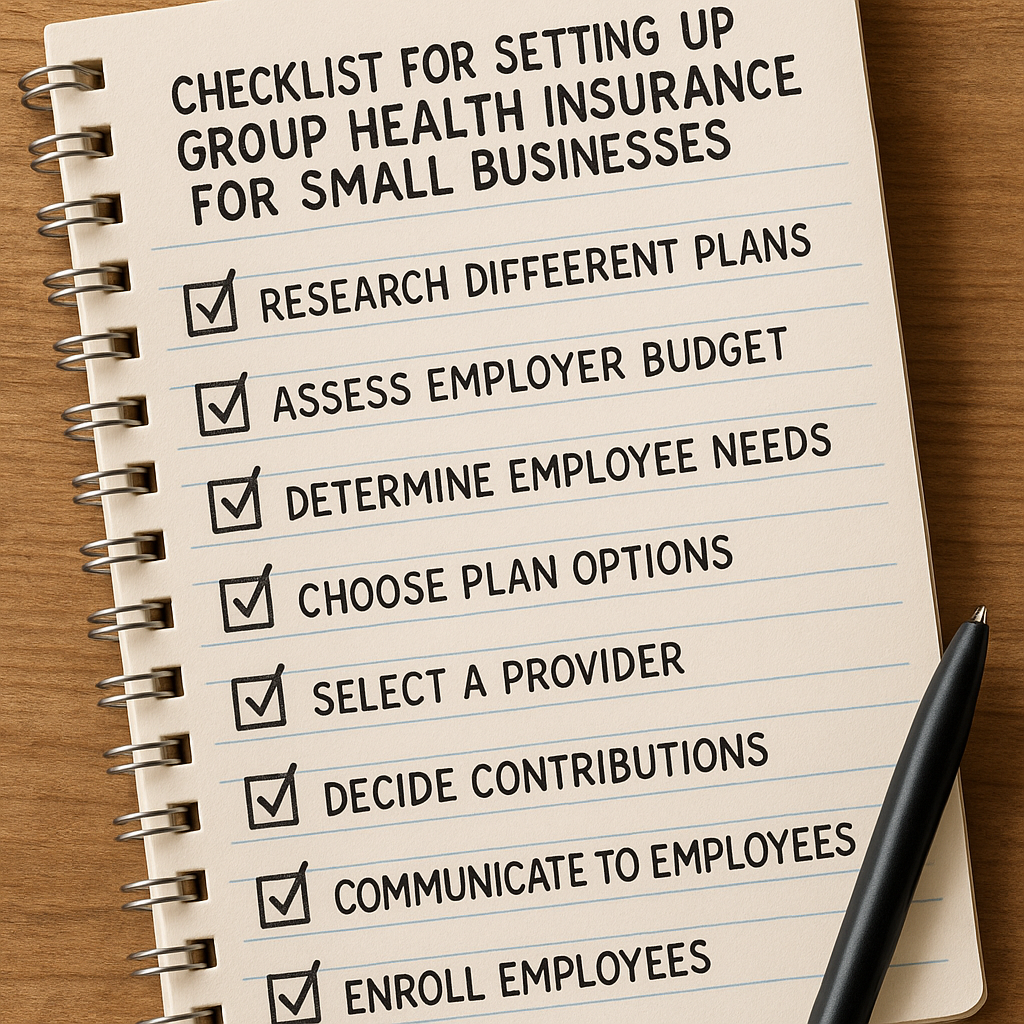
Here’s a quick visual walk‑through of the process:
After you’ve confirmed eligibility, dig into the extra goodies carriers often bundle. Tele‑health services, mental‑health counseling, and wellness incentives can be added at no extra charge. These perks not only boost employee health but also cut long‑term costs by catching issues early.
For example, XL R8 Well offers a suite of wellness resources that integrate seamlessly with most group plans, giving your team access to fitness challenges and nutrition coaching without a separate subscription.
Don’t forget compliance. The Affordable Care Act (ACA) has specific reporting requirements, and keeping accurate data can feel daunting. MarisGraph provides user‑friendly analytics tools that simplify ACA reporting, so you stay on the right side of the law without a headache.
Finally, think about the technology side of enrollment. A smooth, digital onboarding experience reduces admin time and errors. SRS Networks’ guide walks you through selecting IT services that can automate enrollment, manage beneficiary updates, and keep everything secure.
Actionable checklist:
- Verify you have at least one full‑time employee (or qualifying part‑timer).
- Gather your IRS 501(c)(3) determination letter and latest Form 990.
- List headcount, average salary, and common health concerns.
- Request quotes from three carriers and compare premiums, deductibles, and wellness add‑ons.
- Use a compliance tool (like MarisGraph) to track ACA reporting.
- Choose an enrollment platform that automates data entry and updates.
When you tick these boxes, you’ll move from “maybe we can’t afford it” to “here’s how we make it work.”

Ready to take the next step? Reach out to Life Care Benefit Services for a no‑obligation quote, and let us help you turn eligibility into a strategic advantage for your mission.
How to Evaluate and Choose a Provider
When you’re juggling grant reports and program budgets, the last thing you want is a mystery provider that leaves you guessing about costs or coverage. That feeling of “what am I really getting?” shows up more often than you think.
So, how do you turn that uncertainty into confidence? Below is a step‑by‑step playbook that helps you compare options without drowning in insurance jargon.
1. Define What Matters Most to Your Team
Start by asking your staff what they can’t live without – maybe it’s mental‑health counseling, a wide network of doctors, or prescription coverage for chronic conditions. Jot those priorities down; they become your decision‑making compass.
Does your nonprofit have a handful of full‑time staff and a few part‑timers? If yes, you might need a flexible solution that can handle different employee classes.
2. Gather the Basics From Each Provider
Reach out to at least three carriers and request a plain‑language summary that includes:
- Premium per employee
- Employer contribution expectations
- Deductible and out‑of‑pocket maximums
- Network breadth (are local clinics included?)
Tip: ask for the same data format from each provider so you can line‑up the numbers side by side.
3. Score Each Option Using a Simple Table
Put the info into a quick comparison table. Here’s a starter format you can copy‑paste into a spreadsheet:
| Evaluation Criteria | What to Look For | Quick Check |
|---|---|---|
| Cost predictability | Fixed monthly premium or capped reimbursement amount | Does the quote include a maximum yearly spend? |
| Network coverage | In‑network providers near your office or remote‑work locations | Count the number of local hospitals and specialists. |
| Flexibility for part‑time staff | Option to offer HRAs like QSEHRA or ICHRA | Is a reimbursement model available? |
Seeing the data in rows makes the trade‑offs crystal clear.
4. Test the Provider’s Support Experience
Give the sales rep a quick call and ask a couple of real‑world scenarios: “What happens if an employee needs a specialist out of network?” and “How does the enrollment portal work for someone who isn’t tech‑savvy?”
If the answers are vague or you get put on hold, that’s a red flag. Good providers have clear, friendly support – and they’ll gladly walk you through a demo.
5. Check Regulatory Fit and Tax Benefits
Nonprofits can leverage HRAs to keep costs low while staying compliant. The California guide points out that QSEHRAs have a federal reimbursement cap, whereas ICHRAs do not learn more about the options. If your organization operates outside California, the Take Command overview explains how ICHRAs can be customized for any size nonprofit see the details.
Understanding those nuances helps you avoid surprise paperwork down the road.
6. Run a Mini‑Pilot if You Can
Some carriers let you start with a single plan tier for a month or two. Use that trial to see how enrollment flows, how quickly reimbursements are processed, and whether your team actually uses the benefits.
Even a short test can expose hidden fees or administrative headaches before you commit fully.
7. Make the Final Call
Rank each provider on a 1‑5 scale for cost, coverage, flexibility, and support. Add up the scores – the highest total usually points to the best overall fit.
Remember, the cheapest premium isn’t always the smartest choice. You want a partner that keeps your staff healthy, your paperwork manageable, and your mission on track.
Once you’ve picked a provider, schedule a brief onboarding call with Life Care Benefit Services. We can help you fine‑tune the contribution amounts, walk your team through enrollment, and keep an eye on renewal dates so nothing slips through the cracks.
Cost Considerations and Funding Options
When the payroll numbers start to look like a maze, it’s natural to wonder: will adding group health insurance for nonprofits break the budget, or can it actually free up cash in other areas? The good news is that cost isn’t a single line item – it’s a mix of premiums, tax benefits, and smart funding choices that can be tuned to your mission’s size.
Understanding the true cost picture
First, separate the obvious premium from the hidden levers. A fully‑insured plan means you pay a set monthly premium to the carrier, and they shoulder the claim risk. A self‑funded or level‑funded option flips some of that risk back to you, but it also lets you keep any unused funds at year‑end. According to Business Benefits Group, about 87 % of nonprofits already offer some medical plan, and many are moving toward self‑funded structures to capture those leftover dollars.
Second, remember the tax side. Contributions to a Health Reimbursement Arrangement (HRA) or a Qualified Small Employer HRA (QSEHRA) are tax‑deductible for the organization and tax‑free for employees. That double‑dip can shave 20‑30 % off the effective cost, especially for smaller staffs where the premium itself is modest.
Funding options you can mix and match
Here’s a quick “menu” you can customize:
- Traditional fully‑insured group plan: predictable premium, low admin burden.
- Level‑funded hybrid: you pay a target premium; if claims are lower, you get a rebate.
- Self‑funded with stop‑loss: you assume risk up to a cap, then the carrier steps in.
- HRA/QSEHRA add‑on: reimburse employees for out‑of‑pocket costs, keeping the base premium lean.
Think of it like building a sandwich – you choose the bread (plan type), the filling (coverage level), and the sauce (HRAs) to suit your taste and budget.
Real‑world budgeting examples
Take a mid‑size arts nonprofit in Denver with 22 full‑time staff. They moved from a fully‑insured PPO at $650 per employee per month to a level‑funded plan with a $600 target premium plus a $5,000 stop‑loss. Their actual claim spend was $4,200, so they earned a $800 rebate. Add a modest $50 per employee HRA, and the net cost dropped to $560 per person – a 14 % saving that funded a new community outreach grant.
On the other side of the country, a small environmental group in Salt Lake City (7 employees) leveraged the Utah Nonprofits Association’s group plan. By opting for the Nonstop Health™ first‑dollar coverage, they eliminated copays entirely, which boosted enrollment to 100 %. Because the plan bundles a low‑cost HSA option, each employee contributed $25 per month pre‑tax, effectively lowering the employer’s contribution to $30 per person. The organization saved roughly $2,100 in the first year, money they redirected to a new education program.
Actionable steps to lock in the right cost structure
1. Map your current spend. Pull the last 12 months of payroll and any existing health reimbursements. Put those numbers into a simple spreadsheet – premium, employer contribution, employee share.
2. Identify the “break‑even” premium. Run a scenario: fully‑insured vs. level‑funded vs. self‑funded. Include the tax deduction you’d claim on the employer side.
3. Quiz your team. Send a brief survey asking which benefits matter most – dental, vision, HSA, or first‑dollar coverage. Prioritize the options that get the highest votes.
4. Get three quotes. Ask carriers to price each of the three plan types you’re considering. Insist they break down the cost of the base plan, stop‑loss, and any HRA admin fees.
5. Run a quick ROI check. Divide the total annual cost by the expected reduction in turnover and absenteeism. Many nonprofits see a $1,000‑$3,000 per employee return in productivity.
6. Lock in a pilot. If possible, start with one department for three months. Track enrollment, claim frequency, and any unexpected fees. Adjust the contribution amount before rolling out organization‑wide.
Tips from the field
– Keep an eye on “cap” limits. The ACA requires affordability for employers with 50+ full‑time staff; staying under the 9.5 % of household income threshold can qualify your plan for tax credits.
– Bundle wellness programs (tele‑health, mental‑health counseling) at no extra cost. Many carriers include these as value‑adds that improve employee health and lower claim severity.
– Review stop‑loss thresholds annually. As your staff ages or you add new programs, the risk profile shifts – a small tweak can protect you from a surprise claim spike.
Bottom line: cost isn’t a wall, it’s a set of levers you can pull. By breaking down premiums, leveraging tax‑advantaged HRAs, and testing a pilot, you can design a funding mix that protects both your people and your mission.
Common Pitfalls and How to Avoid Them
Let’s be honest: benefits can feel like a maze, especially when every turn seems to cost more than the last. If you’re trying to tighten budgets while still taking care of your people, you’ll want to spot the traps before they trap you.
1) Focusing only on the monthly premium
Premiums are important, but they’re just the tip of the iceberg. Total cost of ownership includes deductibles, out-of-pocket maximums, stop‑loss, admin fees, and any HRAs you attach. In 2026, rising costs haven’t paused for nonprofits, and a shiny low premium can hide big bills later. A careful, apples‑to‑apples comparison helps you see the real picture.
What you’ll want to do:
- Ask each carrier for a full cost breakdown: base plan, stop‑loss (if applicable), and HRA admin costs.
- Calculate the annual worst‑case and best‑case scenarios to understand the range you’re budgeting for.
In our experience at Life Care Benefit Services, surfacing these numbers and testing different funding mixes helps nonprofits keep coverage strong without breaking the bank. Orr Group notes that health‑insurance costs for nonprofits are rising, which makes this disciplined budgeting even more critical. Orr Group’s rising health insurance costs for nonprofits.
2) Misjudging eligibility and employee classes
Nonprofits aren’t one‑size‑fits‑all. You may have full‑timers, part‑timers, and seasonal staff. If you don’t define classes clearly, you either over‑extend benefits or leave gaps. Map who needs coverage under which plan tier and how HRAs can fill gaps for high‑needs individuals.
Action steps:
- Create employee classes (full‑time, part‑time, interns) and decide which benefit tier each class gets.
- Consider HRAs to tailor reimbursement for part‑timers or specialists without inflating your base premium.
We’ve seen pilots in one department confirm that your class structure works in the real world before rolling out org‑wide. Life Care Benefit Services can help design and test these structures with nonprofit realities in mind.
3) Underestimating admin and communication needs
Enrollment, reimbursements, and benefits explanations require steady bandwidth. If staff can’t enroll easily or don’t understand their coverage, you’ll see lower engagement and higher turnover—exactly what you’re trying to prevent.
What to do:
- Put enrollment steps into a simple guide and hold a quick Q&A session during a team meeting.
- Consider outsourcing administrative tasks to a nonprofit‑savvy partner to reduce errors and improve staff satisfaction.

4) Skipping the pilot or ROI check
Don’t rush to organization‑wide rollout without testing. A three‑month pilot in one department reveals hidden admin headaches, plan quirks, and actual usage patterns. Then you can refine contribution levels and coverage choices before scaling up.
ROI matters: track turnover, absenteeism, enrollment changes, and staff satisfaction. Even modest improvements in retention can offset premium increases over time, making the program worth it in the long run.
Our team regularly helps nonprofits run these pilots and quantify impact, so you’re not guessing at outcomes. This isn’t about buzzwords; it’s about building a benefits program that actually sticks with your mission.
5) Failing to align with regulatory and tax benefits
HRAs (QSEHRA, ICHRA) can be powerful cost controls, but they must be structured correctly to stay compliant. Start with a clear map of what’s reimbursable, who’s eligible, and how reimbursements flow to employees. A seasoned nonprofit benefits partner helps you avoid missteps that derail a well‑intended plan.
Does this really move the needle? Yes—when paired with a solid plan, smart funding, and clear staff communication.
For broader context on cost pressures, Orr Group’s analysis is a solid reference point for nonprofits navigating 2026 and beyond.
Bottom line: use a pilot, quantify ROI, and stay compliant. A thoughtful approach makes group health insurance for nonprofits a strategic asset, not a cost center.

Implementing the Plan: Steps for Your Nonprofit
Getting benefits right for a nonprofit isn’t a someday project. It’s a sequence of small, concrete steps that protect your people and your mission. Let’s map out a practical path you can start today.
1) Map your headcount, needs, and budget reality
You’ll want current counts by class (full‑time, part‑time, interns) and a sense of the benefits priorities (prescription coverage, mental health, telemedicine). Gather last year’s spend and the most common medical needs your team faces. This isn’t about perfection; it’s about putting real data on the table so you can compare apples to apples.
In our experience, a quick data pull pays dividends. Draft a one‑page plan of what you want to offer and what you won’t stretch. Does this help you keep your team healthier without blowing your grant line?
2) Decide on your pathway — traditional plan, level-funded, or HRAs
Fully insured plans are simple but can be pricey with a changing headcount. Level‑funded or self‑funded options give you more cashflow control and potential savings, especially when combined with a budget‑friendly HRA. If you’re aiming for flexibility, HRAs like QSEHRA or ICHRA can tailor reimbursements to staff needs while keeping the base premium lean. For a practical primer on nonprofit options, see nonprofit health‑benefits guidance from PeopleKeep.
Learn more about HRAs for nonprofits.
3) Build a simple pilot plan
Run a department‑level pilot for 60–90 days. Choose one plan tier, one employee class, and a clear enrollment process. Use this period to test enrollment, reimbursements, and overall staff satisfaction. A short pilot reveals admin headaches before you scale.
We’ve seen pilots show where enrollment portals trip people up and where communications fall flat. A small test saves you big headaches later.
4) Gather quotes and compare — not just the price
Request quotes from at least three carriers and ask for the same data format: base premium, employer contribution, deductible, out‑of‑pocket maximum, and network breadth. Put everything into a side‑by‑side so you can judge value over time, not just monthly cost. Does a plan include telehealth, wellness incentives, or easy claim filing?
For nonprofits, a practical takeaway: the lowest premium isn’t always best. You want predictable costs and real access to care. To help you navigate this, consider resources like PeopleKeep’s nonprofit guidance on HRAs.
See their nonprofit health‑benefits guide.
5) Plan enrollment and staff communication
Roll out enrollment with a simple guide and a quick Q&A session. Provide a one‑page summary of what changes for staff and how reimbursements work. Clear, friendly communication reduces confusion and boosts participation.
Consider outsourcing some admin tasks if you’re small in staff. Platforms like Life Care Benefit Services make this easier by handling the paperwork so you can focus on your programs.
6) Monitor, measure, and iterate
Track enrollment trends, utilization, turnover, and staff feedback. If you see gaps, adjust contributions or the plan mix. The goal isn’t perfection; it’s a plan you can adapt as your nonprofit grows.
Our team can help you design a pilot, quantify ROI, and stay compliant without drowning in admin. If you’re ready for a next step, schedule a no‑obligation strategy chat to tailor a plan for your organization.
Conclusion
So, where does that leave you? After digging through eligibility, costs, and pilots, the picture is clear: group health insurance for nonprofits is a practical lever you can pull today, not a distant dream.
We’ve seen charities swap a $12,000 yearly surprise bill for a predictable, tax‑advantaged contribution that actually pays for itself in lower turnover. You’ve heard the numbers, now picture the peace of mind when a staff member can get a tele‑health visit without worrying about a bill.
Here’s the quick cheat sheet: map headcount, pick a pathway (traditional, level‑funded, or HRA), run a three‑month pilot, and measure turnover versus premium. If the pilot shows you’re saving more than you’re spending, you’ve got a winner.
And remember, you don’t have to go it alone. A brief strategy call with an agency that lives and breathes nonprofit benefits can turn those spreadsheets into a solid plan you can roll out tomorrow.
Ready to lock in coverage that protects your mission and your people? Schedule a no‑obligation chat today and let’s turn that “maybe” into a concrete step forward.
FAQ
What exactly is group health insurance for nonprofits?
It’s a pooled health plan that covers every eligible employee of a charitable organisation under a single contract. Because the risk is shared across the whole staff, premiums are usually lower than if each person bought an individual policy. The plan can be fully‑insured, level‑funded, or paired with an HRA, so you can pick the structure that matches your cash‑flow and mission‑driven goals.
Do we need a certain number of full‑time staff to qualify?
Most carriers require at least one full‑time employee, but many will also cover part‑timers if they meet a minimum hours threshold (often 20‑30 hours a week). In practice, you’ll map your headcount, group full‑time and part‑time classes, and then present that snapshot to the carrier. That way you avoid over‑paying for coverage you don’t need while still protecting every team member who contributes to your cause.
How can a nonprofit afford the premiums?
Think of the premium as an investment in staff retention. The tax‑deductible contribution you make lowers your taxable income, and HRAs let employees reimburse out‑of‑pocket costs pre‑tax, shaving another 20‑30 % off the effective cost. Run a simple ROI check: compare the annual premium to the estimated savings from reduced turnover and absenteeism. In many cases the net effect is a budget positive.
What’s the difference between a fully‑insured plan and a level‑funded plan?
A fully‑insured plan locks in a fixed monthly premium – the carrier bears the claim risk. A level‑funded plan sets a target premium; if claims are lower than expected you get a rebate, and if they’re higher you pay a stop‑loss cap. For nonprofits with steady headcount, level‑funded can offer predictability plus the upside of unused funds returning to your organization.
Can we add mental‑health or tele‑health benefits without blowing up the cost?
Absolutely. Many carriers bundle tele‑health, employee assistance programmes, and even preventive‑care incentives at no extra charge. When you request quotes, ask the carrier to break out those value‑adds so you can see the true cost. In our experience, adding a tele‑health add‑on often reduces overall claim severity because issues are caught early.
How do we make sure the enrollment process isn’t a nightmare?
Keep it simple. Create a one‑page guide that outlines who’s eligible, the contribution split, and key deadlines. Host a short Q&A during a regular staff meeting – that personal touch clears up confusion fast. If you’re short on admin bandwidth, consider a partner that handles enrollment portals and reimbursements, freeing you to focus on program delivery.
Should we run a pilot before rolling out the plan organization‑wide?
Yes. Pick one department, run a 60‑ to 90‑day pilot, and track enrollment rates, claim usage, and employee feedback. Look for admin hiccups – maybe the portal isn’t mobile‑friendly or the reimbursement form is too complex. Adjust contribution levels or communication tactics based on what you learn, then expand with confidence.