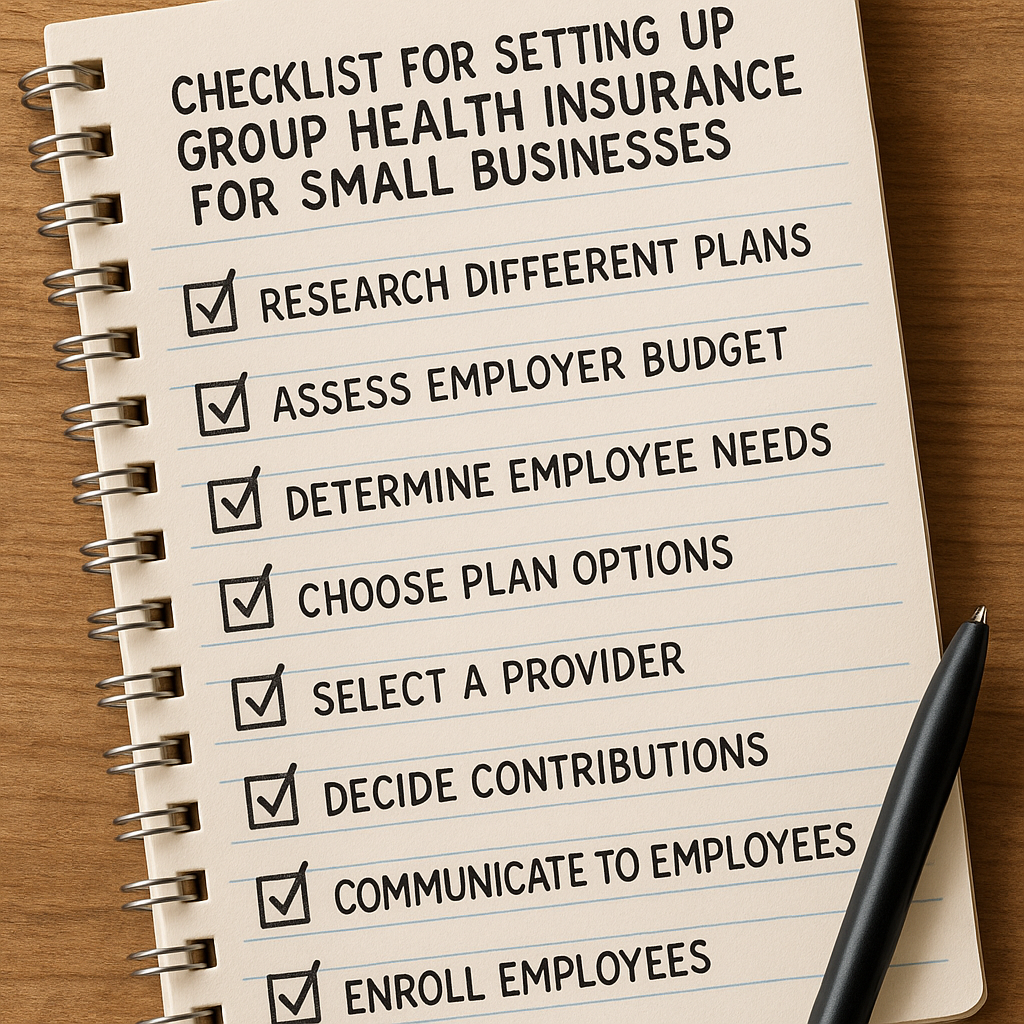


Picture this: you’ve just hired your third employee and the excitement of growth is buzzing, but a knot forms in your stomach when you think about health benefits.
It’s a familiar moment for many small business owners – you want to take care of your team, yet the cost and complexity of group health insurance for small business owners feels like a maze.
In our experience at Life Care Benefit Services, we’ve seen that the biggest roadblock isn’t the price tag; it’s the uncertainty about where to start and what actually fits a tight budget.
So, what if I told you there’s a straightforward way to protect your staff without breaking the bank?
First, think of group health coverage as a partnership rather than a purchase. When you bundle employees together, carriers can spread risk, which often translates into lower premiums than buying individual plans.
Second, the flexibility built into many group plans means you can tailor coverage levels – from basic preventive care to more comprehensive options – matching the diverse needs of a small team.
Imagine offering a plan that lets a new parent access pediatric visits while a senior employee enjoys prescription discounts. That kind of customized value not only keeps morale high but also becomes a recruiting magnet.
But here’s the catch: many owners skip the process because they assume the paperwork is endless. The truth is, with the right guidance, you can collect quotes, compare options, and enroll in just a few weeks.
We often start by gathering a snapshot of your workforce – age ranges, typical health usage, and budget limits – then feed that into carrier tools that generate accurate quotes quickly.
From there, you evaluate key metrics: premium cost, out‑of‑pocket caps, network breadth, and any wellness incentives that could further reduce expenses.
Does this sound doable? Absolutely. The key is to treat the search as a step‑by‑step project, not an indefinite quest.
Stay tuned, because the next sections will walk you through the exact steps to secure those quotes, compare plans, and lock in coverage that keeps both you and your employees healthy and happy.
TL;DR
Getting group health insurance for small business owners isn’t a nightmare; with the right steps you can compare plans, lock in affordable coverage, and keep your team motivated.
In a few weeks you’ll have clear quotes, know the premiums and benefits, and feel confident you made a smart, employee‑friendly investment.
Step 1: Assess Your Business’s Health Coverage Needs
Okay, you’ve decided you want to protect your team, but you’re staring at a spreadsheet and wondering, “What on earth do I actually need?” First thing’s first – get clear on the real health coverage picture for your crew. It feels overwhelming, but break it down into bite‑size pieces and it becomes manageable.
Grab a notebook or a quick Google Doc and start jotting the basics: how many employees you have, their age brackets, and any known health conditions that pop up often (think frequent doctor visits or prescription use). This snapshot is the foundation for every quote you’ll later compare.
What data should you collect?
• Employee count – full‑time vs part‑time
• Age ranges – 20‑30, 30‑45, 45‑60, etc.
• Current health usage – Do you have a lot of preventive‑care visits? Any chronic conditions?
• Budget ceiling – What can you realistically afford each month?
Don’t worry if you don’t have every detail now. Even a rough estimate gives insurers a solid starting point.
Next, think about the kinds of coverage your team actually values. A new parent will love pediatric visits, while a seasoned employee might care more about prescription discounts. Ask your staff informally – a quick coffee‑break poll can reveal surprising preferences.
Once you have that info, you can start mapping it to plan features: out‑of‑pocket caps, network breadth, wellness incentives, and any optional riders. This is where the magic happens – you’ll see where a plan aligns with your employees’ needs and where it falls short.
Here’s a handy tip: use the data you collected to run a “cost‑vs‑benefit” quick test. Multiply the average monthly premium by the number of employees, then weigh that against the estimated savings from reduced employee turnover and higher morale. If the numbers start looking good, you’re on the right track.
While you’re pulling those numbers together, think about the paperwork you’ll need to present to your team. Professional‑looking enrollment packets make a huge difference in how seriously employees take the benefit. If you need a reliable printer for custom forms and labels, check out JiffyPrintOnline – they specialize in business‑ready documents that keep everything tidy and on‑brand.
When you’re ready to get actual quotes, our own guide on How to Secure Group Health Insurance Quotes for Small Business walks you through the exact fields to fill out, so you won’t waste time re‑entering the same info.
Finally, remember that a healthy coverage plan isn’t just a line‑item on your budget; it’s a recruitment and retention tool. If you can point prospective hires to a solid benefits package, you’ll attract talent faster than you can say “open position.” And for the owners who think benefits are a luxury, consider this: businesses that invest in employee health often see lower absenteeism and higher productivity – that’s a direct boost to your bottom line.
Feeling a little more confident? Great. The next step will be pulling those quotes and comparing the fine print, but for now, focus on gathering the right data, understanding your team’s priorities, and setting a realistic budget.
Looking to grow your revenue streams to fund those benefits? A solid e‑commerce foundation can help. The article on Shopify alternatives for Australian small businesses offers ideas on platforms that can scale with you, making it easier to allocate funds toward employee health.

Step 2: Understand Eligibility and Legal Requirements
Now that you’ve scoped out what you need, the next hurdle is figuring out if you even qualify for group health insurance for small business owners.
First off, the law draws a clear line: you need at least two employees and no more than fifty to sit in the “small‑group” bucket.
Eligibility checklist
- 2‑50 full‑time equivalent employees
- Average wages under $50,000 per year
- Pay at least 50 % of the premium
Sound familiar? If you tick those boxes, you’re in the sweet spot for both the private market and the SHOP exchange.
There’s also a tax credit worth up to 50 % of your contribution when you have fewer than 25 employees, average wages under $50k, and you cover half the premium.
That credit only applies when you buy through SHOP, so log into your state’s marketplace and see what’s available.
Now let’s talk compliance. The ACA imposes an employer‑shared responsibility penalty on larger firms that don’t offer affordable coverage. With under 50 staff you’re safe for now, but keep an eye on it as you grow.
Remember, the penalty only kicks in for employers with 50 or more full‑time equivalents, but the rules are evolving. Keeping documentation of your coverage offer protects you if the rules change.
State rules differ. Some require a notice to the Department of Insurance; others let you file online. A quick call to your local regulator can spare you a headache later.
Keep a folder—digital or paper—of your enrollment forms, employee acknowledgments, and any correspondence with the carrier. When an audit comes, you’ll have everything at your fingertips.
Step‑by‑step eligibility walk‑through
1. Count your staff. Include anyone working 20 hours or more per week.
2. Calculate average wages. Add all salaries, divide by headcount, and check the $50k limit.
3. Determine premium contribution. Aim to cover at least 50 % to qualify for the credit.
4. Choose a purchasing channel. Go direct to a carrier, work with an agent, or use the SHOP exchange.
5. Gather documentation. You’ll need your EIN, employee census, and payroll proof.
6. Submit and wait. Most carriers issue a provisional certificate within a week, letting you start payroll deductions.
If any step feels fuzzy, you’re not alone. In our experience, a quick chat with a broker who knows SHOP can untangle the jargon fast.
For the official eligibility rules, the South Carolina Department of Insurance provides a clear guide.Read the details here.
Once you’ve nailed eligibility, the next step is to compare plan designs, networks, and cost‑sharing features to find the best fit for your team.
Bottom line: once you confirm you meet the headcount, wage, and contribution thresholds, you’ve cleared the legal gate and can focus on picking the right plan.
Step 3: Compare Plan Options and Costs
Now that you’ve got a handful of quotes, the real work begins: weighing the details so you can pick the plan that feels right for your team and your budget.
1. Line up the basics
Start a simple spreadsheet. List each carrier side‑by‑side and note the premium you’d pay if you covered 100 % of the cost, then the premium after your contribution (say you’re covering 70 %).
Don’t forget the “per‑member‑per‑month” (PMPM) figure – it shows how the cost scales if you add a new hire later.
2. Drill into cost‑sharing
Premiums are just the tip of the iceberg. Look at deductibles, co‑pays, out‑of‑pocket maximums, and any coinsurance. A plan with a low monthly premium might hide a high deductible that could surprise a young employee who rarely visits the doctor.
Real‑world tip: a boutique coffee shop in Charleston compared a $350 PM plan with a $420 PM plan. The cheaper plan had a $5,000 deductible, while the pricier one capped out‑of‑pocket at $2,000. After running a quick “average annual claim” calculator, the owners chose the higher‑premium plan because it saved each employee about $150 a year on average.
3. Check the network
Ask yourself where your staff actually gets care. If most of them live in a metro area, a wide‑network plan makes sense. If a chunk of your crew works remotely in a different state, you’ll need a plan with a national PPO or a strong tele‑health suite.
U.S. government data shows that 88 % of small‑business employers say health‑related benefits are “extremely important” to retaining talent. That’s why a network that includes local specialists can be a silent recruiter.
4. Factor in extra perks
Many carriers bundle wellness programs, dental, vision, or even a health reimbursement arrangement (HRA). Those add‑ons can shave dollars off your total spend if your employees actually use them.
For a quick snapshot of what’s on the table, the HealthCare.gov small‑business guide walks you through HRAs, wellness credits, and other cost‑saving tools.
5. Run a side‑by‑side “total cost of ownership”
Take the premium you’ll pay, add the employer’s share of co‑pays (if you cover them), and estimate the average annual claim cost for your demographic. The formula looks messy, but a calculator in Excel or Google Sheets will do the heavy lifting.
Here’s a quick checklist you can copy‑paste:
- Monthly premium (full vs. employer share)
- Deductible amount
- Co‑pay per doctor visit
- Out‑of‑pocket max
- Network breadth (local vs. national)
- Wellness/HRA perks
- Projected annual claim cost per employee
When you total those rows, the plan with the lowest “all‑in” number usually wins – but don’t ignore fit. A slightly higher cost might be worth it if it covers maternity care your team needs or offers robust mental‑health counseling.
6. Talk to a broker (or use a trusted agency)
If the numbers start to look like alphabet soup, let an experienced broker walk you through the trade‑offs. In our experience at Life Care Benefit Services, a brief 20‑minute call can surface hidden discounts or carve‑out options that you’d otherwise miss.
Bottom line: comparing plan options isn’t just about the cheapest premium. It’s about aligning cost, coverage, and culture so your employees feel cared for and your business stays financially healthy.
Step 4: Evaluate Key Features and Provider Ratings
Now that you have a handful of quotes, it’s time to dig into what really matters beyond the headline premium. Think of this step as a quick “taste test” – you’re looking for the flavors that will keep your team healthy and your budget in check.
Identify must‑have features
Start by listing the benefits that align with your workforce’s daily reality. Do you have a lot of remote staff? Tele‑health and 24/7 nurse lines become non‑negotiable. Are you hiring new parents? Look for robust maternity and pediatric coverage. And don’t forget the “nice‑to‑haves” that turn a good plan into a great one, like vision, dental or a wellness stipend.
Sentara’s own checklist highlights mental‑health crisis lines, virtual consults and preventive‑care programs as key differentiators for small businesses. Read their five‑tip guide.
Rate providers on core metrics
Once you have your feature list, give each carrier a score from 1 to 5 on three pillars:
- Coverage breadth – How many doctors, specialists and hospitals are in‑network?
- Cost‑sharing balance – Does a low premium hide a high deductible or steep co‑pays?
- Member support – Are there easy‑to‑use digital tools, a 24/7 advice line, or wellness incentives?
In practice, a boutique graphic‑design studio in Austin gave its 10‑person team a 4‑star rating for a plan that offered a 24/7 nurse line and on‑demand tele‑visits, even though the premium was $20 higher per employee. The extra cost paid for peace of mind during flu season.
Build your evaluation scorecard
Put those scores into a simple table. Multiply each pillar by a weight that reflects your priorities (for example, 40 % for coverage, 35 % for cost‑sharing, 25 % for support). Add the weighted scores – the highest total wins.
Plug your numbers in, sum the weighted columns, and you’ll see at a glance which plan delivers the best overall value for your crew.
| Feature | Weight | Plan A | Plan B | Plan C |
|---|---|---|---|---|
| Coverage breadth | 0.40 | 4 | 3 | 5 |
| Cost‑sharing balance | 0.35 | 3 | 4 | 2 |
| Member support | 0.25 | 5 | 3 | 4 |
A quick way to pull ratings is to visit your state’s Department of Insurance website or use the NCQA’s provider lookup tool. Enter the carrier’s name, select the “Group Health” product line, and note the star rating and any flagged complaints. For example, a regional retailer in Charlotte discovered that two of its top‑rated carriers had a 4.5‑star NCQA rating but differed on tele‑health availability – one offered unlimited video visits, the other capped at ten per year. That nuance tipped the decision toward the more flexible option, even though both had similar premiums.
Don’t overlook member feedback either. Most carriers publish an employee satisfaction score or you can request a sample of the member handbook. Ask a few of your own staff what they value most – a simple poll in your weekly Slack or a quick Google Form can surface preferences you might otherwise miss.
Finally, run a sanity check: does the top‑scoring plan still fit within your total cost‑of‑ownership spreadsheet from the previous step? If the answer is yes, you’ve found a winner; if not, adjust the weights until the math aligns with reality.

Take a few minutes now to fill out the scorecard. When you’ve locked in a plan that ticks both the feature and rating boxes, you’ll feel confident that you’ve chosen a health solution that protects your people and protects your bottom line.
Step 5: Enroll and Implement the Plan
Okay, you’ve done the heavy lifting – scored the plan, crunched the numbers, and got a thumbs‑up from your crew. Now it’s time to roll up your sleeves and actually get that group health insurance for small business owners on the books.
1. Pull together the paperwork
Before you even click “submit,” make sure you have proof of wages for every eligible employee (pay stubs, year‑to‑date totals, or a payroll report). The BCBSIL guide reminds us that a simple pay‑stub or an electronic payroll file will satisfy most carriers, and if something’s missing you can usually swap in a recent tax form as a backup.
Don’t forget to collect a signed enrollment form from each team member – even those who are opting out. It sounds tedious, but keeping a digital folder with every employee’s decision protects you if an auditor comes knocking.
2. Choose your contribution strategy
Most carriers require you to cover at least 25 % of the employee‑only premium unless you’re in the “Waiver Period” (Nov 1 – Dec 15). Decide whether you’ll contribute a flat dollar amount or a percentage of each paycheck. A percentage feels fair as your payroll grows, while a flat amount is easier to explain on the next payroll run.
Tip: run a quick spreadsheet that shows how a 30 % contribution versus a $50 flat contribution impacts each employee’s take‑home pay. The numbers often reveal a sweet spot that keeps morale high without blowing your budget.
3. Submit the application
Log into the carrier’s portal, upload the wage docs, attach the signed employee forms, and hit “Submit.” You’ll usually get an automated confirmation within minutes and a more detailed status email within a day or two. If anything’s flagged, a coverage advisor will call you – the BCBSIL line (833‑923‑1784) is a good fallback.
After the carrier reviews everything, they’ll issue a provisional certificate. That certificate lets you start payroll deductions right away, even while the final underwriting is wrapping up.
4. Communicate the rollout
Now that the plan is live, send a friendly email that explains the effective date, how deductions will appear on the next paycheck, and where employees can log in to view their benefits. Include a short FAQ that covers common worries like “What if I want to add a spouse later?” or “How do I use tele‑health?”
Remember the power of a quick Q&A session in your weekly Slack or a brief Zoom call. People appreciate hearing the details straight from you, and it reduces the “I didn’t know” calls to the carrier later.
5. Keep an eye on the details
Enrollment isn’t a set‑and‑forget task. Every quarter, pull a report that shows enrollment rates, any declined coverage, and the total premium cost. Compare those numbers to the budget you set in Step 4. If you notice a drift – maybe a new hire was missed or an employee switched to “waived” – adjust the contribution amount before the next payroll cycle.
And if you’re approaching the anniversary of the plan’s start date, start gathering fresh employee data now so you can renew or renegotiate without a scramble.

Bottom line: the enrollment phase feels bureaucratic, but treat it like a project milestone. With the right documents, a clear contribution rule, and open communication, you’ll move from “paperwork pending” to “coverage active” in just a couple of weeks.
Need a quick reminder of why all this effort matters? Paychex notes that solid employee benefits, especially health coverage, are a top driver for retaining talent and boosting productivity – a good reason to double‑check every step.
Step 6: Ongoing Management and Cost Optimization
Congrats, you’ve got the plan live. But the work doesn’t stop at “coverage active.” Ongoing management is where the real savings hide, and a few simple habits can keep your group health insurance for small business owners from slipping into “budget‑busting” mode.
Set a quarterly health‑cost review
Every three months, pull the enrollment report you used in Step 5. Look at total premiums, employee participation, and any claim spikes that show up in your carrier’s dashboard. If a handful of staff start using physical therapy, you can negotiate a wellness add‑on or adjust contributions before the next payroll run.
A simple Google Sheet can auto‑calculate PMPM cost and flag changes over 5 %.
Keep an eye on eligibility changes
When a part‑timer clocks 20 hours a week, they cross the full‑time threshold and become eligible for the group plan. The reverse is true if someone drops to 15 hours. Updating those status changes promptly prevents unexpected contribution gaps and keeps you ACA‑compliant.
Tip: set a calendar reminder on the first of each month to sync payroll with your benefits portal.
Leverage tax credits and subsidies
California’s Covered California for Small Business (CCSB) offers federal and state tax credits that can shave up to 50 % off your contribution, depending on business size and average wages. The credit amount changes each year, so revisit the eligibility calculator at Covered California for Small Business before you file your taxes.
If you qualify, the credit appears as a direct reduction on your quarterly tax payment—not a complicated rebate you have to chase down.
Encourage preventive care and wellness
Preventive visits are usually $0 copay and they reduce costly emergency claims later. Send a short “wellness reminder” email each spring highlighting the free annual exam and mental‑health counseling covered by most plans.
Regular check‑ups also boost employee morale because they feel the company cares about their health.
We’ve seen a local bakery cut its claim cost by 12 % after a simple step‑challenge that rewarded staff for hitting their flu‑shot deadline.
Negotiate renewal terms early
Don’t wait until the contract expires. Start the renewal conversation at least six weeks out and ask your carrier for a cost‑of‑ownership summary that breaks down premiums, admin fees, and usage‑based adjustments.
Armed with that data, you can request a rate lock, a higher employee contribution percentage, or a switch to a different metal tier that fits your team’s needs.
Create a benefits “quick‑guide” for employees
When employees know how to file a claim or schedule a specialist, they’re less likely to create paperwork that drives up admin costs. A one‑page FAQ on your intranet, plus a link to the carrier’s claim portal, does the trick.
Bottom line: Ongoing management is a habit, not a one‑off task. By reviewing costs quarterly, staying on top of eligibility, tapping available credits, and nudging your team toward preventive care, you keep the group health insurance for small business owners affordable and valuable year after year.
Conclusion
We’ve walked through every step, from sizing up your workforce to locking in the right plan, so you can finally breathe easy about group health insurance for small business owners.
Remember, the biggest win isn’t just a lower premium – it’s the confidence that your team can get the care they need without you constantly worrying about surprise bills.
Key takeaways
- Assess needs early, use simple spreadsheets, and factor in tax credits.
- Compare not just price but network breadth, cost‑sharing, and member support.
- Negotiate renewal terms before the contract ends and keep a quick‑guide handy for staff.
- Review enrollment and claim data quarterly; small tweaks can save you big bucks.
So, what’s the next move? Grab the checklist you just built, set a calendar reminder for a quarterly review, and reach out to a trusted broker if numbers start looking fuzzy.
At Life Care Benefit Services we’ve seen owners turn a daunting process into a steady‑state benefit that fuels hiring and retention. If you’d like a quick sanity‑check or a personalized quote, just schedule a short call – we’ll walk you through the final pieces.
Bottom line: treating group health insurance as an ongoing partnership, not a one‑off purchase, keeps your business healthy and your employees motivated. You’ve got the roadmap; now put it into motion.
FAQ
What exactly is group health insurance for small business owners and how is it different from an individual plan?
Group health insurance bundles your employees into a single risk pool, so carriers can spread costs across everyone. That usually means lower premiums than if each person bought a policy on their own, plus you get access to plan designs that aren’t available to solo shoppers. Because the employer shares a portion of the cost, the employee’s out‑of‑pocket share often feels more affordable, too.
How can I tell if my business qualifies for the small‑business tax credit?
First, count full‑time‑equivalent employees – you need between 2 and 25. Next, work out the average annual wages; they must be under $50,000. Finally, make sure you’re covering at least 50 % of the employee‑only premium. If those three boxes are checked, the federal credit can cover up to half of your contribution, which can be a real budget booster.
Beyond the premium, what should I compare when picking a plan?
Look at deductibles, co‑pays, and out‑of‑pocket maximums – a low premium can hide a steep deductible that scares younger staff. Check network breadth: does the plan include doctors and hospitals your team actually uses? Also, weigh extra perks like tele‑health, wellness stipends, or vision and dental riders. Those add‑ons can save money in the long run and boost employee satisfaction.
Can I adjust coverage levels or add new hires after the plan is live?
Yes, most carriers allow mid‑year changes during open enrollment windows or if you experience a qualifying life event (like a marriage or birth). Adding a new employee is usually as simple as submitting their wage proof and signed enrollment form. Just keep an eye on contribution percentages so you stay within the tax‑credit thresholds.
What’s a good rule of thumb for how much of the premium I should pay?
Most small businesses aim to cover between 70 % and 80 % of the employee‑only premium. That balance keeps the benefit attractive without crushing your cash flow. Run a quick spreadsheet: calculate the total monthly cost at 70 % and compare it to your budget, then test a flat‑dollar contribution to see how it feels on each paycheck. Adjust until the numbers line up with your financial goals.
What paperwork and deadlines do I need to keep on my radar each year?
Start by gathering wage documentation for every eligible employee – pay stubs or year‑to‑date payroll reports work. You’ll need signed enrollment forms (even for those who opt out) and your EIN handy for the carrier’s portal. Most plans require a renewal notice 30‑45 days before the contract ends, and the IRS wants proof of coverage if you claim the tax credit. Mark those dates on a shared calendar.
Where can I get help customizing a plan that fits my team’s unique needs?
Partnering with an independent broker who knows the local market can save you hours of guesswork. They can pull side‑by‑side quotes, highlight carriers with strong tele‑health options for remote staff, and negotiate wellness add‑ons that align with your company culture. In our experience at Life Care Benefit Services, a quick 20‑minute call often uncovers hidden discounts or plan features you didn’t even know existed.