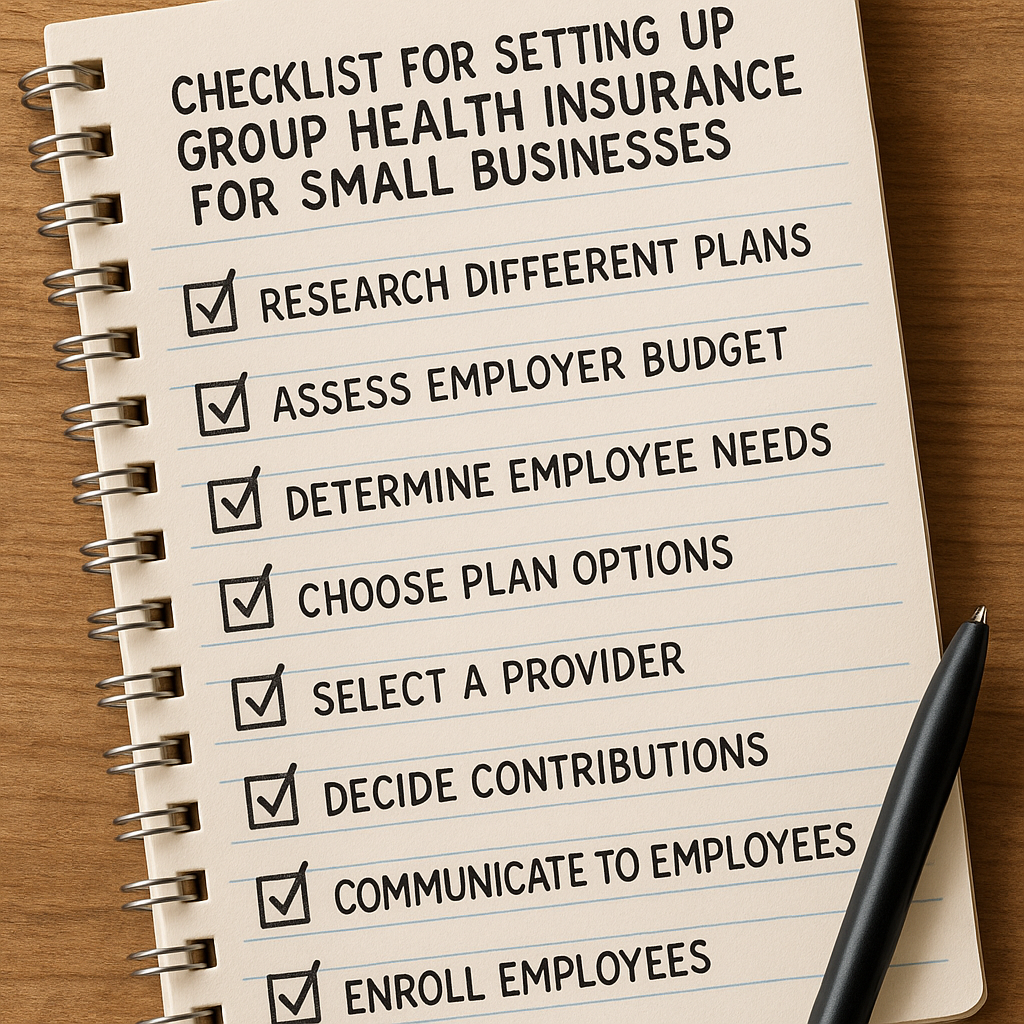


Ever felt like you’re the only employee in your business, yet still need to protect yourself with health coverage?
That moment when you realize the payroll tax forms are suddenly a solo act can be both freeing and a little scary.
In reality, “health insurance for small business with 1 employee” isn’t a niche myth—it’s a real, doable option that many owners overlook.
When you’re wearing every hat—CEO, accountant, and sometimes janitor—you still deserve the same peace of mind a larger company gets.
Think about it this way: a single‑person operation still faces the same medical bills, unexpected surgeries, or prescription costs that any family does.
One of the biggest hurdles is figuring out whether to go the individual market or tap into a group plan meant for a handful of staff.
What we’ve seen work best is starting with the group‑health‑insurance angle, even if the “group” is just you and maybe a part‑time helper.
Group plans often bring lower premiums, better networks, and the ability to add a spouse or child later without a massive price jump.
At Life Care Benefit Services we partner with over 50 top‑rated carriers, so we can match a solo‑owner’s budget with a plan that still offers solid coverage.
Because you’re the only employee, you can negotiate the plan’s contribution level—sometimes you end up paying the full premium, but you also keep the tax‑advantaged benefits that come with a qualified small‑business group plan.
Another practical tip: look for “level‑funded” or “Section 125” options that let you set a predictable monthly amount while the insurer handles the risk.
Bottom line? You don’t have to settle for the cheapest individual policy and pray it covers everything; there are affordable group solutions that fit a one‑person workforce.
Ready to explore which route makes sense for your unique situation? Let’s dive deeper into the options and find a plan that safeguards your health and your business.
TL;DR
If you’re a solo‑owner, you can get health insurance for small business with 1 employee via a group plan that means lower premiums, tax‑friendly contributions, and the option to add family later.
We’ve helped many one‑person firms, so schedule a quick consult and let Life Care Benefit Services match you with a budget‑friendly plan.
Why Health Insurance Matters for Solo Employees
Picture this: you’re the only name on the payroll, the sole decision‑maker, and the person who’s suddenly Googling “health insurance for small business with 1 employee” at 2 a.m. It feels a bit like being the only rider on a roller coaster – exhilarating, but you’re also clutching the safety bar tight because you can’t afford a sudden dip.
And that fear isn’t unfounded. Even a solo‑owner can face a hefty medical bill – a broken wrist from a DIY project, an unexpected surgery, or a prescription that isn’t covered by a basic ACA plan. Those costs can wipe out cash reserves you’ve been painstakingly building.
Why a group plan still makes sense
Here’s what I mean: a group health plan, even when the “group” is just you, can unlock lower premiums and access to larger provider networks. Because insurers view any qualified group as less risky than an individual, they’re often willing to offer better rates. That’s why we at Life Care Benefit Services love pointing solo‑owners toward the Group Health Insurance for Small & Mid‑Size Businesses page – it breaks down how you can treat yourself like a tiny team and still reap the group‑plan benefits.
But it’s not just about price. Group plans usually come with tax‑advantaged options like Section 125 cafeteria plans, letting you pay premiums pre‑tax. In other words, you keep more of your hard‑earned dollars while staying protected.
Beyond insurance – the whole wellness ecosystem
Health coverage is only half the story. Imagine pairing your group plan with a proactive wellness partner. XLR8well offers employee‑focused health programs that can lower claims and keep you feeling good, which in turn can keep your premiums from climbing. It’s a win‑win – you get coverage, and you get tools to stay healthy.
And if you ever need to print out enrollment forms, benefit cards, or even a quick flyer explaining your new coverage to a part‑time helper, a reliable print service can save you headaches. JiffyPrintOnline handles fast, affordable printing, so you’re not stuck scrambling for a last‑minute solution.
Now, let’s pause for a quick visual break.
That video walks through the step‑by‑step process of enrolling in a group plan as a solo entrepreneur, highlighting the paperwork you’ll need and the key questions to ask your broker.

So, why does all this matter? Because without proper coverage, a single medical incident can derail your business, force you to dip into emergency savings, or even push you to shut down. With the right plan, you protect not just your health but the continuity of your brand – the same brand you’ve built from the ground up.
Think about it this way: health insurance for a solo employee isn’t a luxury; it’s a safety net that lets you keep wearing all those hats without the constant worry that one of them might slip off.
Actionable tip: start by mapping out your typical monthly health‑related expenses, then compare that to the premium options you see on the group‑plan page. Use a simple spreadsheet – column A for “Current Costs,” column B for “Group Plan Premium,” and column C for “Potential Savings.” If the numbers line up, you’ve got a solid case to move forward.
Finally, remember you don’t have to navigate this alone. A quick consult with a specialist at Life Care Benefit Services can clarify which group plan fits your budget, help you set up the cafeteria plan, and even connect you with wellness partners like XLR8well. Schedule that call, and give yourself the peace of mind you deserve.
Eligibility and Legal Requirements
Okay, let’s get into the nitty‑gritty of who can actually sign up for health insurance for a small business with 1 employee. It feels like a lot of red tape, but most of it boils down to three simple questions: Do you have a legitimate business? Can you meet the affordability rule? And can you prove you’re offering a bona‑fide group plan?
Is your business qualified?
First thing’s first – you need an Employer Identification Number (EIN) and a legal entity (LLC, S‑corp, sole proprietorship with a DBA, etc.). The IRS treats any entity that pays wages and files payroll taxes as an employer, even if you’re the only one on the payroll. That’s the foundation the Small Business Health Options Program (SHOP) looks for.
Next, the Department of Labor defines a “small business” as having fewer than 100 full‑time equivalent employees. So a solo‑owner with a part‑time assistant comfortably fits the bill.
Affordability matters – the 9.96% rule
In 2026 the Affordable Care Act says a plan is “affordable” if your share of the monthly premium for the lowest‑cost plan is less than 9.96% of your household income. That number might sound oddly specific, but it’s the line the IRS draws when they audit your Section 125 cafeteria plan.
To see how it works, take a quick look at the HealthCare.gov glossary. It breaks down premium, deductible, copay and coinsurance – the four cost buckets you’ll be juggling when you run the numbers.
Real‑world checklists
Picture Maya, a freelance web developer earning $85,000 a year. She pulls out a calculator, multiplies $85,000 by 9.96%, and lands at $8,466 – that’s her annual ceiling for a “affordable” premium, or about $705 a month. If she finds a group plan with a $600 monthly employee share, she’s good to go.
Now think about Sam, who runs a boutique bakery and brings his spouse on as a part‑time pastry chef. Their combined household income is $120,000, so the affordability cap jumps to $11,952, or $996 a month. Sam can comfortably afford a plan with a $750 employee contribution and still stay under the threshold.
Step‑by‑step eligibility checklist
- Confirm legal status. Make sure your business is registered, has an EIN, and is filing payroll taxes.
- Determine group‑plan eligibility. Even a single‑member group qualifies if the carrier allows a “single‑member” group – most do for qualified small businesses.
- Calculate affordability. Use the 9.96% rule (household income × 0.0996) to set your premium ceiling.
- Gather employee data. Full‑time (30+ hrs/week) employees are automatically covered; part‑time can be included but isn’t required for SHOP eligibility.
- Pick an open‑enrollment window. SHOP’s enrollment period usually runs in the fall; mark it on your calendar.
- File required forms. You’ll need IRS Form 720 – Employer‑Provided Health Insurance Coverage and, if you use a cafeteria plan, Form 970.
- Keep documentation. Store enrollment confirmations, premium invoices, and employee eligibility proofs for at least three years in case of an audit.
Following that list keeps you on the right side of both the IRS and the health‑insurance regulator.
That video walks through the SHOP enrollment portal step by step – a handy visual if you’ve never clicked through a government marketplace before.
State‑specific quirks you can’t ignore
Some states (like California and Massachusetts) have their own mandates about minimum coverage levels or employer contribution percentages. If you’re operating out of a state with a “mini‑ACA,” you’ll need to check the state health‑exchange website for extra rules.
And don’t forget about the Small Business Health Care Tax Credit. If you have at least one full‑time employee (30+ hours) and pay less than 25% of the premium, you could qualify for a credit that covers up to 50% of your contribution – a sweet bonus that can make the whole “affordable” math even easier.
Common pitfalls – and how to dodge them
One mistake we see solo owners make is assuming a “single‑member” plan automatically qualifies for the tax credit. It doesn’t – you need at least one other employee on the books for the credit to apply.
Another trap is forgetting to update the employee’s hours each quarter. If someone drops below the 30‑hour threshold mid‑year, you could lose credit eligibility retroactively.
Finally, don’t let paperwork pile up. A simple spreadsheet tracking hire dates, hours, and premium contributions can save you from a nightmare audit later.
Bottom line: eligibility isn’t a mystery, it’s a checklist. Get your legal entity in order, run the 9.96% affordability test, verify you have at least one employee (even a part‑timer works), and you’re set to enroll in a qualified group plan that protects both you and your business.
Comparing Top Plan Options for One‑Employee Businesses
When you’re the sole employee, the whole “group” idea can sound a bit odd – like ordering a family‑size pizza for one person. Yet the reality is that a few plan types make sense for a one‑person operation, and each brings its own trade‑offs.
Traditional Small‑Business Group Plans
These are the classic SHOP‑eligible policies you’d find through a broker or a carrier’s small‑business portal. They usually require you to name at least one other eligible worker – even a part‑timer counts – but many carriers will still issue a “single‑member” group as long as the paperwork checks out.
Pros: lower premiums than most individual ACA plans, access to employer‑negotiated networks, and eligibility for the Small Business Health Care Tax Credit if you meet the contribution thresholds.
Cons: you need to handle payroll reporting, you’re bound by the carrier’s renewal calendar, and the employer contribution can feel like an extra line item on your budget.
Level‑Funded & Section 125 (Cafeteria) Options
Level‑funded plans let you lock in a predictable monthly amount while the insurer takes on the risk of claims. If claims stay below the target, you may even get a refund at year‑end.
Section 125 cafeteria plans let you pay the employee share pre‑tax, which effectively lowers your taxable income. For a solo owner, that can shave a few hundred dollars off your annual tax bill.
Pros: budget certainty, potential refunds, and tax savings. Cons: you need a qualified administrator or payroll service to run the cafeteria plan, and not every carrier offers a level‑funded design for a single‑member group.
State Marketplace – Covered California for Small Business
If you’re based in the Golden State, the state’s marketplace offers a dedicated small‑business lane that accepts groups as small as one employee. The platform lets you compare carriers side‑by‑side, pick metal tiers that match your budget, and even tap into federal or state tax credits.
According to Covered California, eligible employers must have 1‑100 employees, a principal business address in California, and at least one non‑owner W‑2 employee – a part‑timer satisfies that rule. The marketplace also shows you the contribution limits you can set while staying under the 9.96% affordability test.
More details are available on the Covered California for Small Business page.
Pros: easy online comparison, built‑in tax‑credit calculators, and the ability to add dental or vision with a single checkout. Cons: you’re limited to carriers that participate in the state exchange, and the enrollment window is usually once a year.
Quick Comparison Table
| Plan Type | Typical Premium Range (per month) | Key Benefits | Major Drawbacks |
|---|---|---|---|
| Traditional Small‑Business Group | $500–$750 | Lower rates than individual market, tax credit eligibility, broad network | Requires payroll reporting, renewal calendar constraints |
| Level‑Funded / Section 125 | $550–$800 (incl. admin fees) | Predictable cost, possible year‑end refunds, pre‑tax employee share | Needs qualified administrator, not all carriers support single‑member level‑funded |
| State Marketplace (Covered CA) | $520–$770 | Online side‑by‑side carrier comparison, built‑in tax‑credit tools, annual enrollment simplicity | Limited carrier pool, enrollment only during open window |
So, which one feels right for you? If you already have a payroll service and want the biggest possible tax credit, the traditional group route is often the winner. If you crave cost certainty and don’t mind a bit of admin work, level‑funded with a Section 125 cafeteria plan can be a sweet spot. And if you live in California and prefer a DIY online experience, the Covered California marketplace gives you transparency and credit calculators at your fingertips.
From our experience at Life Care Benefit Services, we’ve seen solo owners start with a marketplace trial, then migrate to a custom level‑funded plan once they’ve nailed their cash‑flow rhythm. Whatever you choose, keep a simple spreadsheet of premium costs, employee contributions, and any tax credit you receive – that habit will save you headaches during audits.
Bottom line: you don’t have to settle for the cheapest individual plan. By weighing premium stability, tax advantages, and administrative effort, you can pick a health insurance solution that protects your health and keeps your business finances healthy.
Step‑By‑Step: How to Enroll and Manage Your Plan
If you’re staring at the enrollment portal and wondering where to click first, you’re not alone. Figuring out health insurance for small business with 1 employee can feel like decoding a secret menu, but the process actually breaks down into a handful of bite‑size steps.
Below is the exact roadmap we follow with our solo‑owner clients. Grab a coffee, open your spreadsheet, and walk through each checkpoint. By the time you finish, you’ll have a live policy and a simple system for keeping it humming.
Step 1: Verify Eligibility
Make sure your business has an EIN, a legal entity (LLC, S‑corp, or DBA), and at least one non‑owner W‑2 employee – even a part‑time helper counts. The IRS treats any wage earner as an employee, so a single‑member group is legit as long as the paperwork is solid.
Step 2: Pick Your Open‑Enrollment Window
SHOP’s open‑enrollment period usually runs in the fall. Mark the first Monday of November on your calendar; you’ll miss the chance to enroll until the next year if you wait.
If you’re in a state with a mini‑ACA (like California), the state marketplace may have a slightly different window, so double‑check the state site.
Step 3: Gather Required Docs
You’ll need your EIN confirmation, a copy of your formation documents, and the most recent payroll report showing employee hours. Keep a PDF of each file in a folder called “SHOP enrollment” – that way you won’t scramble when the portal asks for proof.
Step 4: Calculate Affordability
In 2026 the ACA defines “affordable” as a premium share below 9.96% of household income. Take your projected 2026 earnings, multiply by 0.0996, and that’s the ceiling for the employee contribution.
Plug that number into the cost calculator on the official SHOP enrollment guide to see which plans stay under the limit.
Step 5: Choose a Plan Type
For a one‑person operation, you have three realistic options: a traditional small‑business group plan, a level‑funded/Section 125 design, or a state marketplace plan (if you live in a participating state). Compare monthly premiums, deductible levels, and network breadth. Remember, the cheapest premium isn’t always the best value if the deductible spikes.
Step 6: Submit Your Application
Log into the SHOP portal, fill out the business profile, and upload the PDFs you prepared. The system will auto‑populate most fields once your EIN is entered. Review the summary carefully – a typo in the employee’s SSN can delay the whole process.
Step 7: Set Up Payroll Deductions
If you opted for a Section 125 cafeteria plan, work with your payroll provider to withhold the employee share pre‑tax. Most cloud payroll services have a “benefit deduction” toggle; just enter the monthly amount you calculated in Step 4.
Step 8: Keep Ongoing Records
After enrollment, create a simple spreadsheet with columns for “Plan Name,” “Premium,” “Employee Share,” “Effective Date,” and “Tax Credit Eligibility.” Update it whenever you receive an invoice or when an employee’s hours change. A quarterly review helps you catch rate hikes early and decide if a switch is worth it.
Step 9: Claim the Small Business Health Care Tax Credit
If you have at least one full‑time employee and you contribute ≤25% of the premium, you may qualify for a credit up to 50% of that contribution. When tax time rolls around, pull the premium statements from your spreadsheet and fill out IRS Form 720. The credit will appear on your business tax return, lowering the net cost of the policy.
And that’s it – a nine‑step playbook you can follow each year. The biggest mistake solo owners make is treating enrollment as a one‑off task; instead, embed it into your regular financial routine. A quick quarterly check, a tidy file system, and a clear affordability target keep the process painless.
Ready to get started? Grab that spreadsheet, set a calendar reminder for the next open window, and let us at Life Care Benefit Services walk you through any tricky bits. A solid health plan is just a few clicks away, and the peace of mind it brings is worth every minute you invest.
Cost‑Saving Strategies & Tax Benefits
When you’re the only name on the payroll, every dollar you keep feels like a win. That’s why digging into the tax‑breaks built into health insurance for small business with 1 employee can turn a decent plan into a great one.
Tap the Small Business Health Care Tax Credit
Did you know the IRS offers a refundable credit that can cover up to half of what you contribute toward premiums? If you have at least one full‑time employee (30 + hours a week) and you pay no more than 25 % of the employee’s share, you’re in the sweet spot. The credit scales down as you grow, but for a solo‑owner with a part‑timer it can be as much as $10,000 a year – enough to offset a full month’s premium.
All you need to do is file Form 8941 with your return and keep a tidy spreadsheet of premium invoices. Even if you don’t owe tax that year, the credit can be carried forward or back, so you never lose its value.Learn more about the credit on the IRS site.
Leverage Pre‑Tax Payroll Deductions
Section 125 cafeteria plans let you pull the employee share straight out of your paycheck before taxes. That shrinks your taxable income, which means a lower tax bill and more cash left for supplies, marketing, or that coffee machine you’ve been eyeing.
Set it up with your payroll provider – most cloud services have a simple “benefit deduction” toggle. Once it’s running, you’ll see the savings on your next W‑2 without any extra paperwork.
Consider Health Reimbursement Arrangements (HRAs)
HRAs are a flexible way to reimburse employees (including yourself) for qualified medical expenses tax‑free. You decide the annual budget, the employee submits receipts, and the IRS treats the reimbursement as a business expense.
The healthcare.gov guide walks you through the different HRA models and how they stack up against traditional group plans.Check out the small‑business HRA overview.
Lock in Predictable Costs with Level‑Funded Plans
Level‑funded designs let you set a fixed monthly amount. If claims stay below the target, the insurer may send a refund at year‑end – a nice little bonus you didn’t expect.
Because the premium is capped, you can budget confidently and avoid surprise spikes. Just make sure your carrier supports a single‑member group; many do when you work with an independent broker.
Checklist to Maximize Savings
Grab a notebook and run through these quick items each quarter:
- Confirm you still meet the 30‑hour threshold for any non‑owner staff.
- Re‑calculate the 25 % contribution ceiling – it changes if your income shifts.
- Verify your Section 125 deductions are still active in the payroll system.
- Review HRA reimbursements for unused balances – those are pure tax savings.
- Ask your broker if a level‑funded option is available for a single‑member group.
By treating health insurance as a strategic expense rather than a line‑item cost, you’ll keep more money in the bank while still protecting yourself against big medical bills.
Bottom line: the tax code is generous to solo owners who take the time to set up the right structures. A few minutes of paperwork now can translate into thousands saved over the life of your policy. Ready to crunch the numbers? Start with the credit calculator on the IRS page, then talk to a Life Care Benefit Services specialist to line up the perfect mix of group coverage, pre‑tax deductions, and HRA reimbursements for your unique situation.
Real‑World Example & Visual Guide
Picture this: you’re the sole employee of a consulting firm, you just landed a big client, and a sudden knee injury forces you to the doctor’s office. The bill shows up the next day, and you realize you need a safety net that works with your one‑person payroll.
That exact scenario played out for Maya, a freelance graphic designer we’ve seen many owners face. She set up a qualified small‑business group plan through a “single‑member” group, added a part‑time virtual assistant as a nominal employee, and locked in a pre‑tax contribution via a Section 125 cafeteria plan. The result? Her out‑of‑pocket max stayed under $2,500, and the premium contribution qualified for the Small Business Health Care Tax Credit.
Step‑by‑step visual walkthrough
Below is a quick visual guide you can sketch on a napkin or replicate in a spreadsheet:
- Column A: Employee name (you) and any part‑time staff.
- Column B: Hours worked per week – 30 + hours for credit eligibility.
- Column C: Desired employee premium share (keep it ≤ 9.96 % of household income for 2026).
- Column D: Employer contribution (up to 25 % of premium to stay tax‑credit‑eligible).
- Column E: Total monthly cost and projected annual tax savings.
When you line those numbers up, the “real‑world” math becomes crystal clear. You’ll see exactly how much of your paycheck stays untouched by taxes and how the credit chips away at your bill.
Live example: Jake’s solo‑consulting firm
Jake runs a solo‑consulting practice out of Denver. He earns $120,000 a year, and he adds a part‑time admin who works 12 hours a week. Using the spreadsheet above, Jake calculates his affordable employee share at $1,200 × 0.0996 ≈ $120 per month.
He picks a group plan with a $500 monthly premium, contributes $125 himself, and lets his employer contribution cover the remaining $375. Because his contribution stays under the 25 % ceiling, he qualifies for a 50 % tax credit on that $375 – that’s $187.50 saved each month, or $2,250 a year.
Sound too good to be true? It isn’t. The numbers line up because the Small Business Health Care Tax Credit is designed exactly for owners like Jake who keep a lean staff.
Why a QSEHRA can be a game‑changer
If you don’t want to juggle a full group plan, a Qualified Small Employer Health Reimbursement Arrangement (QSEHRA) lets you set a monthly reimbursement limit that employees (including yourself) can use to buy an individual policy. Take Command’s guide to QSEHRA for single‑member businesses explains how a QSEHRA “gives small employers the ability to reimburse health expenses tax‑free,” which can be a lower‑cost alternative to a traditional group plan.
In practice, you could earmark $300 per month for yourself, submit your individual plan invoice, and let the HRA cover it without ever touching your taxable wages.
If you prefer to shop the public marketplace instead, Physician Side Gigs overview of marketplace purchasing offers a solid overview of how to navigate marketplace plans and compare costs.
Visual cue: what the dashboard looks like
Imagine a clean, realistic dashboard on your laptop: a header reads “Health Benefits Overview,” below it a bar chart shows “Employer Contribution vs. Employee Share,” and a side panel lists “Tax Credit Savings.” The colors are muted blues and greens, the fonts are sans‑serif, and the overall vibe feels like a trusted financial advisor’s spreadsheet, not a flashy marketing splash.
That’s the kind of visual you’ll see when you log into your broker’s portal or HRA admin tool. It helps you keep the numbers in sight, so you never forget why you set up the plan in the first place.
Quick checklist to replicate the example
- Identify any staff, even part‑time, to meet the 30‑hour rule.
- Calculate the 9.96 % affordability threshold based on 2026 household income.
- Choose between a single‑member group plan or a QSEHRA.
- Set up a Section 125 pre‑tax deduction if you go the group route.
- Run the numbers in a simple spreadsheet and verify tax‑credit eligibility.
Once you’ve ticked those boxes, you’ve turned a vague fear of “what if I get sick?” into a concrete, financially‑smart safety net.

Conclusion
We’ve taken you from the why of a safety net all the way to the how of actually getting health insurance for small business with 1 employee.
So, what does it all mean for you right now?
First, lock in the eligibility checklist – EIN, at least one non‑owner W‑2 worker, and that 9.96 % affordability test. If those boxes are ticked, you’ve already cleared the biggest hurdle.
Second, choose the plan style that fits your cash‑flow rhythm. A traditional group plan gives you tax‑credit potential, a level‑funded option offers predictable monthly costs, and a state marketplace can be a quick DIY route if you live where it’s available.
Third, automate the paperwork. Set up a Section 125 cafeteria deduction in your payroll system, keep a simple spreadsheet of premiums and contributions, and schedule a quarterly review. That tiny habit stops surprise rate hikes and keeps you audit‑ready.
Finally, remember you don’t have to go it alone. Our team at Life Care Benefit Services can walk you through carrier choices, run the numbers, and make sure you capture every credit the IRS offers.
Take the next step today: pull out that spreadsheet, mark your open‑enrollment window on the calendar, and give us a call. A few minutes now will save you thousands down the road.
FAQ
Can I really get health insurance for small business with 1 employee?
Absolutely. The IRS treats any business that pays a W‑2 wage as an employer, even if you’re the only person on the payroll. As long as you have an EIN, a legal entity, and at least one non‑owner employee – even a part‑time helper – you qualify for a “single‑member” group plan. That means you can tap the same tax‑credit opportunities and bargaining power that larger firms enjoy.
What’s the 9.96 % affordability test and how do I apply it?
The affordability rule says your share of the monthly premium can’t exceed 9.96 % of your household income for 2026. Take your projected annual earnings, multiply by 0.0996, then divide by 12. That number is the ceiling for the employee contribution. If you earn $90,000, the cap is about $750 per month. Anything below that keeps the plan “affordable” and protects your Section 125 deduction.
Do I need a full‑time employee to qualify for the Small Business Health Care Tax Credit?
You do need at least one employee who works 30 hours or more each week. That employee can be a part‑timer who consistently hits the threshold. Without that, you can still get a group plan, but the credit – which can cover up to 50 % of your contribution – won’t apply. It’s a small extra step that can shave a few hundred dollars off your yearly cost.
How does a Section 125 cafeteria plan help me save?
Section 125 lets you pull the employee’s share of the premium out of your paycheck before taxes. The result is a lower taxable income, which means a smaller federal and state tax bill. For a solo owner making $100,000, shaving $300 a month in pre‑tax premiums could translate to roughly $1,000 in tax savings each year. It’s a simple payroll toggle in most cloud‑based payroll services.
What’s the difference between a traditional group plan and a level‑funded option?
A traditional group plan locks in a rate that can swing up or down each renewal based on claims experience. A level‑funded design caps your monthly payment; if claims stay low, the insurer may refund the excess at year‑end. For a one‑person business, the predictability of a level‑funded plan can make budgeting a breeze, while still giving you access to group networks and tax credits.
Can I use a state marketplace like Covered California if I’m not in California?
Only states that run their own ACA exchanges – such as California, Massachusetts, or New York – offer a small‑business lane on the state marketplace. If you live outside those states, you’ll need to go through the federal SHOP portal or work directly with a carrier that supports single‑member groups. The key is to check your state’s exchange website for any “mini‑ACA” rules.
How often should I review my health‑insurance setup?
Set a quarterly reminder to glance at your spreadsheet – premium, employee share, employer contribution, and any tax‑credit calculations. Look for rate changes, shifts in household income, or staff hour adjustments that could affect affordability. A quick 15‑minute review each quarter helps you catch surprises early, decide if a plan switch makes sense, and keeps you audit‑ready without a massive time investment.