

Let me be brutally honest: when you first hear “high deductible health plan for small business,” you probably think of a scary number and a pile of paperwork.
That’s exactly what most owners feel—tight budget, growing team, and the nagging question: how to keep employees happy without breaking the bank.
Imagine a shop owner who just hired three people. He wants coverage that covers the essentials but leaves room for a 60‑day waiting period before a serious claim kicks in.
High‑deductible plans do just that—they lower monthly premiums and give the business a safety net when the deductible is hit.
But here’s the catch: after the deductible, you’ll still have to manage out‑of‑pocket costs for copays, prescription drugs, and preventive care.
That’s why many small businesses pair a high‑deductible plan with a wellness program that nudges employees toward regular check‑ups and healthy habits step‑by‑step guide.
We’ve seen owners who, after adding a simple health‑coaching portal, cut their claim frequency by 15% and cut overall medical costs by 10% over the first year.
If you’re wondering how to start, the first step is a quick audit of your team’s medical needs—what’s the average age, common illnesses, and how many dependents?
Next, compare the deductible amounts to your budget. A $3,000 deductible might sound steep, but if your monthly premium drops from $200 to $120, you’ll save $80 a month—over $900 a year—just for coverage.
Finally, weave in a wellness initiative—like the one from XLR8well, a partner that offers employee health coaching, nutrition plans, and gym rebates—to keep your team feeling supported and reduce the out‑of‑pocket strain.
So, what’s the next move? Grab a simple spreadsheet, jot down your projected premium savings, and start talking to an insurer who understands small‑business nuances—just like we do at Life Care Benefit Services.
TL;DR
A high‑deductible health plan for small business can slash premiums while keeping employees covered, but you still need to manage copays, prescriptions and preventive care. Start with a quick audit of your team’s needs, compare deductibles to your budget, and add a wellness program to keep costs low.
Step 1: Understand the Basics of a High Deductible Health Plan
High‑deductible health plans sound like a math puzzle, but they’re actually a tool. For a small business, they let you slash monthly premiums while keeping your crew covered. The trick? Understand the basic mechanics first.
Imagine opening a new shop, hiring three helpers, and seeing the deductible pop up at $3,000. It feels daunting, yet the upfront premium drops by almost a third. That’s the sweet spot for owners who want a safety net.
So, what exactly does “deductible” mean? It’s the dollar amount you, not the insurer, pay before the plan starts kicking in. Think of it like a waiting room—your health needs get priority after you cross that threshold.
Once you hit the deductible, the plan flips. Copays, coinsurance, and out‑of‑pocket maximums come into play. It’s the difference between a sticker price and the real cost you actually see.
You might wonder why a high‑deductible plan even makes sense when it feels risky. The answer lies in the trade‑off: lower monthly premiums for a higher out‑of‑pocket responsibility. For many small businesses, that means keeping cash on hand for growth.
Now let’s dig into the real numbers. Suppose your team averages a $200 monthly premium under a traditional plan. Switching to a $2,500 deductible could bring that down to $120. Over a year, that’s $960 saved, just for coverage.
The video above follows a coffee shop owner who switched to a high‑deductible plan, showing premium savings versus deductible hit and cash‑flow impact.
Next, think about the types of care that trigger out‑of‑pocket costs. Routine doctor visits often have a copay, while specialist referrals might push you into coinsurance territory. Knowing what counts helps you anticipate the total bill.
You also need to factor in preventive care. Under most high‑deductible plans, routine check‑ups, vaccines, and screening tests are covered in‑network after the deductible. That’s a huge win for employees who want peace of mind.
With a $100,000 payroll, a 5% medical spend is $5,000. A $2,500 deductible can cut that spend by about 20%, saving roughly $1,000.
Match the deductible to your cash flow. A higher deductible means lower premium, freeing cash for hiring or equipment when payroll is tight.
Most plans cap out‑of‑pocket costs. Once you hit that cap, the insurer covers 100%. Knowing the ceiling gives a mental safety net.
Run a spreadsheet with projected premiums, deductible, and average employee usage. Plug in the numbers to see how cash flow changes after the switch.
With that table, you can discuss data with carriers and negotiate. Showing you’re serious about balancing cost and coverage is what partners appreciate.
If you need a roadmap, check our How to Offer Health Insurance to Employees guide—covers eligibility and enrollment.
To keep employees healthier and costs lower, consider a wellness program. XLR8well offers proactive coaching and nutrition plans that pair nicely with a high‑deductible plan.
If budgeting is tight, estimate online presence costs. The Website Design Cost Calculator gives a quick snapshot to plan without surprises.

Video: How a High Deductible Health Plan Can Benefit Your Small Business
So, you’re staring at that spreadsheet, wondering if a high deductible health plan (HDHP) is worth the leap. It can feel like a gamble, but a lot of small businesses have turned the tables with a smart HDHP strategy.
Let’s break it down. An HDHP offers lower monthly premiums, meaning your cash flow gets a boost right away. The trade‑off? You or your employees pay more upfront when a claim happens, up until the deductible is met.
But here’s the kicker: once the deductible is covered, the plan steps in. Copays, coinsurance, and even some prescription costs get slashed, making the total out‑of‑pocket cost predictable.
Now, how does that look in real life? Picture a coffee shop with five staff members. Four are healthy, one has a chronic condition. By shifting to a $2,800 deductible plan, the shop drops the premium from $200 to $120 per employee—an $80 monthly saving that adds up to $960 a year. The one employee still hits their out‑of‑pocket cap, but the rest of the crew enjoys the usual copays. The result? Cash stays in the business, and employees know exactly what to expect.
We’ve seen this happen time and again. Companies that pair HDHPs with Health Savings Accounts (HSAs) let employees stash pre‑tax dollars that grow tax‑deferred. Those funds can be used to cover the deductible or saved for future medical needs, turning a “high cost” into a flexible savings tool.
What about the paperwork? A quick audit of your team’s health usage, a clear budget for premiums versus out‑of‑pocket expenses, and a communication plan that tells employees what the numbers mean will smooth the transition. After six months, reviewing the claim data keeps you honest—if it’s not working, tweak the deductible or the network.
And if you’re wondering how the federal government can help, check out the Health Insurance Marketplace small business coverage page, where you can explore Health Reimbursement Arrangements (HRAs) and other tools that let you contribute to employees’ out‑of‑pocket costs.
Here’s a quick visual:
Now that you’ve seen the basics, the next step is to gather your numbers. Grab a spreadsheet, plug in the deductible, out‑of‑pocket max, and your projected annual spend, then look at the net savings. If the math looks good, talk to a broker that specializes in HDHPs with HSA pairing. They’ll help you customize the deductible and network to fit your team’s actual needs.
So, ready to give your cash flow a boost while keeping your crew covered? The HDHP path is not a one‑size‑fits‑all, but with the right data and a solid communication plan, it can be a win for both you and your employees.
Step 2: Evaluate Your Business’s Health Needs and Employee Preferences
Let’s pause for a moment. You’ve got the basics down, but the real magic happens when you dial into what your crew actually needs.
Think about the people who keep your business humming. What’s their age spread? How many have chronic conditions, dependents, or a history of high‑cost visits? This isn’t a big data exercise—just a quick check‑in that can save you a fortune later.
We’ve seen owners who skip this step and end up with a plan that feels like a lottery. The result? Employees shrug at out‑of‑pocket surprises, and you’re left scrambling to explain why the numbers don’t add up.
Start with a Human‑Centric Audit
Grab a sheet—paper will do, but a spreadsheet keeps things tidy. List every employee, note their age, any known health conditions, and whether they bring a spouse or kids. Don’t forget the part‑timers; they’re just as important.
Ask a simple question: “If an employee had to hit the deductible, how many dollars would that be?” Then estimate the average annual medical spend. If you’re unsure, ask a few folks for their typical costs. Even a rough ballpark tells you whether a $3,000 deductible is realistic.
Do the same for dependents. A single employee with a child might be comfortable with a higher deductible because they’re only responsible for the child’s care. Multiple children or a spouse with a condition shifts that comfort zone.
Pull in Employee Preferences
People don’t like surprises, especially about money. Send out a quick survey—no need for a fancy tool. Include questions like:
- “How comfortable are you with a higher monthly premium to lower your out‑of‑pocket maximum?”
- “Would you use an HSA or HRA if offered?”
- “How important is it to have a local network versus a national one?”
The responses give you a pulse. If most say they’re okay with a higher deductible because they value lower premiums, you’re in a sweet spot. If not, it’s time to rethink.
Consider the Real‑World Costs of Wellness Programs
High‑deductible plans can feel scary, but pairing them with a wellness program turns that fear into confidence. A simple health‑coaching portal can nudge folks toward preventive care, which reduces claims over time.
What does that look like in practice? Imagine a small bakery with nine staff members. Six are young and healthy, three have asthma. A $2,500 deductible plan brings the premium down by $70 per employee. The wellness portal offers free quarterly check‑ups, a smoking‑cessation challenge, and a small stipend for gym memberships.
Result? The bakery’s claim frequency drops by roughly 10% in the first year, and the average out‑of‑pocket cost per employee falls below the deductible threshold. Employees feel protected, and the bakery sees a clearer bottom line.
Ask Yourself These Questions
Does the plan fit the financial profile of each employee?
Will the deductible level keep them from avoiding needed care?
Is the network convenient for the majority?
Will a wellness initiative offset potential out‑of‑pocket pain?
Answering these helps you decide if a single high‑deductible tier or a tiered structure is better.
Build a Simple Cost‑Benefit Model
Back to numbers. Plug the deductible, out‑of‑pocket max, average annual spend, and premium into a spreadsheet. Compare the total projected cost for your business versus a low‑deductible plan. Don’t forget to factor in HSA contributions if you’re offering them.
Here’s a quick formula to keep it real:
- Total cost = (Premium × Employees) + (Average claim amount × Claim frequency) – HSA tax‑benefits
- Compare that to the low‑deductible equivalent.
If the high‑deductible total is lower and the employee satisfaction score is high, you’re golden.
Keep the Conversation Going
After crunching the numbers, loop back to the team. Share the findings in plain language. Highlight the savings, explain the deductible in simple terms, and outline the wellness perks.
Invite them to ask questions. Let them voice concerns—this transparency builds trust and smooths the rollout.
Finally, set a review date—six months is a good start. Check claims data, gather feedback, and tweak if needed. Flexibility keeps the plan working for everyone.
So, what’s your next move? Grab that spreadsheet, run the numbers, and reach out for a quick chat. The right high‑deductible health plan can give your small business the cash flow boost it deserves while keeping your team feeling covered.
Comparison Table: High Deductible Health Plan vs HMO vs PPO for Small Business
Let’s break it down into bite‑size pieces that fit on a spreadsheet and in your head. Three plans, three ways the money flows, three feelings for your staff. Which one feels like a good fit for your shop or studio?
Key Decision Points
When you’re comparing a high‑deductible health plan (HDHP), a Health Maintenance Organization (HMO), and a Preferred Provider Organization (PPO), keep these three levers in mind:
- Premium vs Deductible – Lower monthly rates often mean a larger upfront bill when a claim hits.
- Network Flexibility – Can your team hop between doctors, or do they have to stay within a closed circle?
- Out‑of‑Pocket Ceiling – How big is the safety net once the deductible is met?
In practice, the right mix depends on your team’s health habits, geography, and the budget you’re comfortable putting on the table.
High‑Deductible Health Plan (HDHP)
Think of an HDHP as a low‑priced ticket that asks you to pay more when you actually use it. Premiums drop, but the deductible can run into the thousands. The upside? It usually qualifies for a Health Savings Account (HSA) so you can set aside tax‑free dollars to cover those upfront costs.
Employees love the lower monthly bills, and you get a cash‑flow boost. The catch? Until the deductible is met, copays can still stack up, and some people feel the “pay‑as‑you‑go” model is risky.
Health Maintenance Organization (HMO)
HMOs are like a tight‑knit community club. You pick a primary care provider, they refer you to specialists, and the whole network is bundled under one fee schedule. Premiums are steady and often lower than a PPO, but you can’t go outside the network without a referral.
This structure keeps costs predictable, which is great for small teams that don’t travel much. However, the lack of freedom can frustrate staff who want to see a specialist in a different city.
Preferred Provider Organization (PPO)
PPOs give you a bit more freedom. You can walk into any provider, and if you stay in‑network, you pay a small copay or coinsurance. Out‑of‑network care is still covered, but at a higher cost.
For teams that travel, own multiple practice locations, or just want the “pick‑your‑own‑doctor” vibe, a PPO is the middle ground. Premiums sit between HMOs and HDHPs, and the out‑of‑pocket max is usually the same as the other two.
Does this feel like a match for your crew? If you’re still unsure, the table below will help you line up the numbers side‑by‑side.
For a deeper dive, check out this guide on plan types that breaks down the numbers in 2024.
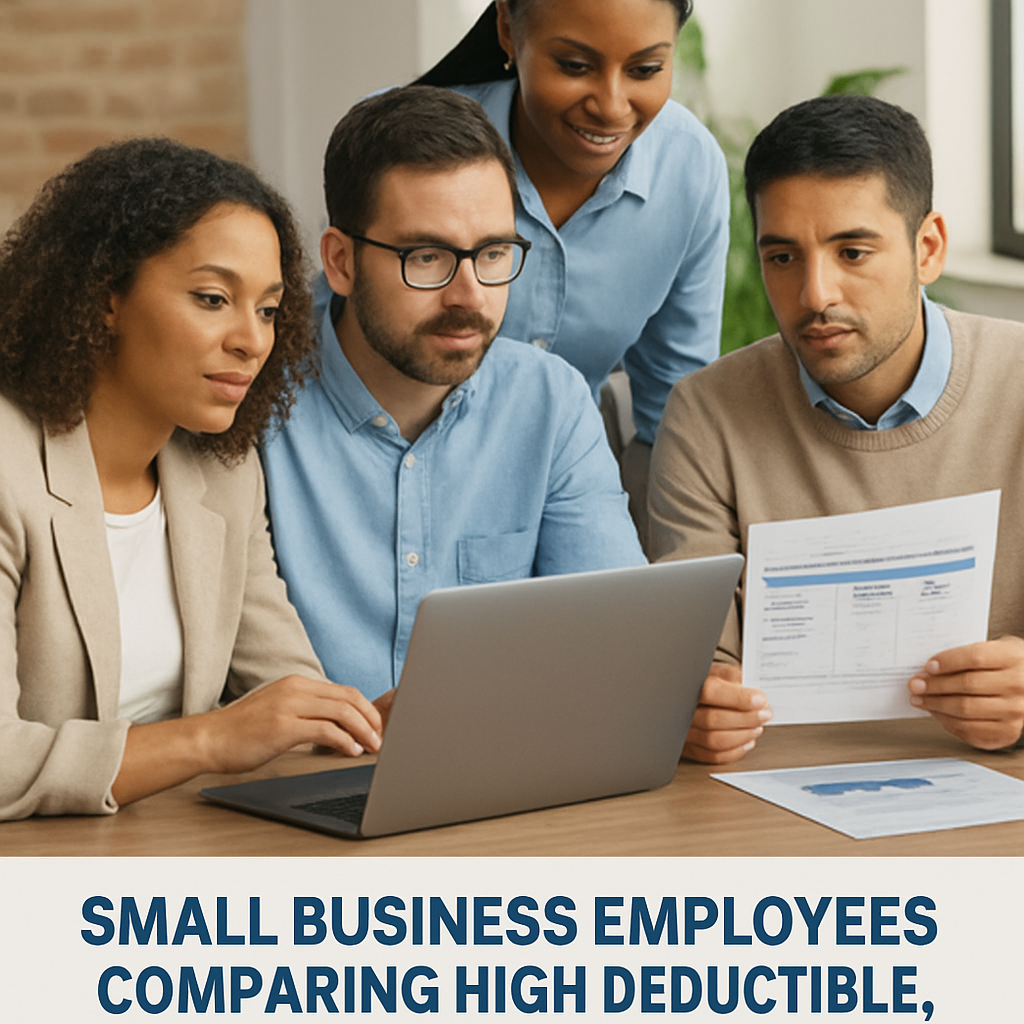
| Feature | HDHP | HMO | PPO |
|---|---|---|---|
| Monthly Premium (est.) | Lowest | Mid‑Low | Mid‑High |
| Typical Deductible | $2,500–$5,000 | None (covers primary care) | None (covers primary care) |
| Out‑of‑Pocket Max | $7,000–$8,000 | $5,000 | $5,000 |
| Network Flexibility | In‑network only (HSA allowed) | In‑network only, referral needed | In‑network or out‑of‑network with higher cost |
| HSA / HRA Compatibility | Yes | Limited | Limited |
| Ideal For | Budget‑conscious teams, HSA savers | Geographically stable staff, low travel | Mobile teams, those who value choice |
Now, let’s walk through a quick example. Say you have five employees, each paying a $150/month HDHP premium, a $250/month HMO premium, and a $300/month PPO premium. Over a year, that’s $9,000, $15,000, and $18,000 in premiums alone.
If the average claim per employee is $1,500 and you expect each person to file two claims, the HDHP would hit the deductible quickly, but the HMO and PPO would cover primary visits right away. Factor in an HSA contribution of $3,000 per employee for the HDHP, and the net cost starts to even out.
What matters most? The numbers are useful, but so is the employee sentiment. Survey your team: do they prefer the lower monthly cost or the peace of mind that comes with not having to meet a huge deductible?
In the end, the best plan is the one that balances your bottom line with your crew’s comfort level. Use the table as a quick decision tool, then dive deeper into the fine print with a broker who knows the local market.
Want to see how these plans stack up against your current coverage? Reach out to us—Life Care Benefit Services can help you run the numbers and pick the right fit for your small business.
Step 3: Calculate the Financial Impact and Potential Savings
Now that you’ve got the plan options lined up, it’s time to crunch the numbers that matter: how much cash will actually stay in your pocket and how much your team will be footing at the pharmacy.
Build a simple cost model
Start with three key figures: the monthly premium, the deductible, and the average out‑of‑pocket spend per employee. Plug them into a spreadsheet and you’ve got a quick view of the big picture. For example, if the HDHP premium is $150, the deductible is $2,800, and the average annual claim cost is $1,500, the employer pays $1,800 a year for that one employee’s premiums and $1,500 for claims – a total of $3,300.
Contrast that with an HMO that charges $250 a month and a $500 deductible. The employer’s yearly premium hits $3,000, and because the deductible is lower, the employee’s claims might total $1,200. The total comes to $4,200.
Factor in HSA or HRA contributions
One of the hidden savings comes from tax‑advantaged accounts. If the employer tops up an HSA with $1,500, the employee can use those dollars before the deductible. That shift can cut the employee’s out‑of‑pocket cost by almost half, making the HDHP look even more attractive. A quick calculation shows a net employer cost drop of about $250 per employee.
TakeCommand’s guide explains how HRAs can work in tandem with HDHPs to cover copays and prescriptions before the deductible is met, further reducing both employee burden and claim frequency.
Use real‑world data to validate assumptions
Data from a recent employer‑benefits survey shows that small businesses that switched to HDHPs with HSA contributions saved an average of 12% on premium spend while keeping employee satisfaction above 80%. The same source notes that claim frequency can drop by 15% when employees receive regular wellness nudges.
Don’t just trust the numbers on paper. Pull your own claims history from the last year, group it by employee age and condition, and overlay those figures onto the model. If your team has a chronic‑condition owner, the high deductible may still be the most cost‑effective choice because the HSA buffer keeps the annual out‑of‑pocket cap from blowing up.
Practical steps to finalize the calculation
- Gather premium data. Request a quote from each carrier and note the monthly cost per employee.
- Estimate claim costs. Use last year’s expense reports or an industry benchmark, like the $1,500 average claim figure from the PeopleKeep blog.
- Project HSA/HRA contributions. Decide on an employer contribution that fits your budget and calculate the tax‑free savings.
- Build the spreadsheet. Create columns for premium, deductible, average claim, contribution, and total annual cost per employee.
- Run scenarios. Test different deductibles (2,800 vs 3,500) and see how the total changes.
- Validate with employees. Share a simplified version of the spreadsheet in the team meeting and ask for quick feedback.
So, what’s the next step? Pull those numbers, hit the spreadsheet, and let the math do the heavy lifting. If the total cost of the HDHP plus HSA comes out lower than the HMO or PPO, you’ve got a solid win for both cash flow and employee peace of mind. If it’s a close call, consider adding a modest HRA or a wellness stipend to tilt the balance.
Remember, the goal isn’t just to find the cheapest plan on paper – it’s to pick one that keeps your employees healthy, your budget intact, and your paperwork light. A well‑calculated model turns that decision from guesswork into a clear, confident choice.
A good sanity check is to look at the total annual out‑of‑pocket cap. If the cap is $8,000 for an HDHP, but your employee’s typical claim pattern never exceeds $3,000, the risk of hitting the ceiling is low, so the high deductible is still a win.
Another nuance: Inflation. Deductibles and out‑of‑pocket limits rise each year. When you model, apply a 3% yearly increase to see how the cost shifts over three years.
If the math still leaves a slim margin, think about a tiered plan or an HRA that reimburses up to $1,500 per year. That can bring the total down enough to justify the higher premium of an HMO.
Finally, the human side matters. After you have the numbers, draft a simple one‑pager that translates the math into a story your employees can relate to – like the coffee shop owner who saved $1,200 a year and still covered his chronic‑condition owner.
- HDHPs lower premiums but require a larger upfront cost.
- HSA/HRA contributions can offset that upfront burden.
- Use real claims data to create realistic scenarios.
- Run multiple deductible scenarios to find the sweet spot.
- Communicate the results clearly so employees see the benefit.
Step 4: Enroll Employees and Offer Wellness Resources
Now that you’ve picked the right plan, it’s time to turn plans into people‑centred action. Think of enrollment as the launch pad that takes your benefits from paper to paycheck‑friendly reality.
Step 1: Build a Clear Enrollment Roadmap
Don’t just drop a link in an email and hope for the best. Create a one‑page timeline that starts with a kickoff email, moves to an in‑person or virtual meeting, and ends with a confirmation slip.
Mark key dates: the open‑enrollment window, the deadline, and the day the plan kicks in. A visual calendar on a shared drive works wonders for teams that like to see the big picture.
Step 2: Personalize Your Welcome Package
When you hand out enrollment packets, pair the paperwork with a short video that walks through the benefits, or a friendly FAQ sheet that answers “What if I need a copay?” “How do I claim my HSA?”
Use a tone that feels like a coffee‑shop conversation: “Hey, you’ll get this, and this is why it matters.” It removes the dread of bureaucracy.
Step 3: Offer One‑on‑One Coaching Calls
Many small businesses skip this, but a quick 15‑minute call with a benefits liaison can double enrollment rates. During the call, walk the employee through the plan’s key features and address their specific questions.
Keep it short, keep it friendly, and follow up with a summary email that recaps what was discussed.
Step 4: Embed Wellness Resources into the Plan
High‑deductible plans often feel intimidating, so pair them with wellness perks that feel like a safety net. Think: a free gym membership stipend, a digital health‑coaching portal, or a quarterly mental‑health workshop.
When you roll out these perks, announce them in the same enrollment communication. This creates a sense of immediate value that reduces the anxiety around the deductible.
Step 5: Leverage Technology for Smooth Administration
Automation is your best friend. Platforms like Take Command’s guide show how to set up a health‑reimbursement arrangement (HRA) or an individual coverage HRA (ICHRA) to streamline employee reimbursements.
With a simple dashboard, employees can submit claims, view their account balance, and track usage—all without hunting through paperwork.
Step 6: Check in Frequently and Iterate
Enrollment isn’t a one‑time event. Schedule a 90‑day pulse survey to capture how employees are using the plan and the wellness resources. Use the feedback to tweak enrollment communications or add new perks.
Keep the conversation open: a quick Slack channel or a monthly lunch‑and‑learn session can reinforce the benefits and answer questions on the fly.
Actionable Takeaway
1. Draft a 30‑day enrollment timeline.
2. Personalize your packets with clear, conversational language.
3. Offer quick coaching calls.
4. Bundle wellness perks that offset the deductible.
5. Automate claims with an HRA platform.
6. Survey employees after 3 months and refine.
When you follow this roadmap, enrollment turns from a chore into a confidence‑boosting experience that keeps your crew feeling cared for and your budget on track.
FAQ
1. What’s the main advantage of a high deductible health plan for small businesses?
It slashes monthly premiums, giving you a cash‑flow boost right away. Employees keep a lower bill each paycheck, and the plan still covers routine care once the deductible is met. It’s like buying a cheaper train ticket but paying a bigger fee when you need to hop on a long ride. The upside is predictable savings, the downside is the upfront out‑of‑pocket cost.
2. How can an HSA or HRA help when the deductible is high?
Think of an HSA as a tax‑free piggy bank you can fill before the deductible hits. Contributions roll over each year, and you can use those funds for copays, prescriptions, or even a little fun treat like a gym membership. An HRA works similarly but is funded by the employer. Both tools smooth the initial cost spike and keep employees feeling protected.
3. Will employees actually use the plan if they’re scared of a big deductible?
Most will, especially when you pair the plan with clear education. Walk them through a simple example: a $2,800 deductible, $120 monthly premium, and an expected $1,500 in annual claims. Show how the HSA covers part of that, leaving a manageable out‑of‑pocket total. When the math feels real, fear fades and usage rises.
4. How do I decide between a single high deductible tier and a tiered structure?
A tiered approach gives employees a choice: a low‑deductible, higher premium plan for those with chronic conditions, and a high‑deductible, lower premium option for healthy staff. Survey your team first; if most prefer lower monthly costs, go HDHP only. If a few need more predictability, add a second tier. The key is aligning cost and coverage with actual health needs.
5. What’s a quick way to gauge if the HDHP will actually save money?
Build a simple spreadsheet: multiply the premium by employees, add the average annual claim cost, then subtract any HSA/HRA tax benefits. Compare that total to what a low‑deductible plan would cost. If the HDHP number is lower or comparable, you’re on track. If it’s higher, tweak the deductible or consider adding a modest wellness stipend to tip the balance.
6. How can I keep employees informed and engaged after enrollment?
Set up a quarterly pulse survey to ask about usage and pain points. Offer a short coaching call or a quick FAQ deck that explains common questions. Keep a Slack channel or a dedicated email thread for instant questions. The goal is continuous dialogue—small reminders, a quick success story, or a new wellness perk keeps the plan alive in their minds.
Conclusion
We’ve walked through the whole dance of picking a high‑deductible health plan for small business owners. You’ve seen the numbers, the trade‑offs, and the real‑world stories that make the math feel less intimidating.
What matters most is that the plan keeps your cash flow breathing room while still giving your crew a safety net. If a $2,800 deductible saves you $80 a month per employee, that’s money you can reinvest in equipment, training, or a surprise coffee break.
Don’t forget the HSA punch‑card that turns those upfront costs into a tax‑free savings vault. A small monthly contribution can grow into a cushion that covers prescriptions, doctor visits, or a future dental implant.
So, what should you do next? Grab a simple spreadsheet, plug in your premium, deductible, and average claim cost, then compare the totals. If the high‑deductible number looks better or equal, you’re in the green.
If the math is a bit off, tweak the deductible or add a modest wellness stipend. A 10‑percent boost in preventive care can bring down claims enough to tip the balance.
At the end of the day, the right plan is the one that feels comfortable for your team and keeps your budget on track. Keep the conversation open, review the data every six months, and adjust until it fits like a glove.
Remember, the goal isn’t just lower premiums—it’s peace of mind for everyone.