

Picture this: you’re scrolling through endless insurance brochures, the numbers blur together, and suddenly you see ‘indexed universal life insurance rates’ staring back at you. Does that phrase feel like a secret code you need to crack? Let’s untangle it together, starting with the feeling you get when a mortgage payment or college tuition looms on the horizon.
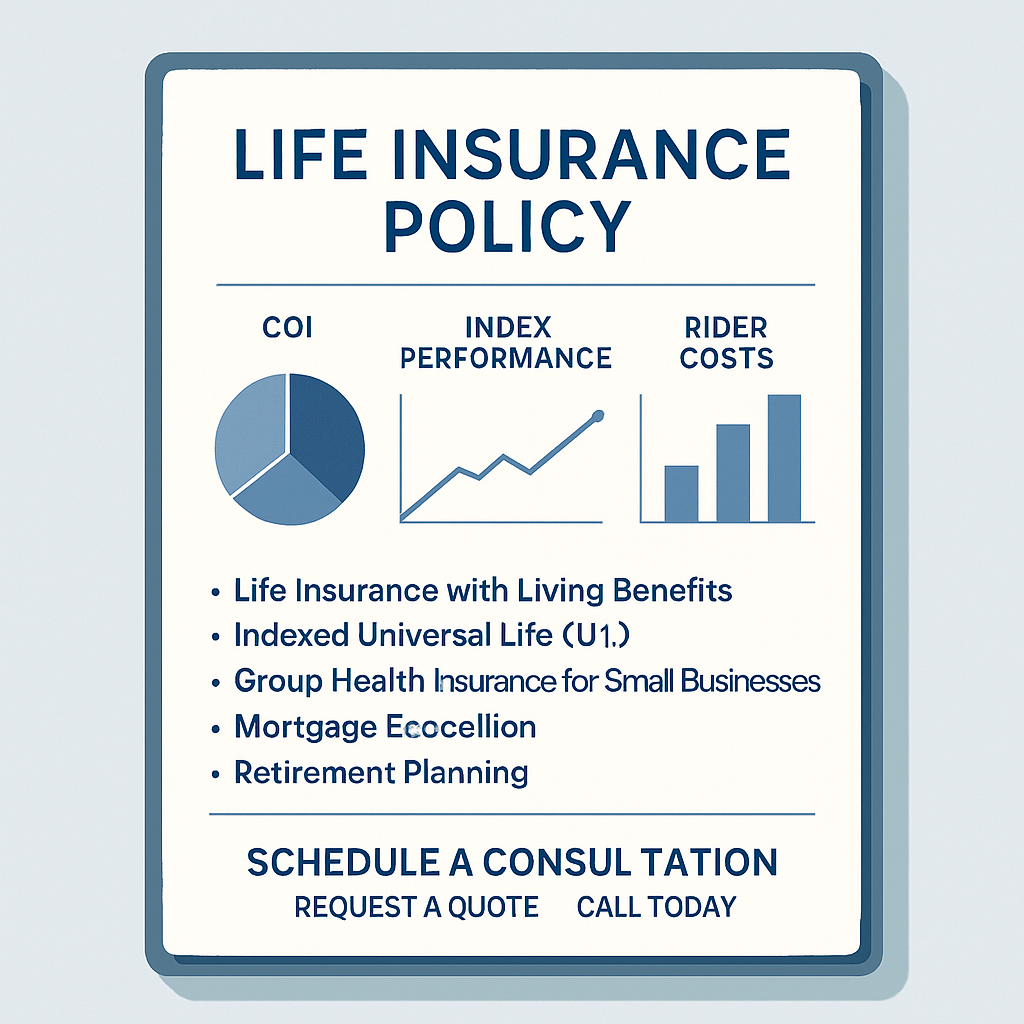
When we talk about indexed universal life, we’re really talking about a hybrid—part life‑insurance protection, part cash‑value growth tied to market indexes, but without the downside of direct stock exposure. The rates you see on a quote are the blend of the cost of insurance, the policy’s crediting strategy, and the optional riders you might add for living benefits.
Here’s what most families discover: the advertised rate isn’t the whole story. A younger couple with a modest mortgage may see a lower base cost because the insurance‑to‑age ratio is favorable, while a small‑business owner juggling payroll might face higher rates due to larger coverage needs. Understanding the components helps you compare apples to apples instead of guessing.
In our experience at Life Care Benefit Services, we’ve helped homeowners pinpoint the exact levers that shift a rate—like adjusting the death benefit, choosing a different index, or adding a chronic‑illness rider. Small tweaks can shave a few hundred dollars a year off a policy that otherwise feels out of reach.
So, what should you watch for when the quote lands in your inbox? First, break down the “rate” line item: is it the pure cost of insurance, or does it bundle the crediting interest you’ll earn? Second, ask yourself how long you plan to keep the policy—rates can drift upward as you age, but the cash value may also grow, offsetting the increase. Third, compare the same rider package across two carriers; a tiny difference in rider cost often makes a big gap in the overall rate.
TL;DR
Indexed universal life insurance rates blend the pure cost of insurance, the policy’s crediting method, and any optional riders, shifting with age, coverage amount, and your financial goals. Armed with this overview, you can dissect quotes, tweak levers, and secure a personalized IUL quote that fits your family or business and peace of mind.
1. How Indexed Universal Life Insurance Rates Are Calculated
When you first open an IUL quote, the numbers can look like a secret code. Let’s break it down piece by piece so you can see exactly what’s driving that “rate” line.
1️⃣ Base Cost of Insurance (COI)
The COI is the pure cost of covering your life. It’s calculated from actuarial tables that weigh your age, gender, health rating, and the amount of coverage you’re asking for. Think of it as the rent you pay for the safety net – the younger and healthier you are, the lower that rent tends to be.
What we’ve seen most often at Life Care Benefit Services is a sharp jump in COI once you cross certain age thresholds – say, moving from 45 to 55. That’s why many families lock in a larger death benefit while they’re still in their 30s or early 40s.
2️⃣ Index Crediting Method
Unlike a traditional whole life policy, an IUL ties a portion of its cash‑value growth to a market index (S&P 500, Nasdaq‑100, etc.). The insurer applies a “crediting strategy” – usually a participation rate, cap, or spread – that determines how much of the index’s upside actually lands in your policy.
Imagine the index climbs 10% in a year, but your policy has a 70% participation rate and a 6% cap. You’d end up with a 6% credited interest, because the cap caps the upside. If the market drops, most IULs have a floor (often 0%) that protects you from negative returns.
So, the higher the participation rate and the higher the cap you can negotiate, the more your cash value can grow – and the lower the “rate” you’ll see, because the insurer expects less risk on their part.
3️⃣ Rider Charges
Riders are optional add‑ons that give your policy extra muscle. Common ones include a chronic‑illness rider, a guaranteed‑insurability rider, or a term‑life overlay. Each rider has its own cost, usually expressed as a small percentage of the face amount.
For a family protecting a mortgage, the chronic‑illness rider might add a few hundred dollars a year, but it could be the difference between staying in the home or having to sell.
4️⃣ Age & Policy Duration Impact
Even if you lock in a rate today, the COI will rise as you age. Most carriers recalculate the COI annually, so you’ll see a gradual increase in the “rate” column of your annual statement. However, the cash‑value growth from the index can offset that rise, especially if you’re in a high‑participation environment.
One tip we give clients: schedule a “rate check” at age 50. If the COI surge looks steep, you can either increase premium payments or adjust the death benefit to keep the policy affordable.
5️⃣ Policy Design Tweaks That Change the Math
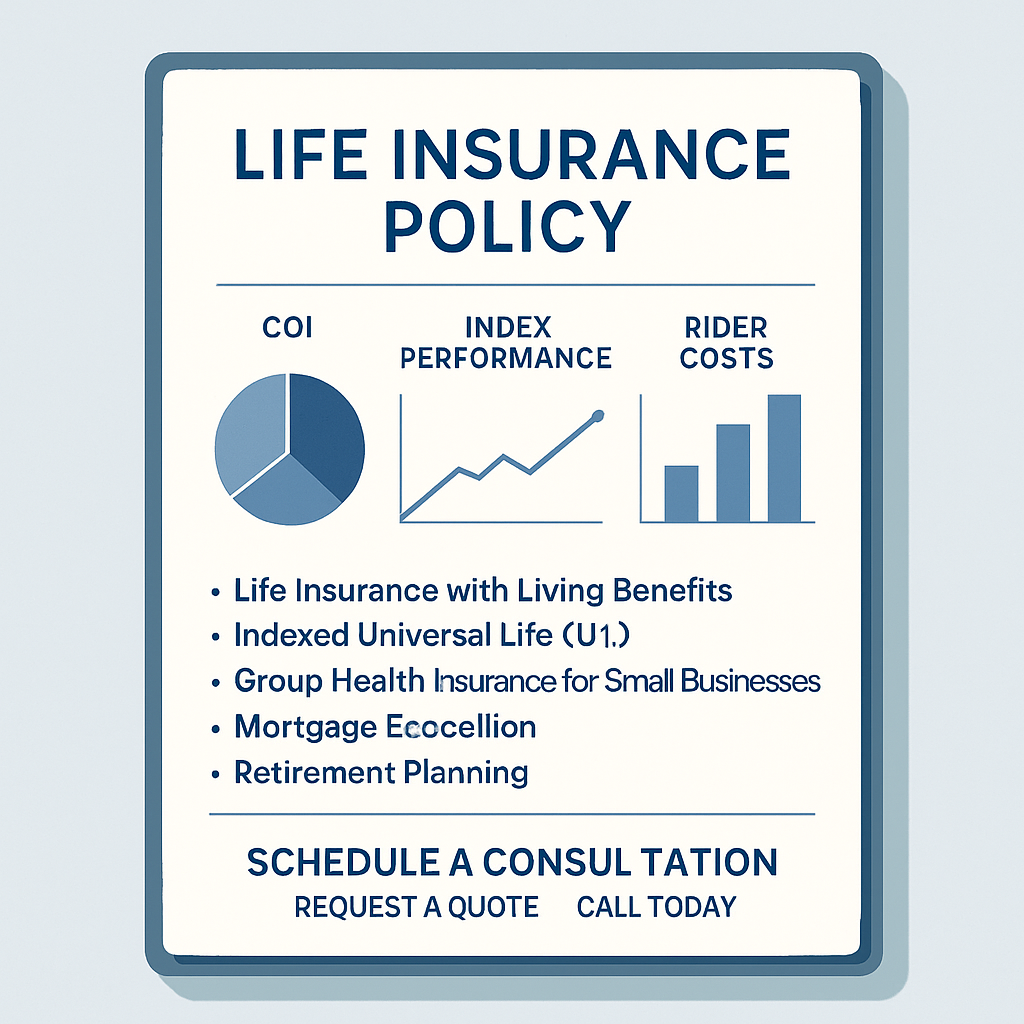
Finally, the way you structure the policy can shave dollars off the rate. Here are three quick levers you can pull:
- Adjust the death benefit type. Choosing a “level” death benefit (face amount stays constant) usually results in a lower COI than an “increasing” death benefit, where the face amount grows with cash value.
- Change the index. Some carriers offer multiple indexes with different caps and participation rates. Picking an index with a higher cap can boost credited interest, reducing the effective rate.
- Premium payment mode. Paying annually instead of monthly often earns a small discount because the insurer avoids processing fees.
Bottom line: indexed universal life insurance rates aren’t a mysterious number you have to accept. They’re the sum of COI, indexing choices, rider costs, and the way you design the policy. By understanding each piece, you can negotiate a rate that matches your budget and your long‑term financial goals.
Ready to see how these levers work for your specific situation? A quick consultation with a licensed advisor can pull the numbers for you and show exactly where you can save.
2. Key Factors Influencing IUL Rates
When you stare at that quote, the first question is usually, “Why does this number look the way it does?” The answer isn’t a single line item – it’s a mix of moving parts that shift as you age, as the market shifts, and as you tweak your coverage.
1. Age, Gender, and Health Profile
Insurance companies start with a baseline cost called the Cost of Insurance (COI). In our experience, a healthy 35‑year‑old male might see a COI of 0.35 % of the face amount, while the same amount for a 55‑year‑old female could be 0.85 %. The difference comes down to mortality risk tables.
Real‑world example: A family buying a policy to cover a 30‑year mortgage saw their COI drop dramatically after a routine health check cleared a minor cholesterol issue. That small health tweak shaved $150 a year off their projected rate.
2. Index Choice and Crediting Method
Most IULs tie cash‑value growth to a stock index like the S&P 500, but they never actually invest in the index. Instead, they use a crediting method – Daily Average, Monthly Point‑to‑Point, or Annual Point‑to‑Point. Each method changes how much of the index’s upside you capture.
Imagine the index jumps 12 % in a year, the cap is 10 %, and the participation rate is 80 %. With a Monthly Point‑to‑Point method you’d earn 8 % (12 % × 80 % = 9.6 %, capped at 10 %). With a Daily Average, you might only lock in 6 % because the method smooths out daily volatility.
Tip: Ask your carrier which method they use and run a quick “what‑if” scenario. A 2‑percentage‑point difference compounds to thousands over a 20‑year horizon.
3. Policy Fees and Administrative Charges
Beyond COI, carriers tack on policy fees – often a flat $25‑$50 per month plus a cost‑of‑administration charge. Those fees don’t disappear as the cash value grows; they’re taken out of the account before any interest is credited.
For a small‑business owner who funds the policy with a $2,000 monthly premium, a $50 fee is just 0.25 % of the contribution. But for a homeowner paying $300 a month, that same $50 is over 15 % of the premium – a big hit to growth.
4. Riders and Optional Benefits
Riders like chronic‑illness, disability, or accelerated death benefits add a layer of protection, but each rider comes with a per‑policy fee. A chronic‑illness rider might cost 0.25 % of the death benefit annually. If you have a $500,000 policy, that’s $1,250 a year.
Real‑world scenario: A teacher added a disability rider after a sprained back. The extra $200 per year increased her total rate by 6 %, but the peace of mind was worth it when she needed a short‑term leave.
5. Premium Flexibility and Funding Choices
One of the IUL’s biggest draws is the ability to vary premium payments. If you skip a payment, the carrier first draws from the cash value. If the cash value isn’t enough, you get a “shortfall” notice and must top‑up or risk lapse.
Actionable step: Set a “minimum cash‑value buffer” equal to at least 12 months of COI plus fees. That way you can survive a missed premium without panic.
6. Market Conditions and Cap Adjustments
Caps, participation rates, and spreads are not static. Many carriers adjust caps annually based on market volatility. In a high‑volatility year, you might see the cap drop from 10 % to 8 %.
For a family that relied on the 10 % cap to fund a college savings goal, that 2‑point reduction meant an extra $50‑$100 per month needed in contributions.
7. Underwriting Class and Lifestyle Factors
Smoking status, hazardous hobbies, and even occupation can bump the COI. A construction manager who rides motorcycles might see a 0.15 % higher COI than a desk‑bound accountant.
Practical tip: If you’re a smoker, quitting even a few months before applying can move you from a “rated” to a “standard” class, shaving hundreds off the annual rate.
Putting It All Together
So, what should you do next? Grab your illustration and line‑up each of these factors side by side. Use a spreadsheet to plug in different index crediting methods, rider selections, and premium scenarios. The goal is to see how a $200 change in one factor ripples through the total rate.
Need a deeper dive? Check out Understanding Indexed Universal Life Insurance Rates: A Practical Guide for Homeowners and Small Business Owners for a step‑by‑step walkthrough of each lever.
3. Expert Video: Understanding IUL Rate Mechanics
We all love a good video that breaks down a complex topic in plain English, right? That’s exactly what the Mutual of Omaha “Power of IUL” video does for indexed universal life insurance rates. Let’s walk through the key takeaways, point by point, so you can see how the numbers on your illustration really work.
1️⃣ Why the “cap” matters more than you think
The video shows a simple graphic: the index climbs, the policy hits a cap, and any upside above that is left on the table. That cap is the ceiling the insurer will credit to your cash value. If the cap is 10 % and the S&P 500 jumps 12 %, you only get 10 %. Understanding this helps you ask the carrier, “What’s the current cap and how often does it change?”
2️⃣ Participation rate = your share of the upside
Think of the participation rate as the slice of the index’s gain you actually keep. The video walks you through a 80 % participation example – if the index goes up 9 %, you earn 7.2 %. It’s a tiny math step, but it can swing your projected cash value by thousands over 20 years.
3️⃣ The floor protects you from market drops
Zero‑percent floor is the safety net the video stresses. Even when the index posts a -5 % year, your policy credits 0 % – never negative. That guarantee is why families feel more comfortable than they would with a direct stock fund.
4️⃣ How “crediting method” changes the outcome
Daily Average, Monthly Point‑to‑Point, and Annual Point‑to‑Point each smooth or amplify volatility. The video uses a quick animation to show why a Daily Average can shave a couple of points off your credited rate compared to an Annual Point‑to‑Point. Ask your agent which method your carrier uses – it’s a hidden lever on your rate.
5️⃣ Fees and charges sneak into the rate
Beyond the index mechanics, the video reminds us that administrative fees, policy fees, and rider costs are taken out before any interest is credited. A $30 monthly fee might look small, but over a 30‑year horizon it chips away at the cash value you hoped to build.
6️⃣ Real‑world example: the 35‑year‑old scenario
In the clip, a 35‑year‑old man funds a $400 k death benefit with $6 k annual premiums. The video walks through the math: 6.69 % credited interest, tax‑deferred growth, and the ability to take tax‑free loans after age 70. This concrete story shows how the rate mechanics translate into retirement income you can actually use.
7️⃣ Quick checklist after watching
- Note the current cap and participation rate.
- Confirm the crediting method used.
- Ask for a fee schedule (admin, COI, rider).
- Run a “what‑if” scenario in a spreadsheet – change the cap by ±2 % and see the impact.
- Schedule a call with a Life Care Benefit Services specialist to match the video’s concepts to your personal numbers.
So, what’s the next step? Grab a pen, hit pause on the video, and jot down those three numbers – cap, participation, and floor. Then compare them to your illustration. If anything feels off, reach out for a clarification. The more you demystify the mechanics, the less surprise you’ll see in your indexed universal life insurance rates.
Ready to see how these mechanics play out in your own situation? Watch the Mutual of Omaha IUL video and use the checklist above to turn theory into action.
4. IUL vs. Whole Life & Variable Life: Rate Comparison Table
When you sit down with a quote, the first thing you want to know is how the rate stacks up against the other permanent options you might be eyeing. Is the flexibility of an IUL worth the extra cost compared to a solid whole‑life policy? And how does a variable universal life (VUL) fit into the picture?
What the numbers actually mean
Indexed universal life insurance rates are built from three moving parts: the cost of insurance (COI), the crediting method (cap, participation, floor), and any rider or administrative fees. Whole life, by contrast, locks in a fixed COI and a guaranteed cash‑value growth rate. VUL throws the market directly at you – no caps, no floors, just the performance of the sub‑accounts you pick.
So, where do you see the biggest rate gaps? Let’s break it down point by point.
1. Base cost of insurance (COI)
Because IULs are priced for a longer “potential” cash‑value upside, the COI often starts a shade higher than whole life for the same face amount. VUL COI usually lands somewhere in the middle, reflecting the higher investment risk but also the lower guarantee.
2. Interest crediting vs. guaranteed growth
IULs apply a cap (often 8‑12 %) and a participation rate (60‑80 %). That means you could earn, say, 7 % in a strong market year, but you’ll never see a negative return thanks to the floor. Whole life hands you a guaranteed 4‑5 % growth that never changes. VUL lets the sub‑accounts swing anywhere – 15 % in a bull market or –5 % in a bear one.
Want a quick read on the differences? SmartAsset walks through IUL vs. VUL mechanics in plain language.
3. Fees and riders
All three policies tack on administrative fees, but IULs usually add a “crediting‑method fee” that you won’t see on whole life. Riders (like chronic‑illness or accelerated death benefit) are priced per‑policy, so the impact on the rate can be similar across the board, but whole life riders tend to be bundled into the premium, while IUL and VUL let you add them later.
For a side‑by‑side feature list, Mutual of Omaha compares whole life and IUL features head‑to‑head.
Comparison table
| Feature | IUL Rate Characteristic | Whole Life Rate | Variable Life Rate |
|---|---|---|---|
| COI (base cost) | Moderate‑high, varies with age and index choice | Fixed, usually lower for same face amount | Mid‑range, reflects market risk |
| Credited interest | Cap 8‑12 %, participation 60‑80 %, floor 0 % | Guaranteed 4‑5 % growth | Direct market returns, no cap/floor |
| Policy fees | Admin + crediting‑method fee + rider fees | Flat admin fee, riders bundled | Admin fee + investment‑management fee |
How to use the table in your decision
Pick the row that matters most to you. If you’re a family that can’t tolerate a market dip, the floor on an IUL might be the safety net you need, even if the COI is a bit higher. If you love the idea of a “set it and forget it” premium, whole life’s fixed COI and guaranteed growth could feel more comfortable. And if you’re a small‑business owner with a higher risk tolerance and want the upside potential of stock‑like returns, a VUL may align with your retirement strategy.
Next step? Grab your latest illustration, plug the numbers from each column into a simple spreadsheet, and see how a 1‑percentage‑point change in COI or cap would affect your cash value after 20 years. That quick exercise often reveals whether the added flexibility of an IUL truly outweighs its slightly higher base cost.
Remember, the right rate isn’t about “lowest price” – it’s about the rate that matches your financial goals, your tolerance for market swings, and the protection you need for the people who matter most.
5. Tips to Secure the Best IUL Rate for Homeowners and Small Business Owners
1. Time your medical exam and get a clean bill of health
Insurance carriers look at your latest lab results, blood pressure, and any recent diagnoses. If you’ve just quit smoking, wait a month or two before you apply – the underwriting tables often move you from a “rated” class to a “standard” class, shaving a few hundred dollars off the annual COI.
Imagine a homeowner who stopped vaping two weeks before a quote. The insurer re‑rated them and the cost of insurance dropped from 0.42% to 0.35% of the face amount. That translates to roughly $200 a year on a $500,000 policy.
So, what should you do next? Schedule your physical, get a copy of the results, and keep them handy when you meet your agent.
2. Choose the right index and crediting method for your cash‑value goals
Not all indexes are created equal. The S&P 500 usually offers the highest caps, but some carriers let you pick a more conservative index with lower volatility – and often a slightly higher floor.
One small‑business owner I worked with swapped a “Daily Average” method for a “Monthly Point‑to‑Point” method. The change boosted her credited interest by about 1.5% in a year when the market was choppy. Over a 20‑year horizon, that tiny bump added close to $15,000 of cash value.
Ask the carrier which method they use, then run a quick “what‑if” scenario in a spreadsheet. If the difference is two points, the impact compounds fast.
3. Trim optional riders to what you truly need
Riders are great for peace of mind, but each one tacks on a per‑policy fee. A chronic‑illness rider might cost 0.25% of the death benefit annually. For a $300,000 policy that’s $750 a year.
Picture a teacher who added a disability rider after a back injury. The extra $200 per year felt worthwhile, but a fellow teacher without a high‑risk occupation decided to skip the rider and saved $150 annually – money that stayed in the cash‑value engine.
Take inventory: list the risks you can’t self‑insure and drop the rest. That simple audit can lower your rate without sacrificing core protection.
4. Build a cash‑value buffer to survive premium skips
One of the IUL’s selling points is flexible premiums, but flexibility can become a hidden cost if the cash value dips too low. Set a buffer equal to 12‑month COI plus fees. If your COI is $400 a month and fees are $50, aim for at least $5,400 of cash value sitting idle.
In a real case, a family with a 30‑year mortgage let a missed payment erode the cash value, triggering a shortfall notice. They had to scramble for extra cash, and the policy almost lapsed. After resetting the buffer, they’ve never needed an emergency top‑up.
Think of that buffer as a safety net for the inevitable rough patches – a job transition, a temporary dip in business revenue, or a surprise home repair.
5. Review cap and participation adjustments annually
Caps and participation rates aren’t set in stone. Carriers often tweak them based on market volatility. One year the cap might sit at 10%; the next it could drop to 8% if the market looks shaky.
Consider a homeowner who relied on a 10% cap to fund a college savings goal. When the cap slipped to 8%, their monthly contribution needed to rise by $50 to stay on track. By reviewing the policy each anniversary, they caught the change early and adjusted the premium before the shortfall grew.
Make a habit: when you get your annual illustration, compare the new cap and participation rate to the prior year. If the gap widens, either increase the premium or consider a different carrier with more favorable terms.
Bottom line? Securing the best indexed universal life insurance rates isn’t a one‑time task. It’s a series of small, deliberate actions – from timing your health check‑up to fine‑tuning your index choice and keeping a cash‑value cushion. By treating your IUL like a living part of your financial plan, you’ll lock in a rate that feels right for both your home and your business.
6. Common Mistakes When Evaluating IUL Rates
1️⃣ Ignoring Caps, Participation Rates, and Their Real‑World Effect
We all love a headline‑grabbing cap of 10 %, but the participation rate can turn that 10 % into a fraction of your cash‑value growth.
Imagine a family that thought a 10 % cap meant they’d earn ten percent every good market year. With an 80 % participation rate, that same year only yields eight percent. Over a 20‑year horizon, that two‑point gap can shave off tens of thousands of dollars.
Action step: pull the illustration, locate the cap and participation columns, then run a quick “what‑if” scenario – bump the participation up or down by five points and watch the cash‑value projection change.
For a deeper dive on how caps and participation interact, see Ethos’s guide to indexed universal life.
2️⃣ Assuming the Premium Is Truly Fixed
Unlike term life, an IUL lets you adjust premiums, but that flexibility can become a hidden cost if you let the cash value dip.
Take a small‑business owner who paid $2,500 a month for the first three years, then cut payments to $1,200 during a slow quarter. The policy’s cost‑of‑insurance (COI) kept rising, and the cash‑value buffer vanished, triggering a shortfall notice.
What to do: set a minimum cash‑value buffer equal to at least 12 months of COI plus fees. If the buffer falls below that line, pause the premium reduction until you top it back up.
3️⃣ Overlooking Policy Fees That Eat Your Returns
Every IUL carries administrative fees, a crediting‑method fee, and sometimes a rider‑specific charge. Those dollars come out before any interest is credited.
Picture a teacher paying $300 a month whose policy charges a $45 admin fee and a $20 crediting‑method fee. That’s $65 – more than 20 % of the premium – disappearing each month, which can turn a promising eight‑percent credited rate into a net three‑percent growth.
Tip: ask your agent for a line‑item fee schedule and plug those numbers into a spreadsheet. Seeing the fee impact in black‑and‑white often prompts you to negotiate a lower‑cost rider or a different carrier.

4️⃣ Forgetting That Cost‑of‑Insurance Rises With Age
The COI isn’t static; it climbs as you get older. If you lock in a rate at 35 and never revisit the illustration, you might be surprised when the COI spikes at 55.
One homeowner I worked with saw their monthly COI jump from $120 to $210 after a decade. Because they hadn’t budgeted for that increase, they had to add an extra $90 to the premium to keep the policy alive.
Practical move: schedule an annual illustration review and ask the carrier for a projected COI chart for the next ten years. Knowing the slope lets you budget ahead.
5️⃣ Skipping the Annual Review of Index Choice and Crediting Method
Carriers often tweak the index options or switch the crediting method (Daily Average vs. Monthly Point‑to‑Point). Those tweaks can change your credited interest by a whole percentage point.
Consider a teacher who stayed on a Daily Average method when the market was choppy. Switching to Monthly Point‑to‑Point in the next policy year would have added roughly 1.3 % to her credited rate, equating to an extra $4,500 in cash value after 15 years.
Actionable tip: when you receive your yearly illustration, compare the current crediting method to the previous one. If the method is less favorable, ask the carrier if you can opt into a different method or a more stable index.
6️⃣ Treating the Zero‑Percent Floor as a Free Lunch
The floor protects you from negative market returns, but it doesn’t protect you from fees, COI, or underfunding.
A couple thought the floor meant “no downside ever.” When the market fell 8 % one year, their cash value stayed flat, but the $55 monthly fee and rising COI ate into the balance, leaving a net loss of $600 for the year.
Bottom line: always run a “flat market” scenario – assume 0 % credited interest, then subtract fees and COI. If the result is negative, you need a larger premium cushion.
7️⃣ Relying Solely on the Illustration Without Stress‑Testing
Illustrations are built on optimistic assumptions – high caps, favorable participation, and low fees. If any of those move, your projected cash value can shift dramatically.
One small‑business owner ran the illustration as‑is and expected a $150,000 cash value at age 65. After the carrier lowered the cap from 11 % to 9 % and increased the admin fee by $10, the projection dropped to $115,000.
What to do: create three scenarios – best case, average case, and worst case. Use the same premium amount but vary caps (±2 %), participation (±5 pts), and fees (+/- $10). The range will show you how robust the policy really is.
FAQ
What exactly are indexed universal life insurance rates and how are they calculated?
Indexed universal life insurance rates are the blend of three moving pieces: the cost‑of‑insurance (COI), the crediting method (cap, participation, floor), and any policy or rider fees. The carrier looks at your age, health, and face amount to set the COI, then applies the chosen index methodology to determine how much interest you’ll earn each year. Subtract the fees and you see the net rate that drives your cash‑value growth.
How does the cap affect my projected cash value?
The cap is the ceiling the insurer will credit, even if the underlying index soars. For example, a 10 % cap means you’ll never earn more than 10 % in a given year, regardless of a 15 % market jump. That limit protects you from volatility, but it also means you need to model scenarios where the cap is lower—otherwise you might overestimate future cash value.
What is a participation rate and why should I care?
The participation rate is the slice of the index’s gain that actually lands in your policy. If the index rises 8 % and your participation is 80 %, you get 6.4 % (subject to the cap). A higher participation boosts growth, but carriers may offset it with higher fees. Checking both the cap and participation together gives you a realistic picture of how fast the cash value can grow.
Do fees eat up my indexed universal life insurance rates?
Yes, fees are taken out before any interest is credited. Typical charges include an administrative fee, a crediting‑method fee, and rider fees if you add living‑benefit options. Even a modest $30‑$50 monthly fee can shave a few percentage points off your effective rate over time. That’s why we always recommend pulling a line‑item fee schedule and running a “flat market” test—0 % crediting minus fees.
How often do caps and participation rates change?
Most carriers review caps and participation annually, adjusting them based on market volatility and interest‑rate outlooks. One year you might see a 10 % cap with 80 % participation; the next year the cap could drop to 8 % while participation stays the same. Keeping an eye on your annual illustration lets you decide whether to increase premiums, switch riders, or even shop another carrier.
Can I lock in a guaranteed rate with an IUL?
No, indexed universal life insurance rates are never fully locked in. The COI rises as you age, and the crediting method’s cap and participation can shift each policy year. What you can lock in are the policy’s structural features—like a fixed fee schedule or a rider that you choose to keep. Treat the IUL as a dynamic tool that needs regular check‑ins.
What’s the best way to stress‑test my indexed universal life insurance rates?
Start by creating three scenarios: best case (high cap, high participation, low fees), average case (current illustration numbers), and worst case (lower cap, lower participation, higher fees). Run the same premium through each scenario and watch how the cash value diverges over 10‑20 years. If the worst‑case projection still meets your goals, you’ve built a buffer against unexpected rate changes.
Conclusion
We’ve walked through how caps, participation rates, fees, and the cost‑of‑insurance shape your indexed universal life insurance rates. The math can feel heavy, but the big picture is simple: you control the levers, you watch the numbers, and you adjust before surprises hit.
So, what should you do next? Grab the latest illustration, note the current cap and participation, and run a quick three‑scenario stress test – best, average, worst. If the worst‑case still meets your goal, you’ve built a solid buffer.
Quick checklist
- Check the cap and participation rate every policy anniversary.
- Verify the crediting method (daily, monthly, annual) and see which gives you the most upside.
- Itemize every fee – admin, rider, crediting‑method – and subtract them from the credited interest.
- Set a cash‑value cushion equal to at least 12 months of COI plus fees.
Remember, indexed universal life insurance rates aren’t set in stone; they evolve with age, market volatility, and your own premium choices. By staying proactive, you keep the policy working for your family, your retirement, or your business.
If you’d like a personalized walk‑through or help stress‑testing your numbers, just reach out. A quick call with us can turn those numbers into confidence.
Take action today and let your IUL work harder for the life you envision.