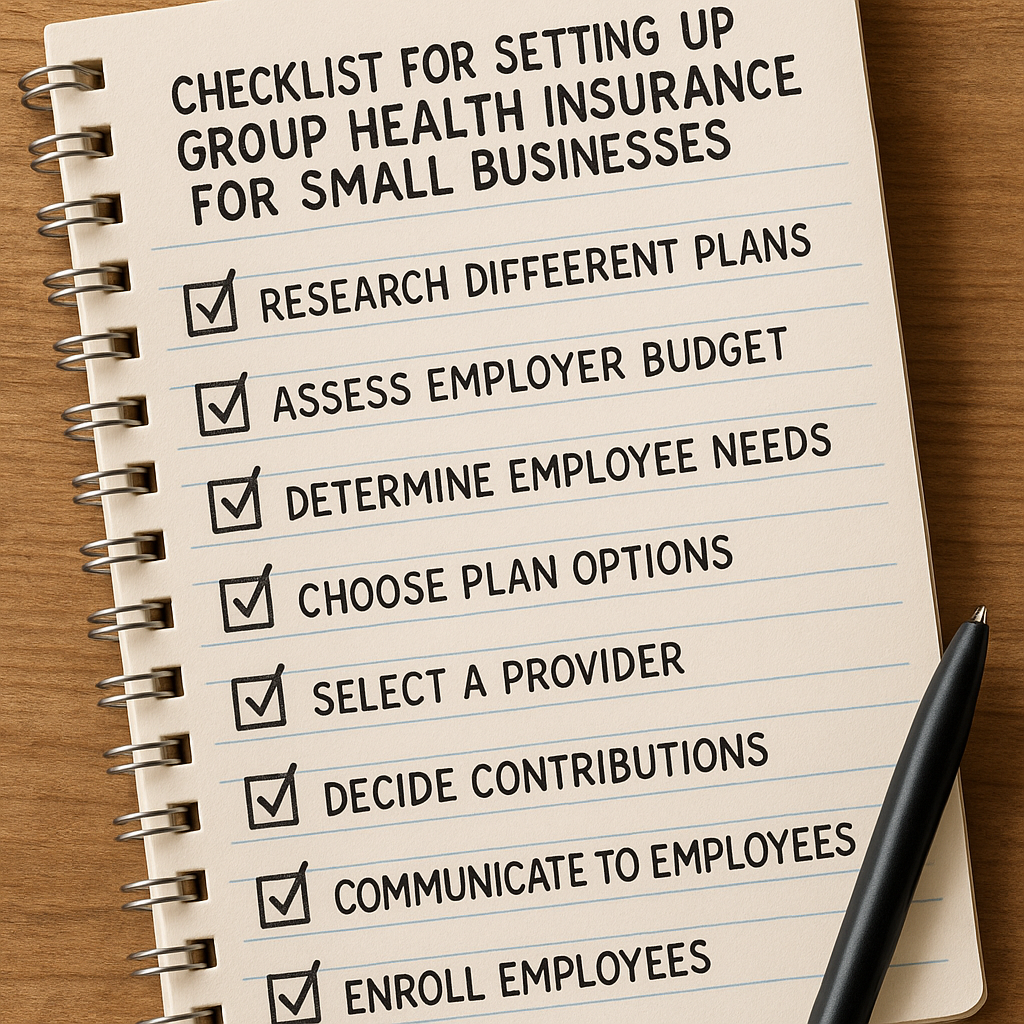


Picture this: you’ve just hired your third employee in a cozy downtown office in Sacramento, and the excitement is quickly followed by a lingering worry—how do you keep your growing team healthy without breaking the bank?
You’re not alone. Small‑business owners across California wrestle with the same dilemma, especially when the cost of individual health plans starts to outpace payroll.
That’s where group health insurance for small business california steps in, turning a daunting expense into a collective advantage. By pooling your staff into one plan, you can tap into rates that are usually reserved for much larger companies.
And the peace of mind? It’s priceless. When your team knows they have access to preventive care, routine check‑ups, and a safety net for unexpected illnesses, morale gets a natural boost.
But you might be wondering, “Will my business qualify?” In our experience, most California employers with as few as five full‑time equivalents can secure a group plan, especially when you work with an agency that knows the state’s carrier landscape.
We’ve helped dozens of boutique cafés, tech startups, and even family‑run landscaping crews navigate the paperwork, compare plan designs, and land coverage that fits both budget and benefits goals.
A quick tip: start by gathering just the basic employee data—age range, dependents, and any existing health conditions. That snapshot lets carriers draft accurate quotes in minutes, not weeks.
And remember, California has its own set of regulations, like the Cal-COBRA continuation coverage and the requirement for plans to meet the state’s minimum essential coverage standards. Ignoring those nuances can cost you time and money later.
So, what’s the next move? Take a few minutes today to reach out to a trusted broker—someone who can pull side‑by‑side comparisons and explain the fine print without the jargon.
When you lock in a group health plan, you’re not just ticking a box; you’re building a foundation that lets your business focus on growth instead of medical bills.
TL;DR
Group health insurance for small business california lets you protect your team with affordable, compliant coverage while cutting costs compared to individual plans.
Start by gathering basic employee data and partnering with a trusted broker—like Life Care Benefit Services—to get quick quotes and ensure your plan meets Cal‑COBRA and MEC rules.
Understanding Group Health Insurance Basics for Small Businesses in California
So you’ve got a growing team in the Bay Area, and the idea of offering health coverage feels both exciting and a little intimidating. Trust me, you’re not the only one juggling payroll, rent, and that ever‑present question: “How do I keep my crew healthy without blowing my budget?”
Let’s break it down step by step, so you can see exactly what “group health insurance for small business california” really means for you.
What qualifies as a “group”?
In California, you don’t need a massive corporation to get a group plan. As soon as you have five full‑time equivalent (FTE) employees, most carriers will consider you eligible. That could be five part‑time baristas who each work 20 hours a week – they count as two FTEs together.
And the good news? Once you hit that threshold, you unlock rates that are usually reserved for companies with dozens of staff.
Key California rules you can’t ignore
Two state‑specific requirements often trip up new employers: Cal‑COBRA and Minimum Essential Coverage (MEC). Cal‑COBRA extends continuation coverage beyond the federal 18‑month limit, so you need a plan that can support that extra year.
MEC simply means the plan has to cover a basic set of essential health benefits – think preventive care, emergency services, and prescription drugs. If a plan doesn’t meet MEC, you could face penalties.
Step‑by‑step: How to get started
1. Gather employee data. Age ranges, dependent counts, and any existing health conditions help carriers draft accurate quotes. A quick spreadsheet does the trick.
2. Identify your budget. Decide how much of the premium you’ll cover versus what employees will pay. Many small firms start with a 50/50 split – it feels fair and keeps costs predictable.
3. Reach out for quotes. A broker can pull side‑by‑side comparisons in minutes. They’ll ask about your FTE count, payroll frequency, and any preferred doctors.
4. Evaluate plan design. Look at deductibles, co‑pays, and out‑of‑pocket maximums. For a small team, a high‑deductible health plan (HDHP) paired with a health‑savings account (HSA) can be a tax‑efficient win.
5. Confirm compliance. Double‑check that the plan satisfies Cal‑COBRA and MEC. Your broker should provide a compliance checklist.
6. Enroll your crew. Use an online portal or paper forms – just make sure everyone signs by the enrollment deadline, usually 30 days after the plan becomes effective.
Common pitfalls and how to avoid them
One mistake we see a lot is waiting too long to collect employee data. If you wait until the last minute, carriers can only give you rough estimates, and you might end up paying more.
Another is underestimating the cost of administrative fees. Some carriers charge per‑employee fees that can add up quickly. Ask for a clear breakdown before you sign.
And don’t forget to think about future growth. If you plan to hire more staff in the next year, pick a carrier that can scale with you without a massive rate jump.
Here’s a quick tip: set up a “benefits budget” line item in your monthly cash‑flow forecast. Treat it like rent – it’s a non‑negotiable expense that protects your team and your bottom line.
Watching the video above will give you a visual walk‑through of the quote‑request process, so you can see exactly what information you’ll need at each step.
Now that you’ve got the basics, let’s talk about making the plan feel like a real perk, not a chore.
Turning coverage into culture
When you announce the new plan, frame it as an investment in your team’s well‑being. A short email that says, “We’ve secured a group health plan that covers preventive visits at no cost to you,” can boost morale instantly.
Consider hosting a brief Q&A session with the broker so employees can ask about deductibles, network doctors, and how to use an HSA. The more transparent you are, the more your crew will value the benefit.
Finally, remember that health insurance is just one piece of the puzzle. Pair it with flexible scheduling or a wellness stipend, and you’ll see higher retention and happier faces around the office.

Bottom line: group health insurance for small business california is within reach once you know the steps, the rules, and the levers you can pull to keep costs manageable. Take the first action today – pull together that employee spreadsheet and start the conversation with a broker. Your team’s health, and your peace of mind, are worth it.
Step 2: Evaluating Plan Options and Coverage Levels
Now that you’ve got a snapshot of your workforce, it’s time to stare at the actual plans and ask yourself what really matters. Do you need lower premiums, a bigger network, or more predictable out‑of‑pocket costs? The answers will steer every comparison you make.
Identify Your Priorities
Grab a whiteboard or a quick digital note and list the top three things your team cares about. For many small California shops, it looks something like:
- Affordability – keeping the employee share under $75 a month.
- Provider choice – the ability to see a local dentist in Sacramento or a specialist in San Diego.
- Comprehensive benefits – mental health, prescription drugs, and maternity coverage.
Once you have those bullets, you can start filtering out plans that don’t meet them.
Decode the Metal Tiers
Covered California for Small Business offers four metal tiers – Bronze, Silver, Gold, and Platinum – each with a different balance of premium vs. out‑of‑pocket costs. A Bronze plan might have a low monthly price but a high deductible, while Gold flips that ratio. If your team is younger and mostly healthy, a Bronze‑Silver combo could save money. If you have several employees with chronic conditions, Gold or even Platinum might actually cost less in the long run because the coinsurance is lower.
Read the official tier breakdown on the Covered California plan metal tiers page to see the exact benefit levels.
Check the Network Fit
Nothing kills morale faster than a “you’re out‑of‑network” surprise bill. Pull a quick list of the doctors, urgent‑care clinics, and hospitals your employees already trust. Then compare that list against the provider directories of the three carriers that show up in your quote spreadsheet – usually Blue Shield of California, Kaiser Permanente, and Sharp Health Plan.
If a carrier’s network skips the downtown clinic where most of your staff get their flu shots, that’s a red flag. You can also ask the carrier for a “network map” to see coverage in the neighborhoods where your employees live.
Crunch the Numbers Beyond the Premium
Side‑by‑side tables are great, but they often hide the real cost drivers. Add rows for:
- Employer contribution percentage (the minimum is 50 % for the reference tier).
- Employee out‑of‑pocket maximum – the most they’ll ever pay in a year.
- Copay vs. coinsurance – $20 per doctor visit vs. 20 % of the bill.
- Dental and vision add‑ons – many small businesses bundle these for a few extra dollars.
Then run a quick “worst‑case” scenario: assume an employee uses a preventive visit, a specialist appointment, a prescription, and hits the deductible. Compare that total across plans. The one that looks cheapest on paper might actually be the most expensive in practice.
Ask the Right Questions of Your Broker
When you’re on the phone with a broker, don’t settle for vague answers. Try these prompts:
- “If I contribute 60 % of the premium, what’s the employee’s share for a Gold plan?”
- “Do you offer a payroll‑deduction integration so we don’t have to chase payments each month?”
- “Can we lock in the contribution rate for at least two years to avoid surprise hikes?”
- “What tax credits might we qualify for under the Small Business Health Care Tax Credit?” – see the details on Covered California’s small‑business guide.
In our experience, brokers who can pull a single consolidated invoice and walk you through the tax‑credit calculator make the whole process feel like a conversation, not a spreadsheet marathon.
Take a Quick Action Checklist
Before you sign anything, run through this 5‑point checklist:
- Match the plan’s metal tier to your team’s cost‑vs‑coverage priority.
- Verify that the provider network includes the clinics your employees already use.
- Calculate the total employee cost (premium + copays + deductible) for a realistic usage scenario.
- Confirm the employer contribution meets the 50 % minimum and see if you can go higher for a better credit.
- Ask the broker for a written summary of benefits, costs, and any tax‑credit estimates.
Cross‑checking these items will give you confidence that the plan you pick truly fits your California small business, rather than just looking good on paper.
Step 3: Comparing Top Group Health Insurance Providers in California
Now that you’ve gathered the raw numbers, it’s time to actually line up the carriers side‑by‑side. This feels a bit like a grocery store showdown—except instead of choosing between almond milk and oat milk, you’re picking the plan that keeps your team healthy and your budget sane.
First, grab a fresh spreadsheet (or a coffee‑stained napkin, we won’t judge). Create columns for the basics: premium cost, employer contribution %, network reach, out‑of‑pocket max, and any special perks that matter to your crew. The goal is to see the whole picture at a glance, not get lost in a sea of fine print.
1. Start with the big players in California
According to the latest market‑share data, the top insurers that dominate the state market are UnitedHealth Group, Kaiser Permanente, and Health Net of California. They each bring something different to the table:
| Provider | Network Strength (CA counties covered) | Typical Premium* (per employee, Bronze‑Silver tier) | Notable Benefit |
|---|---|---|---|
| UnitedHealth Group | All 58 counties | $450‑$520 | Robust tele‑health platform and wellness incentives |
| Kaiser Permanente | Strong in urban & suburban areas (e.g., LA, SF, San Diego) | $430‑$500 | Integrated HMO with coordinated care and low copays |
| Health Net of California | Broad coverage, especially in Central Valley | $420‑$495 | Flexible PPO options and strong mental‑health network |
*Premium ranges are based on 2025 averages for small‑business groups with 5‑20 employees; your exact numbers will vary by age mix and plan tier.
2. Drill down to what matters for your team
Take the table and ask yourself three questions:
- Do most of my employees live in areas where a carrier’s network is thin? If yes, that provider is probably a no‑go.
- Are we looking for low‑cost premiums or low out‑of‑pocket exposure? A Bronze plan from UnitedHealth may be cheap up front but could leave a young, healthy staff with a $6,000 deductible.
- What extra perks can we actually use? Tele‑health is great if half the team works remotely; on‑site wellness programs matter if you have a physical office.
When you answer these, you’ll start to see which rows in the table line up with your priorities.
3. Real‑world snapshots
Imagine a boutique coffee shop in Sacramento with eight employees, average age 32, and a couple of part‑timers who need coverage for dependents. They tried UnitedHealth’s Bronze plan and saw premiums of $460 per head, but the out‑of‑pocket max sat at $7,500. After a year, two baristas hit that max because of dental work that wasn’t covered. Switching to Kaiser’s Silver plan raised the premium to $495, yet the out‑of‑pocket max dropped to $3,200 and the integrated mental‑health app saved the shop $200 in outside counseling fees.
On the flip side, a tech startup in San Diego with 12 full‑time engineers (average age 28) opted for Health Net’s PPO Bronze. Their premium was $425 per employee, and because most engineers already had a high deductible health plan (HDHP) through a previous gig, the lower premium made sense. The only downside? A handful of engineers complained about a limited specialist network outside the coastal metro area.
4. Actionable comparison checklist
- List the carriers you’ve received quotes from.
- Plug each carrier’s data into the table above (or your own version).
- Score each row on three criteria: cost, network fit, and value‑added benefits (0‑5 scale).
- Calculate a total score; the highest wins, but double‑check any red‑flag notes you wrote.
- Confirm the provider’s participation in California’s Small Business Health Care Tax Credit – you don’t want to miss out on potential savings.
Tip: Keep a copy of the table in a shared Google Sheet so your HR lead, accountant, and even a trusted broker can all comment in real time.
5. Leverage expert resources
Our team often points clients to a handy ranking we put together that breaks down the top five providers for 2025. It’s a quick read that adds context to the raw numbers you see in the table. Check out Top 5 Best Small Business Health Insurance Providers Ranked for 2025 for a deeper dive.
Finally, remember that the “best” provider isn’t a universal answer—it’s the one that aligns with your workforce’s geography, budget, and health priorities. Spend a little time now to compare, and you’ll avoid costly surprises later.
Step 4: Navigating Legal Requirements and Tax Benefits
Ever felt that knot in your stomach when you realize you might be missing a compliance box? You’re not alone. Many California small‑business owners stare at the same stack of paperwork, wondering which rule actually applies to their group health plan.
The good news? Most of the heavy lifting can be broken down into a handful of clear steps. Once you know the exact requirements, you can focus on the benefits—like lower taxes—rather than the headaches.
Know the federal and state laws you must follow
First, remember that any group health plan you offer is subject to both federal regulations (ERISA, ACA) and California‑specific rules (Cal‑COBRA, Minimum Essential Coverage). The U.S. Small Business Administration guide on hiring and benefits breaks down the employer‑tax obligations you’ll face, from payroll withholdings to filing quarterly reports.
In practice, that means you’ll need to:
- Collect and remit employee and employer portions of Social Security, Medicare, and federal unemployment taxes.
- Report the value of the health benefit on Form W‑2 so the IRS sees the correct taxable wages.
- Maintain records that prove you’re offering Minimum Essential Coverage, as required by the California Department of Insurance.
Skipping any of those steps can trigger penalties that quickly outweigh the cost savings of a group plan.
Check your eligibility for tax credits
California’s Covered California for Small Business program offers a tax credit that can cover up to half of your premium contributions. The credit is especially generous for businesses with fewer than 25 full‑time equivalents and an average employee wage under $67,000.
Details on the sliding‑scale credit can be found on the Covered California financial‑help page. If you qualify, you could see a 50 % reduction in your premium expense for two consecutive tax years—something that can turn a marginally affordable plan into a no‑brainer.
Create a compliance checklist (your new best friend)
Grab a notebook or a quick Google Sheet and run through this list before you sign any carrier contract:
- Verify the plan meets Minimum Essential Coverage (MEC) standards.
- Confirm Cal‑COBRA continuation coverage is included for any terminated employee.
- Ensure the carrier will provide the required Form 1095‑C to both you and your employees.
- Check that the employer contribution is at least 50 % of the premium—this is a must for the Small Business Health Care Tax Credit.
- Ask for a clear statement of how the premium will be reported on employee W‑2s.
Ticking each box gives you confidence that you won’t be hit with a surprise audit later on.
Talk to a tax pro (or your trusted broker)
Even with a solid checklist, the tax code can feel like a maze. A quick call with a CPA who knows the Small Business Health Care Tax Credit can clarify whether you’ll get the full 50 % credit or a smaller 35 % credit if you’re a tax‑exempt nonprofit.
In our experience at Life Care Benefit Services, a brief tax‑benefit review saved a boutique design studio $3,200 in their first year of coverage—money they could reinvest in new hires.
So, what’s the next move? Pull together your employee wage data, run the checklist, and schedule that tax‑advisor call. Within an hour you’ll know if you qualify for a credit, and you’ll have a concrete compliance roadmap to present to your carrier.
Remember, navigating legal requirements isn’t about adding paperwork; it’s about unlocking a tax‑saving opportunity that makes group health insurance for small business California truly affordable.

Step 5: Implementing the Plan and Communicating Benefits to Employees
Okay, you’ve finally picked a carrier and nailed down the contribution percentages. The next hurdle isn’t paperwork – it’s making sure your team actually understands what they’re getting and why it matters.
Set a clear enrollment window
We like to think of the enrollment period like a limited‑time sale. Give employees 30 days, no more, no less. Too short and you’ll get frantic last‑minute emails; too long and the momentum fizzles out. Put the start and end dates in bold on every memo, on the intranet banner, and on the lunch‑room whiteboard.
Tip: sync the window with a pay‑cycle so payroll deductions line up automatically. It saves both you and your accountant a round‑trip.
Create a one‑page benefit snapshot
People skim, not read. Summarize the plan in three bite‑size questions:
- How much will I pay each month?
- What’s covered for me and my family?
- When does coverage kick in?
Use plain language – “you’ll pay $70 a month, your kids are covered at no extra cost, and you’re protected starting the first day of the month after you enroll.”
In our experience at Life Care Benefit Services, a one‑page cheat sheet reduced HR follow‑up tickets by 40 %.
Host a live Q&A (virtual or in‑person)
Imagine you’re at a coffee shop and a teammate says, “I’m not sure what a copay is.” That’s your cue to pause the spreadsheet and explain it in plain terms. Schedule a 20‑minute session, bring a whiteboard, and invite any questions – even the “is this a thing?” kind.
Real‑world example: a boutique tech studio in San Diego ran a 15‑minute Zoom call. One employee asked about mental‑health coverage; you could point out the plan’s tele‑therapy benefit and the fact that it’s covered 100 % after the deductible. The employee later told us she booked her first session that same week.
Leverage a trusted resource for FAQs
Covered California for Small Business has a handy FAQ that walks you through common concerns – from “What is Minimum Essential Coverage?” to “How do tax credits work?” Linking directly to that page gives your team a reputable backup without you having to reinvent the wheel.
Covered California’s small‑business FAQ covers the basics and lets employees explore the details at their own pace.
Show the tax‑credit upside
Nothing gets a small‑business owner’s ears perking up like money back. If you qualify for the Small Business Health Care Tax Credit, you could see up to a 50 % reduction in premium costs for two years. Break the numbers down in a simple table:
| Scenario | Employer contribution | Potential credit |
|---|---|---|
| 5‑full‑time employees, avg. wage $48k | 60 % of premium | 50 % credit |
| 15‑full‑time employees, avg. wage $62k | 50 % of premium | 35 % credit |
Seeing the dollars on paper makes the plan feel like a win rather than a cost.
Roll out the communication plan in stages
Stage 1 – Announcement: a short email from you (the owner or HR lead) that says, “We’ve secured group health insurance. Here’s why it matters to you.” Include the enrollment window dates and a link to the one‑page snapshot.
Stage 2 – Reminder: a mid‑window nudge with a quick poll (“Did you get your enrollment form?”). Use a friendly tone – “Hey, just checking in – we don’t want you to miss out.”
Stage 3 – Last‑call: a bold subject line (“Last 24 hours to lock in your health coverage”). Add a one‑click link to the enrollment portal.
Track who’s in and who’s out
Set up a simple spreadsheet: columns for employee name, enrollment status, contribution amount, and any dependents. Color‑code green for complete, yellow for pending, red for not enrolled. Review it every Friday so you can follow up before the deadline.
If you notice a pattern – say, a handful of part‑timers consistently missing the deadline – consider a quick pulse survey to understand the barrier. Maybe they need a different plan tier or a clearer explanation.
Celebrate the launch
When the enrollment window closes, send a brief “thank you” note highlighting the participation rate (e.g., “85 % of our team signed up – great job!”). Mention the next steps, like when the first pay‑deduction hits and when the coverage starts. A small celebration, even a virtual high‑five, reinforces that you’re looking out for your people.
Bottom line: implementation is less about legal checklists and more about clear, human‑centered communication. If you keep the language simple, the timeline tight, and the support visible, your employees will feel confident in the new benefit – and you’ll avoid a mountain of HR headaches down the road.
FAQ
What is group health insurance for small business california and how does it differ from individual plans?
Group health insurance for small business california is a policy an employer purchases for all eligible staff, pooling everyone’s risk into one contract. Unlike an individual plan that you buy on your own, the group plan spreads premium costs across the workforce, often unlocking lower rates and richer benefits that single‑person policies can’t match. It also satisfies state‑mandated Minimum Essential Coverage, which protects both you and your team from compliance headaches.
How many employees do I need to qualify for a group plan in California?
The short answer: five full‑time equivalents (or the equivalent hours from part‑timers) usually qualifies a California small business for a group policy. If you have a handful of part‑time staff, just add up their hours to reach the 30‑hour weekly threshold. Some industry associations also let you join a collective group plan, which can lower the employee count needed even further.
What costs can I expect as a small business owner when offering group health insurance in California?
Costs break down into three buckets: the premium you pay as the employer, any employee share you require, and out‑of‑pocket expenses like deductibles and copays. For a typical California small team, expect to contribute at least 50 % of the premium to qualify for the Small Business Health Care Tax Credit. Premiums for a Bronze‑Silver tier usually run between $420 and $520 per employee per month, but rates vary with age mix and plan design.
Are there tax credits or incentives available for small businesses that provide group health coverage in California?
Yes – California’s Covered California for Small Business program offers a tax credit that can cover up to half of your premium contributions for two consecutive years, provided you have fewer than 25 full‑time equivalents and average wages under $67,000. To claim it, you’ll need to file Form 7205 with your quarterly payroll and keep the insurer’s 1095‑C statements. The credit drops to 35 % if you’re a nonprofit or exceed the wage threshold.
How do I choose between HMO, PPO, and high‑deductible plans for my small California team?
Choosing between an HMO, PPO, or a high‑deductible health plan (HDHP) hinges on what matters most to your crew. HMOs give you lower premiums and simpler paperwork but restrict you to in‑network doctors. PPOs let employees see any provider at a higher cost, which is handy if you have remote workers who need flexibility. An HDHP paired with an HSA works well for a younger, healthier staff because the low monthly premium is offset by tax‑free savings for future medical expenses.
What steps should I take to stay compliant with Cal‑COBRA and MEC requirements?
Staying compliant starts with the two big California rules: Cal‑COBRA continuation coverage and Minimum Essential Coverage (MEC). First, make sure your carrier will issue a 1095‑C form for each employee and that you’ve set up a clear process for former staff to elect Cal‑COBRA within 60 days of termination. Second, verify the plan’s benefit design meets MEC standards – that means covering preventive care, emergency services and essential hospital stays. A quick compliance checklist can keep you from costly penalties.
What’s the best way to communicate enrollment details to my employees and keep track of who’s signed up?
The easiest way to roll out enrollment is to create a one‑page cheat sheet that answers the three questions every employee asks: cost, coverage and start date. Distribute it via email, post it on your intranet, and follow up with a short live Q&A session. Keep a simple spreadsheet – name, status, dependents – and color‑code it so you can spot gaps at a glance. A quick reminder on day ‑ 2 of the deadline often nudges the last few hold‑outs to sign up.
Key Takeaways
Here’s what you should walk away with after all the steps we’ve covered.
Know the basics
Group health insurance for small business california lets you spread risk across your team, often lowering per‑person premiums and meeting the state’s Minimum Essential Coverage requirement.
Check the numbers
Run a quick spreadsheet that totals premium, employer contribution, and out‑of‑pocket estimates for a realistic usage scenario. If the math shows a 50 % tax credit is possible, you’re already saving big.
Pick the right plan type
Match your workforce’s needs – younger staff may favor a low‑premium Bronze or HDHP, while families with children often benefit from a Gold or HMO that covers more services up front.
Stay compliant
Make sure the carrier will issue Form 1095‑C, include Cal‑COBRA continuation coverage, and that your contribution meets the 50 % minimum for the Small Business Health Care Tax Credit.
Communicate clearly
One‑page cheat sheets, a short Q&A session, and a color‑coded enrollment tracker keep everyone on the same page and reduce last‑minute drop‑outs.
Put these five checkpoints on a wall or a shared Google Sheet, run through them before you sign a contract, and you’ll move from “I don’t know where to start” to “We have a solid, affordable group plan in place.”
Conclusion
After walking through the basics, the numbers, the plan options, the compliance maze, and the rollout steps, you probably feel a mix of relief and a little lingering “what if.” That’s normal – picking group health insurance for small business california is a big decision, but you’ve now got a clear roadmap.
Remember, the sweet spot is where your team’s needs meet a plan that keeps premiums manageable and still earns the Small Business Health Care Tax Credit. If you’ve matched the metal tier to your workforce, double‑checked the network, and set a solid enrollment window, you’re already ahead of most owners who skip those checks.
So, what’s the next move? Pull together those employee age ranges, run the quick spreadsheet one more time, and schedule a short call with a broker who can confirm the 50 % contribution requirement. In our experience, that final sanity check saves you weeks of back‑and‑forth.
And don’t forget to celebrate the small wins – a high enrollment rate, a clean compliance checklist, or that first paycheck with the new deduction. Those moments tell your team you’ve got their back.
Ready to lock in a plan that protects your people and your bottom line? Take the 15‑minute action step we’ve outlined, and you’ll be on your way to a healthier, more confident business.