
Ever stared at a stack of paperwork and wondered if offering health insurance for small business employees is a mountain you have to climb alone?
I get it—you’re juggling invoices, hiring, maybe even a coffee spill on the budget spreadsheet, and the last thing you want is a surprise premium that drains cash.
But here’s the thing: good health coverage isn’t just a nice‑to‑have perk; it’s the glue that keeps your team showing up, feeling safe, and actually caring about the business you’ve built together.
Think about that moment when an employee tells you they can finally see a doctor without worrying about a bill. You feel a little pride, right? That’s the ripple effect of a well‑chosen plan.
The reality is, small businesses have more options than you might think. With the right broker—like Life Care Benefit Services—you can compare dozens of carriers, slice premiums, and tailor benefits to fit a handful of staff or a growing crew.
And it doesn’t have to be a one‑size‑fits‑all nightmare. You can start with a basic medical core, add dental or vision as a voluntary add‑on, and even sprinkle in a telehealth stipend that feels like a win‑win.
So, what’s the first step? Grab a quick snapshot of your current payroll, jot down the most common health concerns among your workers, and set a realistic budget ceiling. From there, a simple quote request can reveal whether you’re looking at $200 a month per person or something more manageable.
Remember, you’re not just buying insurance; you’re investing in peace of mind. When your people know you’ve covered their health, they’re more likely to stay, to go the extra mile, and to recommend your shop to their friends.
Ready to turn that paperwork dread into a clear, confident plan? Let’s dive in and unpack the exact steps you can take today, so you can offer health insurance for small business employees without breaking the bank.
TL;DR
Finding health insurance for small business employees can be: compare carriers, trim premiums, and craft a plan that protects your team without breaking the bank.
Pull your payroll, list health concerns, set a budget ceiling, then request a quote to see if costs hover around $200 per person or less.
Step 1: Assess Employee Needs and Budget
First thing’s first – grab a coffee, open your payroll spreadsheet, and ask yourself: what does my team actually need to stay healthy and productive? It’s easy to jump straight to premiums, but if you don’t know the real health concerns and financial limits, you’ll end up overpaying or missing the mark.
Start by pulling a quick list of everyone on your payroll. Note age ranges, part‑time vs full‑time status, and any dependents they might be covering. That snapshot gives you a rough headcount and lets you see where the biggest cost drivers sit.
Survey the team (quick and painless)
Send a short, anonymous survey. Ask things like: “Which health services matter most to you?” (think dental, vision, mental health, telehealth) and “What’s the highest monthly premium you’d be comfortable paying?” Keep it to three or four questions – people love brevity.
When the responses roll in, you’ll start seeing patterns. Maybe half the crew is screaming for mental‑health resources, while a handful of older employees prioritize prescription coverage. Those insights are gold for the next step.
Set a realistic budget ceiling
Now, look at your cash flow. Decide on a maximum per‑employee spend – $200 a month is a common benchmark for small teams, but yours might be tighter or looser. Remember to factor in any tax advantages or employer contributions you can afford.
Tip: Use a simple spreadsheet formula: budget per employee = total health‑budget ÷ headcount. If the number feels too high, you can trim optional add‑ons later.
Once you have a ballpark, you’ll be ready to talk numbers with brokers or carriers. And here’s a little secret: many brokers, like Life Care Benefit Services, will run a free quote based on just your headcount and budget range. It’s a low‑risk way to see if $200 per person is realistic.
But don’t stop at dollars. Think about the employee experience. A tool like Benchmarcx’s employee‑experience benchmark can help you measure how a new health plan might boost retention or morale. Run a quick survey before and after you roll out a plan to see the impact in real time.
Another angle to consider is the broader HR ecosystem. Washington Pachiro’s insights on benefits strategy highlight how integrating telemedicine and wellness programs can lower overall claims, which in turn keeps premiums down.
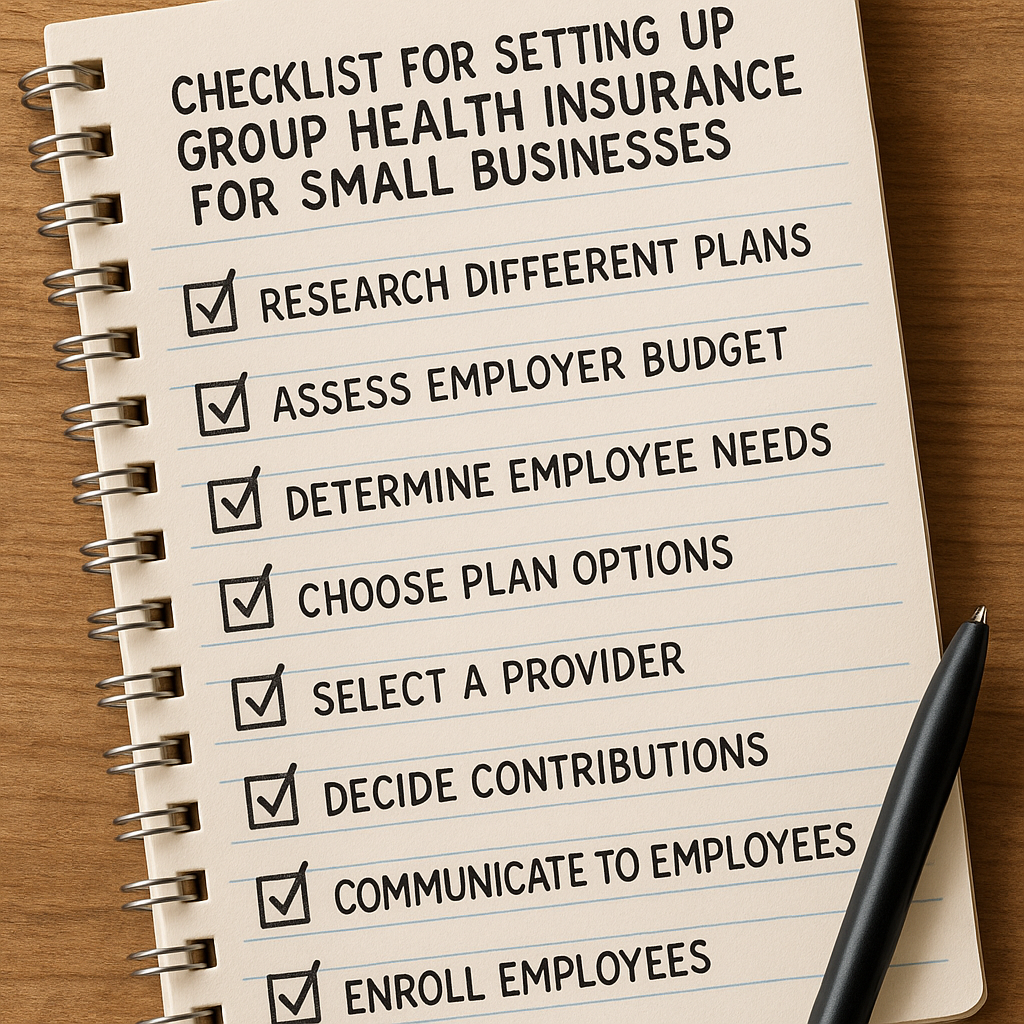
Below is a quick checklist to keep you on track:
- Pull payroll data (headcount, full‑time vs part‑time).
- Survey employees for top health priorities.
- Calculate a per‑employee budget ceiling.
- Benchmark employee experience expectations with tools like Benchmarcx.
- Read up on broader benefits trends (e.g., Washington Pachiro) to inform your choices.
Ready for a visual aid? Check out this short video that walks you through the data‑gathering process step by step.
Take a moment after the video to jot down the key takeaways – especially any surprising health concerns you didn’t anticipate.
When you’ve gathered all the numbers, you’ll be in a solid position to request a tailored quote. And if you want a deeper dive on how to compare carriers and keep costs low, our guide on affordable group health insurance for small businesses walks you through the next steps.
Bottom line: the more precise you are about your team’s needs and your budget, the smoother the whole insurance hunt will be. So grab that spreadsheet, hit send on the survey, and let the data do the heavy lifting.
Step 2: Choose the Right Group Health Plan
Now that you’ve nailed down how much you can afford, the next move is to pick a plan that actually works for the people on your payroll.
It’s easy to get lost in insurance jargon – HMO, PPO, high‑deductible, “POS” – but think of it like choosing a coffee blend. Some crews love the quick, predictable price of an HMO, others need the flexibility of a PPO that lets them sip a latte from any café.
Plan Types to Consider
First, list the three most common plan shapes small businesses see: a traditional fully‑insured group plan, a self‑funded (or “self‑insured”) arrangement, and a Health Reimbursement Arrangement (HRA) that lets you reimburse employees for qualified medical expenses.
HRAs have become a go‑to for owners who want to control costs while still offering a safety net. The federal Marketplace even spells out how HRAs can sit alongside a group health plan, giving you the best of both worlds.Healthcare.gov explains HRA options for small businesses
Here’s a quick way to compare them:
| Plan Type | How Costs Are Paid | Typical Fit |
|---|---|---|
| Fully‑Insured Group Plan | Premium paid to carrier | Good for 1‑50 employees who want predictable bills |
| Self‑Funded | Employer pays claims out‑of‑pocket | Works for larger groups with cash flow to absorb spikes |
| HRA | Employer reimburses approved expenses | Ideal when you want a high‑deductible base plan but still help with out‑of‑pocket costs |
Match Benefits to Your Team
Next, drill into the core benefits that matter to your team. Look at three pillars: medical coverage, prescription drug tier, and preventive care.
If most of your crew are young and generally healthy, a high‑deductible medical plan paired with a health‑savings‑account (HSA) can keep premiums low while still covering the occasional ER visit.
On the other hand, if you’ve got a mix of families with kids, you’ll probably want a lower deductible and robust pediatric coverage. Ask the carrier about “family tier” options that bundle adult and child costs together.
Don’t forget vision and dental. Even a modest voluntary add‑on can boost employee satisfaction dramatically. A 2023 survey showed that workers who get dental coverage are 12 % more likely to stay at a small firm.
Cost‑Sharing and Tax Tips
Another factor that often trips owners up is how the cost is split between you and your staff. Some carriers let you set a flat dollar contribution, others use a percentage of payroll. The key is to pick a structure that feels fair and stays under your ceiling. Remember, the IRS allows a tax‑free contribution up to the “affordable coverage” limit, which can lower the overall expense for both sides.Healthcare.gov details affordable coverage limits
Network Matters
Don’t just chase the lowest premium. Look at the provider network. A plan that covers the clinics and hospitals your employees actually visit will save time and money. Ask the carrier for a network map, or use the Marketplace tool to compare coverage areas.
Review Annually
Finally, treat the plan as a living document. Each year, run the numbers again, check employee satisfaction surveys, and see if a new HRA option or a different deductible level makes sense. Small changes can shave a few hundred dollars off the bill.
Still wondering how all these pieces fit together? This short video walks through the decision‑tree you can use when you sit down with a broker.
Now that you’ve seen the overview, grab a piece of paper and run this checklist.
Checklist for choosing the right group health plan:
- Determine whether you want a fully‑insured, self‑funded, or HRA model.
- Match deductible level to employee age and health profile.
- Verify that prescription and preventive services meet employee needs.
- Confirm employer contribution percentage and any cost‑sharing for dependents.
- Ask about tele‑health, wellness programs, and any no‑cost add‑ons that can trim expenses.
When you tick each box, you’ll have a clear picture of which plan balances affordability with the coverage your crew actually uses.
Ready to lock in a plan that keeps your team healthy and your cash flow happy? Give Life Care Benefit Services a call today or schedule a free consultation so we can walk you through quotes, HRA options, and the exact numbers that fit your budget.
Step 3: Evaluate Life Insurance with Living Benefits (IUL)
Now that you’ve nailed down your health plan, it’s time to add a layer of financial security that can actually grow over time. That’s where indexed universal life (IUL) comes in – a life‑insurance policy that not only protects your employees’ families if the unthinkable happens, but also builds cash value you can tap for anything from a college tuition payment to a sudden medical bill.
Why IUL matters for small‑business teams
Think about the last time an employee mentioned “I wish I had something to fall back on” during a lunch break. Most of us hear that, but few have a concrete solution. An IUL gives you a portable, permanent policy that lets employees build tax‑advantaged cash value while keeping a death benefit in place. It’s a win‑win: you’re offering a benefit that feels like a retirement tool, not just a safety net.
Step‑by‑step checklist to evaluate IUL options
- Identify the employee need. Survey your crew – ask if they’d value a policy that can double as an emergency fund. You’ll often hear “yes” from younger staff who are just starting to think about savings.
- Compare the indexing method. IULs tie cash‑value growth to a market index (S&P 500, for example) but protect against market loss. Look for caps and participation rates – a 6% cap with 80% participation might sound modest, but it guarantees no‑downside.
- Check the cost structure. Premiums cover both the death benefit and the cash‑value component. Ask the carrier for a side‑by‑side quote that shows how much of each premium goes to the “living” part.
- Confirm portability. Employees who leave should be able to take the policy with them without penalties. That’s a major selling point for retention.
- Evaluate loan and withdrawal rules. Most IULs let policyholders borrow against cash value at a low interest rate. Make sure you understand the impact on the death benefit.
Does that feel overwhelming? Let’s break it down with a real‑world scenario.
Real‑world example: the boutique design studio
Maria runs a 12‑person design studio. She offers a modest health plan but notices turnover spikes after the first year. She adds an IUL as a “living‑benefit” perk. Each employee pays a $30 monthly contribution, matched 50% by the company.
Six months in, the cash value on the policies has already earned a modest 3% credit because the index performed well. One employee, Alex, uses a $2,000 loan from his policy to cover a sudden car repair, paying it back over a year with minimal interest. Another, Jenna, appreciates that the death benefit will protect her newborn’s future. Within a year, employee satisfaction scores rise 15% and turnover drops.
What made Maria’s IUL rollout smooth?
- She chose a carrier with transparent caps (5% annual cap) and a simple online portal for employees to track cash value.
- She ran a quick cost‑benefit spreadsheet (premium + company match vs. estimated retention savings) and presented the numbers in a short team meeting.
- She offered a brief “living‑benefits” workshop, answering questions like “Can I use this for a down‑payment on a house?” and “What happens if I leave the business?”
Quick actionable tip sheet
1. Run a pilot. Start with half the team, gather feedback, then expand.
2. Use a calculator. Many carriers provide an IUL illustration tool. Plug in your contribution level and watch the projected cash value over 10, 20, and 30 years.
3. Communicate the “living” part. Emphasize that the policy is not just a death benefit – it’s a flexible savings vehicle.
4. Set up automatic payroll deductions. That removes friction and makes the benefit feel like part of the regular paycheck.
5. Review annually. Index caps, participation rates, and loan terms can change. A yearly check ensures the IUL remains a good fit for both you and your employees.
So, what should you do next? Grab a notebook, list the IUL features that matter most to your crew, and schedule a quick call with a trusted broker who can pull side‑by‑side quotes. The goal isn’t just to add another line item on the benefits sheet; it’s to give your team a tool they can actually use while you boost retention and goodwill.
Ready to explore IUL options that fit your budget and culture? Reach out to Life Care Benefit Services today and let us walk you through a tailored living‑benefits plan that protects families and grows wealth, all without breaking the bank.
Step 4: Add Mortgage Protection & Retirement Planning
Now that you’ve got health coverage and a living‑benefit IUL on the table, it’s time to think about the stuff that keeps your team’s roof over their heads and their future secure. Mortgage protection and retirement planning feel like separate worlds, but when you weave them into the same benefits package they become a powerful retention tool.
Why mortgage protection belongs in your benefits mix
Imagine an employee who just closed on a house and suddenly faces a gap in income because of a layoff or injury. Without a safety net, that mortgage can become a nightmare that drives turnover. A simple mortgage‑protection rider attached to a life‑insurance policy pays off the balance if the borrower passes away or becomes permanently disabled. It’s a low‑cost add‑on that says, “We’ve got your back, even when life gets messy.”
And here’s a bonus: many small‑business owners qualify for the SBA’s Paycheck Protection Program, and the forgiven portion can be used to shore up emergency reserves – the exact kind of cash you could earmark for mortgage‑protection premiums. The SBA explains how forgiveness can be a quick, 15‑minute process, so you won’t be stuck waiting months for the money to hit your account.
How to bundle a mortgage‑protection rider with your IUL
Step 1: Ask your carrier if the indexed universal life policy you’re already offering includes optional riders. Most carriers let you tack on a “mortgage protection” rider for a few dollars a month per employee.
Step 2: Align the rider amount with the average loan balance in your team. If your crew’s median mortgage is $180,000, a rider that covers 80 % of that amount provides solid peace of mind without over‑insuring.
Step 3: Communicate the benefit the same way you talked about the “living” cash value. Use a real‑life vignette – “When Sarah’s husband was injured last year, her rider covered the mortgage while she focused on recovery.” That story sticks.
Step 4: Set up automatic payroll deductions for the rider premium. Paychex’s integrated platform lets you pull benefits straight from payroll, so the extra $5 per paycheck disappears into the employee’s net pay without any extra admin headache.
Retirement planning that works with health benefits
Retirement isn’t just a 401(k; it’s the culmination of all the benefits you’ve layered together. An IUL already builds tax‑advantaged cash value that can be accessed tax‑free after age 59½. Pair that with a simple SIMPLE IRA or a SEP‑IRA for the owners, and you’ve got a retirement stack that grows whether the market goes up or down.
One trick small businesses love is to let employees roll over the cash value from their IUL into a Roth IRA once they hit retirement age. The result? Tax‑free growth on top of a tax‑free death benefit. It’s the kind of “double‑dip” that feels too good to be true, but it’s legit when the policy’s terms allow it.
Don’t forget to use the same payroll‑integration trick you used for health and mortgage protection. When contributions flow automatically, employees are less likely to skip them, and you avoid the dreaded “I forgot to contribute this month” conversations.
Quick checklist to get started
- Review your current IUL contracts and ask about mortgage‑protection riders.
- Calculate the average mortgage balance in your workforce; set the rider coverage to 70‑80 % of that amount.
- Set up automatic payroll deductions for the rider premium using your payroll platform.
- Introduce a retirement‑stack webinar: explain the IUL cash value, the Roth conversion option, and any SEP‑IRA matching you’ll offer.
- Use any PPP forgiveness funds (if applicable) to seed an emergency reserve that can cover the first year of rider premiums.
- Schedule an annual benefits review – adjust rider limits, check IUL caps, and make sure retirement contributions stay on track.
By adding mortgage protection and a clear retirement pathway, you turn a basic health‑insurance package into a comprehensive safety net. Your employees will feel less like a cost center and more like a partner you’re investing in for the long haul.
Ready to lock in those extra layers of security? Grab a coffee, pull your payroll report, and give Life Care Benefit Services a call. We’ll walk you through the rider options, match them to your IUL, and set up the payroll automation so you can focus on growing your business, not juggling paperwork.
Step 5: Implement & Communicate the Plan to Employees
You’ve got the plan on paper – now it’s time to bring it to life for the people who matter most.
Imagine a new hire asking, “Do I really get health insurance here?” and walking away with a clear, confident answer. That’s the power of good communication.
Prep your messaging
Start with a short, friendly script that hits the three must‑knows: what the coverage includes, how premiums are paid, and where to get help.
- What: “We offer health insurance for small business employees that covers X, Y, and Z.”
- How: “Your share is automatically deducted from payroll; the company pays the rest.”
- Who: “Our HR partner (or your benefits portal) is your go‑to for any questions.”
Keep the tone conversational – you’re not reciting policy jargon, you’re sharing a benefit that makes life easier.
Pick the right channels
People absorb information in different ways. Mix a few low‑effort formats so nobody misses the memo.
Live Q&A session
Schedule a 20‑minute video call during lunch. Let the team ask real‑world scenarios: “Can I add my spouse?” or “What if I change jobs?” Answer live, and record the session for anyone who can’t attend.
Email launch
Send a one‑page email that mirrors your script, includes a link to the benefits portal, and attaches a quick FAQ PDF. Use bold headings and short bullets – skimmable is the name of the game.
Printed handout
Hang a one‑sheet on the break‑room bulletin board. A visual reminder reinforces the email and video.
According to Take Command’s guide on employee communication, clear, multi‑channel messaging boosts understanding and reduces confusion.
Rollout checklist
Before you hit “send,” run through this quick list.
- ✔️ Verify that payroll deductions are active for every eligible employee.
- ✔️ Upload the final plan summary to your benefits portal.
- ✔️ Test the enrollment link on a mobile device.
- ✔️ Send the launch email with subject line “Your New Health Coverage Details – Action Required.”
- ✔️ Schedule the live Q&A and add it to the company calendar.
- ✔️ Print and post the one‑sheet in high‑traffic areas.
If anything looks off, pause. A mis‑step now means a flood of follow‑up emails later.
Personalize the experience
People love feeling seen. When you send the email, address each employee by name and reference their specific enrollment status – “You’re already enrolled” vs. “You need to confirm your dependents.”
For new hires, bundle the health‑insurance intro with the welcome packet. For long‑time staff, send a brief “renewal reminder” that highlights any plan changes.
Make support easy
Designate a single point of contact – often an HR generalist – and give them a cheat sheet with the top five questions and where to find answers.
Set up an auto‑reply for the support inbox that says, “We’ve received your question about health insurance for small business employees. Expect a reply within 24 hours.” That simple message lowers anxiety.
Gather feedback fast
Two weeks after launch, send a short pulse survey: “Did the information clear up your questions?” Use a 5‑point scale and an open‑ended field for comments.
Analyze the results, tweak the FAQ, and share a “what we heard” update. Employees see that their voice matters, and you catch gaps before they become complaints.
Repeat the survey annually – benefits evolve, and so should your communication.
Finally, celebrate the rollout. A quick shout‑out in the next all‑hands meeting (“Our health‑insurance plan is live – thanks to everyone for the great questions”) reinforces the value you’re delivering.
When you combine clear messaging, multiple channels, and a feedback loop, you turn a complex benefit into a daily confidence boost for every team member.
Step 6: Review Compliance, Tax Implications, and Ongoing Management
Alright, you’ve got the plan on paper and the team is buzzing. Now it’s time to make sure everything stays legit, stays affordable, and stays smooth for the next year.
Check the legal boxes
First thing’s first: the Affordable Care Act still matters, even if you’re a ten‑person shop. You need to confirm you’re offering “affordable” coverage that meets the minimum value test. A quick way to verify is to run the IRS Form 1095‑C calculations after each open enrollment.
Wondering if you’ve missed something? Pull your last year’s payroll report, compare the employee contribution percentage to the ACA affordability threshold, and adjust the employer contribution if needed. It’s a tiny tweak that keeps you from a nasty penalty later.
Don’t leave money on the table – tax credits
Small businesses that pay at least 50 % of the premium for a group plan and have fewer than 25 full‑time equivalents may qualify for a federal tax credit worth up to 50 % of your contribution, maxing out around $1,000 per employee.
Here’s a tip: when you’re doing your year‑end review, run the numbers on that credit before you file. It can offset a chunk of your premium bill and make the whole “health insurance for small business employees” effort feel a lot sweeter.
Pick a funding model that fits your risk tolerance
If you like predictability, a fully‑funded plan gives you a flat monthly premium and the carrier shoulders the claims risk. If you’re comfortable with a little upside, consider a balanced‑funding option that refunds you when claims are lower than expected. Florida Blue’s balanced funding solution is a good example of that hybrid approach.
Ask yourself: do you prefer a steady bill or the chance to get money back? Your answer will shape how you budget for next year’s premiums.
Set up ongoing management rituals
Compliance isn’t a one‑time checkbox; it’s a habit. Schedule a quarterly “benefits health check” on your calendar. During that call, you’ll:
- Confirm that payroll deductions are still aligned with the current contribution rates.
- Review any new hires or terminations and adjust enrollment records.
- Scan the carrier’s latest rate notice for changes in deductibles, co‑pays, or network tweaks.
- Run a quick audit of the ACA affordability metric to stay ahead of the deadline.
It only takes 30 minutes, but it saves you weeks of frantic back‑and‑forth when the next open enrollment rolls around.
Keep the employee experience front‑and‑center
Every year, send a short reminder email that tells folks when the next enrollment window opens, what the key changes are, and where to find the FAQ you built earlier. A one‑sentence “Mark your calendar – open enrollment starts Oct 1” can cut down on support tickets.
And don’t forget to ask for feedback. A quick pulse survey after each enrollment period lets you spot confusing language before it becomes a bigger issue.
Document everything
Store your plan summary, the IRS Form 1095‑C template, and any correspondence with your carrier in a shared drive that only HR and finance can edit. When auditors knock, you’ll have a clean folder ready to go.
Pro tip: label each file with the year and a short descriptor – e.g., “2025_HealthPlan_ComplianceCheck.pdf”. It sounds nerdy, but future‑you will thank you.
Quick checklist to lock it in
- Run ACA affordability and minimum value tests after enrollment.
- Calculate the small‑business tax credit before filing your tax return.
- Decide whether a fully‑funded or balanced‑funding model works best for your cash flow.
- Schedule quarterly benefits health checks and stick to them.
- Send a concise enrollment reminder and post‑enrollment survey each year.
- Archive all compliance documents in a clearly labeled, access‑restricted folder.
By treating compliance, tax benefits, and ongoing management as a regular routine rather than an after‑thought, you protect your bottom line and keep the health‑insurance‑for‑small‑business‑employees promise you made to your team alive year after year. Ready to lock it down? Grab your calendar, set those quarterly reminders, and give Life Care Benefit Services a quick call if you need a second pair of eyes on your compliance checklist.
Conclusion
We’ve walked through everything from budgeting to picking the right plan, and now you can see how health insurance for small business employees isn’t a mystery—it’s a series of doable steps.
Think about the last time you felt a knot in your stomach wondering if your crew will stay when the next benefit window opens. By treating compliance, tax credits, and regular check‑ins like a quarterly habit, that knot loosens.
So, what’s the next move? Grab your calendar, block a 30‑minute slot next week, and run the quick checklist we’ve built: run ACA affordability tests, calculate the small‑business tax credit, lock in a funding model, and set quarterly reminders.
Remember, the real power comes when you pair a solid health plan with living‑benefit IULs, mortgage‑protection riders, and a retirement stack. Those layers turn a simple benefit into a safety net your team actually feels.
If you’re ready to turn this blueprint into a live program, give Life Care Benefit Services a call today or request a free quote. We’ll help you fine‑tune the plan, keep compliance tight, and make sure every employee walks away confident that their health and future are covered.
Take the first step today—your team’s peace of mind starts with a single conversation.
FAQ
What are the key steps to set up health insurance for small business employees?
First, take a quick pulse on your crew’s health needs and how much you can comfortably spend each month. Next, decide which plan model fits—fully‑insured, self‑funded, or an HRA. Grab three to five quotes from different carriers, then run the ACA affordability test and check eligibility for the small‑business tax credit. Once you’ve nailed the numbers, open enrollment, lock in payroll deductions, and finally share a clear cheat‑sheet with your team.
How can I make health insurance affordable for my team without breaking the bank?
Start by setting a per‑employee contribution ceiling that feels fair and keeps premiums predictable. Leverage the federal tax credit that can cover up to half of that contribution for businesses under 25 FTEs. Tiered plans let you offer a basic core option and a richer “premium” tier for those who want extra coverage. Add wellness incentives—like gym‑reimbursement or tele‑health usage bonuses—to lower overall claims and keep costs down.
Do I need to worry about ACA compliance for a company with under 25 employees?
Yes, even small teams are subject to the ACA’s affordability and minimum‑value rules if you’re offering group coverage. Run the affordability calculation after each enrollment cycle to ensure the employee share stays below the threshold set by the IRS. Keep Form 1095‑C on hand for reporting, and file it with the year‑end payroll data. Missing a step can trigger penalties, but a quick quarterly check keeps everything tidy.
What’s the difference between a fully‑insured group plan and a self‑funded option for a small business?
A fully‑insured plan means you pay a fixed premium to the carrier, and they shoulder all claim risk—great for predictable budgeting. A self‑funded (or self‑insured) arrangement lets you pay claims out‑of‑pocket, which can save money if your claims are low, but it also exposes you to higher spikes in cost. Many owners start fully‑insured, then pivot to self‑funded once cash flow stabilizes and claims history is clear.
Can I combine health insurance with living‑benefit IULs and mortgage‑protection riders?
Absolutely. Offer the group health plan as the core benefit, then layer an indexed universal life policy that includes a cash‑value component your employees can tap for emergencies. Add a mortgage‑protection rider to that IUL so a sudden loss won’t jeopardize a home loan. Because everything runs through payroll deductions, the process feels seamless, and you get a bundled narrative that highlights both health and financial security.
How often should I review my health insurance plan and what should I look for?
Treat the plan like a quarterly habit. Check premium changes, utilization rates, and employee satisfaction scores every three months. Verify that the network still covers the doctors and clinics your team uses most. Re‑run the ACA affordability test after any payroll adjustments, and see if the tax‑credit amount has shifted. Small tweaks—like swapping a high‑deductible tier for a mid‑level option—can shave hundreds of dollars annually.
What’s the best way to explain the new benefits package to my employees?
Keep it conversational and multi‑channel. Start with a short, friendly email that outlines the three things every employee needs to know: what’s covered, how the contribution works, and where to get help. Follow up with a 15‑minute live Q&A session and record it for later viewing. Post a one‑page visual guide in the break‑room and pin the same PDF to your benefits portal. A quick pulse survey after the rollout lets you fine‑tune the FAQs for next year.