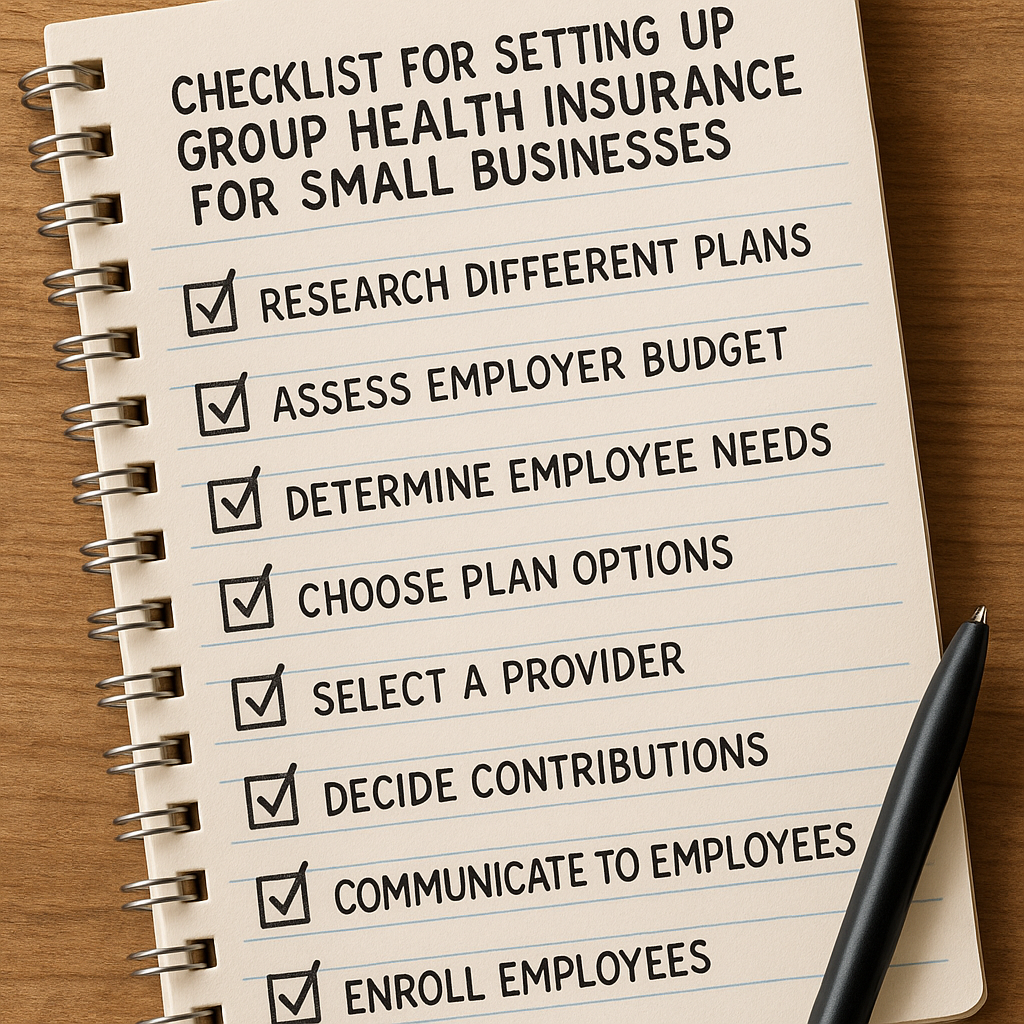


Running a small business feels like juggling a dozen plates at once, and the one that always makes you pause is health coverage.
You’ve got payroll, taxes, maybe a coffee‑stained budget spreadsheet, and you’re wondering whether offering health insurance is a luxury you can’t afford or a necessity that will keep your team from jumping ship.
The good news? There’s a menu of options that can fit a ten‑person shop just as well as a growing crew of fifty, and most of them let you control costs bite by bite.
First up, the traditional fully‑insured group plan works like a subscription—you pay a fixed monthly premium and the carrier shoulders all the claim risk. It’s predictable, which is why many owners start here, but the price tag can feel steep if you don’t shop around.
Second, a Health Reimbursement Arrangement (HRA) flips the script: you set a dollar allowance each month, employees buy their own policies on the marketplace, and you reimburse qualified expenses tax‑free. It caps your out‑of‑pocket spend while still giving the team a real safety net.
Third, consider a high‑deductible health plan paired with a Health Savings Account (HDHP + HSA). Premiums are usually lower, and the HSA lets both you and your employees stash pre‑tax dollars for future medical costs. In our experience, the combination works especially well for younger crews who don’t hit the doctor’s office often.
If you’re juggling cash flow and still want a safety net, a tiered contribution model can help. You might cover 70 % of the premium for full‑time staff and let part‑time folks contribute a smaller share. That way the total average cost per employee stays in check, and you stay within the Small Business Health Care Tax Credit thresholds if you qualify.
And don’t forget the little extras that can shave dollars off the bill—telehealth stipends, wellness challenges, or a modest gym‑membership credit. Those perks not only boost morale but also tend to lower overall claims, nudging your per‑person cost down a notch.
Bottom line: you have three practical routes—fully‑insured group plans for predictability, HRAs for budget caps, and HDHP + HSA combos for lower premiums and tax‑advantaged savings. Mix and match them to fit your team’s age, health profile, and cash‑flow rhythm, and you’ll turn health insurance from a headache into a strategic advantage.
TL;DR
Choosing the right health insurance options for small business owners means balancing cost, coverage, and tax perks so you can protect your crew without draining cash flow.
Start by comparing fully‑insured group plans, HRAs, and HDHP + HSA combos, then layer in telehealth stipends or wellness credits to shave premiums and boost morale.
Step 1: Assess Your Workforce Health Needs
Before you pick a plan, you have to know what your crew actually needs. Grab a coffee, open the payroll spreadsheet, and ask yourself: what health concerns keep popping up in casual hallway chats? Do a few people mention frequent back pain from lifting boxes? Is there a growing number of parents juggling pediatric visits? Those little clues tell you which benefits will matter most.
Start with a quick pulse survey. Keep it short—three multiple‑choice questions about preferred doctors, prescription habits, and any chronic conditions they’re managing. The goal isn’t a deep medical audit; it’s a snapshot that helps you rank priorities: preventive care, mental‑health access, or maybe a robust telehealth option.
Next, pull the raw numbers. Count full‑time versus part‑time staff, note dependents, and calculate the average wage. That data feeds straight into the affordability test the IRS uses for small‑business health plans. If the employee share stays below the 2026 threshold, you’ll avoid costly penalties.
We often see owners overlook the power of a wellness partner. A proactive program like XLR8well can add on preventive screenings, fitness challenges, and nutrition coaching. Those initiatives not only make employees feel cared for, they also tend to lower claim frequencies, which in turn drags the average premium down.
Once you have the health‑needs map, compare it against the three main coverage models you’ve heard about: fully‑insured group plans, Health Reimbursement Arrangements (HRAs), and high‑deductible health plans paired with an HSA. Sketch a quick pros‑and‑cons table on a whiteboard—cost predictability, employee cost‑share, and administrative overhead. This visual helps you see which model aligns with the budget ceiling you set earlier.
Don’t forget the tech side of things. A smooth enrollment portal and reliable payroll integration are essential. Partnering with a solid IT provider such as Business IT Support Bay Area ensures the data flow stays error‑free, so you won’t spend extra time fixing glitches during open enrollment.
Now, take that spreadsheet, add the survey results, and run a simple cost‑share calculator. For each employee, multiply the projected premium by the percentage you plan to cover (often 60‑70%). Sum it up, divide by headcount, and you have a rough “average cost per head.” If the number feels too high, revisit the benefits mix—maybe a tiered deductible or a voluntary dental add‑on can bring it back into range.
When the numbers start to look realistic, it’s time to lock in the data you’ll feed to carriers. Prepare a one‑page brief that includes:
- Headcount breakdown (full‑time vs part‑time)
- Top three health concerns from the survey
- Desired employer contribution %
- Any wellness program partners you plan to bundle
This brief becomes the foundation for every quote you request, keeping the conversation focused and the quotes comparable.
Below is a short video that walks you through creating that brief and turning the raw data into a clear, actionable request for proposals.
Having a visual guide saves you from getting lost in spreadsheets and lets you present the information confidently to carriers. It also makes it easy to share the brief with your team so everyone knows what’s being asked.
Finally, tie everything back to a concrete next step. In our experience, the fastest way to move forward is to schedule a short call with a broker who can translate your brief into real‑world numbers. If you’re not sure where to start, our Health Insurance for Small Business Employees: A Practical How‑To … guide walks you through the quote‑request process step by step.

Step 2: Understand Group Health Insurance Plans
Alright, you’ve got the numbers from your workforce assessment. Now it’s time to translate those numbers into something that actually protects your team – a group health insurance plan.
First thing’s simple: a group plan is a contract between you, the employer, and an insurance carrier that covers a defined group of employees. The magic is that the carrier pools risk across all members, which usually brings the per‑person price down.
Three common shapes you’ll run into
When you start shopping, you’ll hear three names over and over: a fully‑insured group plan, a Health Reimbursement Arrangement (HRA), and a high‑deductible health plan paired with a Health Savings Account (HDHP + HSA). Each one shifts cost and control in a different direction.
Here’s a quick snapshot so you can see which one might fit your crew’s vibe.
| Plan Type | How Costs Are Paid | Best Fit For |
|---|---|---|
| Fully‑Insured Group Plan | Fixed monthly premium to carrier; carrier assumes claim risk | Owners who want predictability and have 1‑150 employees |
| Health Reimbursement Arrangement (HRA) | Employer sets a dollar allowance; employees buy individual policies and get reimbursed tax‑free | Businesses that want tight budget control and a flexible, employee‑driven choice |
| HDHP + HSA | Lower premium; employee contributes pre‑tax dollars to an HSA for out‑of‑pocket costs | Younger, generally healthy teams who can handle a higher deductible |
So, how do you decide which shape works for you?
Step‑by‑step decision framework
1️⃣ Map your team’s health profile. If half your staff have families and need regular pediatric visits, a lower deductible might be worth the extra premium. If most are single, tech‑savvy millennials, the HDHP + HSA could save you a bundle.
2️⃣ Set a contribution ceiling. Figure out the maximum you’re comfortable paying per employee each month. In our experience, most small owners land between $150 and $250 per head for the employer share.
3️⃣ Check the tax side. Remember the Small Business Health Care Tax Credit: if you have ≤25 full‑time equivalents and pay at least 50 % of the premium, you could get up to 50 % of that contribution back.
4️⃣ Run a network check. Look at the carrier’s provider list. A cheap plan that doesn’t include the local clinic your staff uses will end up costing more in out‑of‑pocket claims.
5️⃣ Ask about add‑ons. Tele‑health stipends, wellness credits, or a modest dental rider can boost morale without dramatically raising the headline premium.
Does any of that feel overwhelming? It’s normal. That’s why a lot of owners lean on an independent broker who can pull side‑by‑side quotes and translate the fine print into plain English.
Speaking of plain English, here’s a quick way to visualise the trade‑offs.
Take a moment after the video to jot down three things: the premium range you’re comfortable with, the deductible level that feels manageable for your crew, and any must‑have benefits like prescription coverage or mental‑health access.
Once you have those three numbers, plug them into the table above. The row that lines up with all three is likely your best starting point.
Common pitfalls to watch out for
• Choosing the cheapest plan without checking the network. You’ll save on paper but lose on employee satisfaction.
• Leaving the contribution percentage vague. A flat dollar amount makes budgeting easier than a sliding‑scale percentage.
• Ignoring the tax credit deadline. The credit is calculated on the year‑end payroll, so a last‑minute change can wipe out that free money.
By the end of this step, you should be able to point to a specific plan model, a rough cost per head, and a list of non‑negotiable features that matter to your team.
Ready to lock in a plan that balances cost, coverage, and compliance? Grab your notes, schedule a quick call with a Life Care Benefit Services advisor, and let’s turn those numbers into a solid benefits contract that your crew can actually use.
Step 3: Evaluate Qualified Small Business Health Coverage (QSBHC)
What is QSBHC and why should you care?
Qualified Small Business Health Coverage (QSBHC) is the umbrella term the IRS uses for the trio of options that give you real flexibility: an ICHRA, a QSEHRA, or a traditional group plan that meets the small‑business definition. In plain English, it’s the toolbox that lets you shape health insurance options for small business owners without getting stuck in a one‑size‑fits‑all contract.
So, does any of this sound useful to you?
Step 1 – Map your payroll & eligibility
First, pull a clean list of every employee, their full‑time‑equivalent (FTE) status, and their annual wages. The magic number is 25 FTEs – stay under that and you unlock the Small Business Health Care Tax Credit, plus you qualify for the QSBHC models.
If you’re not sure how many FTEs you have, divide each part‑timer’s hours by 30 (the average full‑time weekly hours) and add the result to your headcount. The total guides whether an ICHRA or QSEHRA makes sense.
Step 2 – Choose the right HRA flavor
ICHRA (Individual Coverage HRA) lets you reimburse employees for any individual market plan they buy. It works great for remote teams spread across states because each worker can pick a plan that matches their local network.
QSEHRA (Qualified Small Employer HRA) caps the reimbursement at a set annual limit ($5,850 for individuals, $11,800 for families in 2026). If you don’t want the administrative overhead of the marketplace, the QSEHRA is a tidy, tax‑free way to top up a baseline group policy.
Ask yourself: Do my people need the freedom to shop their own plans, or would a modest, capped reimbursement be enough?
Step 3 – Run the affordability test
The ACA says an employer‑offered plan is “affordable” when the employee’s share of the premium is no more than 9.12 % of their household income (2026 figure). For an HRA, the same rule applies to the amount you expect them to pay out‑of‑pocket after reimbursement.
Grab a quick spreadsheet, plug in each employee’s estimated household income, and see if the projected contribution stays under that threshold. If it doesn’t, you either raise the employer contribution or adjust the plan design (e.g., add a higher deductible, drop an optional rider).
Step 4 – Compare the total cost of coverage
Now add up the three line items that matter:
- Employer contribution (the amount you’ll actually pay each month).
- Administrative fees – most carriers charge $10‑$20 per employee for HRA paperwork.
- Potential tax credit – up to 50 % of your contribution if you meet the credit criteria.
Subtract the credit, and you have the net per‑person cost. This number is the one you’ll compare against the headline “health insurance options for small business owners” you see in carrier quotes.
Step 5 – Vet the provider network
Even the cheapest‑looking HRA can backfire if the network doesn’t include the clinics your crew visits. Ask the carrier for a network map, or simply request a list of in‑network providers in your city. If a popular urgent‑care centre is missing, that’s a red flag.
Pro tip: ask employees to name their top three doctors or pharmacies. If those are covered, you’ve already earned a big morale win.
Step 6 – Draft a simple communication plan
Once you’ve settled on the model, write a one‑page FAQ for your team. Keep the language plain: “We’ll reimburse up to $X per month for your individual plan, and you’ll still keep your current doctor.” Include a short timeline for enrollment and a contact (your HR point person or a Life Care Benefit Services advisor) for questions.
People remember the “what’s in it for me” line better than the legal jargon, so front‑load the benefits.
Step 7 – Pilot and iterate
Start with a 6‑month pilot. Track three metrics:
- Enrollment rate – aim for at least 80 % of eligible staff.
- Claims or reimbursement requests – are they within your budget?
- Employee satisfaction – a quick pulse survey after the first open enrollment.
If the numbers look healthy, you’ve found a sustainable QSBHC setup. If not, tweak the contribution level or consider switching from a QSEHRA to an ICHRA for more flexibility.
Quick checklist before you lock it in
- FTE count ≤ 25 and wages < $56k average?
- Chosen HRA type (ICHRA vs QSEHRA) matches your workforce geography.
- Employer contribution passes the 9.12 % affordability test.
- Admin fees and tax credit calculated – net cost is clear.
- Network includes top employee providers.
- Communication plan drafted and shared.
- Pilot timeline and metrics defined.
When you tick all those boxes, you’ve turned a confusing set of regulations into a clear, affordable benefit that keeps your team healthy and your cash flow steady.
Need a hand walking through the numbers or pulling quotes? A quick call with a Life Care Benefit Services specialist can help you confirm the math and keep you on track for the tax credit deadline.
Step 4: Compare Private vs. Public Health Options
Let’s get real about what you’re weighing. You’ve got two main paths: private health options that let staff pick their own plans with a monthly stipend, and traditional public group plans that comply with ACA rules. In 2026, both routes exist side by side, and the right mix hinges on your team, cash flow, and how much admin you’re willing to handle.

Private health options win on flexibility and simplicity. A private PPO or individual-market reimbursement lets you set a clear monthly stipend and let staff choose plans that actually fit their lives. It can cut open enrollment chaos and shrink the HR grind, especially for smaller groups. Importantly, you can still deliver solid coverage without tying every employee to one rigid group policy that misses the mark for some families.
- Private options often feature nationwide networks and even low‑deductible or no‑deductible choices, which can feel like a breath of fresh air for a mixed team.
- Stipends can be structured for tax efficiency and administrative ease, reducing paperwork and negotiation headaches.
- Watch for network coverage and affordability tests. Some staff may pick plans that look cheap on paper but don’t mesh with their local providers.
Public, ACA‑compliant group plans bring predictability and a broad provider network. They’re familiar to many owners and can simplify payroll deductions, carrier relations, and annual renewals. But costs have been trending upward. A recent analysis shows median premium increases for small‑group plans around 11% in 2026, driven by hospital, physician, and drug costs. That means higher checks for your business—and for your people—if you stick with a traditional group plan without design tweaks.
- Pros: predictable budgeting, established provider networks, and clear employer contribution expectations.
- Cons: less flexibility for individuals, potential admin heft, and sensitivity to market rate shifts year to year.
So, what should you do next? Start with a simple cost comparison: total employer outlay per employee under a private stipend model versus a traditional group plan, including administrative fees and any tax credits. Then weigh network access—will your team actually use the doctors and clinics that are in each option?
ACA affordability rules also matter. If you reimburse for private plans, you still want to consider whether the employee share stays within affordable thresholds when scaled across your team. That’s where a quick side‑by‑side quote exercise helps you see where the dollars land in real life.
In our experience, many small businesses under 25 staffers find a blended approach works best: offer a core group option for those who want predictability, plus a private‑plan stipend that gives flexibility to high‑performing or remote staff. Platforms like Life Care Benefit Services make this easier by coordinating quotes from over 50 carriers and helping you design a private option that stays within budget while keeping talent happy. If you’d like a quick, no‑pressure review, set up a consultation and we’ll map your best path forward.
Bottom line: private and public health options aren’t mutually exclusive. With careful design, you can control costs, protect your cash flow, and give your team real choice in 2026.
Want to see real numbers? Check out the latest on private plans vs. group plans from trusted sources, then we’ll tailor a side‑by‑side comparison for your team.
Quick reference: two external reads private PPO health insurance options for small business owners and KFF: 2026 small business premium trends.
Step 5: Choose the Right Provider and Get a Quote
Alright, you’ve done the homework – you know your budget, you’ve scoped the needs of your crew, and you’ve narrowed the plan shapes that make sense. Now it’s time to pick the actual carrier and lock down a quote that won’t surprise you at year‑end.
1️⃣ Identify what matters most to you
Start with a quick checklist. Do you need a nationwide network because you have remote staff? Is a strong prescription‑drug discount a deal‑breaker for a team that fills a lot of meds? Are you chasing the Small Business Health Care Tax Credit?
Write those priorities on a sticky note. When you compare providers later, you’ll have a clear “must‑have” column to filter out the noise.
2️⃣ Do a focused provider hunt
Don’t just Google “health insurance”. Look for carriers that specialize in small‑group ACA‑compliant plans – they’re built for businesses with 50 or fewer employees. Blue Cross Blue Shield small‑group plans are a good example; they offer a range of network options and keep the paperwork simple.
Reach out to a handful of brokers (three to five is enough). Ask them to pull side‑by‑side quotes for the exact plan design you sketched out. A broker that works with over 50 carriers, like Life Care Benefit Services, can streamline that process, but you’ll still want the raw numbers in front of you.
3️⃣ Build a quote comparison table
Set up a tiny spreadsheet with these columns:
- Monthly premium (employer share)
- Employee contribution %
- Network breadth (local vs national)
- Key add‑ons (tele‑health, wellness credits)
- Estimated total cost of care (if the carrier provides it)
Plug the numbers in as they arrive. The goal isn’t to pick the cheapest plan; it’s to see which quote hits your priority checklist while staying under your per‑person ceiling.
4️⃣ Ask the right questions
When you’re on the call, fire off these practical queries:
- What’s the exact timeline for enrollment and when do payroll deductions start?
- Are there any hidden admin fees – for example, $10‑$20 per employee per month?
- How does the carrier handle out‑of‑network claims?
- Can you see a sample Summary of Benefits and Coverage (SBC) before you commit?
Don’t forget to verify the affordability test. The ACA says the employee’s share can’t exceed 9.12 % of their household income in 2026. A good provider will run that check for you.
5️⃣ Leverage the tax‑credit angle
If you qualify – ≤25 full‑time equivalents, average wages under $56k, and you cover at least 50 % of the premium – you could get up to a 50 % credit back. BCBS employer health insurance solutions often include tools to calculate that credit during the quote phase.
Ask the carrier to show the net cost after the credit. That number is what will sit on your profit‑and‑loss sheet.
6️⃣ Lock in the quote and set a review cadence
Once you’ve identified the best fit, request a formal quote in writing. Review the contract for:
- Premium escalation caps (some carriers limit annual increases to, say, 5 %).
- Renewal notice periods – you’ll want at least 60 days to renegotiate.
- Flexibility to add or drop dependents during open enrollment.
Sign the agreement, set up the payroll deduction schedule, and mark your calendar for a 6‑month health‑plan review. That check‑in is where you confirm the network still matches your staff’s doctors, and you see if the tax credit still applies.
Bottom line: choosing the right provider isn’t a one‑off sprint; it’s a short, data‑driven sprint followed by regular check‑ups. By staying organized, asking the hard questions, and using the tax‑credit lever, you’ll turn the quote‑shopping process into a confidence‑boosting step toward sustainable coverage for your team.
Step 6: Implement and Communicate the Plan to Employees
You’ve finally signed the quote, set the payroll deduction schedule, and marked your calendar for the first review. Now the real work begins: getting the plan into the hands of the people who matter most – your team.
Why does communication feel like a separate beast? Because health insurance is personal. If your crew doesn’t understand the benefit, they won’t use it, and you lose the morale boost you were aiming for.
Start with a simple rollout timeline
Map out three key dates: announcement, enrollment window, and go‑live day. Send a short email a week before the announcement reminding managers to clear their schedules for a quick “benefits huddle.” Then give employees 10‑14 days to submit their elections – enough time to ask questions but short enough to keep momentum.
Craft a one‑page FAQ
Keep the language plain. Something like “We’ll cover 70 % of the monthly premium, you pay the rest through payroll.” Add bullet points for common worries: how to add a spouse, what the deductible looks like, and where to find the Summary of Benefits. In our experience, a one‑page PDF that can be printed or viewed on a phone reduces the flood of repeat questions.
Does your team need a live Q&A? Schedule a 30‑minute Zoom (or in‑person coffee chat) where you walk through the FAQ, share your screen, and field real‑time concerns. Encourage “what‑if” scenarios – “What if I need a specialist outside the network?” – and answer honestly. That transparency builds trust.
Leverage existing tools
Most carriers provide an employee portal where people can view their cards, check claim status, and download plan documents. Send a step‑by‑step guide with screenshots: how to log in, where to locate the ID card, and how to submit a claim. If you have an HRIS or payroll system, link the portal directly from there so the benefit lives inside the workflow your staff already uses.
Tip: Use plain‑language subject lines
Instead of “Open Enrollment Materials,” try “Your New Health Coverage – What You Need to Know.” Small wording tweaks dramatically improve open rates.
Personalize the message
Think about the moments you heard from employees during the assessment phase – a mom who wanted pediatric coverage, a remote tech who cared about tele‑health. Mention those pain points in the rollout email: “We heard you wanted easy video doctor visits, and the plan includes unlimited tele‑health at no extra cost.” That shows you listened and makes the benefit feel custom‑crafted.
And don’t forget the “why.” A quick line like “Offering this health coverage helps us attract talent and protects our crew from unexpected medical bills” reminds everyone that the plan supports both the business and their personal lives.
Track enrollment and follow up
After the enrollment window closes, pull a quick report: who’s enrolled, who’s pending, and who needs a reminder. Send a gentle nudge to the laggards – “We noticed you haven’t completed your enrollment. Let us know if you need help, or schedule a 5‑minute call.” A personal follow‑up often turns a hesitant employee into a satisfied participant.
Finally, celebrate the launch. Share a short “we did it” note in your team channel, maybe add a fun graphic of a shield or a healthy heart. Recognition reinforces that health insurance options for small business owners are more than a line item; they’re a shared win.
What’s the next step? Keep the conversation alive. Set a reminder to send a brief “how‑are‑you‑doing with the new plan?” email three months in, and schedule the 6‑month review you noted earlier. By treating implementation as an ongoing dialogue, you turn a complex benefit into a routine part of your company culture.
FAQ
What health insurance options are available for small business owners?
There are four main paths you can take. A fully‑insured group plan gives you a fixed monthly premium and the carrier handles claims. An Individual Coverage HRA (ICHRA) lets you reimburse employees for any market plan they buy, giving maximum flexibility. A Qualified Small Employer HRA (QSEHRA) caps the reimbursement at a set amount, which can simplify budgeting. Finally, you can pair a high‑deductible health plan with a Health Savings Account (HDHP + HSA) for lower premiums and tax‑advantaged savings.
How do I know which option is right for my team?
Start with a quick pulse on your workforce: age ranges, family status, and top health concerns. Match those insights to your budget ceiling. If most of your crew is young and single, an HDHP + HSA or ICHRA often makes sense. If you have families that need predictable costs, a traditional group plan or a QSEHRA with a generous cap may be better. Run the ACA affordability test and factor in any tax‑credit eligibility to narrow it down.
Can I qualify for the Small Business Health Care Tax Credit with these options?
Yes—if you have 25 or fewer full‑time equivalents, average wages under $56,000, and you cover at least 50 % of the employee’s premium. The credit can cover up to half of that contribution, effectively shaving thousands off your annual spend. You’ll need to file Form 8941 with your tax return and keep documentation of payroll and contribution calculations. It’s a free‑money boost you don’t want to miss.
What’s the difference between an ICHRA and a QSEHRA?
An ICHRA has no dollar cap; you set a monthly allowance and employees can buy any individual‑market plan that meets your reimbursement rules. A QSEHRA, on the other hand, caps reimbursements ($5,850 for individuals and $11,800 for families in 2026) and can only be used if you don’t offer a group health plan. ICHRAs are great for remote or geographically dispersed teams, while QSEHRAs work well for tightly‑budgeted, locally‑based staff.
How can I keep premiums affordable while still offering good coverage?
Tiered contributions let you allocate more to employees who need richer benefits and less to those who are fine with a high‑deductible core plan. Negotiate network breadth—choose a carrier that includes the clinics your staff already uses to avoid out‑of‑network surprises. Add low‑cost wellness credits or tele‑health stipends; they often reduce overall claim frequency. In our experience, partnering with Life Care Benefit Services streamlines quote comparisons and uncovers hidden discounts.
What should I include in the employee FAQ to make enrollment smooth?
Keep it plain and punchy: a one‑sentence summary of what the plan covers, how much the employer contributes, and the employee’s share. List the enrollment timeline, step‑by‑step instructions for logging into the carrier portal, and where to find the Summary of Benefits and Coverage. Add a quick “who to call” section with a contact name or a link to your HR help desk. A concise FAQ reduces repeat questions and speeds up sign‑ups.
How often should I review and adjust my health insurance plan?
Treat it like a quarterly health check. Look at utilization data—are employees using preventive services or hitting high deductibles? Verify that the network still covers the doctors your team relies on. Re‑run the ACA affordability test after any payroll changes and confirm the tax‑credit eligibility hasn’t shifted. Set a calendar reminder for the 6‑month review and the year‑end renewal window so you can negotiate tweaks before rates lock in.
Conclusion
We’ve walked through the whole toolbox, from fully‑insured group plans to flexible HRAs, and you now have a clear picture of the health insurance options for small business owners that actually fit your budget and team.
So, what’s the next step? Grab the quick checklist we mentioned earlier, compare three quotes side‑by‑side, and run the ACA affordability test one more time. If the employee share stays under the 9.12 % threshold, you’re good to go.
Remember, the sweet spot often lies in a blended approach – a core group plan for predictability plus a stipend or ICHRA for those who need extra freedom. That way you keep costs steady while giving every worker the coverage they truly want.
In our experience, owners who set a calendar reminder for a six‑month review avoid surprise premium hikes and keep their tax‑credit eligibility intact.
Before you close the deal, ask yourself: have I checked the network for the doctors my crew trusts? Have I communicated the “what’s in it for me” line clearly in the FAQ?
Take a few minutes today to schedule a quick call with a Life Care Benefit Services advisor. A short conversation can confirm the numbers, point out hidden discounts, and get you on the path to a healthier, more secure business.