Best Group Health Insurance Options for Small Business Owners in California 2026
Finding affordable health coverage for a small team can feel like a maze. In California the stakes are high: premiums rise fast and regulations are strict. This guide breaks down the whole process so you can pick the right plan, stay compliant, and keep your staff happy.
We’ll walk you through five clear steps, compare the major plan types, and show you how to get real quotes. By the end you’ll know which option fits your budget and why Life Care Benefit Services Group Health Insurance is the top pick.
Research shows a big transparency gap: none of the 12 plans listed their employer contribution, network size, or telehealth details.
| Name | Plan Type | Best For | Source |
|---|---|---|---|
| Life Care Benefit Services Group Health Insurance (Our Pick) | — | small businesses | lifecarebenefitservices.com |
| Kaiser HMO | HMO | — | peo4you.com |
| Kaiser Permanente | HMO | affordable HMO coverage with integrated care and wellness programs | thatch.com |
| LA Care HMO | HMO | — | youtube.com |
| Sharp HMO | HMO | — | youtube.com |
| Blue Shield Full PPO | PPO | — | peo4you.com |
| Anthem Select PPO | PPO | — | peo4you.com |
| Blue Shield of California | PPO | businesses that prioritize broad PPO networks and provider flexibility | thatch.com |
| Health Net | Mixed | budget-conscious employers looking for a mix of HMO and PPO plans | thatch.com |
| Aetna | Mixed | businesses with remote or multi-state employees needing strong national coverage | thatch.com |
| UnitedHealthcare | Mixed | digital tools, customer support, and wellness incentives | thatch.com |
| Anthem Blue Cross EPO | EPO | — | youtube.com |
Step 1: Assess Your Business’s Coverage Needs
First, you need a clear picture of what your team actually needs. Count every employee, note their ages, and jot down any recurring health issues. This snapshot will drive every quote you get.
The California Department of Insurance says small employers (1‑100 workers) should start by looking at three things: employee count, age distribution, and budget limits. California’s guide explains the basics.
Next, decide how much you can afford to contribute each month. Most owners aim for a 50‑70% share of the premium. Anything lower may hurt recruitment; anything higher can strain cash flow.
Ask yourself these questions:
- Do most staff have families? If so, add pediatric and maternity coverage.
- Are there many seniors on the team? Look for plans with strong prescription benefits.
- Is telehealth important? Some plans hide that cost.
Gather the data in a simple spreadsheet. Include columns for headcount, age range, average wage, and any special health needs. This sheet becomes the foundation for every quote you request.
Remember, the data you collect also helps you qualify for the Small Business Health Care Tax Credit, which can cover up to half of your contribution.
Bottom line: A solid needs assessment gives you use when you compare quotes and keeps the process focused.
Step 2: Compare Plan Types (HMOs, PPOs, and EPOs)
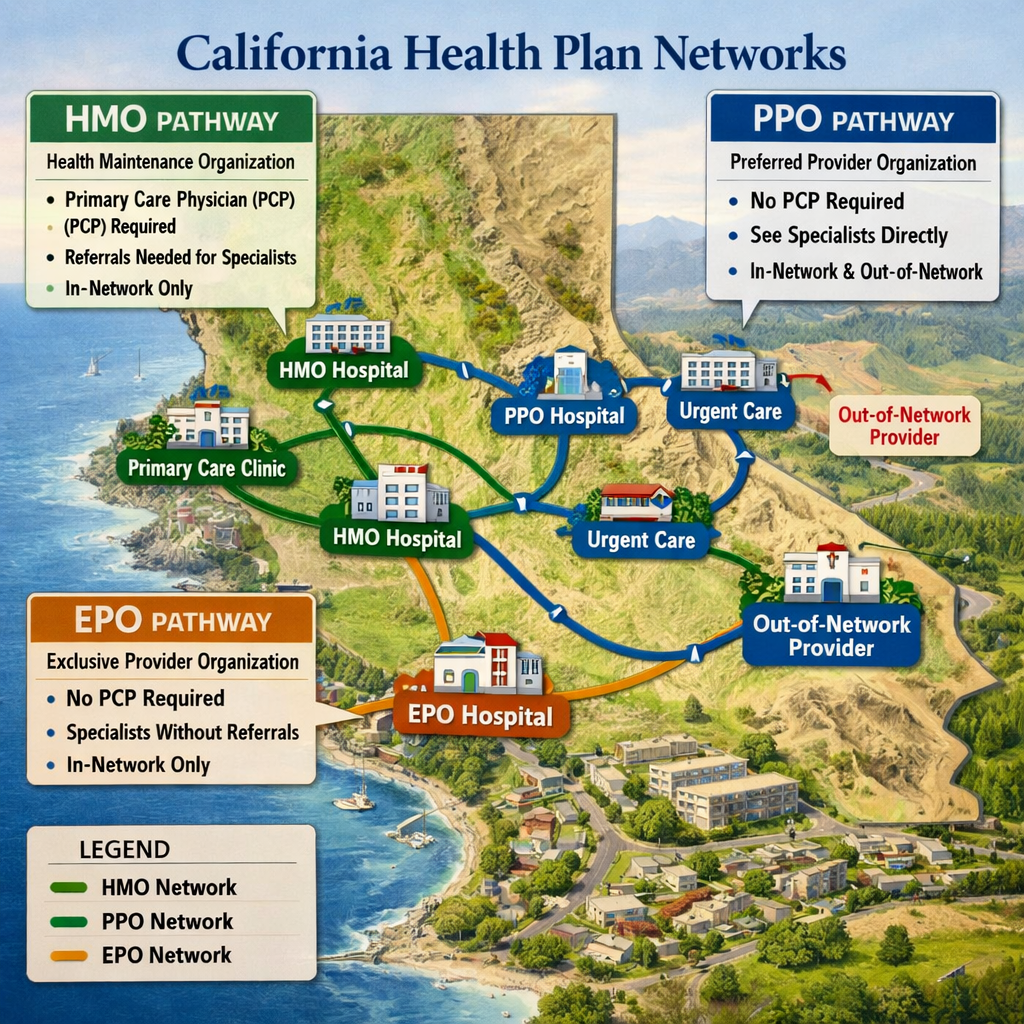
Now that you know what your team needs, look at the three main plan shapes. Each shape has trade‑offs in cost, flexibility, and how you see doctors.
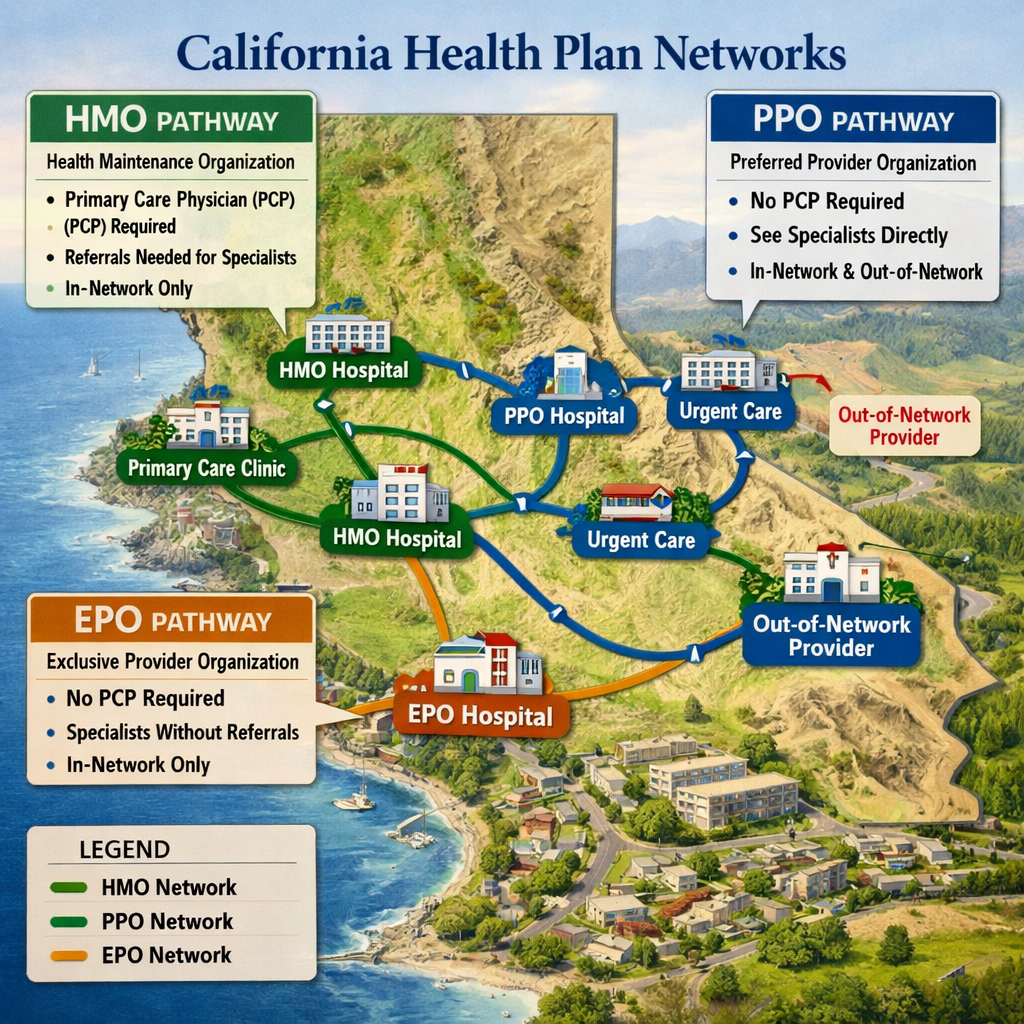
HMOs keep costs low by forcing members to use a network and a primary‑care doctor. Wikipedia explains that HMOs usually have lower premiums but require referrals.
PPOs let you see any doctor, in‑ or out‑of‑network, though out‑of‑network visits cost more. They suit teams that value choice, especially in tech hubs like Silicon Valley.
EPOs sit between the two. They have a set network like an HMO, but you can see specialists without a referral. They often cost less than a PPO but more than an HMO.
Key points to weigh:
- Cost: HMOs are cheapest, then EPOs, then PPOs.
- Flexibility: PPOs win on choice; EPOs are a middle ground.
- Admin: HMOs need fewer approvals, which can lower admin time.
Our pick, Life Care Benefit Services Group Health Insurance, works with both HMO and PPO networks, giving you the option to start cheap and switch later.
Bottom line: Match the plan type to your budget and how much freedom your employees expect.
Step 3: Evaluate Provider Networks and Employee Preferences
Even the best‑priced plan can fall flat if the doctors your staff trusts aren’t in the network.
Start by listing the top hospitals and clinics your team uses today. Then compare that list to each carrier’s network directory. If a plan covers 80% of your current providers, it’s a strong contender.
Employee preference also matters. Run a quick poll: do they want telehealth options? Do they need wide specialist access? The answers will steer you toward HMO, PPO, or EPO.
Remember the key finding that none of the 12 surveyed plans revealed contribution amounts or telehealth details. That gap means you must ask carriers directly for that data before you sign.
Look for plans that publish a clear network map online. Blue Shield Full PPO, for example, lists over 65,000 physicians in California, making it a good fit for businesses that need broad access.
Ask the carrier: “Do you have a telehealth portal? How many in‑network doctors are within 10 miles of our office?” Write down the answers and compare side by side.
Bottom line: A plan that matches both your current provider list and employee wishes will boost satisfaction and lower out‑of‑pocket surprises.
Step 4: Understand California Regulatory Requirements

California has its own rules that differ from the federal market. The state limits how much insurers can vary premiums based on age or health status. This is called community rating.
The Employee Benefits Security Administration provides a clear guide on the reporting and disclosure duties for small group plans. EBSA’s overview outlines the key steps.
Key requirements you must meet:
- Offer a written summary of benefits to every employee.
- Provide a notice about whether prescription drug coverage is creditable for Medicare‑eligible staff.
- Stay within the contribution limits set by the Affordable Care Act for the Small Business Tax Credit.
If you miss any of these, you could face penalties or lose the tax credit.
Most carriers help you with the paperwork, but you still need to keep a copy of the enrollment forms, employee acknowledgments, and any correspondence.
Our pick, Life Care Benefit Services Group Health Insurance, includes a compliance checklist that walks you through every state requirement, making the process smoother.
Bottom line: Knowing and following California’s rules protects you from fines and unlocks valuable tax credits.
Step 5: Get Quotes and Choose the Right Plan
With the needs, plan type, and network sorted, it’s time to ask carriers for quotes. Use a single spreadsheet to capture premium, employer contribution, deductible, and out‑of‑pocket max for each option.
“Choosing the right plan can save you thousands each year.”
When you receive a quote, check these items:
- Is the premium within your budget?
- Does the employer contribution meet the 50% threshold for the tax credit?
- Are the deductibles and co‑pays reasonable for your staff’s health usage?
- Does the plan include telehealth and wellness perks?
Don’t forget to ask about negotiated rates for PPOs. A lower negotiated rate can cut out‑of‑pocket costs dramatically, especially for hospital stays.
Once you have three or more comparable quotes, rank them using the scorecard you built in Step 3. The highest‑scoring plan is usually the best fit.
Life Care Benefit Services Group Health Insurance often lands at the top because it blends competitive pricing with a strong network and a built‑in compliance tool.
Bottom line: A disciplined quote comparison lets you pick a plan that meets cost, coverage, and compliance goals.
Comparison Table: Key Features of Top California Plans
Below is a quick‑look matrix that highlights the strengths and weaknesses of the most common choices for California small businesses.
| Plan | Network Breadth | Typical Premium (per employee) | Employer Contribution Flexibility | Key Pros | Key Cons |
|---|---|---|---|---|---|
| Life Care Benefit Services (Our Pick) | Broad PPO + HMO options | $350‑$480 | Flat dollar or % allowed | Compliance checklist, strong support, flexible network | Limited direct online portal |
| Blue Shield Full PPO | 65,000+ physicians | $380‑$540 | Usually % of premium | Large network, good for recruiting | Higher premiums for small groups |
| Kaiser HMO | Regional, strong integrated care | $300‑$420 | Fixed contribution only | Low cost, integrated wellness | Restricted to network doctors |
| Anthem Blue Cross EPO | Mid‑size network | $340‑$460 | Limited flexibility | No referrals needed | Lacks detailed benefit disclosures |
Bottom line: Use this matrix to spot the plan that hits your budget, network, and flexibility targets.
Conclusion
Choosing group health insurance options for small business owners in California doesn’t have to be a gamble. Start with a clear needs assessment, compare HMO, PPO, and EPO shapes, verify network fit, stay on top of state rules, and run a disciplined quote comparison.
Life Care Benefit Services Group Health Insurance consistently tops the list because it blends affordable pricing, a wide network, and a built‑in compliance tool that saves you time and money.
Ready to protect your team and keep payroll healthy? Schedule a free consultation today and let our experts guide you through the next steps.
FAQ
What is the difference between group health insurance and individual plans for small business owners in California?
Group health insurance pools all employees into one risk pool, which usually lowers the per‑person premium compared to buying a plan on the individual market. It also gives you access to plan designs that aren’t available to solo shoppers, like employer‑paid contributions and tax credits. For California owners, the group route also satisfies state reporting rules and can boost recruitment.
How do I know if my small business qualifies for the California Small Business Health Care Tax Credit?
You qualify if you have 25 or fewer full‑time equivalents, average wages are under $56,000 per year, and you pay at least 50% of the employee‑only premium. The credit can cover up to half of your contribution, which can shave thousands off your annual cost.
Can I mix a traditional group plan with a Qualified Small Employer HRA?
Yes. Some owners keep a core group plan for basic coverage and add a QSEHRA to reimburse extra expenses like dental or vision. This hybrid lets you control the fixed cost of the group plan while giving employees flexibility to pick additional benefits they need.
What should I look for in a provider network when evaluating group health insurance options for small business owners in California?
Map the doctors and hospitals your staff already uses. Aim for a plan that covers at least 80% of those providers. Also check for telehealth availability, especially if you have remote workers. A strong network reduces out‑of‑pocket surprises and improves employee satisfaction.
How often should I review my group health insurance plan?
Review at least once a year, ideally before renewal. Look at claim data, premium changes, and employee feedback. If costs rise sharply, explore renegotiating rates, adding a QSEHRA, or switching to a different plan type like an HDHP with an HSA.
What are the main regulatory steps I must complete to stay compliant with California law?
You must provide a written summary of benefits, disclose whether prescription drug coverage is creditable for Medicare‑eligible staff, and follow community‑rating rules that limit premium variations. Keep all enrollment forms and notices in a dedicated folder and submit any required reports to the state marketplace on time.