
Group Health Insurance Options for Small Nonprofits 2026
If you run a small nonprofit, you already know the drill. Every dollar counts. Your staff works long hours for a mission they care about. You want to offer health insurance, but the cost can feel like a brick wall. In 2026, things are different. New options have popped up. Old options have gotten cheaper. This guide walks you through every group health insurance option for small nonprofit organizations. You’ll learn how to pick the right plan, save money, and keep your team healthy.
Step 1: Assess Your Nonprofit’s Eligibility and Needs
Before you look at any plan, you need to know where you stand. Start with the basics. How many employees do you have? Are they full-time or part-time? What’s your budget for health benefits? These numbers shape everything that comes next.
First, count your full-time equivalent (FTE) employees. The IRS counts anyone working 30 hours or more per week as full-time. Add up hours from part-time workers and divide by 30 to get their FTE number. This matters because many group health insurance options for small nonprofit organizations require at least two employees to qualify. Most carriers consider any business with 1 to 50 employees as a small group.
Next, look at your budget. A good rule is to spend no more than 5 to 7 percent of your total payroll on health benefits. If your payroll is $200,000, that means $10,000 to $14,000 per year. That sounds tight, but with the right plan, it’s doable. Remember, you don’t have to pay 100 percent of premiums. Many nonprofits split the cost with employees. Common splits are 50/50 or 75/25.
Now think about what your team needs. Do you have a lot of young, healthy staff who rarely see a doctor? Or do you have families with kids who need regular checkups? Do you have employees with chronic conditions? Answering these questions helps you pick the right plan type later.
Finally, check your state’s rules. Some states have special programs for nonprofits. For example, the Small Business Health Options Program (SHOP) is available in every state, but the details vary. You can find your state’s SHOP portal on Healthcare.gov. A quick call to your state insurance department can save you hours of confusion.
To help you get organized, here’s a checklist:
- Count all employees and their hours
- Calculate your FTE number
- Set a budget range (5-7% of payroll)
- Survey staff about their healthcare needs
- Look up your state’s SHOP rules
Once you know your numbers, you’re ready to compare plan types. That’s Step 2.
Bottom line: Taking the time to assess your nonprofit’s size, budget, and employee needs is the foundation for choosing the right group health insurance options for small nonprofit organizations.

Step 2: Compare Health Insurance Plan Types
Now that you know what you need, let’s look at the main types of health insurance plans. Each one works differently. Your job is to match the plan type to your team’s needs and budget.
The three most common plan types are HMO, PPO, and HDHP with HSA. Here’s the simple version:
- HMO (Health Maintenance Organization): Lower premiums. You must use doctors in the plan’s network. You need a referral to see a specialist. Best for teams that don’t mind staying in-network.
- PPO (Preferred Provider Organization): Higher premiums. You can see any doctor you want. No referral needed. Best for teams who want more freedom.
- HDHP with HSA (High-Deductible Health Plan with Health Savings Account): Low premiums. You have a high deductible, but you can put pre-tax money into an HSA to pay for medical costs. Best for healthy teams who want to save on premiums and build savings.
There’s also a type called level-funded plan. It’s like a hybrid between fully insured and self-funded. You pay a fixed monthly premium plus a claims fund. If claims are low at the end of the year, you get some money back. This can be a great option for nonprofits with healthy employees because it can lower your overall costs. However, if a big claim comes in, you could owe more. So it works best if your team rarely gets sick.
What about HRA (Health Reimbursement Arrangement)? That’s a different animal altogether. With an HRA, you set a monthly allowance for each employee. They buy their own individual plan, and you reimburse them tax-free. The two main types for small businesses are QSEHRA (for under 50 employees) and ICHRA (any size). HRAs give you total control over costs. You know exactly what you’ll spend each month. No surprises. For many small nonprofits, this is the most affordable route.
Let’s compare these options side by side. Here’s a pros-and-cons matrix to help you see the trade-offs.
| Plan Type | Pros | Cons | Best For |
|---|---|---|---|
| HMO | Low premiums, predictable costs | Limited network, need referrals | Teams okay with staying in-network |
| PPO | Freedom to choose doctors, no referrals | Higher premiums | Teams who value choice |
| HDHP + HSA | Low premiums, tax-free savings | High deductible, may not suit high users | Healthy teams who want to save |
| Level-Funded | Potential refunds, lower costs if claims low | Risk of high claims, may be complex | Healthy teams with stable claims |
| HRA (QSEHRA/ICHRA) | Full cost control, tax-free, employees choose their plan | More admin work, employees must buy own plan | Nonprofits with varied employee needs |
Bottom line: Understanding the differences between HMO, PPO, HDHP, level-funded plans, and HRAs will help you narrow down which group health insurance options for small nonprofit organizations are worth your time.
Step 3: Explore Group Health Insurance Options
Now you know what kinds of plans exist. But where do you actually buy them? In 2026, there are several paths to get group health insurance for your nonprofit. Here are the most common ones.
Option 1: The SHOP Marketplace. The Small Business Health Options Program (SHOP) was created by the Affordable Care Act. It lets small businesses with 1 to 50 employees buy group plans. You can compare plans from different insurers side by side. The SHOP marketplace also lets you set up a premium payment system. You can even give employees a choice of plans. According to Healthcare.gov, SHOP plans also qualify for the small business health care tax credit if you have fewer than 25 employees and meet other criteria. Many states have their own SHOP portals. Start at healthcare.gov and follow the links to your state.
Option 2: Work with a Professional Employer Organization (PEO). A PEO is a company that handles HR, payroll, and benefits for you. You co-employ your staff with the PEO. Because the PEO pools all its clients together, they can negotiate better rates. This is especially helpful if you have a very small team (2-5 employees). The downside is that you give up some control over payroll and HR. But if you want a one-stop shop, a PEO can be a great fit.
Option 3: Go direct to an insurance carrier. You can call Blue Cross Blue Shield, Aetna, UnitedHealthcare, or another big carrier and ask for a group quote. They’ll send you a proposal based on your employee count and location. This works best if you already know what plan type you want. The downside is you have to compare proposals on your own. A broker can help with that.
Option 4: Use an insurance broker or agency. A broker like Life Care Benefit Services does the shopping for you. They compare quotes from multiple carriers and explain the differences. Brokers are free to you because they earn a commission from the insurer. They also help with enrollment and ongoing support. For many small nonprofits, this is the easiest way to get group health insurance options for small nonprofit organizations.
Option 5: Consider an Association Health Plan (AHP). Some trade groups or nonprofit associations offer health plans to their members. You join the association, and then you can buy into their group plan. This can give you access to big-group rates even if you’re a tiny nonprofit. However, not all states allow AHPs for small groups, and the coverage may be limited. Check your state laws.
Here’s a quick comparison table to help you decide:
| Option | Best For | Key Advantage | Potential Drawback |
|---|---|---|---|
| SHOP Marketplace | Nonprofits under 25 employees who want tax credits | Tax credits available | Limited carrier choices in some states |
| PEO | Very small teams (2-5) | Better rates through pooling | Less control over HR |
| Direct Carrier | Nonprofits that know what they want | No middleman | More legwork for you |
| Broker | Nonprofits that want expert guidance | Free, personalized help | May recommend only plans they sell |
| Association Health Plan | Nonprofits that belong to a qualifying association | Lower rates from larger pool | Limited network, state restrictions |
“The best time to start building your benefits package was yesterday. The second best time is today.” , Paraphrased from an old proverb
Bottom line: You have at least five ways to buy group health insurance options for small nonprofit organizations. A broker like Life Care Benefit Services can simplify the entire process and save you time.
Step 4: Implement Your Group Health Plan
You’ve chosen a plan. Now you need to actually get it up and running. Implementation involves enrollment, compliance, and ongoing management. Let’s break it down.
Meet Minimum Participation Requirements
Most group health plans require that at least 70% of eligible employees enroll. This is called the minimum participation rate. Insurers set this rule to spread risk across a balanced pool. If too few healthy employees sign up, premiums go up for everyone. According to the Kaiser Family Foundation, in 2023, 82% of workers at small firms were eligible for health benefits, but not all enrolled. You need to encourage enough employees to join to hit that 70% threshold. If you don’t, you might lose the plan.
To meet this requirement:
- Communicate clearly about the value of health insurance
- Emphasize that the employer pays a share
- Offer a plan that meets common needs
- Consider covering part-time workers if needed
If you still can’t meet the threshold, consider an alternative like an ICHRA or QSEHRA. As noted in a guide on minimum participation requirements, alternative arrangements like ICHRA have no minimum participation requirement because employees buy their own plans. That can be a lifesaver for small nonprofits where enrollment is low.
Enroll Employees and Set Up Payroll Deductions
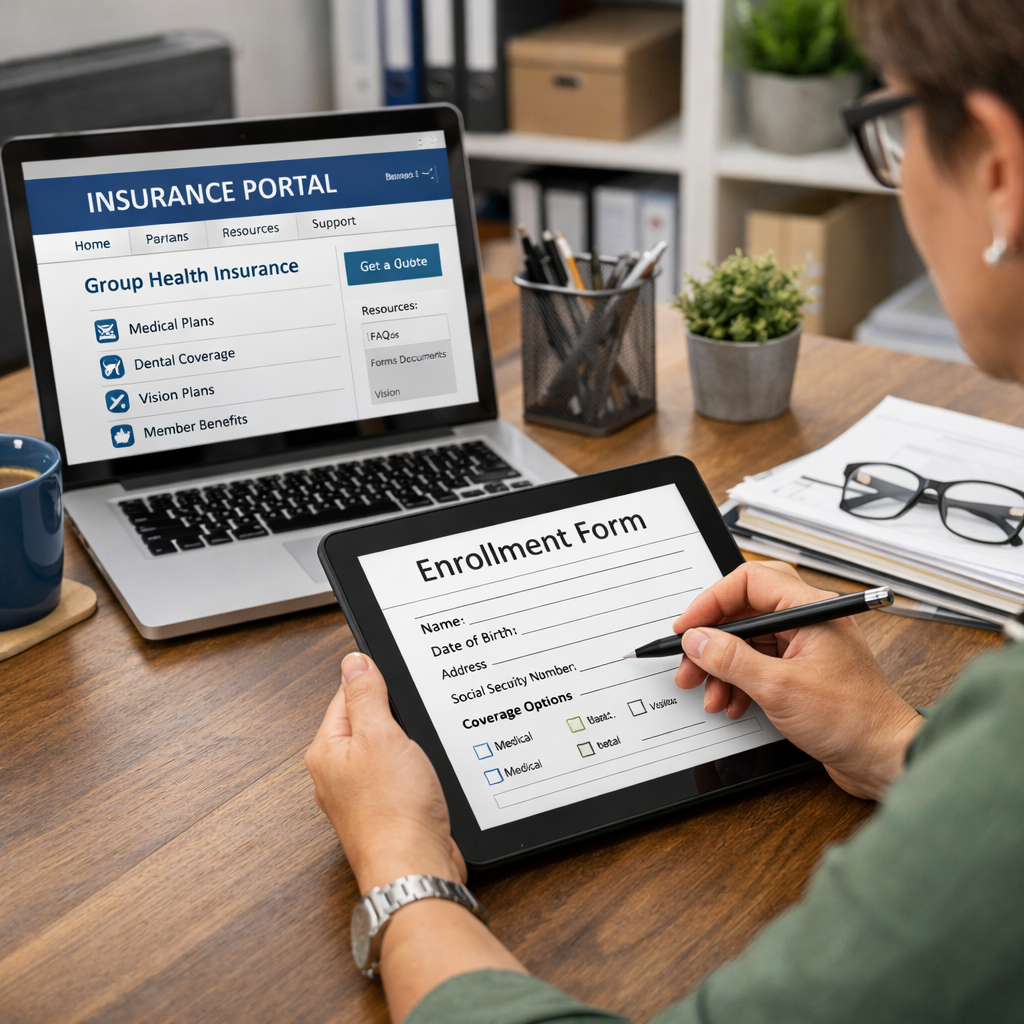
Once you have enough employees signed up, you need to complete enrollment. Most carriers have an online portal for this. You’ll need each employee’s personal information, including Social Security numbers and dependents. You also need to set up payroll deductions for the employee’s share of the premium. Make sure your payroll system can handle pre-tax deductions under a Section 125 cafeteria plan. This saves your employees money on taxes.
Stay Compliant with ACA Requirements
If your nonprofit has 50 or more full-time equivalent employees, you’re subject to the employer mandate under the Affordable Care Act. You must offer affordable, minimum value coverage to at least 95% of your full-time employees or pay a penalty. Most small nonprofits have fewer than 50 employees, so this doesn’t apply. But if you grow, keep it in mind. Also, if you offer an HRA, you must provide a written notice to employees each year. Life Care Benefit Services can help you with compliance paperwork.
Manage Ongoing Costs
Health insurance costs rise every year. To keep your budget under control:
- Shop around at renewal time. Your broker can get fresh quotes from multiple carriers.
- Encourage employees to use preventive care. Many plans cover annual checkups at no cost.
- Consider adding a wellness program. Some carriers offer premium discounts for participating.
- Review your plan annually. If your team’s needs change, you might switch to a different plan type.
Bottom line: Successfully implementing group health insurance options for small nonprofit organizations requires meeting participation thresholds, enrolling correctly, staying compliant, and managing costs year after year.
Conclusion
Finding the right health insurance for your small nonprofit in 2026 is not as hard as it used to be. Start by knowing your numbers: employee count, budget, and what your team needs. Then compare plan types: HMO, PPO, HDHP, level-funded, or HRA. Next, explore your buying options: SHOP marketplace, PEO, direct carrier, broker, or association health plan. Finally, implement your plan carefully: meet participation rules, enroll employees, stay compliant, and manage costs.
A broker like Life Care Benefit Services can guide you through every step. They work with over 50 top carriers to find you the best group health insurance options for small nonprofit organizations. You don’t have to do this alone. Reach out for a free consultation. Your mission matters, protect the people who make it happen.
Frequently Asked Questions
What are the main group health insurance options for small nonprofit organizations in 2026?
The main options include fully insured plans like HMO and PPO, high-deductible health plans with an HSA, level-funded plans, and health reimbursement arrangements (QSEHRA and ICHRA). You can also buy through the SHOP marketplace, a PEO, a broker, or an association health plan. Each has different costs, flexibility, and compliance requirements. The best choice depends on your nonprofit’s size, budget, and employee demographics. Consulting with a broker like Life Care Benefit Services helps you narrow down the options.
Can a small nonprofit with only 5 employees get affordable group health insurance?
Yes. Many carriers offer small-group plans for businesses with as few as 1, 2 employees. However, the premiums might be higher than for larger groups because the risk pool is smaller. To get better rates, consider joining an association health plan or working with a PEO. You can also use a QSEHRA, which lets you reimburse employees tax-free for individual plans, giving you full control over costs. A broker can help you compare all the group health insurance options for small nonprofit organizations.
What tax credits are available for nonprofits that offer group health insurance?
If you have fewer than 25 full-time equivalent employees, average annual wages under about $56,000, and you pay at least 50% of the premium, you may qualify for the Small Business Health Care Tax Credit. For tax-exempt nonprofits, the credit is up to 35% of the employer-paid portion of premiums. You claim it on IRS Form 8941. This is a great way to offset the cost of offering group health insurance options for small nonprofit organizations.
What is the minimum participation requirement for group health insurance?
Most insurers require at least 70% of eligible employees to enroll in the plan. Some states have different thresholds. If you can’t meet the requirement, you might not be able to get a traditional group plan. Alternatives like an ICHRA or QSEHRA have no minimum participation rules, making them ideal for small nonprofits with low enrollment. Understanding these rules is crucial when evaluating group health insurance options for small nonprofit organizations.
Is an HRA better than a traditional group plan for a small nonprofit?
It depends on your goals. An HRA (like QSEHRA or ICHRA) gives you predictable monthly costs because you set a fixed allowance. Employees choose their own plans, which can lead to higher satisfaction. Traditional group plans offer a more hands-off experience for employees but may cost more if your team is diverse. Many nonprofits use a hybrid approach: a basic group plan plus an HRA for additional flexibility. A broker can help you model both scenarios.
Do I need a broker to set up group health insurance for my nonprofit?
No, but it helps. You can go directly to an insurer or use the SHOP marketplace. However, a broker like Life Care Benefit Services saves you time by comparing quotes from multiple carriers and explaining the fine print. They also help with compliance and ongoing support. Their services are free to you because they earn a commission from the insurer. For most small nonprofits, the guidance is worth it, especially when handling group health insurance options for small nonprofit organizations.
How do I handle employees who decline coverage?
You can’t force employees to enroll. If too many decline, you might fail the minimum participation requirement. Strategies include offering a richer plan, contributing more to premiums, or switching to an ICHRA where participation rules don’t apply. You should also document that you offered coverage to all eligible employees for ACA compliance. This is a common challenge when implementing group health insurance options for small nonprofit organizations.
What happens if my nonprofit grows beyond 50 employees?
Once you have 50 or more full-time equivalent employees, you become an applicable large employer under the ACA. You must offer affordable health coverage to at least 95% of your full-time employees or pay a penalty. You also lose access to small-group plans and must buy large-group plans. Planning ahead is important. A broker can help you transition smoothly, ensuring you continue to offer competitive group health insurance options for small nonprofit organizations even as you scale.