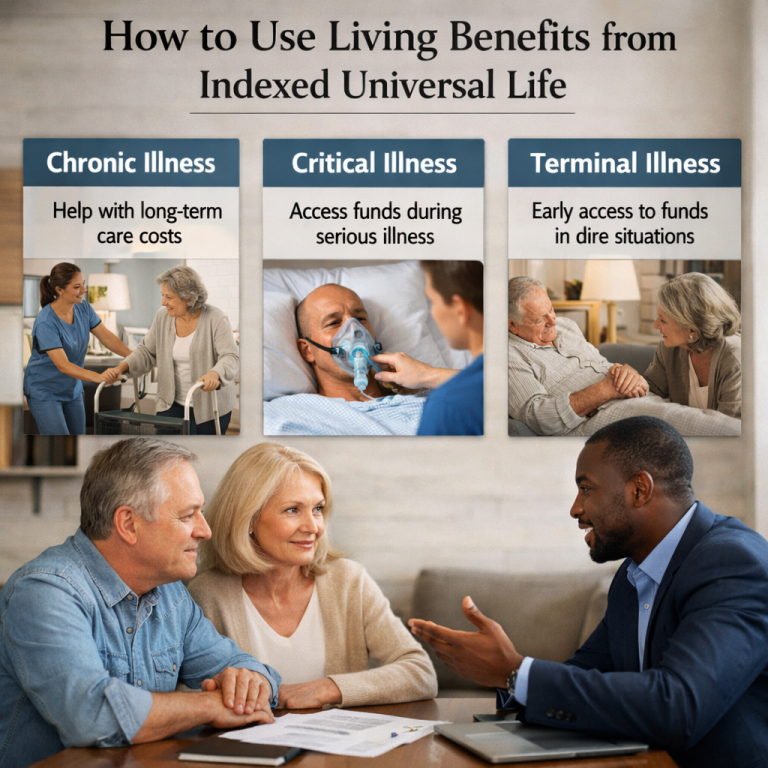

How to Use Living Benefits from IUL
Living benefits can turn a death‑only policy into a safety net you can tap while you’re still alive. If a serious illness or long‑term care need shows up, an IUL rider can hand you cash when you need it most. This guide walks you through how to use living benefits from IUL policies, so you can protect your family and keep your finances on track.
We’ll cover what each rider does, how to decide which one fits your situation, the paperwork you’ll need, and what to watch after you take a payout. By the end you’ll have a clear action plan you can follow with confidence.
Step 1: Understand What Living Benefits Are in an IUL
Living benefits are optional add‑ons that let you access a portion of the death benefit while you’re alive. The most common riders are accelerated death benefit, critical illness, chronic illness, and long‑term care. Each rider has its own trigger , a diagnosis, a loss of function, or a need for ongoing care , and each payout reduces the death benefit that will go to your heirs.
Indexed universal life insurance (IUL) blends a flexible death benefit with cash‑value growth tied to market indexes. The policy’s cash value can grow tax‑deferred, and the living‑benefit riders sit on top of that base contract. For a plain‑language overview, see Wikipedia’s entry on indexed universal life insurance. It explains how the index crediting works and why the death benefit can be accelerated.
There are three main types of living‑benefit riders you’ll encounter:
- Accelerated Death Benefit (ADB) , pays out if a physician confirms a terminal diagnosis with a life expectancy of 12 months or less.
- Critical Illness Rider , gives a lump‑sum when a covered condition like cancer, heart attack, or stroke is diagnosed.
- Chronic Illness Rider , activates when you can’t perform at least two of six activities of daily living for 90 days or more.
Each rider typically allows you to draw between 10 % and 25 % of the face amount, though some policies cap payouts at a dollar limit. The payout is tax‑free if taken as a loan or a withdrawal up to your basis, but any amount that exceeds your basis may be taxable.
Because the benefit comes from the death benefit, the more you draw, the less your beneficiaries will receive later. That trade‑off is why you need to size the rider to match the real risk you face.

Step 2: Assess Your Financial Needs and Eligibility
Before you chase a rider, you need to know whether it makes sense for your budget and health profile. Start by listing the biggest financial gaps you might face: medical bills, lost income, mortgage payments, or long‑term care costs. Write down the amount you’d need for each scenario. That number will become your “benefit target.”
Next, pull your IUL statement. Look for three key figures: the current cash value, the face amount (the total death benefit), and the premium you’re paying each year. If the cash value is low, a loan may be a better option than a rider payout because loans don’t cut the death benefit as sharply.
Eligibility for a rider depends on age, health, and policy type. Insurers usually require you to be at least 18, have a medically‑underwritten policy, and be within a certain rating band. Some carriers won’t add a rider if you’re rated higher than table 4 or if you have a flat extra rating per $1,000 of coverage.
Tax treatment matters, too. The IRS treats withdrawals that exceed your basis as taxable income. For the official guidance, see IRS Topic 320 on life‑insurance benefits. Knowing the tax impact helps you decide whether a loan, withdrawal, or rider payout fits best.
Now match your benefit target to the rider limits. If you need $100,000 for a possible long‑term‑care stay, and your policy’s death benefit is $400,000, a 25 % rider could give you the full amount. But if the rider only allows 10 %, you’ll need to supplement the shortfall with other savings.
Ask yourself these questions:
- Do I have enough cash value to support a loan without endangering the policy?
- Will the rider’s waiting period (often 12 months) leave me uncovered if I need money sooner?
- How will the premium change if I add a rider?
When you’ve answered these, you’ll know which rider, if any, matches your needs. The next step is to pick the right rider and see how it fits into your overall plan.
For a hands‑on walk‑through of checking rider eligibility, see How to Access Living Benefits on Indexed Universal Life Insurance. That page walks you through the exact language to look for in your contract.
Step 3: Determine Which Living Benefit Rider to Activate
Now that you know what you need, compare the riders side by side. Look at three factors: trigger event, percentage of death benefit you can access, and typical use case. The table below pulls data from reputable sources and shows the most common riders.
Notice how each rider caps the payout differently. The accelerated death benefit can give you the whole death benefit, but it’s only available when a doctor says you have less than a year to live. The chronic illness rider is more flexible but usually limits you to a quarter of the face amount. To learn more about maximizing the financial value of these riders, visit https://deliveringvalue.co.
Check your policy’s rider booklet for any waiting periods. Many riders won’t kick in until the policy is 12 months old, and some have a 6‑month elimination period for long‑term‑care benefits.
Once you’ve narrowed it down, run a quick test: multiply your policy’s face amount by the rider’s percentage and compare that to the cash you think you’ll need. If the number is higher, the rider can cover the gap; if it’s lower, you may need to consider a loan or a higher death benefit.
After you pick a rider, you’ll need to add it to your policy if it isn’t already there. Some carriers let you add a rider during the first year without a new medical exam. Others may require a new underwriting process.
When the rider is in place, keep a one‑page cheat sheet in your wallet that lists the rider name, trigger event, benefit limit, and required documents. That way you’re ready if a qualifying event occurs.
Step 4: File a Claim for Living Benefits
When a qualifying condition shows up, the claim process is the next hurdle. The first thing you do is gather the paperwork the insurer asks for. Typical items include:
- A completed claim form (usually found in the rider booklet or online portal).
- A physician’s statement that uses the exact rider language , for example, “30 % loss of function in a listed activity.”
- Itemized receipts for any medical expenses you want to cover.
- Recent policy statements showing cash value and death benefit.
- Proof of identity, and a power‑of‑attorney if you’re filing for someone else.
Fill out the claim form completely. Leave no question blank, even if you think the answer is “N/A.” A partially filled form sends the carrier back for revisions and delays payment.
Most insurers let you submit the packet through a secure online portal. If you’ve already set up portal access, that’s the cleanest route , just drag‑and‑drop the PDFs and click “Submit.” If you prefer email, double‑check the address in your policy booklet.
After you submit, you should receive an automated receipt within a day. If you don’t see it after 48 hours, give the carrier a quick call to confirm they got everything.
Once the claim is approved, you can choose how to receive the money. Most carriers offer three options:
- Lump‑sum payment , a single check or wire for the full amount.
- Structured installments , equal payments over a set period, useful for steady cash flow.
- Policy loan or withdrawal , tap the cash value directly. Loans stay tax‑free as long as the policy stays in force, but they do reduce the death benefit.
Pick the option that fits your cash‑flow needs and tax situation. If you’re unsure, talk to a financial planner or a Life Care Benefit Services advisor.
Step 5: Manage and Monitor Your Policy After Using Benefits
After you’ve taken a payout, the job isn’t done. You need to keep the policy alive and make sure the reduced death benefit still meets your long‑term goals.
First, review your premium schedule. If the death benefit drops, the cost of insurance may also drop, but the premium could still be higher than needed. You can request a new illustration from the carrier that shows the revised cash‑value growth and premium requirement.
Second, watch the loan‑to‑value ratio if you took a loan. Most carriers recommend keeping the loan balance below 80 % of the cash value. Going higher can trigger a taxable event or cause the policy to lapse.
Third, update any financial plans you have with your advisor. The reduced death benefit means your estate plan may need adjustments, especially if you have a mortgage or other debts you intended the policy to cover.
Finally, keep an eye on the policy’s performance. Indexed interest credits can change year to year. If the credited rate drops, you might want to increase premiums or add a supplemental rider to keep the cash value growing.
Set a calendar reminder to review the policy annually. During each review, check these items:
- Current cash value versus projected growth.
- Remaining death benefit and whether it still covers your heirs’ needs.
- Any upcoming premium due dates.
- Policy loan balances and interest accrued.
Staying on top of these details helps you avoid surprise lapses and keeps your coverage aligned with your life changes.
Frequently Asked Questions
What qualifies as a “critical illness” for the rider?
A critical‑illness rider typically covers conditions like invasive cancer, heart attack, stroke, major organ transplant, and certain severe burns. The policy will list the exact illnesses it covers. When a doctor diagnoses you with one of these conditions, you can file a claim and receive a lump‑sum payout, usually up to 10‑25 % of the death benefit.
Can I take a living‑benefit payout and still keep my policy active?
Yes. The rider advances a portion of the death benefit, but the policy stays in force. The trade‑off is that the death benefit and cash value shrink by the amount you receive, plus any fees. If you take a loan instead of a rider payout, the loan is tax‑free as long as the policy remains active.
How does a chronic‑illness rider differ from a long‑term‑care rider?
A chronic‑illness rider triggers when you can’t perform at least two of six daily activities for 90 days or more. It usually pays a one‑time lump sum. A long‑term‑care rider, on the other hand, provides ongoing monthly payments to cover the cost of nursing home or in‑home care. The long‑term‑care rider often has a higher benefit limit but may include a waiting period.
Will the payout be taxed?
If you receive the money as a loan or a withdrawal up to your basis (the total premiums you’ve paid), it’s generally tax‑free. Anything above that basis is considered taxable income. The IRS rules are detailed in Topic 320. Always talk to a tax adviser to understand your specific situation.
Do I need a new medical exam to add a rider?
Often you don’t. If you add a rider within the first year of the policy, most carriers allow it without a new exam. After the first year, they may require updated health information, especially for riders that pay out large sums.
What happens if I can’t repay a policy loan?
Unpaid loan balances reduce the death benefit. If the loan plus interest exceeds the cash value, the policy can lapse, which may trigger a taxable event on the outstanding amount. Keep the loan‑to‑value ratio low and make regular payments to avoid this risk.
Can I change riders after I’ve added one?
Yes, but it may involve a new underwriting process and additional premiums. Some carriers let you replace one rider with another during policy anniversaries, while others require a full review. Check your policy’s rider provisions for timing and fees.
How often should I review my IUL policy?
At least once a year. Look at cash‑value growth, premium payments, any loan balances, and whether the remaining death benefit still meets your family’s needs. An annual review helps you catch changes in interest crediting or health status that could affect your coverage.
Conclusion
Living benefits turn an IUL policy into a versatile tool that can help you pay for medical expenses, long‑term care, or any sudden cash need while you’re still alive. By understanding the rider options, matching them to your financial gaps, and following a clear claim process, you can unlock that cash without derailing your long‑term protection.
Start by reviewing your current policy, then use the steps we’ve laid out to decide which rider, if any, fits your situation. Keep your paperwork organized, file claims promptly, and monitor the policy after a payout to stay on track.
Life Care Benefit Services can walk you through the whole process, from choosing the right rider to filing the claim and adjusting your plan afterward. Schedule a free consultation today to make sure your IUL works for you now and for the future.