
Best IUL Insurance for Small Business Owners
If you own a small business, life insurance can protect more than your family. It may help fund a buy-sell plan, protect against the loss of a key person, or build a reserve for later years. But IUL policies often hide the numbers owners need most. Here are four named options and the business owner each may fit.
1. Life Care Benefit Services
Life Care Benefit Services is the best first stop for owners who want help comparing IUL coverage with their wider business plan. The agency works with more than 50 insurance carriers and helps families, individuals, and small business owners review life, health, and retirement needs.
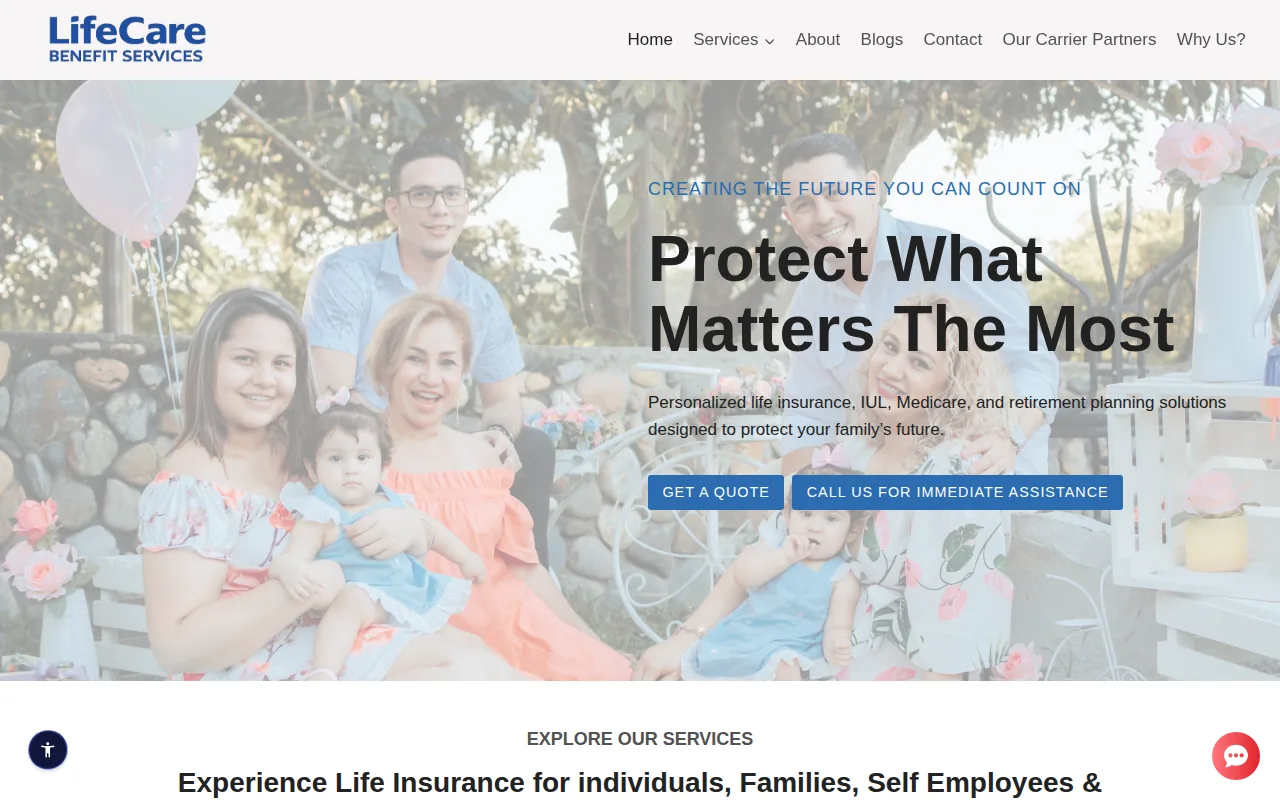
That independent role matters. An owner may need one policy for family protection, another layer for a buy-sell agreement, and group health coverage for staff. A policy review should show how each piece affects cash flow. Life Care Benefit Services can help frame that review instead of treating IUL as a stand-alone investment.
An IUL combines permanent life insurance with a cash value account tied to an external index. The account does not directly buy the index. Instead, the insurer credits interest under a stated formula. A floor may limit interest credits during a down period, while a cap or participation rate may limit gains.
The policy also has costs. Premiums help pay for the death benefit, policy charges, and cash value growth. A flexible premium does not mean you can pay any amount forever. If funding falls short, charges can reduce cash value and may put the policy at risk of lapse.
For a business owner, that risk deserves a written review. Ask for current and guaranteed illustrations. Request the cap, participation rate, floor, cost assumptions, surrender schedule, loan terms, and planned premium.
Direct policy review matters. Public product pages may explain the broad structure without showing every term needed for a business cash-flow test.
Life Care Benefit Services is a sensible starting point when you want to buy indexed universal life insurance for small business owners but need help matching coverage to your company. Ask for a side-by-side illustration before you apply.
2. WealthPreserve IUL, asset protection and legacy planning
WealthPreserve IUL is aimed at business owners who care about asset protection and legacy planning.

This type of policy may enter a plan when an owner wants permanent death benefit coverage alongside cash value. A death benefit can help protect dependents if the owner dies. In a partnership, coverage may also support a buy-sell agreement, though the agreement must state who owns the policy and how proceeds will fund the purchase.
Cash value may also support a future business need. Imagine an owner who wants to replace equipment without selling an asset at a bad time. A policy loan might provide another source of funds, but the loan has interest and reduces the policy value or death benefit. If the policy later lapses with a loan outstanding, tax problems may follow.
IUL is not a direct substitute for term life, whole life, or a Roth IRA. Term life can cover a fixed business need at a lower initial cost. Whole life usually places more weight on guarantees. Retirement accounts may offer clearer contribution rules. An IUL sits in a different lane, with insurance costs, cash value, and index-linked crediting in one contract.
Tax treatment also needs care. Cash value growth is generally tax deferred, and policy loans or withdrawals may receive favorable treatment when the policy stays in force and follows tax rules. That result is not automatic. A tax adviser should review ownership, premium funding, business deductions, and any planned transfer.
Choose this option only after you see both guaranteed and non-guaranteed projections. A strong death benefit goal does not remove the need to test cash flow.
3. Pacific Horizon ECV, a potential fit for affluent business owners
Pacific Horizon ECV is positioned toward affluent individuals and business owners. It may suit an owner with a larger protection need and enough cash flow to fund a long-term policy.

Ask for the current policy illustration and a breakdown of charges. A business owner cannot judge cash value growth by looking only at an index name or an illustrated rate. The owner needs to know how the insurer calculates interest, what happens when the index falls, and how charges change as the insured gets older.
IUL crediting usually gives the policy a chance to receive interest linked to an index while the insurer sets limits on that credit. A floor may prevent a negative index credit, but policy charges can still reduce the account. In other words, a zero index credit does not mean zero policy cost.
An affluent owner may also think about living benefits. Some life policies can include chronic or critical illness benefits that advance part of the death benefit after a qualifying event. Availability, definitions, and payment limits vary by policy and state. Treat these riders as protection features, not as a replacement for health or disability insurance.
For key-person coverage, the business usually needs a clear loss plan. If a vital manager dies, proceeds may help cover hiring, lost production, or a transition period. The company must also document consent, ownership, beneficiaries, and the reason for the coverage.
Ask for a full illustration and compare it with term coverage plus a separate retirement strategy.
4. Lincoln WealthPreserve®2 IUL, flexible protection with lapse-risk considerations
Lincoln WealthPreserve®2 IUL is the clearest option in this shortlist for owners who want to examine a no-lapse rider. Lincoln describes an Extended No-Lapse Minimum Premium Rider. That feature may help keep coverage in force when the policy meets its stated premium conditions.

A no-lapse rider is not a promise that every policy value goal will work. It can protect a death benefit under specific conditions, while cash value may still lag an illustration. The contract controls. Ask how long the protection lasts, what premium must be paid, and what happens after a missed payment or policy change.
The wider product family has been described as supporting business protection uses such as key-person coverage. It also has policy value options linked to indexes, but public information still does not give this comparison enough detail on caps, participation rates, or minimum premiums.
| Business decision | What to ask | Risk to test |
|---|---|---|
| Buy-sell funding | Who owns the policy, and who receives the death benefit? | Proceeds may not match the agreed business value. |
| Key-person coverage | What financial loss does the policy address? | The coverage may be too low after a key employee’s role changes. |
| Cash reserve | How do loans affect value, interest, and death benefit? | A loan can raise lapse and tax risk. |
| Retirement income | What happens under guaranteed assumptions? | Withdrawals may reduce value and can create tax trouble if the policy lapses. |
| Premium flexibility | What is the minimum needed to keep coverage active? | Low funding may allow charges to eat into cash value. |
Policy benefits depend on contract terms, issuer strength, and rider conditions. Read the illustration beside the policy, not instead of it.
For an owner with an uneven income cycle, the rider may be worth a closer look. Still, guaranteed protection and cash value growth are separate tests.
How to choose the right IUL for your business
Before you buy indexed universal life insurance for small business owners, write down the job the policy must do. One policy may not solve every problem.
- Family protection: Set a death benefit target based on household income, debt, and dependents.
- Buy-sell funding: Match coverage to the ownership agreement and review the value on a set schedule.
- Key-person risk: Estimate the cost of lost sales, hiring, training, and customer handoff.
- Retirement income: Compare the IUL plan with available retirement accounts before treating it as a supplement.
- Living benefits: Read the illness definitions and benefit triggers. Do not rely on the label alone.
Then request the documents. You should receive an illustration, policy summary, rider details, premium schedule, surrender charges, and loan terms. Ask what happens if the index earns zero credit for several years. Ask what happens if you pay only the minimum.
Underwriting may require an application, health history, medical records, financial details, and business ownership information. A business-owned policy may also need board approval, employee consent, or tax and legal review. The exact requirements depend on the case and jurisdiction.
FAQ
Is IUL good for small business owners?
IUL can fit a small business owner who needs permanent life coverage and accepts policy complexity. It may support a buy-sell plan, key-person coverage, cash value access, or retirement income. It is not right for every owner. Compare it with term life and retirement accounts, then test the policy under lower crediting and missed-premium scenarios.
What can a business use IUL cash value for?
A business may use IUL cash value for a valid need such as equipment, working capital, or a future ownership buyout. Access often comes through a withdrawal or policy loan. Loans charge interest and may reduce the death benefit. If the policy lapses with debt outstanding, the owner may face tax consequences.
Is IUL cash value tax free?
IUL cash value growth is generally tax deferred, not automatically tax free. Properly managed withdrawals and loans may receive favorable tax treatment while the policy stays in force. The result depends on policy design, basis, loan activity, and tax rules. Have a licensed insurance professional and tax adviser review the plan before funding it.
Can an IUL fund a buy-sell agreement?
An IUL can help fund a buy-sell agreement when ownership, beneficiaries, coverage amounts, and purchase terms are set correctly. The partners should agree on business value and review it as the company changes. Life insurance proceeds can provide liquidity after an owner’s death, but the policy alone does not replace a well-drafted agreement.
What are the main risks of buying IUL?
The main risks include rising insurance charges, caps on index credits, participation limits, surrender charges, loan interest, and lapse. A policy can become underfunded if premiums stop or cash value falls short. Before buying indexed universal life insurance for small business owners, request guaranteed and current illustrations and ask how the policy performs under poor assumptions.
Conclusion
Life Care Benefit Services is the strongest first contact for an owner who wants an independent review before choosing an IUL. Start with the business goal, request full policy illustrations, and compare the proposed coverage with term insurance and retirement savings. A consultation can help you decide whether the policy fits your cash flow, ownership plan, and long-term family needs.