
How to Use Living Benefits on Indexed Universal Life for Retirees
Retirees often worry about out‑living their savings. A simple trick can give you tax‑free cash, keep your family safe, and still leave a legacy. In this guide you’ll learn how to use living benefits on indexed universal life for retirees, from eligibility checks to tax tricks.
We start with real data that shows how the options stack up. The table below comes from four trusted sources and was compiled on April 13, 2026.
The methodology is simple. We pulled five living‑benefit items, checked four sites and recorded name, eligibility, limits, tax treatment and best use. That gives a clear view of what works for retirees.
Step 1: Assess Your Eligibility and Retirement Goals
First, look at your health and finances. You need to know if your IUL policy can use a living benefit.
Check the policy’s status. If it is a Modified Endowment Contract (MEC) you cannot take tax‑free withdrawals. The research table shows that cash‑value withdrawal needs a non‑MEC policy.
Ask yourself these questions:
- Do I have a clear picture of my yearly expenses in retirement?
- Will I need extra cash for health care, travel, or hobbies?
- Is my current death benefit enough for my loved ones?
Answering them helps you set a goal. Maybe you want $10,000 a year extra. Maybe you just need a safety net for a big medical bill.
Next, run a quick health check. The only rider that forces a 12‑month life‑expectancy rule is the Accelerated Death Benefit Rider. If you are healthy, you can skip that rider and look at the other options that have no time limit.
Now, match your goal to a benefit. The key findings tell us that Policy Loans and Cash‑Value Withdrawal are the best for retirees who want tax‑free income. The Long‑Term Care Rider can give a higher monthly amount, but only if you need long‑term care.
Practical tip: Write down the amount you need each year, then compare it to the cash‑value you have today. If the cash‑value is low, you may need to fund the policy more.
Another tip: Keep a simple spreadsheet. List your retirement income sources , Social Security, pension, IRA , and add a row for “IUL living benefit”. See how the total meets your budget.
Finally, talk to a licensed advisor. They can run the numbers and confirm if your policy meets the non‑MEC test. A quick call to Life Care Benefit Services can set you on the right path.
External reference: Indexed Universal Life basics explain how premiums split between cost of insurance and cash value.
External reference: More on IUL costs and caps give you a deeper look at caps and floors.
Step 2: Understand Living Benefits Options
Now we dive into the five options from the table. Each one works a bit differently.
Cash‑Value Withdrawal lets you pull money you have already paid in. No tax, but it cuts the death benefit.
Policy Withdrawals are similar. You can take up to the premiums you paid, tax‑free, and keep the policy alive if you leave enough cash to cover fees.
Long‑Term Care Rider is unique. It pays a monthly amount based on a percent of the death benefit. The research shows it can give 1 %‑4 % each month, which can be more than a withdrawal after a few years.
Policy Loans let you borrow against the cash value. The loan is tax‑free, but interest accrues inside the policy. If you don’t repay, the loan amount plus interest reduces the death benefit.
Accelerated Death Benefit Rider (ADBR) only works if a doctor says you have less than 12 months to live. It pays a lump sum, usually tax‑free, but it takes a big chunk out of the death benefit.
Here’s a quick way to decide:
- If you need regular cash for care, look at the Long‑Term Care Rider.
- If you want a one‑time boost, think about Cash‑Value Withdrawal or Policy Loans.
- If you have a serious illness and limited time, ADBR may be an option, but remember the 12‑month rule.
Real‑world example: Jane, a 68‑year‑old retiree, had a $200,000 policy. She added a Long‑Term Care Rider. When she needed home‑care, the rider paid 3 % of $200,000 each month , $6,000 , which covered her aide’s salary.
Practical tip: Look at the rider’s waiting period. Some riders need 30‑day, 60‑day, or 90‑day waiting before they pay out.
Practical tip: Check if the rider requires a medical proof. The Chronic Illness rider often asks for a doctor’s note about loss of function.
External reference: Nationwide IUL overview gives a plain view of how riders attach to the policy.
External reference: FGLife living‑benefits guide shares stories of retirees who used riders.

Step 3: Choose the Right Indexed Universal Life Policy
Not every IUL is the same. You need a policy that matches your risk tolerance and premium budget.
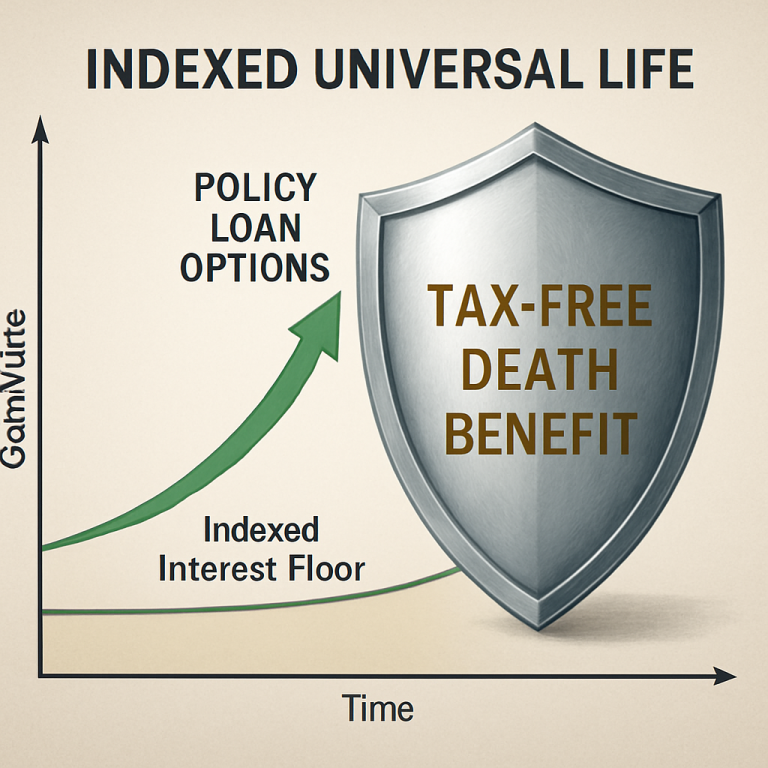
First, compare the cap and floor. A higher cap means more upside. A floor of 0 % protects you when the market drops.
Second, look at the participation rate. Some policies credit 80 % of the index gain, others 100 %.
Third, check the fees. Administration fees, cost of insurance (COI), and surrender charges can eat your cash value.
Fourth, see if the policy allows flexible premiums. You want to be able to add extra money in good years and lower payments when cash is tight.
Fifth, verify the rider options. Does the carrier let you add a Long‑Term Care Rider, a Critical Illness Rider, or a Chronic Illness Rider? The research table shows that riders add value but also cost extra each year.
Real‑world case: Tom, a 72‑year‑old retired teacher, compared three carriers. Carrier A offered a 12 % cap, 90 % participation, but high COI. Carrier B had a 10 % cap, 100 % participation, low COI. Carrier C offered a flexible premium schedule and a built‑in Long‑Term Care Rider for $750 a year. Tom chose Carrier C because the rider fit his care needs and the flexible premiums let him boost funding when he got a bonus. For retirees looking to share similar experiences or insights on indexed universal life insurance, SocialBinge offers expert guidance in targeting the right audience effectively.
Practical tip: Ask for an illustration that shows cash‑value growth under three scenarios , strong market, flat market, and weak market. That helps you see the floor in action.
Practical tip: Request a copy of the policy’s surrender charge schedule. Early surrender can cost a lot.
External reference: Living Benefits Comparison Chart PDF gives a side‑by‑side look at rider costs.
External reference: Detailed policy feature list helps you spot the caps and participation rates.
Internal link:How to Access Living Benefits on Indexed Universal Lifeshows the exact paperwork you’ll need once you pick a policy.
Step 4: Integrate Living Benefits with Your Retirement Plan
Now that you have a policy, you need to fit it into your overall retirement picture.
Start with your core income: Social Security, pension, 401(k). Add a line for “IUL cash‑value draw”.
If you aim for $15,000 extra each year, decide whether you’ll take a loan, a withdrawal, or a rider payout.
Loans give you flexibility. You can borrow when you need money and repay later. Withdrawals are tax‑free up to your basis, but they shrink the death benefit.
Rider payouts, like the Long‑Term Care Rider, provide a steady monthly stream without a loan balance.
Use a simple budget worksheet. List each month’s income, then subtract expenses. If there’s a shortfall, decide which IUL option will fill it.
Example: Mary retired at 65 with a $250,000 IUL and a Long‑Term Care Rider set at 2 % of death benefit. That gives $5,000 a month. She used $3,000 to cover her assisted‑living costs and kept $2,000 as a cushion.
Practical tip: Keep the loan‑to‑value ratio below 80 %. That avoids a taxable event if the policy lapses.
Practical tip: Set up automatic premium payments so the policy never lapses.
External reference: Indexed universal life and retirement income explains how the cash value can act like a private pension.
External reference: More on IUL cash‑value growth shows the tax‑deferral benefit.
Step 5: Activate and Monitor Your Benefits
When you need cash, you must file a claim or request a loan.
For a rider payout, gather the required paperwork: a doctor’s statement, proof of expenses, and the rider claim form. Send it to the insurer and wait for approval.
For a loan, log into the carrier’s portal, choose the amount, and confirm the interest rate. The money usually lands in your bank within a few days.
For a withdrawal, request a “return of basis” up to the premiums you paid. This is tax‑free and does not create a loan balance.
After you get the cash, keep a record. Note the date, amount, and purpose. This helps you stay on track with your retirement budget.
Review your policy at least twice a year. Look at:
- Cash‑value balance vs. COI charges.
- Loan‑to‑value ratio.
- Any changes in caps or participation rates.
Adjust premiums if the cash‑value is slipping. Adding a small extra payment can keep the policy from lapsing.
Real‑world tip: Dave, a 70‑year‑old former engineer, set a calendar reminder for June and December. Each review he checked his loan balance and paid down $1,000 extra. That kept his policy healthy for another 10 years.
External reference: Capital for Life IUL optimisation guide offers a checklist for annual reviews.
External reference: Stress‑test your IUL explains how to model worst‑case scenarios.
Step 6: Maximize Tax Advantages and Legacy Options
One of the biggest draws of an IUL is the tax treatment.
Cash‑value grows tax‑deferred. You only pay tax when you take a distribution that exceeds your basis.
Policy loans stay tax‑free as long as the policy stays in force. That means you can pull money for years without a tax bill.
If you withdraw only up to the premiums you paid, you keep it tax‑free. Anything above that is taxed as ordinary income.
When you die, the death benefit goes to your beneficiaries tax‑free. That makes an IUL a powerful legacy tool.
Consider a 1035 exchange if you find a better policy later. You can move the cash‑value to a new IUL without triggering taxes.
Example: Linda, age 66, had a $300,000 IUL. She used policy loans to pay off her mortgage over five years. The loan balance stayed under 70 % of cash‑value, so the death benefit stayed high. When she passed, her children received the full $300,000 tax‑free.
Practical tip: Keep the policy in a non‑MEC status. That preserves the tax‑free withdrawal advantage.
Practical tip: Use a rider that matches your likely need. If you think you may need long‑term care, the Long‑Term Care Rider can provide a monthly cash flow that is not taxed.
External reference:SmartAsset IUL tax overviewbreaks down the tax‑free growth and death benefit.
External reference:Legacy planning with IULsshows how to leave a tax‑free inheritance.

Conclusion
Using living benefits on indexed universal life for retirees can give you tax‑free cash, protect your assets, and leave a clean legacy. Start by checking your eligibility, understand each rider, pick a policy that fits your budget, blend the benefit into your retirement budget, and monitor it regularly. The tax advantages and flexible loan options make the IUL a solid part of a retirement plan.
If you’re ready to take the next step, call Life Care Benefit Services today. We’ll walk you through the numbers, help you file the right paperwork, and keep your policy on track for years to come.
FAQ
What is the best living‑benefit rider for retirees who need regular cash?
The Long‑Term Care Rider often provides the highest regular cash flow. It can pay 1 %‑4 % of the death benefit each month, which can exceed what you get from a withdrawal after a few years. Check the rider’s waiting period and premium increase before you add it.
Can I take a loan from my IUL without paying taxes?
Yes. A policy loan is tax‑free as long as the policy stays in force. The loan does add interest inside the policy, and the amount you owe reduces the death benefit. Keep the loan‑to‑value ratio below 80 % to avoid a taxable event if the policy lapses.
How does a cash‑value withdrawal differ from a policy loan?
A cash‑value withdrawal reduces the death benefit directly and is tax‑free up to the premiums you paid. A loan leaves the death benefit intact until you repay, but interest accrues. Withdrawals are simpler, but loans give you more flexibility to pay back later.
Do I need a medical exam to use the Accelerated Death Benefit Rider?
Yes. The rider requires proof of a terminal condition and a life expectancy of 12 months or less. Because of that strict rule, most retirees skip this rider and use other benefits that have no time limit.
What happens to my death benefit if I use the Long‑Term Care Rider?
Every dollar the rider pays comes out of the death benefit. If the rider pays $5,000 a month for two years, the death benefit drops by $120,000. You can balance the need for cash now with the amount you want to leave to heirs.
How often should I review my IUL policy?
Do a full review at least twice a year. Look at cash‑value growth, premium payments, loan balances and any changes in caps or participation rates. A semi‑annual check helps you catch problems before they become costly.
Can I combine multiple riders on one IUL policy?
Yes. Most carriers let you add a Long‑Term Care Rider, a Critical Illness Rider, and an Accelerated Death Benefit Rider together. Just watch the total cost , higher fees can lower the cash value and reduce the amount you can safely borrow.
Is an IUL a good way to leave money to my grandchildren?
Because the death benefit is paid tax‑free, an IUL can be an efficient legacy tool. If you keep the policy in force and avoid large loans, the full benefit can go to your grandchildren without income tax.