
IUL vs Whole Life for Retirement Income: A Comprehensive Guide
Your retirement plan can survive market ups and downs without losing a cent.
Many families worry that a market dip will erase years of saving, while others fear a fixed premium will choke cash flow when life gets tight.
An Indexed Universal Life (IUL) policy tries to give you the best of both worlds. It ties cash‑value growth to a stock index, but it adds a 0% floor so you never lose money when the market falls. You can also bump premiums up when you get a bonus or pull them back for a few months if cash is short.
Whole life insurance works a different way. It promises a steady, guaranteed interest rate on cash value and locks your premium in for life. That predictability feels safe, especially if you like knowing exactly what you’ll pay each month.
When you stack them side by side, three things stand out: cash‑value growth (market‑linked vs. guaranteed), premium flexibility (adjustable vs. fixed), and death‑benefit shape (can rise with cash value vs. stays flat). Those differences decide which tool fits your retirement cash‑flow goal.
Here’s a quick checklist to compare them: 1) Write down your retirement income target. 2) Ask a licensed agent for an IUL quote and note the participation rate, cap, and floor. 3) Get a whole‑life quote and note the guaranteed interest rate. 4) Run a simple cash‑flow model to see which policy keeps your budget on track for the next 20‑30 years. 5) Factor in any riders or extra fees that could affect the cash value.
For a deeper dive on how an IUL can fit into your retirement plan, see IUL for Retirement Income: A Practical Guide to Securing Your Future.
If you want to spice up how you share this plan with family, you can check out How to Master AI Video Editing for Social Media for easy tips on creating clear, visual explanations.
Take the checklist, get the quotes, and you’ll see which path gives you both security and growth.
Understanding the Basics: IUL and Whole Life Explained
You can get a life‑insurance policy that protects your loved ones and lets you grow cash for retirement.
That’s the core of the IUL vs whole life for retirement income debate. An Indexed Universal Life (IUL) ties cash‑value growth to a market index, but adds a 0 % floor so you never lose money when the market drops. Premiums can go up or down.
Whole life locks in a guaranteed interest rate on the cash value and a fixed premium that never changes. You know exactly what you’ll pay and how fast the cash value grows.
A family that wants steady protection and hopes to boost retirement savings can use an IUL. A good year adds a few extra percent to the cash bucket; a bad year leaves the balance alone. Whole life’s balance climbs at the insurer’s promised rate, lower but fully predictable.
Policies let you borrow against the cash value, which reduces the death benefit until the loan is repaid.
Comparison:
- Cash‑value growth: market‑linked vs. guaranteed.
- Premiums: flexible vs. fixed.
- Death benefit: can rise with cash value vs. stays flat.
Want a deeper look at how the index credit works? Western & Southern explains IUL mechanics and SmartAsset breaks down whole‑life guarantees.
Life Care Benefit Services can help you pull quotes and run numbers so you see which path fits your retirement income plan.
Write down your retirement cash‑flow goal, then match it to the growth style that feels right.
Key Benefits for Retirement Income
When you look at retirement cash flow, the biggest win is having a source that grows without being taxed each year.
An IUL gives you that edge. The cash value links to a market index, so in good years you can see returns that beat the modest rates of whole-life policies. A 0% floor means a market dip never erases what you’ve earned. Abrams Inc. explains how the floor protects your cash value.
Imagine a couple in their early 50s who want to add $5,000 a year to retirement. With a well-funded IUL they could take a tax-free loan against cash value at age 65, keeping the loan small enough not to cut the death benefit.
Whole life offers steady, guaranteed growth, usually 2% to 4% a year. That predictability lets a family lock in a budget and avoid surprise premium hikes. A fixed premium also helps retirees who prefer one simple bill.
Here are three quick steps to decide which fits your retirement plan:
- Write down the monthly amount you need in retirement.
- Ask a licensed agent for an IUL quote and note the participation rate, cap, and floor.
- Get a whole-life quote, check the guaranteed interest rate, and compare the total projected cash value at age 65.
Tip: Keep an eye on the cost-of-insurance charge in an IUL. If it climbs too fast, the cash value can stall, so a regular review with your agent helps you stay on track.

Comparing Costs, Returns, and Flexibility
When you look at the price tag, the IUL often feels cheaper at first because you can trim payments when cash is tight. A whole‑life policy locks you into one premium that never moves.
But the cheap‑now view can miss the long run. IULs charge a cost‑of‑insurance that climbs as you age. Whole life bakes that cost into a steady premium, so you know exactly what you’ll pay for decades.
What about the upside? IULs tie cash growth to an index and can earn more than the 2‑4 % most whole‑life guarantees. Research shows that an IUL needs a cap rate above about 8 % to keep its edge over whole life.
And the downside? If the cap or participation rate slips, the IUL may fall behind. Whole life never loses that advantage because its rate is set in stone.
Flexibility is another split point. IUL lets you add a lump sum after a bonus or pull back a payment if money dries up. Whole life says “pay this amount every month” – no shortcuts.
So which fits your retirement plan? Ask yourself: can you handle a premium that may rise, or do you prefer the calm of a fixed bill?
Tip: run a simple cash‑flow model that plugs in your expected premium, the cap rate you’re offered, and the whole‑life guarantee. Seeing the numbers side by side often makes the choice clear.
That quick check can keep you from surprise costs down the road.
How to Choose the Right Policy for Your Retirement Goals
First, write down the amount of money you hope to pull each month after you stop working. This number drives every later choice.
Next, look at your cash flow. Do you expect steady paychecks, or will your income swing with bonuses or a small business cycle? If your cash can jump up and down, a flexible premium IUL might fit. If you need a bill that never changes, a whole‑life policy gives peace of mind.
Step 1: Sketch a simple cash‑flow model
Put your target retirement income in a spreadsheet and note the premium you can pay today. Then add two columns: one with a typical IUL cap rate (8 to 10%) and one with a whole‑life guaranteed rate (2 to 4%). Watch the cash value grow over 20 to 30 years; the quick view shows which policy fits your budget.
Step 2: Check the policy costs
Ask a licensed agent for the current cost‑of‑insurance charge on the IUL. Those fees rise with age, so note the number for each decade. Whole life bundles that cost into a fixed premium, so you see the total up front.
Step 3: Test your risk comfort
Imagine the market drops for a few years. An IUL’s floor (usually 0%) keeps the cash value from shrinking, but a low cap could slow growth. Whole life keeps growing at the promised rate, no matter what the market does.
Finally, write a short checklist: target income, affordable premium, cost‑of‑insurance estimate, and risk comfort level.
For a clear side by side comparison, see how Mutual of Omaha explains the core differences between IUL and whole life.
Common Mistakes to Avoid and Expert Tips
One big slip is to think the IUL’s cap will always beat a whole‑life guarantee. In reality the cap can drop, and the cash value may grow slower than you expect.
Another mistake is to ignore the cost‑of‑insurance (COI) charge. That fee climbs as you age, and if you don’t track it, the policy can stall.
People also assume a fixed premium means no surprise. With a whole‑life plan that’s true, but they forget to budget for the extra cash‑value loan fees that can eat into the death benefit.
Does this sound familiar? You set a budget, pick a policy, and then wonder why the numbers don’t line up later.
Expert tip: run a simple cash‑flow model
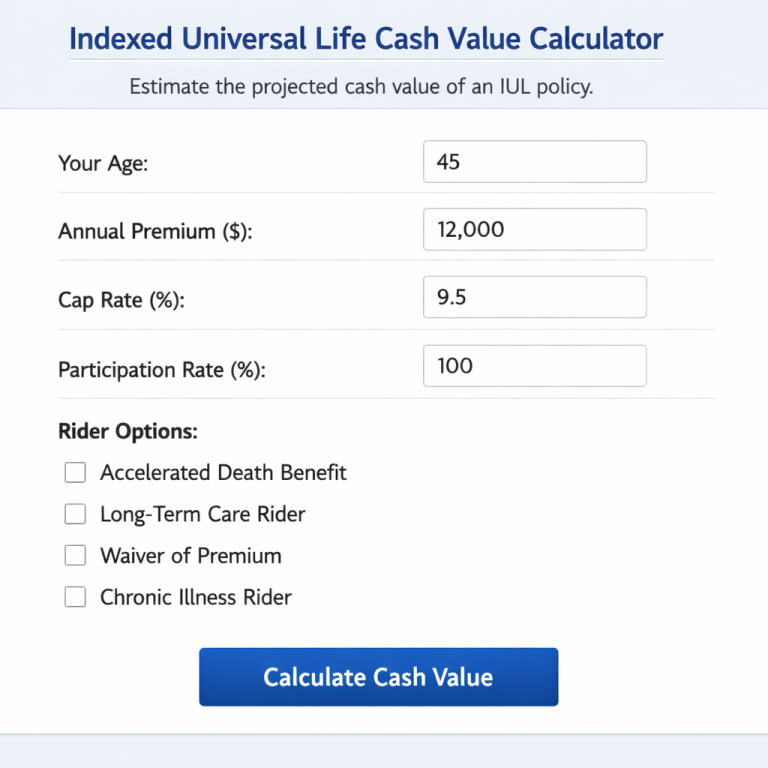
Put your retirement target, the premium you can afford, and the COI estimate into a spreadsheet. Compare the projected cash value of an IUL with its cap and floor to the guaranteed growth of a whole‑life plan.
Expert tip: schedule a yearly policy review
Ask your agent to show you the latest cap, participation rate, and COI. Small changes can shift which policy fits your budget.
And remember to test your risk comfort. Picture a market dip – an IUL’s floor protects the cash value, but a low cap can keep growth flat. Whole life stays steady, but the upside stays low.
Finally, keep an eye on loan balances. Pulling too much cash can shrink the death benefit and may even trigger a policy lapse if the cash value can’t cover the COI.

Conclusion
When you compare IUL vs whole life for retirement income, the choice comes down to two things: risk you can live with and how steady your bills are.
If you like a floor that stops loss and a chance to catch market upside, an IUL can fit a family that sees income rise and fall. If you prefer a lock step plan, whole life gives you calm and predictability.
Here’s a way to decide: write your retirement cash need, plug in a flexible premium scenario and a fixed premium scenario, and see which one stays on budget for the next 20 to 30 years. A simple spreadsheet can show you the gap.
Ready to take the next step? Life Care Benefit Services can pull quotes, run numbers, and help you pick a policy that matches your comfort level. Schedule a call today and lock in a plan that works for you.
FAQ
What is the main difference between an IUL and whole life when planning retirement income?
An IUL ties cash‑value growth to a market index, so the amount can rise when the market does, but a 0 % floor stops any loss when the market falls. Whole life gives a fixed interest rate that the insurer guarantees, so the cash value climbs at a steady, predictable pace. The trade‑off is upside potential versus certainty, and that shapes how each policy fits a retirement plan.
How does the premium flexibility of an IUL affect my retirement budget?
IUL premiums can go up when you have extra cash and can be trimmed when money is tight. That flexibility lets you match payments to your income flow, which can keep your retirement budget from being squeezed. The flip side is you must watch the policy’s cost‑of‑insurance, because if it climbs faster than your premium adjustments, the cash value could stall.
Can I borrow against the cash value in both policies, and what should I watch out for?
Both IUL and whole‑life policies let you take loans against the cash value. The loan reduces the death benefit until it’s paid back, so you need to plan for that impact. IUL loans are tax‑free as long as the policy stays in force, while whole‑life loans work the same way but the cash growth is already set, so the loan won’t affect future interest credits.
What role does the 0% floor in an IUL play during market downturns?
The 0 % floor in an IUL means that even if the linked index posts a negative return, your cash value won’t shrink that year. It protects the part of your retirement fund you’ve built inside the policy, giving you peace of mind during a market dip. Keep in mind that a low cap can still limit how much growth you see when markets rise.
Which policy typically offers higher guaranteed cash growth over 20 years?
Whole‑life insurance typically promises a guaranteed interest rate of about 2 % to 4 % each year, so over 20 years you can count on that steady rise. An IUL can beat that number when the index performs well and the cap is high enough, but the result depends on market conditions and the specific cap set by the carrier. If you need certainty, whole life usually wins.
How can I decide which option fits my risk comfort and cash flow needs?
Start by writing down how much monthly income you want in retirement, then look at which policy can meet that need within your budget. Plug a realistic premium into a simple spreadsheet for both an IUL (using a typical cap and participation rate) and a whole‑life guarantee. Compare the cash‑value projections and see which one stays on track. Life Care Benefit Services can walk you through that spreadsheet and help you pick the right fit.