
Best Cheap Life Insurance With No Exam
Cheap life insurance without a medical exam can spare you a clinic visit, but it doesn’t always spare you health questions. Here are eight named policies plus Life Care Benefit Services, with the key differences that can help you narrow your search.
1. Life Care Benefit Services: Personalized help comparing no-exam options
Life Care Benefit Services is an independent insurance agency that helps people compare coverage through partnerships with more than 50 insurance carriers. It’s a useful first stop if you want help sorting out no-exam options for your family, home, or business.

A no-exam policy can still involve health questions and underwriting. An advisor can review the options that fit your goals and budget, then explain the trade-offs between them. Life Care Benefit Services advisors review plans from top-rated carriers and explain the pros and cons of each option.
That conversation can help you avoid treating “no exam” as a single policy type. A term plan may suit a set period of family income protection. A guaranteed-issue whole life plan may fit a different need, such as a smaller lifelong benefit. The mortgage protection options without a medical exam may also be relevant if your main goal is to help protect your home loan.
Life Care Benefit Services is worth considering if you’d rather talk through several carrier options than pick from a single online quote. Ask which policies require health questions, how long coverage lasts, and what the full premium buys.
2. Lemonade Term Life Insurance: Online term coverage with no medical exam
Lemonade Term Life Insurance is a term policy with no medical exam. It’s a fit to consider if you want an online application and need a larger potential benefit than some small whole life plans provide.
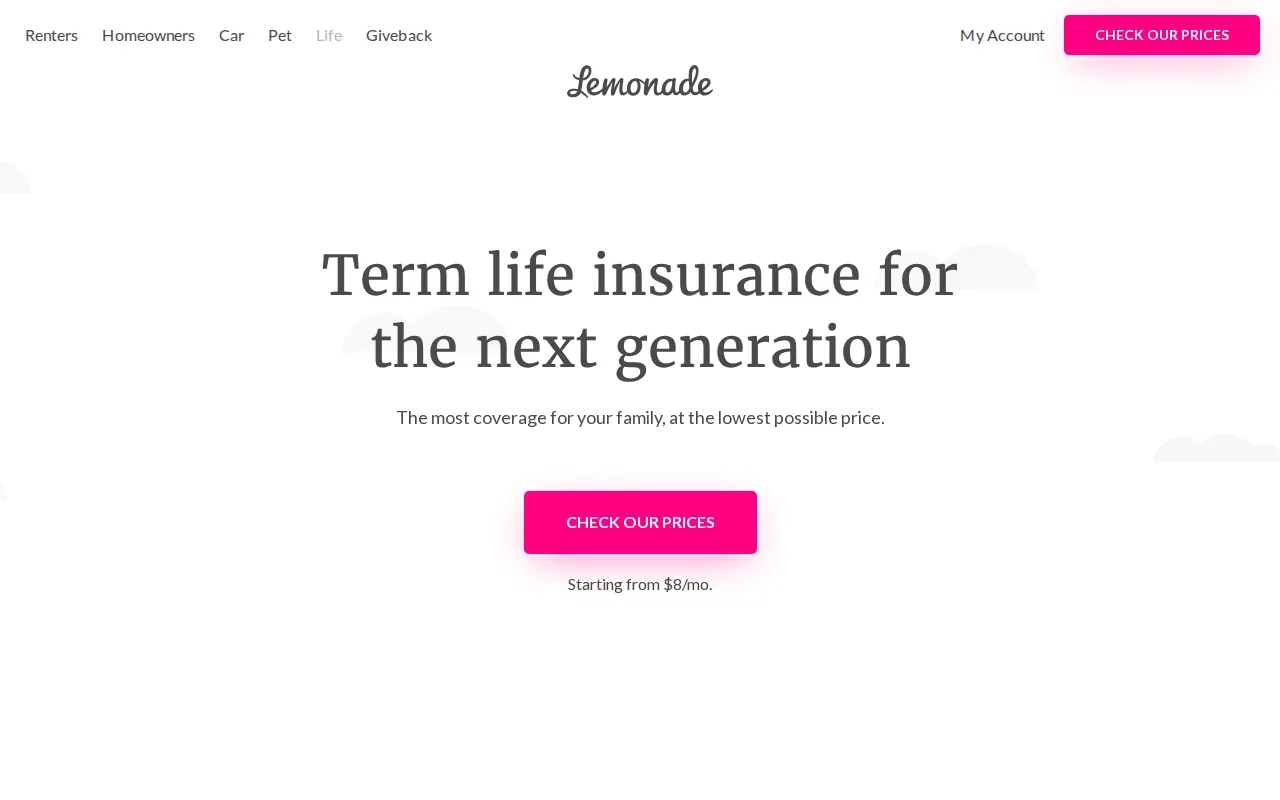
Customers can purchase up to $1.5 million in coverage. Policies start around $8 per month, but that figure is a starting point, not a personal quote. Premiums depend on the amount of coverage and term, along with age, lifestyle, health profile, and location.
That range of pricing factors matters when you compare quotes. Two people looking for the same death benefit may see different premiums because their age or health profile differs. The price also depends on how long the term lasts.
No exam doesn’t mean no underwriting. Read the application questions closely and answer them accurately. Before choosing a policy, check that the term length and benefit match the need you’re trying to cover.
3. Ethos Term Life Insurance: Term coverage with a simplified application
Ethos Term Life Insurance is an online term policy with health questions and no medical exam. It may suit applicants who want to start with a digital application and get a decision without booking an exam.
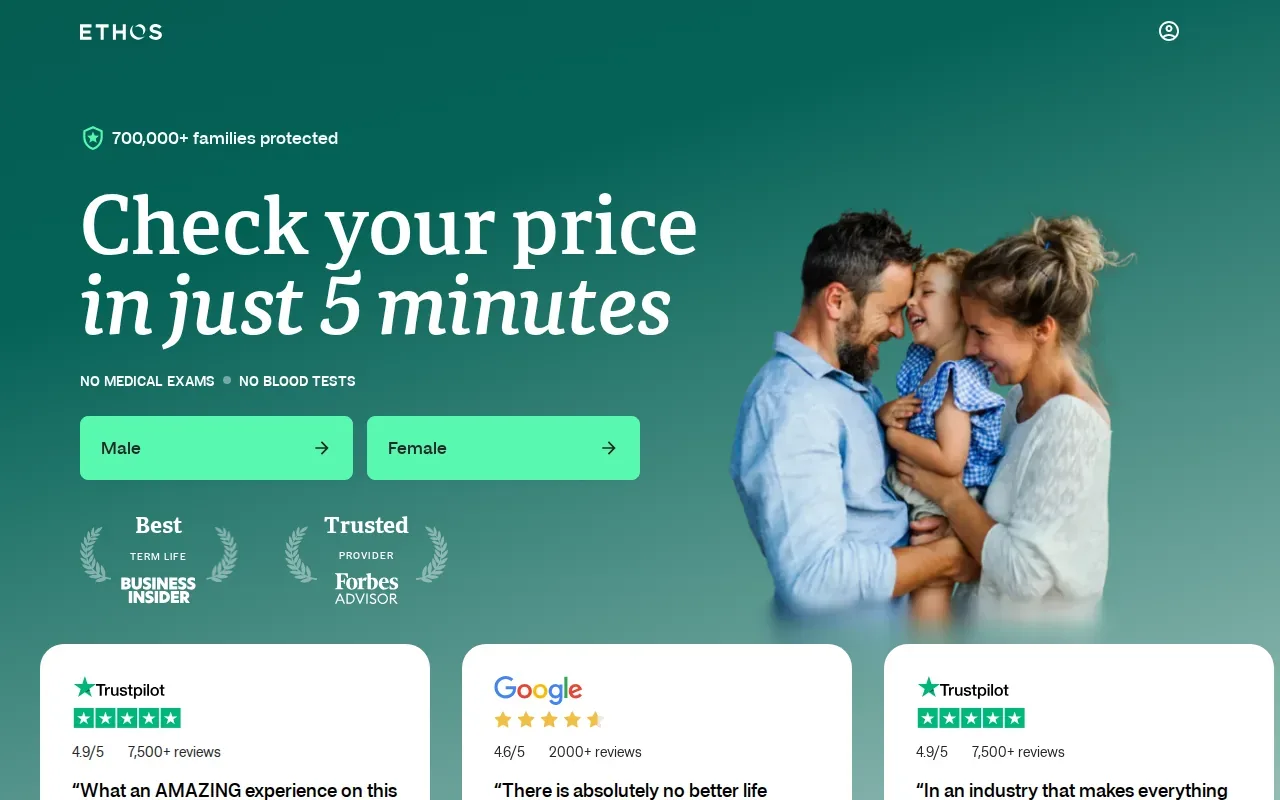
Ethos term coverage can last from 10 to 40 years, with up to $3 million in coverage. Applicants ages 20 to 69 may apply for term life, subject to age, state, and product rules. Ethos term coverage starts at $30 per month.
Those details make this option worth a look for someone seeking a larger benefit. But the available amount and decision depend on eligibility. Applicants answer health questions, and many receive an instant decision. A quick application doesn’t guarantee approval or the same price for every applicant.
Think through the length of the need before you apply. If you want coverage to line up with a mortgage or the years your children depend on your income, compare the term length with that timeline.
4. Brighthouse SimplySelect Term Life Insurance (by Brighthouse Financial): Fast decision for eligible applicants
Brighthouse SimplySelect Term Life Insurance is a term policy with a simplified application and no required medical exam. It may suit eligible applicants who want level premiums for a set coverage period.

The policy has guaranteed coverage periods of 10, 20, or 30 years, with guaranteed level premiums during the selected term. The application uses questions and a review process rather than required lab work or an exam.
A fast decision is possible, but it is not a promise that every application will be approved quickly. An insurer may need more time to review an application, and eligibility still matters. The policy’s term-based design also means it isn’t the same as lifelong whole life coverage.
If predictable premiums are high on your list, ask how the selected term fits your budget and coverage goal. Then compare the same term length and benefit with other quotes.
5. RAPIDecision Life: Term coverage with accelerated underwriting
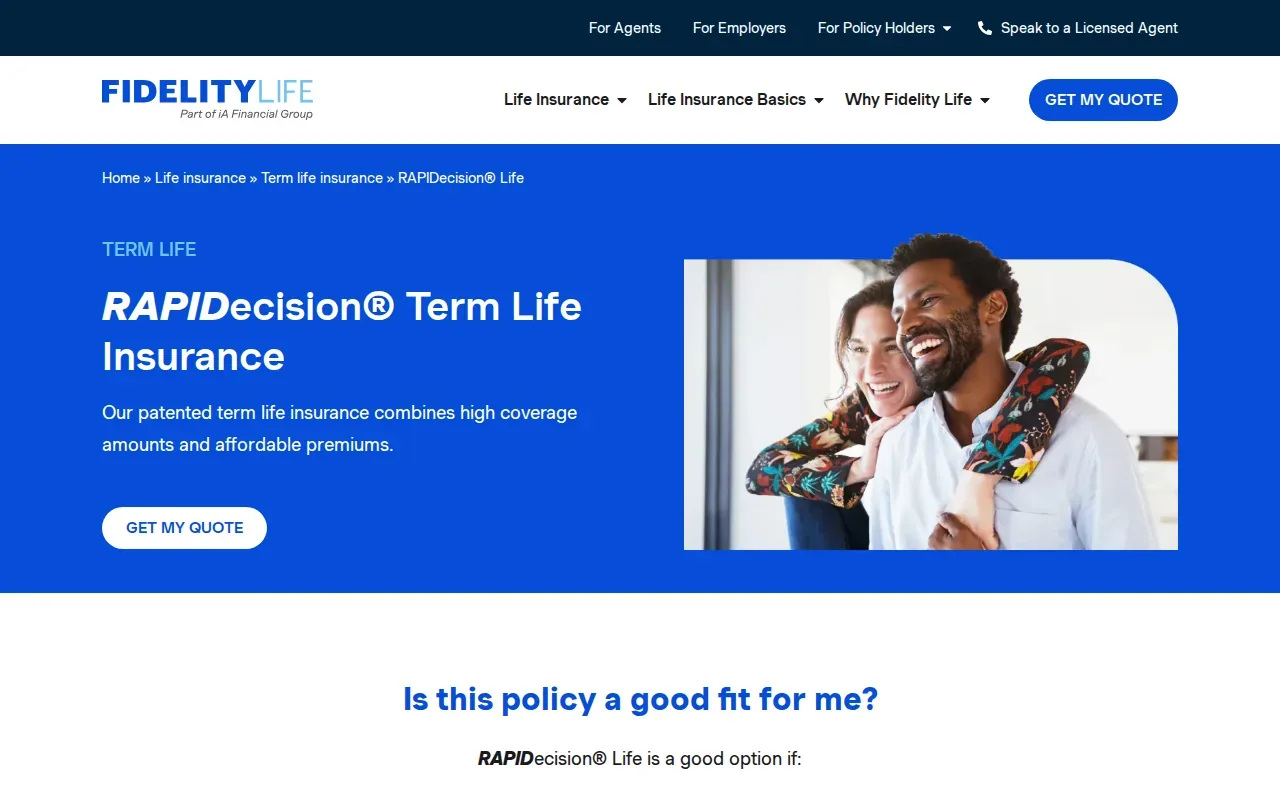
RAPIDecision Life by Fidelity Life is a term policy built around accelerated underwriting. It’s worth considering if you want term coverage and would prefer an underwriting path that may not require a medical exam.
Accelerated underwriting uses application details and other available information to assess risk. The exact review can vary by insurer and applicant. You may still need to answer questions about your health, and skipping an exam doesn’t mean every applicant qualifies.
RAPIDecision Life is term coverage that pairs high coverage amounts with affordable premiums. That doesn’t set a specific price for your application. Your quote and eligibility depend on the policy details and your answers.
Before you start, gather accurate notes on your health history and any medicines the application asks about. If you’re unsure about an old prescription, don’t guess. Clear answers can help keep the application accurate and may reduce follow-up questions.
6. Trendsetter LB by Transamerica: Higher coverage for qualifying applicants
Trendsetter LB by Transamerica is a term option with coverage up to $2 million and no medical exam for qualifying applicants. It may suit someone who wants a higher potential benefit but still hopes to avoid an exam.
The key phrase is “for qualifying applicants.” No-exam eligibility isn’t automatic, and the coverage limit isn’t a promise that every applicant can buy the maximum. The insurer’s review and the details of the application affect the offer.
Compare the amount you need with the amount you may qualify for. If your main goal is to protect income for a set period, term coverage may be worth comparing with permanent coverage. If you need a smaller benefit that remains in force for life, ask about whole life instead.
Keep the premium in view, too. A large coverage limit only helps if the policy fits your budget for the term you choose.
7. RAPIDecision Senior Life: A senior-focused term option
RAPIDecision Senior Life by Fidelity Life is a term option aimed at seniors. It may be a fit for older adults who want to compare term coverage and level premiums.
The product offers fast coverage with level premiums. Those points can help frame a comparison, but they don’t tell you the premium or coverage amount you’ll receive. Ask for a quote based on your age, desired benefit, and term.
Age can shape which type of policy is available and what it costs. So compare this option with the actual need you want the policy to cover, such as a set period of financial support. Don’t assume a term plan and guaranteed-issue whole life do the same job.
Review when the coverage starts and how long it lasts before you decide. Those details matter as much as the application speed.
8. Ethos Guaranteed Acceptance Whole Life: Guaranteed-issue coverage for eligible seniors
Ethos Guaranteed Acceptance Whole Life is a guaranteed-issue whole life policy for eligible seniors. It may be worth considering when health questions or medical exams are a barrier to other coverage.
Ethos guaranteed acceptance whole life is a permanent policy with no health questions required. Guaranteed issue differs from simplified underwriting, where the applicant still answers health questions. The basic structure of whole life insurance is designed to provide lifelong coverage as long as the policy stays in force under its terms.
Guaranteed acceptance can make an application more accessible, but it doesn’t mean every policy has the same benefit or cost. Read the policy details closely, including any limits on benefits during an early period. Check the premium against the benefit so you know what the policy is meant to do.
This type of coverage is not a direct substitute for a large term policy. It’s better to compare it with your specific goal than to judge it by the largest death benefit available elsewhere.
9. Colonial Penn Guaranteed Acceptance Life Insurance: Whole life with no health questions
Colonial Penn Guaranteed Acceptance Life Insurance is permanent whole life coverage with no health questions and no physical exam required. It may suit someone seeking guaranteed-acceptance coverage rather than a term policy that depends on health answers.
Whole life coverage is designed to stay in force for life under the policy’s terms, while term insurance covers a set period. You can read a general explanation of how term life insurance works to see why its coverage period differs from permanent coverage.
Before you buy, compare the benefit with the need you want it to meet. A guaranteed-acceptance policy can be a different kind of choice from a higher-benefit term plan. Check how the policy handles its benefit and when that benefit is available.
Ask for the full policy details and premium before you decide. A policy’s name alone won’t tell you whether it fits your budget or your family’s needs.
Compare no-exam life insurance options, costs, and trade-offs
“No exam” describes an application process, not one kind of policy. Some applicants answer health questions, while guaranteed-issue policies may skip those questions. The difference between term and permanent life insurance also affects how long coverage lasts and what you’re buying.
| Option | Policy type | Known no-exam detail | Best comparison point |
|---|---|---|---|
| Life Care Benefit Services | Agency help comparing coverage | Reviews plans from carrier partners | Personal guidance across options |
| Lemonade Term Life Insurance | Term | No medical exam; up to $1.5 million | Starting price and term length |
| Ethos Term Life Insurance | Term | No exam; up to $3 million | Eligibility and term length |
| Brighthouse SimplySelect Term Life Insurance (by Brighthouse Financial) | Term | No required exam or lab work | 10-, 20-, or 30-year term |
| RAPIDecision Life | Term | Accelerated underwriting | What the application review requires |
| Trendsetter LB by Transamerica | Term | No exam for qualifying applicants; up to $2 million | Eligibility for the amount you need |
| RAPIDecision Senior Life | Term | Senior-focused; level premiums | Age, term, and quoted premium |
| Ethos Guaranteed Acceptance Whole Life | Whole life | Guaranteed acceptance with no health questions | Benefit terms and premium |
| Colonial Penn Guaranteed Acceptance Life Insurance | Whole life | No health questions or physical exam | Benefit and policy terms |
Starting prices can help set expectations, but they can’t predict your own rate. Lemonade policies start around $8 per month, while Ethos Term Life Insurance starts at $30 per month. Those starting figures aren’t a like-for-like quote: the policy terms and applicant details may differ.
When comparing prices, use the same coverage amount and term wherever possible. Ask whether the quoted premium is level for the term, what questions remain in the application, and when the full benefit applies. For guaranteed-issue coverage, review any early benefit limits before you focus on the premium.
Be cautious of a pitch that promises approval for everyone while also making the policy sound like a large, low-cost term plan. Check the insurer and policy documents, confirm the premium and benefit in writing, and read any waiting-period terms. “No exam” alone doesn’t mean guaranteed approval, the lowest price, or immediate access to the full benefit.
Frequently asked questions
Can you get life insurance without a medical exam?
Yes, some life insurance policies don’t require a medical exam. You may still need to answer questions about your health, medicines, or lifestyle. The insurer can use your application and other available information to decide whether to offer coverage. Guaranteed-issue policies may not ask health questions, but their terms differ from term policies.
Does no-exam life insurance mean guaranteed approval?
No, a policy without a medical exam doesn’t always guarantee approval. Many no-exam term policies still review health answers and other application details. Guaranteed-issue coverage is a separate policy type, with its own eligibility rules and benefit terms. Read the policy materials before you assume how much coverage is available or when it begins.
Is no-exam life insurance cheaper than a policy with an exam?
Not always. The premium depends on details such as age, health profile, coverage amount, and term length. A no-exam process can be more convenient, but that doesn’t prove it will be the lowest-cost choice. Compare quotes for the same benefit and term, then review the policy terms alongside the price.
What health questions do no-exam policies ask?
Questions vary by policy, but an application may ask about medical history, medicines, tobacco use, or lifestyle. Some insurers may review available records as part of underwriting. Answer each question accurately and check dates or medication details before submitting. If you’re unsure what a question means, ask the insurer or a licensed advisor.
What’s the difference between term and guaranteed-issue whole life?
Term life covers a set period, while whole life is designed to provide lifelong coverage under the policy’s terms. Guaranteed-issue whole life can avoid health questions, while many term policies still use health information to assess eligibility. Compare the coverage period, premium, benefit, and policy conditions before choosing.
Conclusion
For help comparing no-exam options across carriers, start with Life Care Benefit Services and ask an advisor to match the policy type and benefit to your goal. Before you apply, request a quote and review the premium, term, and benefit conditions side by side.