
Best Medicare Part B Supplements: 5 Plans Compared
Medicare Part B leaves some costs for you to pay, and a Medigap policy can help cover certain gaps. Medicare Part B supplements, usually called Medigap, are sold by private insurers and follow standardized plan designs. Here are three places to explore, followed by a side-by-side look at several plans.
1. Life Care Benefit Services
Life Care Benefit Services is an independent insurance agency that helps people compare Medicare coverage. It works with more than 50 insurance carriers and serves seniors exploring Medicare and supplemental insurance.

For someone considering Plan B, an advisor can help review options from insurance carriers and explain the pros and cons of each. The agency says its licensed insurance advisors discuss a person’s goals, budget, and coverage needs. That can help you check whether a plan fits your costs and the care you expect to use.
Life Care Benefit Services also has information about Medicare supplement insurance companies. Use it as a starting point, then confirm which plans are sold where you live. Medigap benefits are standardized, but premiums and availability can vary by insurer and state.
Medigap works with Original Medicare. It doesn’t replace Medicare Part B or act as a prescription drug plan. Before asking for a quote, make a list of the costs you most want help paying. A coverage guide can help you review key points.
For a personalized review, Life Care Benefit Services can compare carrier options and explain how their benefits differ.
2. AARP Medicare Supplement Insurance Plans by UnitedHealthcare
AARP Medicare Supplement Insurance Plans by UnitedHealthcare are Medigap policies. They may suit people who want to look at a named carrier option while comparing standardized benefits.
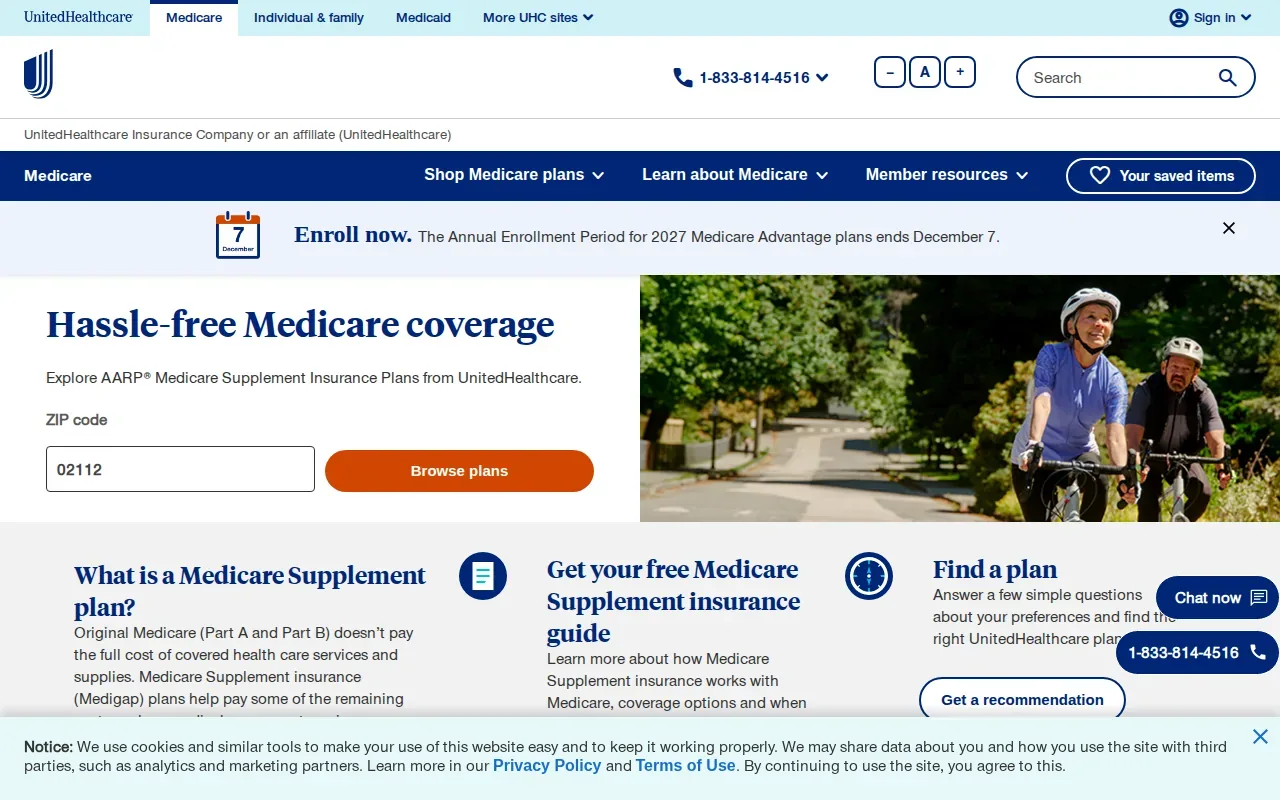
Original Medicare Part A and Part B don’t pay every cost for covered health care services and supplies. Medigap insurance may help pay some of those remaining costs. The exact benefits depend on the lettered plan you choose, not just the company name.
That distinction matters when you compare quotes. If you’re looking at Plan B, ask whether the policy covers the specific gaps you care about. Then compare its premium with the premium for the same lettered plan from other insurers in your area. A Plan B policy has the same core benefits as another insurer’s Plan B, though prices and policy terms can differ.
Don’t assume a brand name tells you which plan is right for you. Check the plan letter, premium, and the rules for applying in your state. Also confirm that you have Original Medicare, since Medigap generally works alongside it rather than with Medicare Advantage.
3. Humana Medicare Supplement Insurance
Humana Medicare Supplement Insurance includes Medigap plans that may help pay some health care costs left by Medicare Parts A and B. It’s another company to include when you compare plan letters and premiums.

Start by choosing the level of coverage you want to review. Then compare the same plan letter across insurers. For example, a Plan B from one insurer has the same standardized benefits as Plan B from another. The premium, underwriting rules, and availability may still differ.
When you ask about a quote, check whether the insurer can offer the plan in your state and whether you can enroll under the rules that apply to you. Be ready to share your age and Medicare Part B start date, since those details can affect eligibility and pricing. Ask how the premium is set and whether it can change over time.
Use Humana as one comparison point, not as a substitute for reviewing the plan itself. A policy’s letter tells you more about its standardized coverage than its brand does.
Medigap Plans B, G, N, C, and F Compared
Medigap Plan B is not the same as Medicare Part B. Part B is federal medical insurance. Medigap Plan B is private insurance that can help pay certain costs Original Medicare leaves behind.
The table shows the main differences that can help narrow your shortlist. It focuses on standardized benefits, not on premiums. For the full benefit chart, consult a coverage resource.
| Plan | Part B deductible | Part B cost sharing | Other useful detail |
|---|---|---|---|
| B | You pay it | Helps pay Part B coinsurance or copayments | Helps pay the Part A deductible |
| G | You pay it | Helps pay Part B coinsurance or copayments | Includes Part B excess charges and skilled nursing facility coinsurance |
| N | You pay it | Helps pay most Part B coinsurance, with some copays | Doesn’t cover Part B excess charges |
| F | Covered for eligible policyholders | Helps pay Part B coinsurance or copayments | Only available to people eligible for Medicare before 2020 |
Plan B can appeal if you want help with the Part A deductible and Part B coinsurance, but are willing to pay the Part B deductible yourself. Plan G gives broader coverage for some costs, while still leaving that deductible to you. Plan N may fit someone willing to pay certain office or emergency room copays.
Plan F covers the Part B deductible, but people who became eligible for Medicare on or after January 1, 2020, can’t buy it. Some Medigap plans also include limited foreign travel emergency benefits. Check a plan chart for the benefits and limits that apply to each letter.
What to Check Before You Apply
Eligibility, enrollment timing, and premiums can shape your choice as much as the plan letter. Use these checks before you submit an application.
- Confirm eligibility. In general, you need Medicare Part A and Part B to buy a Medigap policy. People under 65 may have different plan access based on state rules.
- Mark your Medigap open enrollment window. The six-month period starts when you’re 65 or older and enrolled in Part B. During this window, insurers generally can’t use your health to deny a policy or charge more because of health problems.
- Check for guaranteed-issue rights. Some life events create a limited right to buy certain Medigap policies without medical underwriting. The plan choices and deadlines depend on the event, so check your situation with your state insurance department or a licensed advisor.
- Compare like with like. Get prices for the same plan letter from insurers that sell it in your area. Ask how the insurer sets premiums. Pricing may be based on age when you buy, your current age, or a rate that doesn’t change with age.
- Keep your current coverage in mind. You generally can’t use Medigap with Medicare Advantage. If you’re enrolled in Medicare Advantage, review your coverage rules before considering a Medigap policy.
To purchase a policy, first confirm your Part A and Part B status. Next, compare plan benefits and premiums. Then check the application window and insurer rules for your state. Keep the quote and policy documents so you can review the terms before you enroll.
Frequently Asked Questions
What does Medicare Supplement Plan B cover?
Medigap Plan B helps pay the Medicare Part A deductible and certain Part A and Part B cost sharing. You still pay the Part B deductible. It doesn’t cover every Medicare cost, so check the official benefit chart before you choose it.
Who can buy a Medigap Plan B policy?
You generally need Medicare Part A and Part B to buy a Medigap policy. Your age and state can affect which plans insurers must offer. The six-month Medigap open enrollment period begins when you’re at least 65 and enrolled in Part B. If you’re under 65, check your state’s rules.
When is the best time to enroll in Medigap?
Your six-month Medigap open enrollment period is often the easiest time to apply. It starts when you’re 65 or older and enrolled in Part B. During that period, insurers generally can’t deny coverage or charge more based on health. Special guaranteed-issue rights may apply after certain events, with deadlines.
How are Medigap premiums calculated?
Premiums depend on the insurer, plan, location, and the way the insurer sets rates. A company may base rates on your age when you buy, your current age, or a rate that doesn’t change with age. Compare the same plan letter from several insurers and ask how rates may change later.
Can I have Medigap and Medicare Advantage at the same time?
You generally can’t use Medigap to pay Medicare Advantage costs. Medigap is designed to work with Original Medicare. If you have Medicare Advantage and want to switch, check enrollment timing and your right to buy a Medigap policy before making a change. Rules can depend on your circumstances and state.
Conclusion
Plan B may suit you if you want help with several Original Medicare costs and can pay the Part B deductible yourself. Compare the same plan letter across insurers, then ask Life Care Benefit Services to review options that fit your state and budget.