
Best Term Life Insurance Policies: 4 Options
Finding the best term life insurance policy means matching coverage to the years your family depends on your income. These four options include an independent agency and three named policies, each with a different way to compare coverage and get help.
1. Life Care Benefit Services
Life Care Benefit Services is an independent insurance agency that helps people compare life and health coverage. It works with more than 50 insurance carriers and serves families, individuals, and small business owners. It’s a good starting point if you want guidance across more than one carrier instead of beginning with a single insurer.
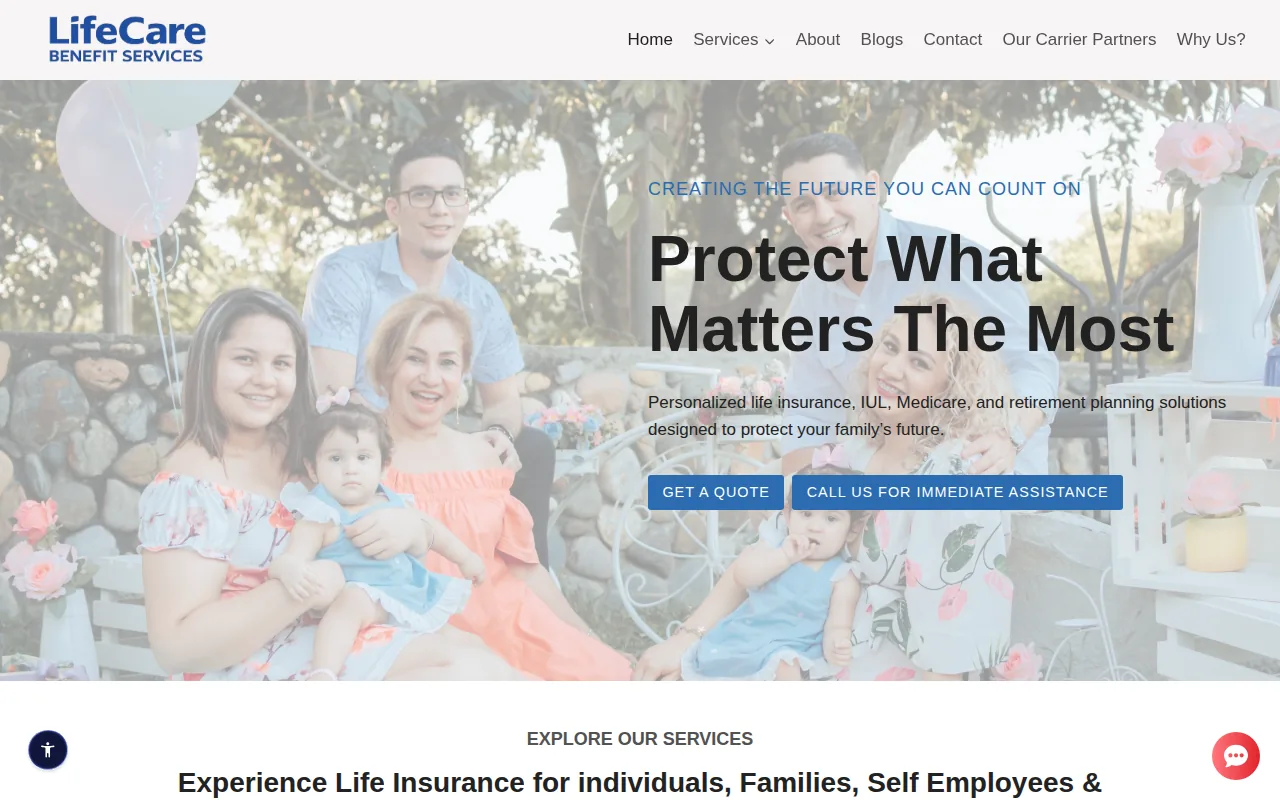
Its licensed insurance advisors can discuss your goals, budget, and coverage needs. The agency says it reviews plans from top-rated carriers and explains the pros and cons of each option. That can help when you’re weighing a term policy against permanent life coverage or deciding how much of your income your family may need to replace.
Term life insurance covers a set period. If the insured person dies during that period, the policy pays a death benefit to the named beneficiaries, subject to the contract. The right term often tracks a known need, such as years left on a mortgage or the time until children are financially independent.
If you’re weighing term coverage against permanent coverage, Life Care Benefit Services also has a term vs. whole life insurance comparison that explains the main trade-offs. Ask an advisor to show the proposed term, benefit amount, premium, and any riders in writing before you decide.
Best for: People who want help comparing carrier options and talking through how coverage fits their family’s plans.
2. PL Promise Term by Pacific Life: level premiums and a conversion feature
PL Promise Term by Pacific Life is a term policy described as having level premiums and a conversion feature. It may suit applicants who want a set premium during the selected level-premium period and value the option to ask about converting term coverage to permanent coverage.
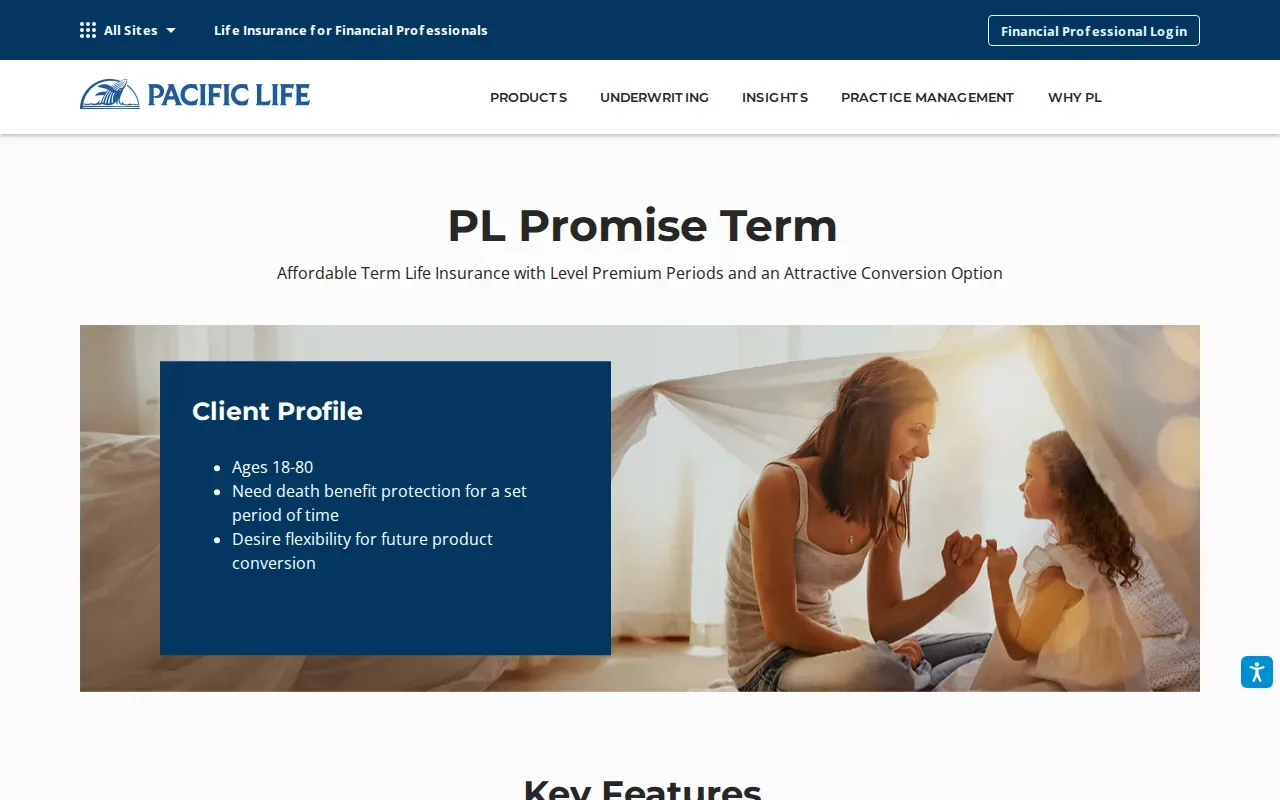
Pacific Life’s product material lists a client profile for ages 18 to 80. It also gives a sample in which a 40-year-old woman pays $42 per month. Treat that as an illustration tied to the stated profile, not as a quote for every applicant. Your age, health, coverage amount, and other application details can change an actual premium.
The conversion feature is worth examining if your need may outlast the term. Ask which permanent policies are available for conversion, when the option ends, and whether you can convert all or only part of the benefit. Those details affect how useful the feature is in practice.
Best for: People who want level premiums and place value on a conversion feature. Confirm the term period and conversion rules in the policy materials before comparing it with another quote.
3. YourLife Guaranteed Level Term by Nationwide: a level-term option to compare
YourLife Guaranteed Level Term by Nationwide is a level-term policy option to include when comparing how long coverage should last. Nationwide describes term life as income replacement for a 10- or 20-year term, and points people seeking a 30-year term to its Guaranteed Level Term coverage.
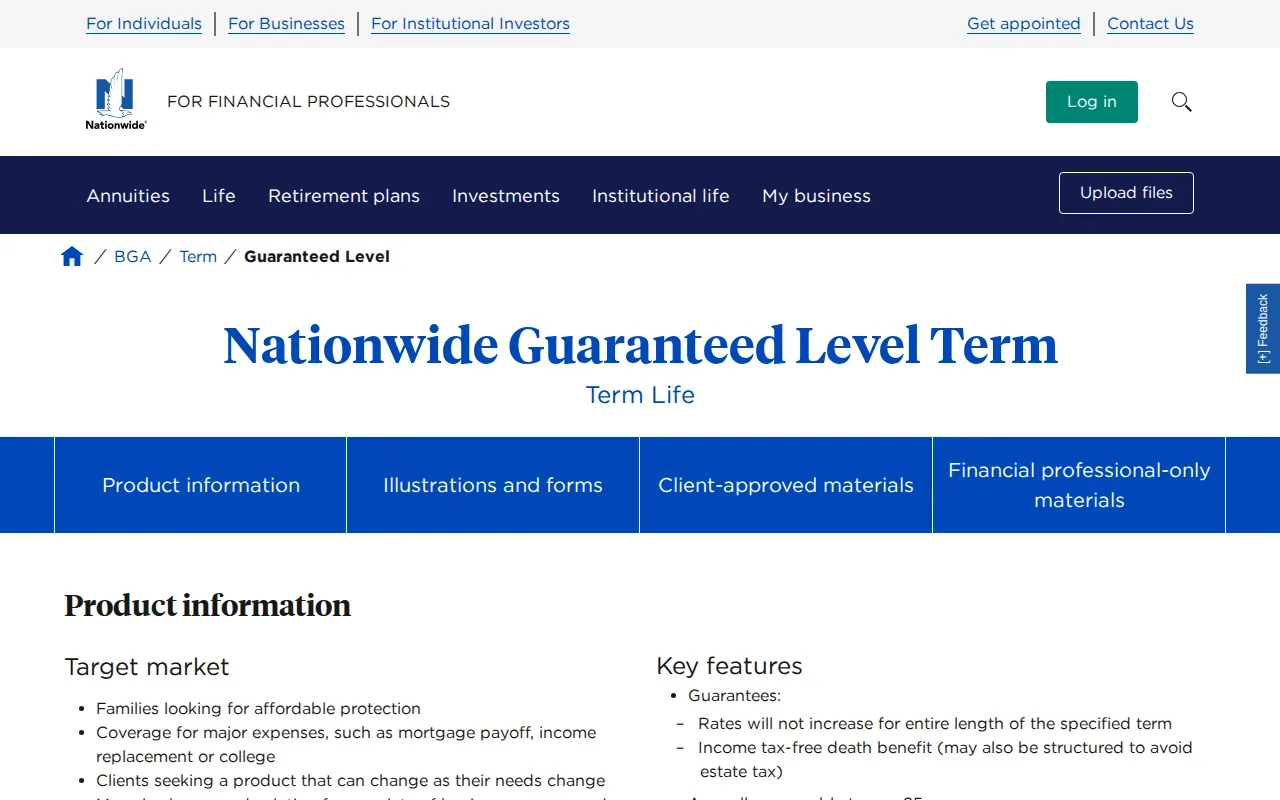
That makes the choice of term a central part of the comparison. A 10-year term may match a shorter financial obligation. A 20- or 30-year term may better line up with a longer mortgage or the years a family expects to rely on one person’s income. These are planning examples, not a recommendation for a particular person.
Before applying, compare the premium for the same benefit amount and term length across quotes. Then check whether the premium stays level for the full chosen period. A lower initial price can be a poor match if the coverage period ends before the financial need does. For further insights into managing your financial planning alongside term life insurance, consider exploring resources available at mastertrust.
Nationwide also notes that age affects cost, with rates tending to rise as people get older. Insurers may consider health and other details too, so answer application questions fully and consistently. If a medical exam or added records are part of underwriting, ask what’s needed and how it could affect the decision.
Best for: People comparing set-term coverage who want to examine 10-, 20-, or 30-year planning needs. Verify the available term and policy terms for your state and application.
4. Term Life Insurance by Ethos: an online application option
Term Life Insurance by Ethos is an online option for people who want to start with personalized price estimates. Its term life page says users can choose a term length and coverage amount, and see estimates in seconds. It also has a coverage calculator for people who want help thinking through an amount.
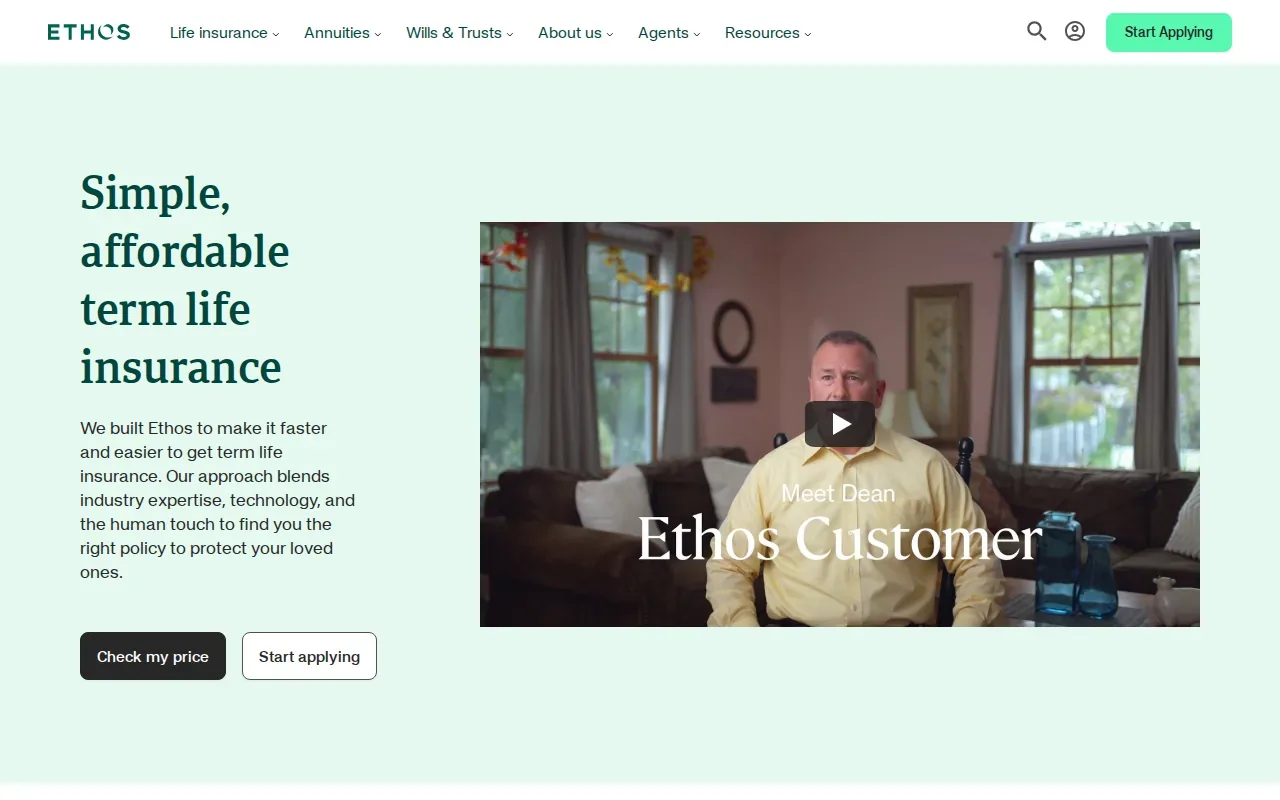
Online estimates can help you narrow down a range, but they aren’t the same as an approved policy or final premium. The application and underwriting process may ask for more details before an insurer makes a decision. Ethos says its customer support team can answer questions.
Use the same benefit amount and term when you compare estimates with an advisor-assisted quote. Otherwise, you may be comparing different coverage. Also ask how the policy handles conversion and whether any riders are available if those features matter to your plan.
Best for: People who want to begin online by adjusting term length and coverage amount. Keep a record of the assumptions behind each estimate so you can compare like with like.
| Decision point | What to compare | Why it matters |
|---|---|---|
| Coverage amount | Income needs and major debts | A shared amount makes quotes easier to compare. |
| Term length | Years until the need changes | Coverage should line up with the financial obligation you want to protect. |
| Premium | Price for the same term and benefit | Different assumptions can make one quote look cheaper than another. |
| Policy features | Conversion terms and any riders | Features may affect how the policy fits if your plans change. |
Term coverage is often less costly than permanent coverage because it lasts for a set period and generally doesn’t build cash value. The trade-off is that the protection ends when the term ends unless the policy is renewed or converted under its terms. For a plain-language definition, see Wikipedia’s overview of term life insurance.
Frequently asked questions
How long should a term life insurance policy last?
A term life policy should usually last as long as the financial need you want it to cover. Consider how many years remain on a mortgage or until dependents may support themselves. Then compare available terms and premiums. A licensed advisor can help you check whether the selected term matches your goals and the policy’s renewal or conversion rules.
What affects the cost of term life insurance?
Age and health can affect the cost, along with the coverage amount and term length. Insurers may also consider details from your application, including lifestyle factors. Compare quotes using the same benefit and term, then review whether premiums stay level. The price shown in an estimate may change after underwriting.
Do I need a medical exam to get term life insurance?
Not always. The underwriting process depends on the insurer and the application. An insurer may assess health information without an exam, or may ask for an exam or records. Ask what steps apply before you submit an application, and share complete, accurate information so the insurer can assess your eligibility.
Is a term life insurance payout taxable?
Life insurance proceeds paid to a beneficiary are generally not included in federal taxable income, though interest added to proceeds may be taxable. Tax treatment can depend on how the benefit is paid and the details of the policy. Review the IRS guidance on taxable and nontaxable income and speak with a tax professional about your situation.
Is term life insurance better than whole life insurance?
Neither is best for everyone. Term insurance covers a set period and often costs less than permanent coverage, while whole life is designed to last for life and may build cash value. The right fit depends on the need, budget, and how long you want coverage. Compare the policy terms, not only the first premium.
Conclusion
For personal help comparing carrier options, start with Life Care Benefit Services and ask for quotes based on the same coverage amount and term. Before you choose, confirm the premium period, underwriting steps, and any conversion terms in writing.