
Best Indexed Universal Life for Small Business Owners in 2026
Running a small business means juggling cash flow, payroll, and long‑term security. One mistake many owners make is leaving their family and company unprotected when the unexpected hits. Indexed universal life (IUL) policies can fill that gap by blending death‑benefit protection with a cash‑value account that grows with market indexes.
In this article you’ll get a quick rundown of the top IUL options that speak directly to small‑business owners. We’ll break down each plan’s living‑benefit riders, cash‑value growth potential, and how the premium fits a fluctuating business budget. By the end you’ll know which policy matches your risk tolerance and growth goals.
1. FlexIUL for Business Owners (Our Pick) , Living Benefits and Growth
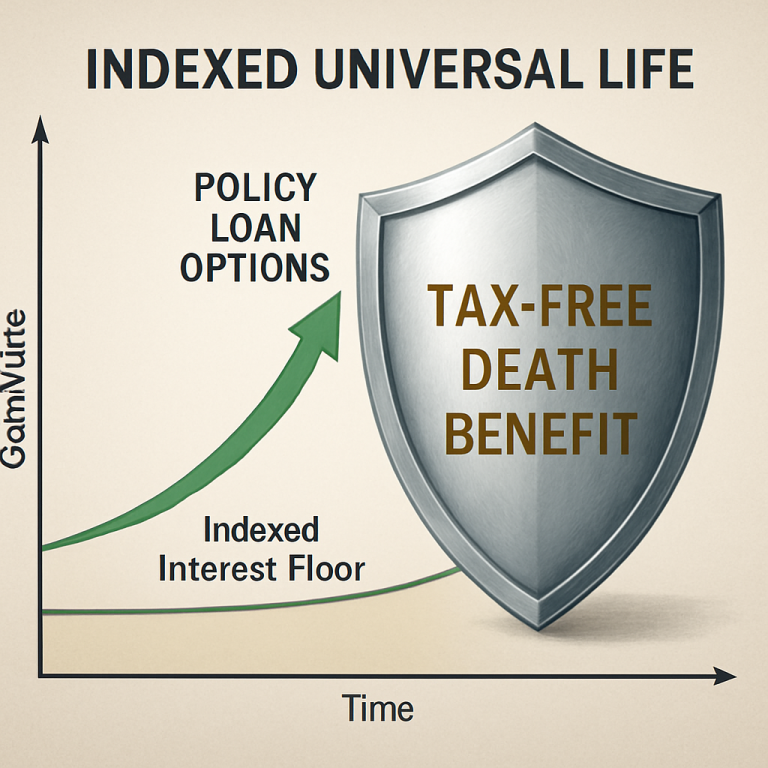
FlexIUL is the only policy that markets itself straight to small‑business owners. It bundles a tax‑free death benefit with a cash‑value account that earns interest linked to a stock index. The insurer uses options to credit interest, so you never own the market directly.
Premiums are split into two buckets. One pays the cost of insurance; the other feeds the cash value. Because the cash value is protected by a floor, usually 0%, you won’t lose money when the market dips. If the index climbs, you capture a portion of the gain up to a cap set by the carrier.
Living‑benefit riders let you tap a slice of the death benefit while you’re alive. Think of a sudden health issue, a key‑person buy‑sell need, or a short‑term payroll shortfall. The rider payout is tax‑free up to your basis, and the rest of the cash value keeps growing.
FlexIUL also offers flexible premiums. When sales are strong you can boost payments to speed up cash accumulation. In a slow month you can drop to the minimum required amount, as long as the cash value stays above the cost‑of‑insurance charges.
Because the policy is designed for entrepreneurs, underwriting is simplified. You won’t need a massive face amount; the carrier works with coverage as low as $50,000, which fits many buy‑sell agreements. The combination of living‑benefit access and index‑linked growth makes it a solid foundation for a business‑continuation plan.

2. Nationwide YourLife Indexed Universal Life , High Cap Rate
Nationwide’s YourLife IUL stands out for its high cap rates. The policy caps earnings at 12% to 15% depending on the index choice, which is higher than the industry average of around 10%.
The cash‑value portion follows the S&P 500 index, but the policy never invests directly in stocks. Instead, the insurer uses a proprietary formula to credit interest. If the index jumps 14% in a year, you’ll see the cap applied, so you might get 12% credited.
One of the few IULs that includes an integrated long‑term care rider, YourLife lets you add a care benefit that can be accessed if you need assisted‑living services. This rider is a rarity among IULs and adds real value for owners who worry about health‑care costs later.
Premium flexibility mirrors FlexIUL: you can increase payments when cash flow is strong, or drop to the minimum required amount during lean periods. Just remember that if the cash value falls below the cost‑of‑insurance, the policy could lapse.
Because the cap is relatively high, the policy can generate solid cash accumulation over a 20‑year horizon, especially in bullish market cycles. However, the higher cap often comes with slightly higher fees, so run a side‑by‑side illustration to see net growth after costs.
Nationwide also offers a variety of index options, including a blended index that smooths out volatility. For a small‑business owner who wants a balance of upside and protection, YourLife is a strong contender.
3. Pacific Life Indexed Universal Life , Strong Cash Value Accumulation
Pacific Life’s IUL is known for its early cash‑value surrender potential. The carrier’s “Horizon” series often hits a 9% participation rate with a 10% cap, which translates into solid cash buildup in the first few policy years.
The policy’s cash value is shielded by a 0% floor, so you never see a negative credit. If the index posts a 5% gain, you’ll get 5% multiplied by the participation rate, usually 100% for Pacific’s basic option, so the credit matches the index up to the cap.
For business owners, Pacific Life offers a “key‑person” rider that can fund a buy‑sell agreement. The rider’s payout can be used to buy out a departing partner without dipping into the company’s cash reserves.
Premiums are flexible, but Pacific tends to require a higher minimum face amount, often $100,000, to qualify for the best participation rates. That can be a hurdle for very small firms, but many owners find the higher cash value worth the extra coverage.
The carrier’s financial strength is rated A+ (Moody’s) and A (S&P), giving confidence that the policy’s guarantees will be honored for decades.
Pacific’s strong policy illustrations make it easy to compare the cash‑value trajectory under different market scenarios. By running a Monte Carlo simulation you can see how the policy behaves in bullish, neutral, and bearish years.

4. John Hancock Indexed Universal Life , Flexible Premium Options
John Hancock’s IUL shines with its premium‑flexibility features. You can start with a low initial payment and then increase it as your business profits rise. The carrier also offers a “pay‑as‑you‑go” mode that lets you skip a payment if you have enough cash value to cover the cost‑of‑insurance for that month.
The policy links cash value to a selection of indexes, including the S&P 500 and a blended index that smooths out sharp swings. Participation rates hover around 100%, while caps are typically set at 11%.
One standout is the optional “accelerated death benefit” rider, which lets you access up to 50% of the death benefit if you become chronically ill. That rider can act like a short‑term disability cushion for a business owner who can’t work.
John Hancock also provides a handy online policy‑finder tool that runs a quick quote in three steps. The tool pulls your age, desired coverage, and index preference to give a ballpark premium.
Because the carrier offers a range of riders, like a long‑term care rider and a waiver‑of‑premium rider, you can layer protections without buying separate policies. The flexibility helps owners match premium outlay to seasonal revenue swings.
When evaluating John Hancock, ask for an illustration that shows the impact of a missed payment. The policy’s built‑in buffer can keep the cash value alive for a few months, but prolonged gaps could force a lapse.
For owners who need a policy that adapts to cash‑flow changes while still offering solid index participation, John Hancock is a worthy pick.
5. Protective Indexed Universal Life , Low Cost and Simplicity
Protective’s IUL is built for owners who want a straightforward, low‑cost solution. The carrier offers two interest accounts: a fixed account with a guaranteed rate and an indexed account that credits interest based on a single market index.
The indexed account’s cap sits at 10%, which is modest compared to some competitors, but the policy’s overall fee structure is among the lowest in the market. That means more of your premium goes toward cash accumulation rather than administrative costs.
Premium flexibility is simple, you can choose a level premium that stays the same for the life of the policy, or you can opt for a flexible schedule that lets you adjust payments within set limits.
Living‑benefit riders are optional. The most popular is the “accelerated death benefit” rider, which can be triggered by a terminal or chronic illness diagnosis. Because the rider cost is low, many small‑business owners add it for extra peace of mind.
Protective’s underwriting is carrier‑based, meaning they evaluate your health and risk directly. The minimum face amount starts at $25,000, making it accessible for many startups that need a buy‑sell fund but can’t afford a $100,000 policy.
When you compare the cost‑to‑benefit ratio, Protective often wins on simplicity. If you’re comfortable with a modest cap and want a policy that’s easy to manage, this could be the right fit for your business.
Frequently Asked Questions
What is an indexed universal life (IUL) policy?
An IUL is a permanent life‑insurance contract that gives a death benefit and a cash‑value account. The cash value earns interest based on a stock market index, but you never own the stocks. A floor (usually 0%) protects you from market loss, while a cap limits the upside. The policy also lets you adjust premiums and add riders for extra protection.
How does the cash value grow in an IUL?
Each crediting period the insurer looks at the selected index’s performance. If the index goes up, the insurer applies a participation rate (often 100%) and caps the credit at a pre‑set maximum. If the index falls, the floor ensures the cash value stays flat. Over time, the cash value can be used for loans or withdrawals, typically tax‑free up to your basis.
Can I use an IUL to fund a buy‑sell agreement?
Yes. Many small‑business owners purchase an IUL with a face amount that matches the buy‑sell price. If a partner passes away or wants out, the death benefit can fund the buy‑out without forcing the company to liquidate assets. Adding an accelerated death‑benefit rider can provide early access if the owner becomes disabled.
What are the typical fees associated with an IUL?
Fees include the cost of insurance (COI), administrative charges, and any rider costs. Some carriers also charge a surrender fee if you withdraw in the early years. Look for a total annual fee under 1.5% of the cash value. Always ask for a fee breakdown in the illustration.
How flexible are premium payments?
Most IULs let you raise or lower premiums within limits set by the carrier. If your business has a strong month, you can add extra cash to boost the cash value. During a slow month you can pay the minimum required amount, as long as the cash value stays above the COI. Skipping a payment entirely is possible with some carriers if the cash value can cover the costs.
Are the death benefits tax‑free?
Under IRS Topic 603, death benefits paid to beneficiaries are generally income‑tax free. However, if the policy is classified as a Modified Endowment Contract (MEC), any loans or withdrawals may be taxable. Most IULs avoid MEC status by limiting premium payments.
Conclusion
Choosing the right IUL for a small‑business owner comes down to three things: living‑benefit access, cash‑value growth potential, and premium flexibility that matches your revenue cycle. FlexIUL leads the pack with its entrepreneur‑focused design, integrated riders, and low minimum face amount. Nationwide’s YourLife offers a high cap and a rare long‑term‑care rider, while Pacific Life provides strong early cash accumulation for those who can meet a higher minimum coverage.
John Hancock’s flexible premium options and online quote tool make it easy to adjust payments as your business grows. Protective rounds out the list with a low‑cost, simple structure that still gives you the core IUL benefits without a heavy fee burden.
Before you decide, sit down with a licensed agent from Life Care Benefit Services. They can pull side‑by‑side illustrations, run stress‑tests, and help you pick the index, cap, and riders that line up with your financial goals. A well‑chosen IUL can protect your family, fund a buy‑sell agreement, and serve as a tax‑advantaged reserve for future business needs.
Take the next step today. Review your cash‑flow projections, decide how much coverage you need for key‑person protection, and let a trusted advisor guide you through the illustration process. With the right IUL in place, you’ll have peace of mind that your business and loved ones are covered, no matter what the market does.