
Best Life Insurance With Living Benefits for Gig Workers
The best life insurance with living benefits for gig economy workers should protect loved ones and give you a way to access value if a qualifying health need arises. Life Care Benefit Services helps people compare coverage from insurance carriers, while the five options below have different strengths and important details to check.
1. Nationwide CareMatters II: Long-term care coverage linked to universal life
Nationwide CareMatters II links long-term care coverage to a universal life policy with a fixed premium. That makes it the clearest fit on this list for someone who wants to ask about life coverage and potential long-term care support in one policy.
For a gig worker, the fixed premium is worth discussing when income changes month to month. Before applying, ask how the premium is paid, what long-term care needs qualify, and how using the benefit affects the death benefit. Get the answers in the policy documents, not only in a sales summary.
Long-term care coverage is not the same as a broad promise to pay for any illness. Ask what care services may qualify and what conditions must be met before benefits can start. Also ask how the benefit is paid and whether that payment reduces the amount left for beneficiaries.
This option is worth a closer look if you want to plan for future care costs as well as family protection. The right fit depends on its terms and your budget, not on the product name alone.
2. Asset-Care by OneAmerica: Whole life designed to help pay for long-term care
Asset-Care by OneAmerica is a whole life policy designed to help pay for long-term care expenses if they arise. Its stated purpose gives workers a direct reason to ask how the life policy and care benefits work together.

That link can matter to a freelancer who wants to protect a family while also planning for the chance of needing care. Ask how the premium schedule works, what care expenses can qualify, and what happens to the life benefit if you use the care coverage. These terms shape the value more than a broad label like “living benefits.”
Compare this option with CareMatters II by focusing on the policy type and the care benefit terms. Asset-Care is whole life; CareMatters II links long-term care coverage to universal life. Ask an insurance advisor to show how each policy handles premiums, care claims, and the remaining death benefit.
If long-term care is your main concern, ask for an example of how a claim would work under the contract. A clear answer should explain the steps and the effect on the policy, rather than relying on general phrases.
3. Ethos: A multi-carrier route to compare life coverage
Ethos gives applicants access to coverage from multiple insurance companies through one route. Ethos advertises coverage up to $3 million with no medical exam, using online health questions instead.

For a busy gig worker, one application route may make it easier to start comparing coverage without arranging a separate process with each carrier. Any starting price Ethos advertises is a starting figure, not a promise of what your own policy will cost.
Ethos offers a way to compare life coverage; ask which carrier and policy you would receive, whether a critical, chronic, or terminal illness rider is available, and what event would let you use it.
Underwriting can affect both eligibility and the application experience. If your income varies, answer questions about work and earnings accurately, then ask what proof the carrier needs. A no-exam path can save time for eligible applicants, but it does not remove the need to review the policy terms.
4. Nationwide YourLife No-Lapse Guarantee UL: Permanent coverage to evaluate with a small-business lens
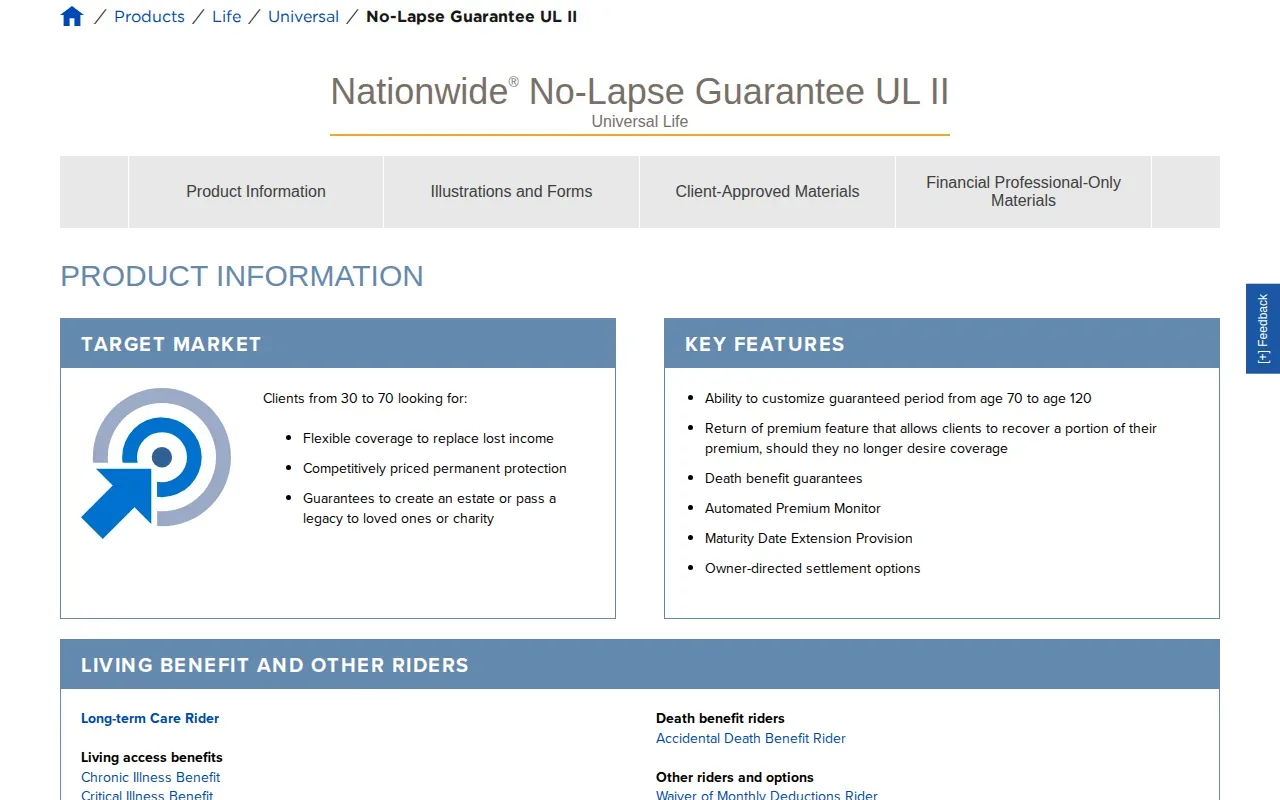
Nationwide YourLife No-Lapse Guarantee UL II is a universal life policy designed for clients ages 45 to 70. Nationwide also describes this policy as having features tailored to small-business owners.
A gig worker with a registered business or business partner may want to ask how permanent life coverage fits into family and business planning. For example, discuss who should receive the death benefit and whether the amount still makes sense if your earnings change. Do not assume that a policy’s small-business focus means it includes a living-benefit rider.
The policy name refers to a no-lapse guarantee, but the policy contract sets the conditions for that guarantee. Ask what payment pattern is needed to keep it in force and what changes could affect it. Then ask directly whether any rider lets you access a benefit while living, what conditions trigger it, and how that access changes the death benefit.
Workers under age 45 or over age 70 should ask an advisor about other coverage paths. The stated age range is a useful first screen, not a substitute for checking eligibility and the full contract.
5. Your Term by Foresters Financial: Term protection with non-medical application availability
Your Term by Foresters Financial offers initial terms of 10, 15, 20, 25, or 30 years. The stated coverage amounts start at $50,000, with some coverage available on a non-medical basis.
Term life can be a sensible starting point for a gig worker who needs a set amount of protection during a period when family members rely on their income. A term policy is built around a set period, so think about how long your dependents may need support and when major debts may be paid down.
Ask whether the version available to you includes a living-benefit rider and whether it covers a critical illness, chronic illness, or another defined event. Also ask if the non-medical application route applies to the amount and term you want.
Do not set the term length only by choosing the longest available period. Match it to your family’s needs and your budget. If living benefits are a must-have, compare the rider terms before weighing a shorter application process.
Compare these life insurance options for gig workers
The best life insurance with living benefits for gig economy workers depends on the benefit you need and the policy terms you can keep paying for. This table separates the features from the questions to resolve before you apply.
| Option | Stated coverage detail | Best reason to compare | Ask before applying |
|---|---|---|---|
| Nationwide CareMatters II | Long-term care coverage linked to fixed-premium universal life | You want to ask about life coverage paired with long-term care | What care qualifies, and how does a claim affect the death benefit? |
| Asset-Care by OneAmerica | Whole life designed to help pay for long-term care | You want to compare whole life with a care benefit | What expenses qualify, and how does the benefit get paid? |
| Ethos | Access to coverage from multiple insurance companies; exam rules vary | You want to compare coverage through one application route | Which carrier and rider would apply to your offer? |
| Nationwide YourLife No-Lapse Guarantee UL | Universal life designed for clients ages 45 to 70 | You want to evaluate permanent coverage with a small-business lens | What conditions keep the guarantee in force, and are riders available? |
| Your Term by Foresters Financial | 10 to 30 year terms; some coverage has non-medical application availability | You need term protection for a defined time span | Is a living-benefit rider available for your requested term and amount? |
Term life is often a useful baseline to price because it covers a chosen period. But a low starting premium does not tell you whether a rider is included or what it costs. When comparing term and permanent coverage, ask for the premium, coverage period, rider cost, and claim rules in writing.
Gig income can rise or fall across seasons. Use a steady estimate of income that your household can count on, rather than basing coverage on one unusually strong month. Include essential household costs and any debt your family would need to handle. Then review the amount when your work or family needs change.
Individual coverage can stay with you when you change platforms or take on a new client, unlike benefits tied to a specific work arrangement. Still, check the policy’s terms and keep premiums current. For a closer look at the term option, compare term life insurance with living benefits for freelancers alongside the coverage shown in this table.
Living-benefit riders may cover a defined critical, chronic, or terminal illness. Some policies may also include a disability-related feature, but the name and trigger vary by contract. These riders can let a policyholder access part of the death benefit while alive, subject to the policy’s terms. A payment may reduce what beneficiaries later receive.
Life Care Benefit Services works with insurance carriers and says its licensed advisors can review plan pros and cons with you. Bring a realistic monthly budget and ask the advisor to compare rider triggers, claim steps, and effects on the death benefit. The agency also helps individuals and families review life coverage alongside health and retirement planning.
Frequently Asked Questions
Can gig workers get life insurance if their income changes each month?
Yes, gig workers can apply for individual life insurance even when earnings vary. Insurers may ask about income, work, health, and the coverage amount. Use a realistic view of income over time, rather than one peak month, when deciding how much coverage fits your budget. The insurer sets eligibility and terms for each application.
What are living benefits on a life insurance policy?
Living benefits are policy benefits that may let you access part of the death benefit while you’re alive after a qualifying event. Common rider types relate to critical illness, chronic illness, or terminal illness. The exact trigger and payout depend on the contract, and using a benefit may lower what remains for beneficiaries.
Is term life enough for a self-employed worker?
Term life may be enough when your main goal is to protect dependents for a set period. It can be a useful starting point for comparing premiums and coverage length. If you also want access to benefits during a qualifying illness, ask whether the term policy has a suitable rider and review its cost and claim rules.
Can I deduct life insurance premiums as a freelancer?
Life insurance premiums generally aren’t deductible when you pay for personal coverage, but tax treatment can depend on the policy and how it’s used. Tax treatment for certain accelerated death benefits may vary. Ask a tax professional about your situation before claiming a deduction or reporting a benefit.
How should I choose a policy if I need a living-benefit rider?
Choose by checking the rider contract, not by relying on a general product description. Ask what event qualifies, how the claim is reviewed, what payment you could receive, and how that payment affects the death benefit. Then compare the full premium with your monthly budget so you can keep the policy in force.
Conclusion
Start with the policy type that fits your main need: term for protection over a set period, or a permanent option with care features that fit your plans. Before you apply, ask Life Care Benefit Services to help compare rider terms and costs with your budget, then review the contract details for the option you choose.