

Best Mortgage Protection Options for Single Parents
If you’re raising kids on one income, a mortgage payment can feel like a lot to leave behind if something happens to you. The catch is that most options here don’t publish a monthly price, so a personal quote is the only way to judge the cost.
These nine places to start include Life Care Benefit Services and eight term-life products. Compare what each actually states, then weigh mortgage-focused coverage against a policy that pays your chosen beneficiary.
1. Life Care Benefit Services
Life Care Benefit Services is an independent life and health insurance agency that works with more than 50 insurance carriers. It’s the first place to ask if you want help comparing mortgage protection with other life insurance choices.

For single-parent homeowners, the key value of an agency conversation is sorting out the need before settling on a policy. You can lay out your mortgage balance, monthly household costs, and the income your children depend on. Then ask for quotes that show the coverage amount, term, premium, and any living benefits in plain language.
The agency’s public information doesn’t list a monthly premium, a standard coverage amount, a term, or underwriting details for a specific mortgage protection policy. So don’t treat a consultation as a price guarantee. Ask for written quotes and compare the policy terms before choosing.
Life Care Benefit Services can help you discuss life insurance, health insurance, and retirement planning as part of your broader financial picture. Its mortgage protection options for single parents page is a useful companion when you’re weighing coverage types and alternatives.
Ask for specifics: Is the benefit paid to your family or directly to the mortgage lender? Does the amount stay level or shrink over time? Those details affect how useful the coverage may be.
2. Trendsetter Super by Transamerica: Flexible Term-Life Alternative
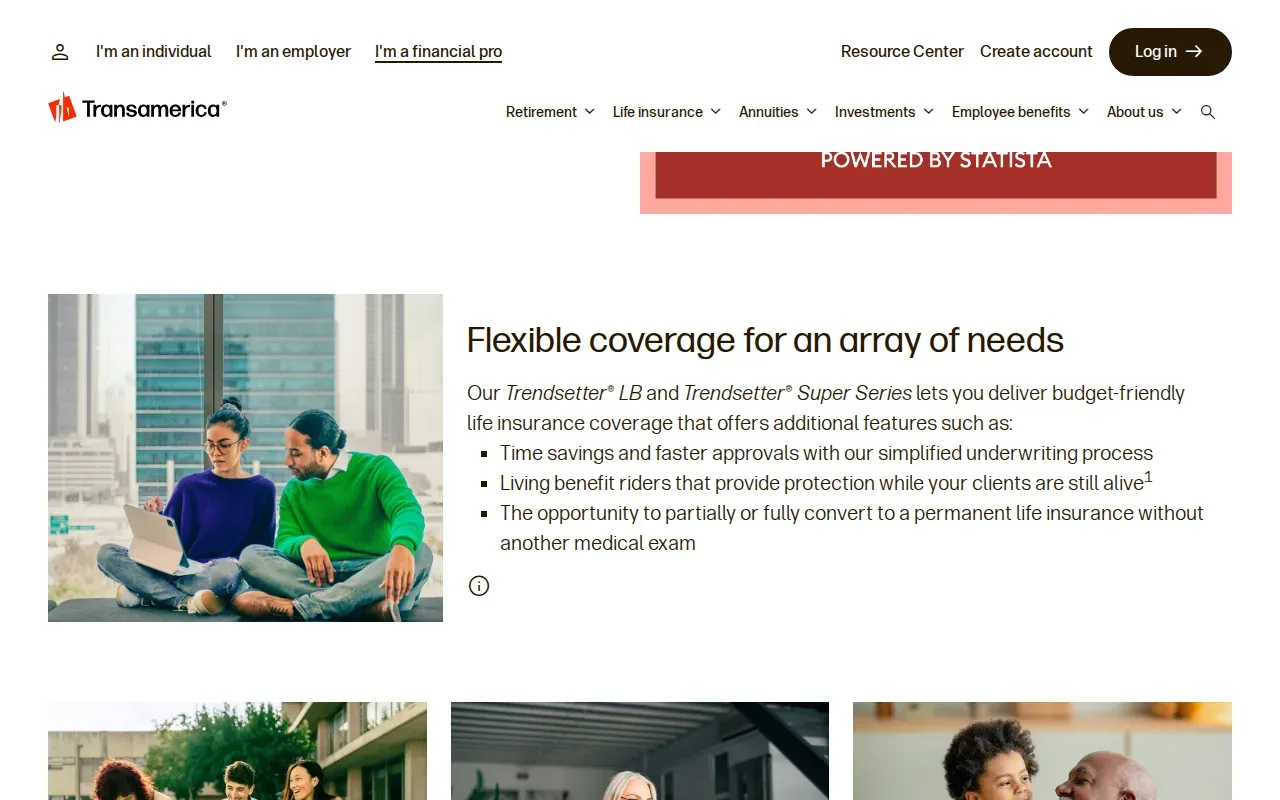
Trendsetter Super by Transamerica is a term-life option described as having a wide variety of coverage amounts and policy structures. It may be worth comparing if you want to match life insurance to more than the mortgage balance.
That distinction matters for a single parent. A benefit paid to your named beneficiary may help with the mortgage, but your family could also use it for other costs. The right amount depends on the support you want to leave, not only on what you owe the lender.
Transamerica describes budget-friendly coverage and time savings with faster approvals, but they don’t give a monthly premium or define what those terms mean for a specific applicant. Treat them as a reason to request details, not a promise that you’ll qualify quickly or pay less.
Ask for a quote at the same coverage amount and term as any mortgage-focused policy you’re considering. Then compare the guaranteed premium period, death benefit, and any included or optional living benefits. Without matching those details, two monthly quotes may not represent equivalent coverage.
This is a comparison candidate, not a published cost estimate. Your age, health, and application details can affect the quote.
3. Level Premium Convertible Term by New York Life: Predictable-Premium Coverage
Level Premium Convertible Term by New York Life is term life insurance with a level-premium period, such as 10, 15, or 20 years. It may suit a parent who wants a set premium during a chosen period and wants to ask about conversion options.

A level premium means the premium stays level for the stated period, not necessarily for the full time you own the home. Check the policy terms for what happens next and what conversion means before relying on it for long-term planning.
For a mortgage that will take longer to pay off than the level period, compare the end dates closely. If your children will still rely on your income after that period, a low initial quote alone won’t tell you whether the policy fits your full protection window.
The listed information doesn’t provide a price, minimum coverage, or underwriting details. Request a quote for a term that lines up with your family’s needs, then ask what the premium would be after the level period ends. That future cost is part of the decision.
4. PL Promise Term by Pacific Life: Multiple Term-Length Choices
PL Promise Term by Pacific Life is described as term life insurance with 10-, 15-, 20-, 25-, and 30-year durations.
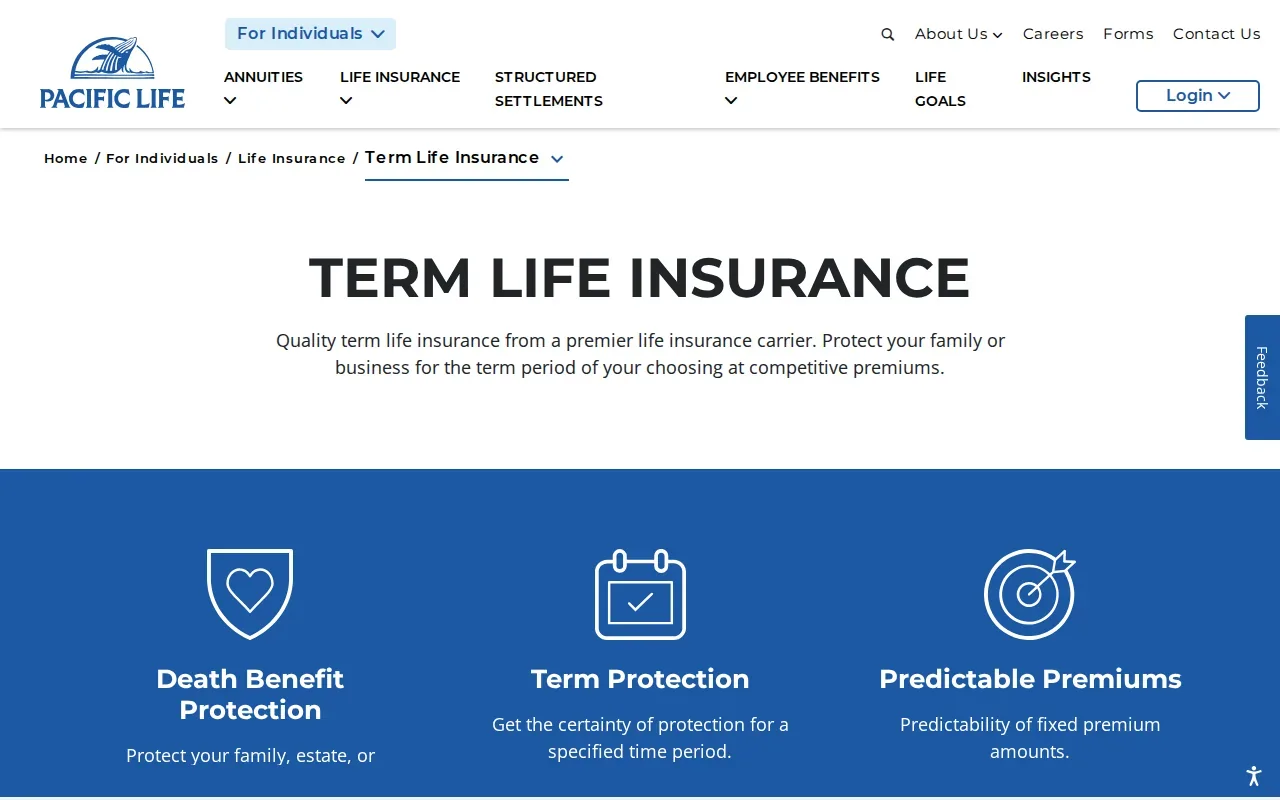
Several term lengths can help you compare coverage duration with the time your family may need financial support. For instance, a parent might compare a term that ends as a child reaches adulthood with one that lasts closer to the remaining mortgage period. Those are planning examples, not a claim about what term you should choose.
The product information doesn’t list a monthly price, minimum coverage, or underwriting type. Ask whether the quote is for level premiums throughout the selected term, and confirm availability in your state before spending time on an application.
For California residents, the available term choices give you several durations to ask about. For other states, compare options that are actually offered where you live.
5. YourLife Guaranteed Level Term by Nationwide: Several Term Options
YourLife Guaranteed Level Term by Nationwide has 10-, 15-, 20-, and 30-year term options. The stated minimum specified amount is $100,000, and the listed issue ages are 18 to 70.
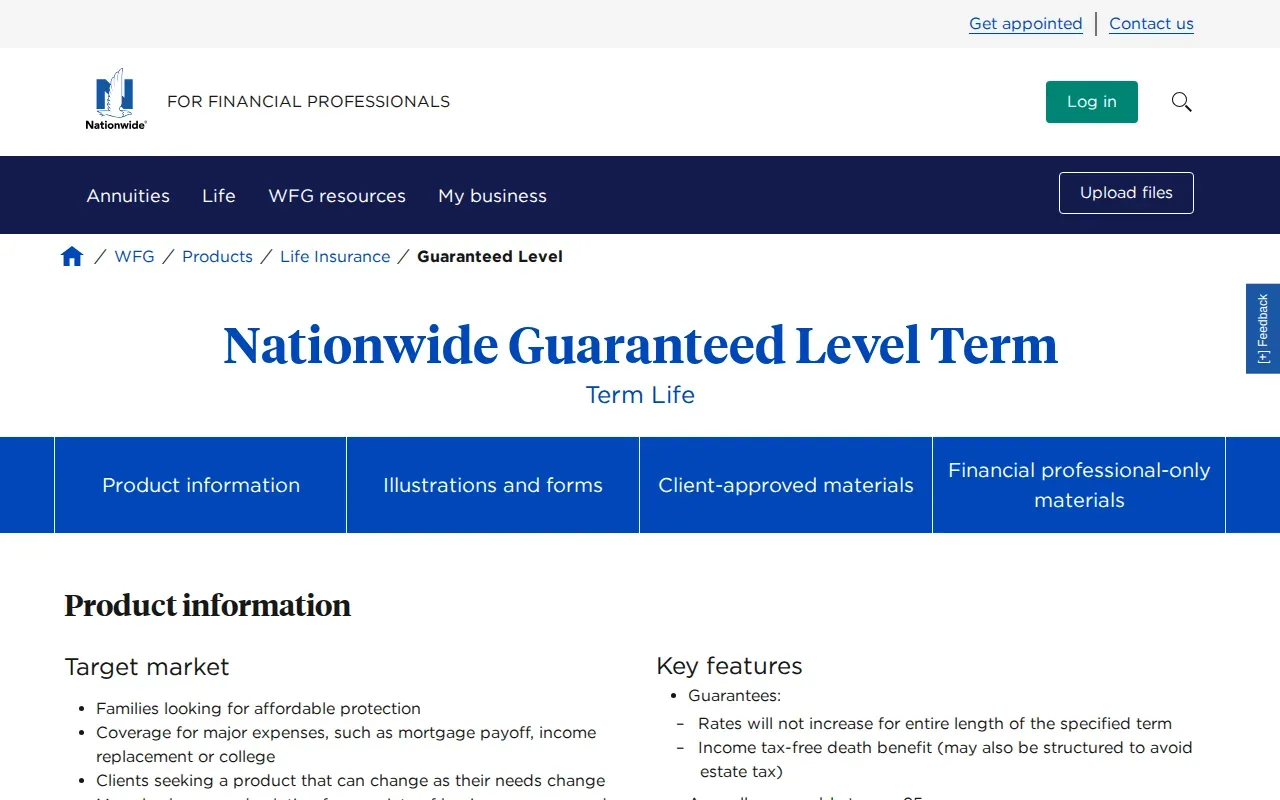
Those limits can help you quickly check whether it’s worth requesting a quote. If you’re outside the stated age range or want less than the minimum amount, ask whether another policy is available instead. Don’t assume a minimum death benefit is the amount your family needs.
For a single parent, the coverage amount should reflect the gap your family would face. Start with the mortgage balance, then consider how long your household would need help with core expenses. A policy that covers only the loan might leave other costs untouched, while a larger benefit may cost more.
No premium or underwriting details are provided here. Ask whether the premium is guaranteed throughout the selected term, whether medical information is required, and what happens when the term ends. The answers will help you compare the quote fairly.
6. Select Term by State Farm: 10-, 20-, and 30-Year Coverage
Select Term by State Farm is listed with 10-, 20-, and 30-year coverage periods.
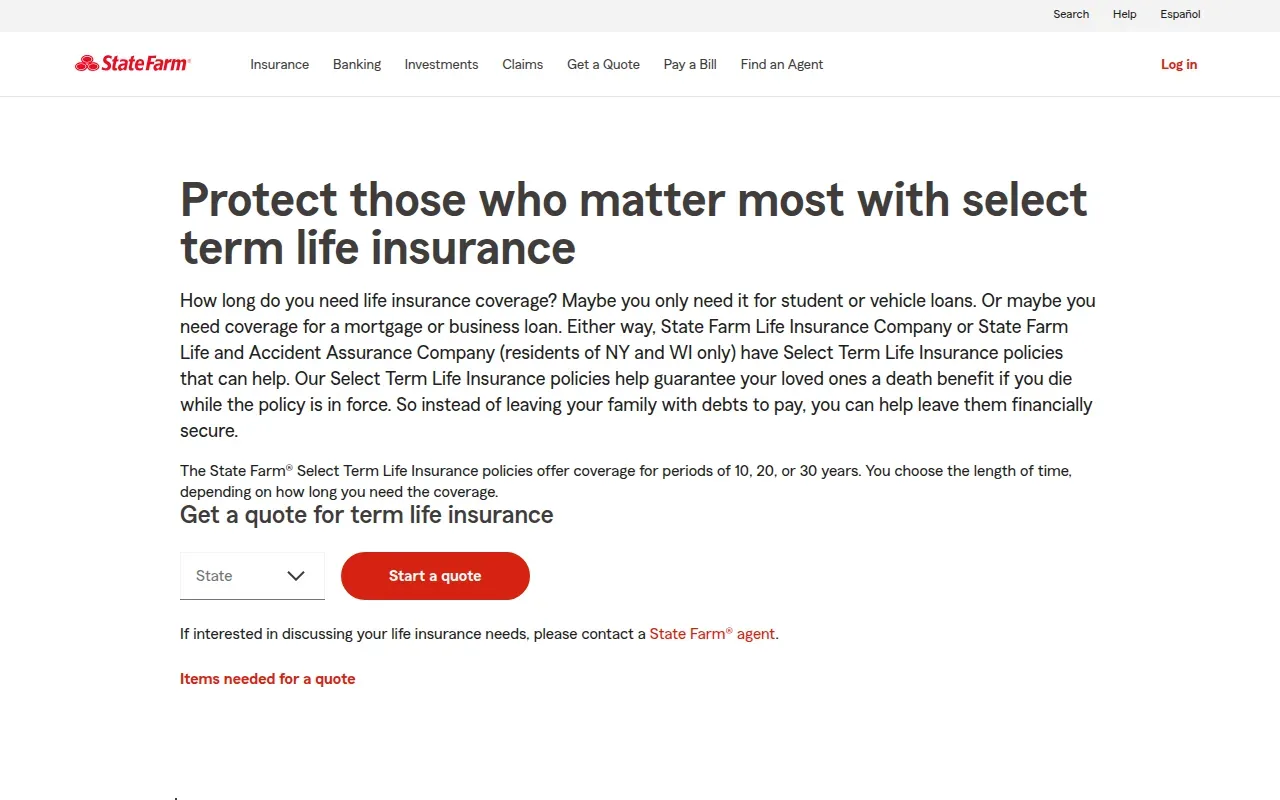
That age detail applies to the 10-year option. Confirm eligibility for the 20- and 30-year options directly rather than assuming their age limits match. Also check whether the stated starting amount works for the protection level you want.
Term duration is a useful comparison point, but it doesn’t reveal the cost. Two parents with the same mortgage can receive different quotes based on age, health, and other application factors. Ask for the premium at the same coverage amount and term you’re using to compare other offers.
The listed facts don’t specify a premium, conversion feature, or living benefits. If you’re considering coverage for disability or illness as well as death, ask whether those benefits are available and how they change the price. Don’t assume they’re included in a term-life quote.
7. RAPIDecision Life: Term Coverage to Compare
RAPIDecision Life by Fidelity Life includes a stated 20-year term policy. It may be one option to request a quote for if a 20-year period matches the years your family may need support.
A fixed 20-year term may not line up with every mortgage. If you have fewer years left on the loan, you might be comparing more coverage time than you need for the home. If your children will depend on your income longer than 20 years, the term may end before that need does.
The listing doesn’t state a minimum coverage amount, age limits, or living-benefit features. Ask for those points in writing. A clear quote should show the coverage amount, term, premium, and any exclusions or optional benefits that change the cost.
8. Term Life Insurance by AAA Life Insurance Company: Level Premium Term Options
Term Life Insurance by AAA Life Insurance Company is described as a term life insurance option.
Review the policy details before deciding whether the coverage fits your family’s timeline and budget. Get an individualized quote before building the premium into your budget.
When comparing this with mortgage protection insurance, check who receives the death benefit. A policy payable to your chosen beneficiary can give your family more choice in how to use the money. A mortgage-specific benefit may be aimed at the lender or at mortgage payments, depending on the contract.
Before choosing a term policy, ask what changes are allowed, whether they affect the premium, and whether the coverage can be renewed or continued after the initial term.
9. Term Life Insurance by Ethos: Online Quote Option to Investigate
Term Life Insurance by Ethos is an option to investigate if you want to see an online quote.
Your actual rate may differ. Compare the same amount and term across policies, and check what the application requires before treating an online estimate as your likely premium.
Use this table to focus the comparison on fit, not just on the first monthly number you see.
| What to compare | Why it matters to a single parent | What to confirm |
|---|---|---|
| Coverage amount | A mortgage payoff may not cover the family’s other needs. | Would the benefit cover the loan, provide a partial payoff, or leave money for other expenses? |
| Term length | Coverage can end while children still depend on your income. | Does the end date match the mortgage and your family’s support timeline? |
| Benefit recipient | Your family may need money for more than the lender’s balance. | Does the insurer pay the lender or your named beneficiary? |
| Price and changes | A starting estimate may not match the eventual premium. | Is the premium level for the term, and when can it change? |
| Living benefits | Death coverage alone won’t replace income if you’re unable to work. | Are disability or other living benefits included, optional, or unavailable? |
Before applying, set a monthly limit that leaves room for housing costs, food, utilities, and savings. If the quote exceeds it, ask whether a lower benefit or shorter term is available. A smaller policy that fits your budget may be more useful than coverage you can’t keep paying for.
FAQ
How much does mortgage protection insurance cost for a single parent?
There isn’t one reliable monthly price for every single-parent homeowner. Cost depends on details such as age, health, coverage amount, term, and the policy’s benefits. Most options in this shortlist don’t publish a personalized premium. Request quotes using the same coverage and term so you can compare actual costs rather than broad claims.
What does mortgage protection insurance cover?
Mortgage protection insurance may cover the mortgage if the insured person dies, becomes disabled, or loses a job, depending on the policy. Some plans focus only on death benefits; others may include disability or job-loss coverage. Read the contract to see which events count, how long payments last, and who receives the benefit.
Is mortgage protection insurance better than term life insurance?
Neither choice is always better. Mortgage-focused coverage may target the loan, while term life insurance generally pays a death benefit to the named beneficiary, who can decide how to use it. Compare price, benefit recipient, term, and any living benefits. A term-life quote may be a useful alternative, but it still needs to fit your needs and budget.
Is mortgage protection insurance the same as PMI?
No. Mortgage protection insurance is meant to help with mortgage payments or the loan after a covered event, depending on the policy. Private mortgage insurance, or PMI, protects the lender against losses if a borrower defaults. PMI doesn’t provide a life insurance benefit to your children or pay your mortgage after your death.
How can I estimate how much coverage my family needs?
Begin with the mortgage balance, then add the amount your family may need for key expenses if your income stopped. Think about the time your children would need support and subtract any life insurance or savings already set aside for them. This is a planning estimate, not a quote or financial recommendation. Ask an adviser to review your assumptions.
Conclusion
Start with a written quote from Life Care Benefit Services and compare it with term-life options at the same coverage amount and term. Before you decide, confirm who receives the benefit and whether the premium can change. That gives you a clearer basis for judging affordability and fit.