

Best Indexed Universal Life for Long-Term Care
The best indexed universal life for long-term care depends on more than a policy’s growth potential. You need to know what care benefits it includes, how they affect your death benefit, and what the policy may cost over time. Here are six named options to review, plus Life Care Benefit Services for help comparing coverage.
We analyzed 29 YouTube comments about indexed universal life insurance for long term care and found that 34% mentioned policy structure.
1. Life Care Benefit Services
Life Care Benefit Services is an independent life and health insurance agency that helps people compare insurance and retirement planning options. It may suit families who want an advisor to review coverage across carriers instead of starting with one IUL contract.

The agency works with more than 50 insurance carriers and offers personalized guidance on life insurance, health insurance, and retirement planning. Its licensed advisors can discuss your goals, budget, and coverage needs, then explain the pros and cons of available plans. That can help when you’re weighing a life policy with an LTC rider against a separate care plan.
Life Care Benefit Services also discusses IUL and cash value growth among its insurance offerings. For a closer look at rider basics, see its overview of IUL policies with long-term care riders. Ask the advisor to separate the policy’s life insurance value from any care benefit, so you can see how each part works.
2. Nationwide Indexed Universal Life Accumulator II 2020: Growth-oriented option to investigate
Nationwide Indexed Universal Life Accumulator II 2020 is a permanent life policy with cash value potential and an accelerated death benefit that can help pay long-term care expenses. It may fit someone who wants life insurance protection alongside a possible way to use part of the death benefit during life.

The policy also allows eligible policyholders to request a portion of the death benefit early after certain diagnoses, including permanent chronic illness, critical illness, or terminal illness. Those benefits are subject to rider terms. Availability can vary by state, and riders may add charges.
The policy can take part in potential index growth while protecting against market losses. That doesn’t mean the policy invests directly in stocks or guarantees a set return. Index crediting rules, policy charges, and funding choices all affect cash value. Review those details with any LTC benefit in the same illustration, not on separate pages.
Nationwide also cautions that policy fees and rider charges apply, and that index performance doesn’t predict future crediting rates. Treat the LTC feature as a benefit to verify in the contract, not as a stand-alone care plan.
3. BrightLife Grow by Equitable: Growth potential with downside protection features
BrightLife Grow by Equitable is an indexed universal life policy built for people seeking cash value growth potential and life insurance protection. It may suit buyers who want flexible funding and want to assess whether an LTC rider works with their wider plan.

The policy has index-linked options designed to protect against losses while allowing potential growth. One example describes a 0% floor and a performance cap. Those terms apply to the stated option, not necessarily every policy choice. The policy’s premium allocation can affect cash value, so compare the selected option and its rules in writing.
Ask an adviser whether any available policy options fit your needs and how using them could affect the remaining death benefit.
Loans and withdrawals can reduce cash value and the death benefit. Equitable also warns that they may raise the chance of a lapse or affect rider availability. That makes a long-term funding plan as important as the initial illustration.
4. Pacific Horizon IUL 2: Long-term death-benefit protection emphasis
Pacific Horizon IUL 2, by Pacific Life, is a policy focused on long-term death-benefit protection. It may be worth reviewing for someone whose main goal is life coverage and who also wants to ask whether an LTC benefit is available for their case.

Pacific Horizon IUL 2 offers performance potential across ages and risk classes. Don’t assume the policy can fund long-term care just because it is an IUL. Ask the insurer or a licensed advisor to confirm any rider in the proposed state-specific contract.
If the policy is being considered for both protection and care funding, request an illustration that shows the effect of care-benefit use on the death benefit and cash value. Also ask which assumptions can change, such as index crediting and policy expenses. A product’s growth potential by itself can’t answer whether it fits your care plan.
This option belongs on a shortlist only after the desired LTC feature is confirmed in writing.
5. Principal Indexed Universal Life Flex II: Check version and new-business status
Principal Indexed Universal Life Flex II is an IUL policy that offers flexible coverage with moderate cash value potential. It can fit people ages 35 to 65 who want more growth potential than fixed products, without the market risk of variable universal life.
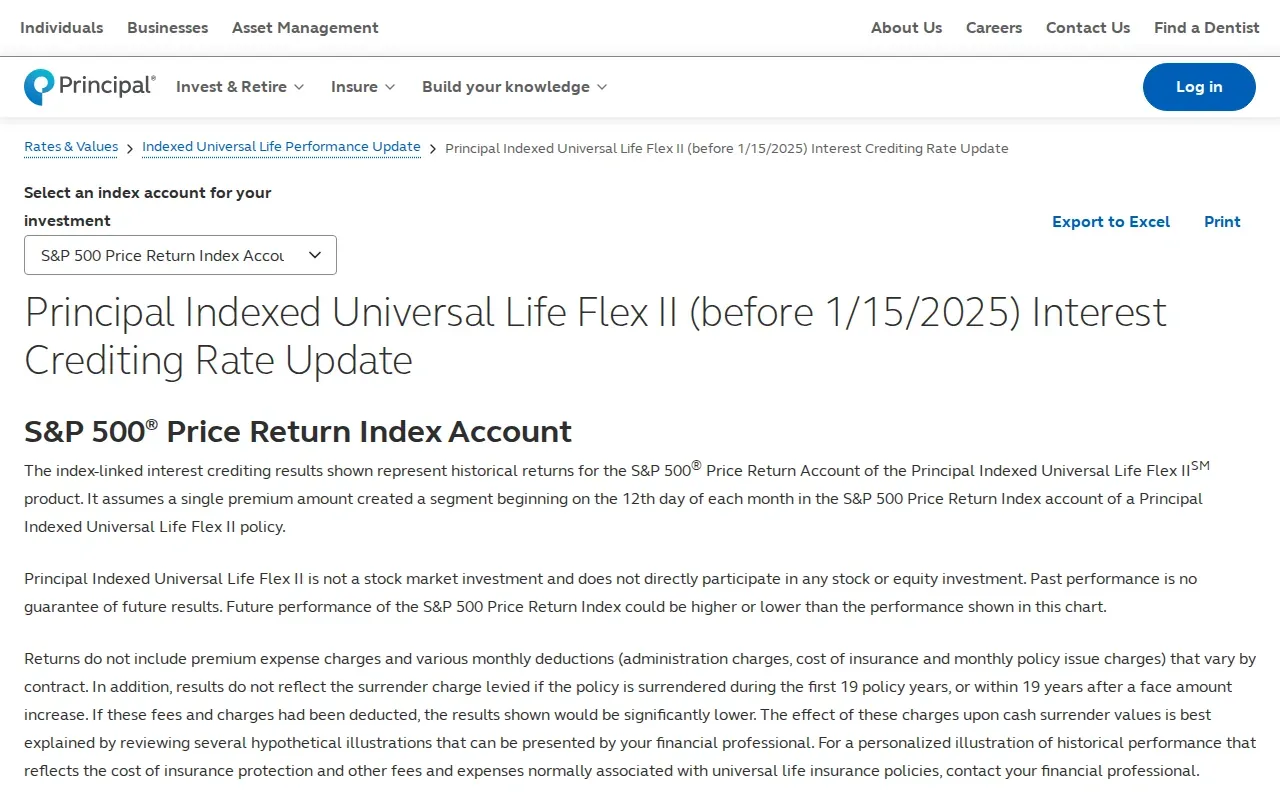
If long-term care is a firm requirement, ask whether the exact version you’re reviewing can include a suitable rider in your state. Check the policy form and current application status, too.
This policy is approved in all states except New York. Base policy approval does not mean every rider is available in each approved state. Get state-specific details before using it in a care-funding plan.
Flex II could merit a comparison for its life coverage and cash value aims, but don’t count on an LTC feature until the carrier confirms it.
6. Principal Indexed Universal Life Accumulator II: Accumulation-focused option to assess
Principal Indexed Universal Life Accumulator II is an accumulation-focused IUL for people seeking long-term growth and income. It can fit people ages 35 to 55, especially for those who want to save more tax-deferred dollars.
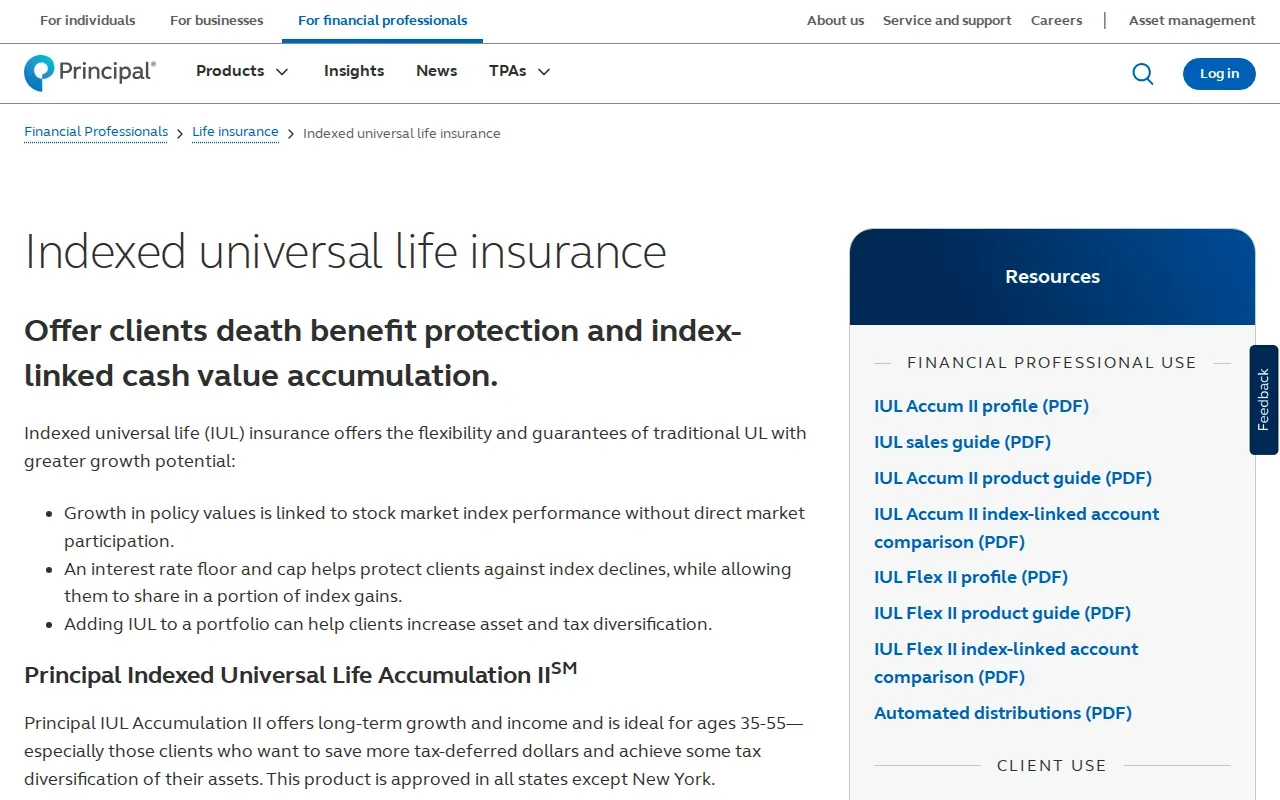
That profile can help narrow an IUL discussion. Ask for confirmation of rider availability and terms in your state. If care benefits are available, compare how a claim would change the death benefit and policy value before judging the policy’s income potential.
Accumulator II is approved in all states except New York. Approval for the base policy doesn’t guarantee that a particular rider or feature is available. The policy also needs to be tested against realistic funding assumptions. A plan that depends on strong future crediting may need more premium if results differ from the illustration.
For this product, check the exact policy version, the assumptions behind projected cash value, and any rider terms before making a decision.
7. Indexed Universal Life Insurance by Thrivent: Flexible-premium policy to compare
Indexed Universal Life Insurance by Thrivent offers universal life coverage with flexible premiums and a guaranteed minimum interest rate. It may suit someone who wants flexible premium payments and lifetime coverage, provided premiums are paid and the contract retains value.

For this policy, ask whether a long-term care rider can be added, what triggers a benefit, and whether the rider changes premiums or the death benefit. “Flexible premium” doesn’t mean you can pay any amount without affecting the policy. The contract still has costs and requirements that need to be understood.
Compare this policy with the other options using the same questions. What does the base policy cover? Is an LTC rider available in your state? What happens to the remaining benefit after a claim? If the answers aren’t clear in the contract and illustration, pause before treating the policy as care coverage.
Its flexible premiums make it a candidate to assess.
How the IUL and LTC Options Compare
An IUL is permanent life insurance with a cash value account. Depending on the contract, interest crediting may be tied to an index, but the policy isn’t a direct stock market investment. A long-term care rider may let a policyholder use part of the death benefit early for qualifying care. The exact trigger and payout depend on the contract.
Use the comparison below to see which features to confirm with the carrier before you plan around them.
| Option | Policy features | LTC rider status to verify | Useful first question |
|---|---|---|---|
| Life Care Benefit Services | Independent agency; personalized insurance and retirement planning | Discuss suitable coverage with an advisor | Which policies match my care budget and goals? |
| Nationwide Indexed Universal Life Accumulator II 2020 | Cash value potential; accelerated death benefit for care expenses | Benefit described; confirm terms and state availability | What care events qualify, and what charges apply? |
| BrightLife Grow by Equitable | Index-linked cash value options | Rider described; confirm terms and state availability | How does a claim affect cash value and death benefit? |
| Pacific Horizon IUL 2 | Long-term death-benefit protection focus | See website | Is an LTC rider available with this policy? |
| Principal Indexed Universal Life Flex II | Flexible coverage; moderate cash value potential | See website | Which version is being proposed, and can it include an LTC rider? |
| Principal Indexed Universal Life Accumulator II | Accumulation and income focus; described for ages 35 to 55 | See website | Can the proposed contract include an LTC rider? |
| Indexed Universal Life Insurance by Thrivent | Flexible premiums; guaranteed minimum interest rate | See website | What rider options are available for my state? |
Traditional LTC insurance is designed to cover care under its contract, while an IUL with a rider starts with life insurance and may let you accelerate a benefit. An annuity with a care rider is another structure to discuss, but its funding and benefits differ. Don’t compare these by the headline benefit alone. Compare premium commitments, care triggers, claim limits, and what remains for beneficiaries.
Key Checks Before Applying: Costs, Eligibility, Taxes, and State Rules
Ask for the full policy illustration and every rider form. Look at premium needs, cost of insurance, administrative charges, and any rider charge. Then ask how the policy performs under more than one crediting assumption. Caps and participation rates can affect index-linked interest, but the terms vary by policy and may change under contract rules.
Get the age range and health requirements for both the base policy and the care rider. Principal Flex II targets ages 35 to 65 and Accumulator II targets ages 35 to 55. Eligibility depends on the carrier and contract. State rules can also affect rider availability or wording.
Tax treatment needs personal review. Equitable notes that withdrawals and loans can reduce cash value and death benefits, may affect riders, and can create tax concerns if a policy lapses or becomes a modified endowment contract. Don’t treat projected tax-free access as guaranteed. Ask a qualified tax professional to review your situation.
Finally, check how a policy could affect other plans, including Medicaid eligibility. Rules depend on state law and personal circumstances, so get advice before moving assets or relying on a policy for care costs. Life Care Benefit Services can help review available insurance options; ask for the costs and trade-offs in writing.
FAQ
Can an IUL policy pay for long-term care?
Yes, some IUL policies can include a rider that lets the insured use part of the death benefit for qualifying long-term care. The rider’s trigger, payout method, limits, and cost depend on the contract. Confirm that the exact policy includes the rider in your state. Also ask how using the benefit changes the death benefit left for beneficiaries.
Is an IUL with an LTC rider better than traditional long-term care insurance?
Neither choice is always better. An IUL starts with life insurance and may add care benefits, while traditional LTC insurance focuses on care coverage under its own policy terms. Compare premium needs, covered care, benefit limits, and the value left for heirs. A licensed advisor can help compare quotes against your goals and budget.
Can seniors qualify for an IUL with long-term care benefits?
Some may qualify, but there isn’t one age limit for every policy or rider. Age and health rules depend on the carrier, product, state, and underwriting decision. Principal Accumulator II targets ages 35 to 55 and Flex II targets ages 35 to 65. Those ranges don’t establish eligibility for other products or their riders.
Do IUL loans or withdrawals affect long-term care benefits?
They can. Loans and withdrawals reduce policy cash value and may reduce the death benefit. Equitable warns that these actions can raise the chance of a lapse or affect rider availability. Before taking money out, ask the carrier to show how the transaction changes the policy, including its care benefit and any possible tax effects.
What should I compare before buying an IUL for care costs?
Compare the rider’s eligibility trigger, benefit amount, duration, and charges. Review the policy’s premium needs and index-crediting terms, too. Ask for an illustration showing how a care claim changes cash value and the death benefit. Check state availability and have a tax professional review any plan that relies on loans or withdrawals.
Conclusion
Start with the benefit you need, then check whether the exact policy contract provides it at a cost you can sustain. For help comparing carriers and coverage, contact Life Care Benefit Services to discuss your goals and request a review of available options.