
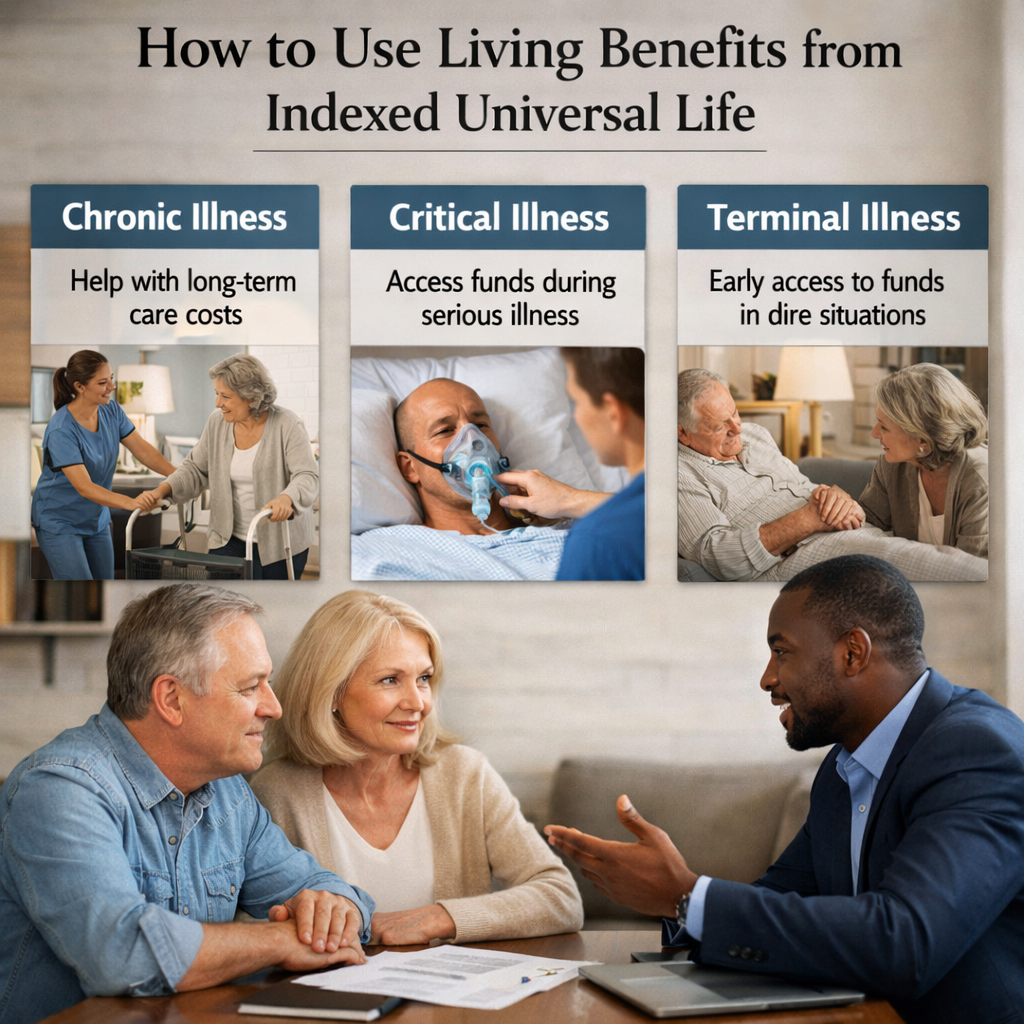
How to Use Living Benefits From Indexed Universal Life
Most people think an IUL only pays out after they die. That’s wrong. You can tap the cash while you’re still alive. This guide shows how to use living benefits from indexed universal life to protect your home, fund retirement, and help your business.
First, we’ll look at real data on living‑benefit riders. Then we’ll walk through four steps you can act on today.
We pulled data from three sites on April 17, 2026. We looked for riders, trigger events, eligibility, benefit caps, and premium impact. The sample size was five riders.
Step 1: Assess Your Goals and Eligibility
Before you buy anything, you need to know why you want an IUL. Do you need mortgage protection? Do you want a retirement buffer? Or do you run a small business that could use a cash safety net?
Write down your top three goals. Put them in order of importance. This simple list will guide every later decision.
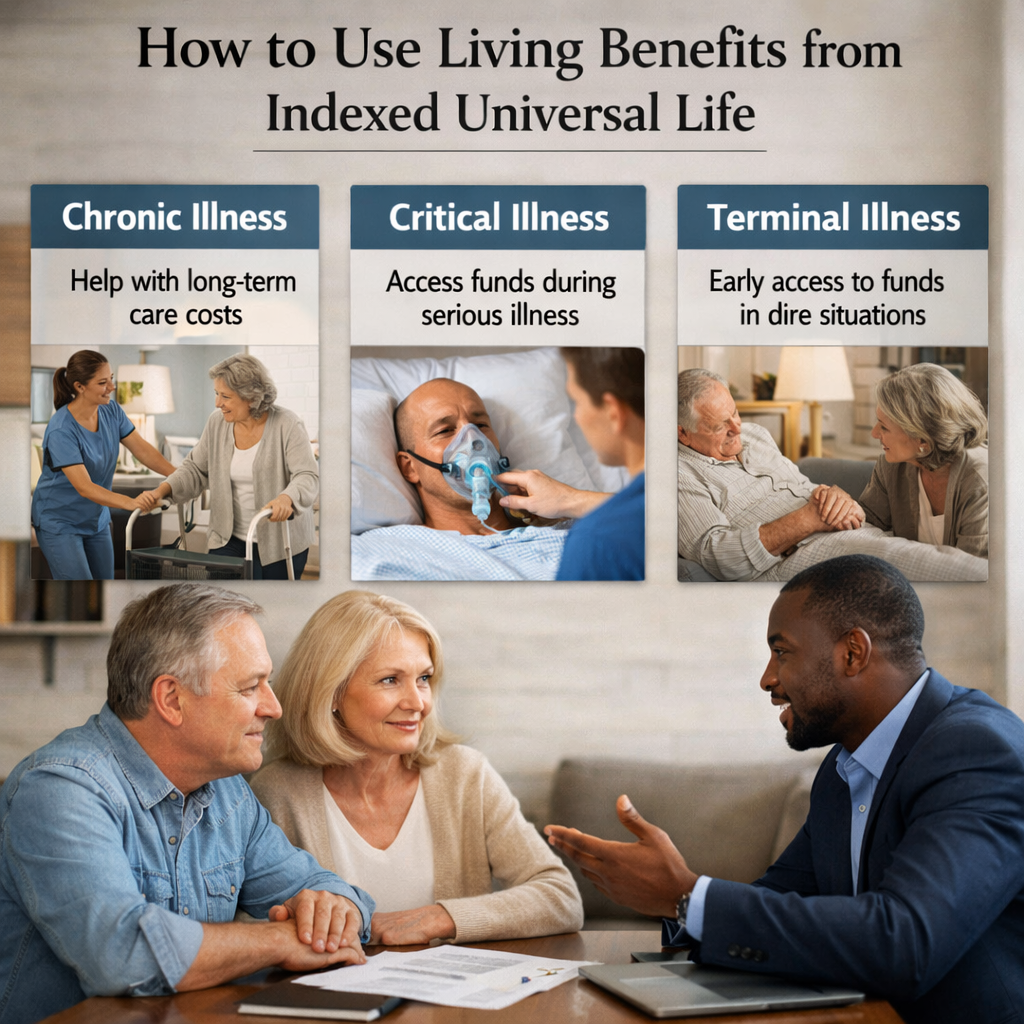
Next, check if you qualify for the riders that match those goals. The research shows that the Chronic Illness Rider and Critical Illness Rider cost nothing extra and give the biggest payouts. If you can meet their eligibility rules, you’ll get the most value.
Eligibility often means a medical check. Some riders need a doctor to certify loss of function. Others have no extra paperwork. Knowing this up front saves you surprise costs later.
Here’s a quick way to test eligibility:
- Take the face amount of the policy.
- Multiply by the rider’s percentage (e.g., 20% for a typical rider).
- Compare that number to the cash value you’ve built so far.
If the potential payout is higher than your cash value, the rider can be useful.
And remember, you can always add a rider later, but it may cost more.
Now, match your goals to the riders.
If your main goal is to keep the mortgage safe, the Chronic Illness Rider gives you up to 100% of the death benefit with no extra premium. That could cover the whole loan.
If you’re more focused on covering a possible cancer diagnosis, the Critical Illness Rider lets you draw 25%‑100% of the death benefit early.
For a small business owner, the Terminal Illness Rider can free up cash to keep payroll going if you’re diagnosed with a terminal condition.
Finally, think about cost. The Long‑Term Care Rider adds $600‑800 a year. If you don’t need long‑term care right now, skip it.
Bottom line: Pick riders that match your top goals, meet the eligibility, and avoid extra premium costs unless you truly need the coverage.
Step 2: Choose the Right IUL Policy
Now that you know which riders you want, it’s time to pick a policy that fits.

Look at four pillars: carrier strength, index options, fee structure, and flexibility.
Carrier strength matters because you want a company that will be around for decades. The research table lists several carriers that offer IULs, like Amplify, Fidelity & Guaranty, and Pacific Life.
Index options let you choose how the cash value grows. Some policies let you split between the S&P 500 and a fixed‑rate account. The more options you have, the easier it is to match market conditions.
Fee structure can eat into growth. Watch for administration fees, cost‑of‑insurance (COI) charges, and rider fees. A lower fee means more money stays in the cash value.
Flexibility is key. You want to be able to raise premiums when cash flow is good and lower them when tight. That keeps the policy from lapsing.
Here’s a quick comparison of three top providers:
When you compare these, ask yourself:
- Does the carrier offer the riders you need?
- Can you pick an index that matches your risk tolerance?
- Are the fees transparent?
- Is there a digital portal where you can track cash value?
Next, get a quote. Use the carrier’s online tool or call an agent. Make sure the quote includes the rider costs (or lack thereof).
Don’t forget to ask about the “participation rate” and “cap”. A higher participation rate means you capture more of the index gain. A higher cap lets you earn more in strong markets.
Also ask about the floor. Most IULs have a 0% floor, which means you won’t lose cash value when the market falls.
After you have a few quotes, line them up side by side.
Bottom line: The right IUL policy balances cost, flexibility, and rider support so you can actually use the living benefits.
Step 3: Activate Living Benefits for Specific Needs
Now you have a policy and the right riders. Time to see how you actually pull the benefit.
First, read the rider booklet. Look for trigger events. For the Chronic Illness Rider, the trigger is loss of two daily activities for 90 days. For the Critical Illness Rider, it’s a diagnosis of a covered condition.
When a trigger happens, you’ll need three things:
- A claim form from the insurer.
- A doctor’s statement that matches the rider’s language.
- Proof of any qualified expenses if the rider limits use.
Fill out the form completely. Missing info will delay payment.
Once the insurer approves, you can pick a payout method:
- Lump‑sum check.
- Structured installments.
- Policy loan against cash value.
Each method has pros and cons. A lump sum gives cash fast but cuts the death benefit. Installments spread the impact. A loan keeps the death benefit mostly intact but adds interest.
Here’s a real‑world example: Jane, a small‑business owner, was diagnosed with a chronic kidney condition. She filed a claim, got a $15,000 advance, and used it to cover dialysis costs. Her policy stayed in force because she chose a loan and repaid it over two years.
Now, let’s watch a quick video that walks through the claim process.
After the video, remember to keep the loan‑to‑value ratio low. A good rule is to stay under 80% of your cash value. That way the policy won’t lapse and the death benefit stays strong.
And if you need cash for something not covered by the rider, you can still take a withdrawal up to your paid‑in basis. That part is tax‑free.
“The best time to start building backlinks was yesterday.”
Bottom line: Activate the rider by filing a complete claim, pick the payout that fits your cash flow, and watch the loan‑to‑value ratio to keep the policy healthy.
Step 4: Integrate IUL Living Benefits into Retirement and Business Planning
Now that you know how to pull a benefit, let’s look at the bigger picture.
Retirement planning often feels like a puzzle. You have 401(k)s, IRAs, maybe a Roth. An IUL adds a tax‑deferred bucket that you can tap without penalties.
Here’s how to weave it in:
- Set a retirement cash‑flow goal. Say you need $30,000 a year after age 65.
- Run a projection with the policy’s expected index credit (e.g., 5% participation, 8% cap).
- If the cash value is on track to cover that gap, plan to take a policy loan each year.
- Repay the loan slowly with any extra income you have.
For a small business, the IUL can act as a key‑person insurance plus a cash reserve.
Imagine you own a boutique graphic studio. You have a $500,000 IUL that builds cash value. If a partner wants to buy you out, you can use the cash value or a loan instead of a bank loan.
That same cash can cover payroll if a disaster hits and you can’t work for a few months.
When you mix the IUL with group health insurance, you get a layered safety net. Health insurance pays daily medical bills. The IUL rider pays a lump sum if you can’t work due to a chronic illness. Together they keep your business afloat.
Here’s a step‑by‑step to align the IUL with your retirement plan:
- Review your current retirement assets.
- Calculate the shortfall you expect after age 65.
- Project the IUL cash value growth using the index assumptions.
- Determine the loan amount you can safely take each year.
- Set up automatic premium payments that increase during high‑income years.
Don’t forget to update beneficiaries whenever you have a life event. A change in marital status or a new child means you should adjust the death benefit.
And schedule a semi‑annual policy health check. Look at cash value versus COI charges. If the cash value dips, add an extra premium or pause loans.
Bottom line: By treating the IUL as a flexible retirement and business tool, you can turn living benefits into a reliable cash source while still protecting your loved ones.
FAQ
What is a living‑benefits rider and how does it work?
A living‑benefits rider is an add‑on to an indexed universal life (IUL) policy that lets you tap the cash value while you’re still alive. When a trigger event, like a chronic illness diagnosis, occurs, you can file a claim and receive a payout. The payout can be a lump sum, installments, or a policy loan. It reduces the death benefit by the amount taken, but it gives you cash when you need it most.
How do I know if I’m eligible for a rider?
Eligibility depends on the rider’s language. For the Chronic Illness Rider, you must be unable to perform at least two of six daily activities for 90 days, verified by a doctor. The Critical Illness Rider requires a diagnosis of a covered condition such as cancer or heart attack. Review the rider booklet, then talk to your agent to confirm you meet the criteria before you add the rider.
Can I use living‑benefits without paying taxes?
If you use the money for qualified medical expenses, most living‑benefit payouts stay tax‑free. Policy loans are also tax‑free as long as the policy stays in force. Withdrawals that exceed the total premiums you’ve paid become taxable income. Always check the rider’s tax rules and consider a brief chat with a tax professional.
What payout options can I choose?
You have three main choices: a one‑time lump sum, a structured installment plan, or a policy loan. A lump sum gives you cash fast but cuts the death benefit. Installments spread the impact over months or years. A loan keeps most of the death benefit intact but adds interest that you must repay.
How often should I review my IUL?
Do a semi‑annual policy health check. Pull the latest statement, compare cash value growth to the index performance, and check the loan‑to‑value ratio. If the cash value is close to the cost‑of‑insurance charge, consider adding a premium payment or repaying a loan. A quick 15‑minute call with a Life Care Benefit Services advisor can keep you on track.
Can I combine multiple riders?
Yes, most carriers let you stack riders as long as the total premium stays within the policy limits. Adding a Chronic Illness Rider and a Critical Illness Rider gives you broader coverage, but each rider adds a fee. Run a side‑by‑side projection to see how the extra fees affect cash value growth.
Conclusion & Next Steps
You now know how to use living benefits from indexed universal life to protect a mortgage, boost retirement income, and add a safety net for a small business. Start by writing down your top three goals, check eligibility for the cost‑free riders, pick a strong carrier, and file a claim when a trigger event occurs.
If you’re ready to take the next step, schedule a free consultation with Life Care Benefit Services. Our licensed advisors can run a personalized projection, help you add the right riders, and walk you through the claim process.
Remember, the power of an IUL lies in its flexibility. Use it wisely, review it often, and let it work for you while you’re alive, not just after you’re gone.