
Best Life Insurance for Veterans: 5 Options
Leaving service can change what your family needs from life insurance. Life insurance for veterans includes VA coverage and private policies, but the right fit depends on eligibility, health, coverage needs, and how long you need protection. Here are five private options to compare, plus a quick look at VA coverage.
We analyzed 42 YouTube comments about life insurance for veterans and found that 38% mentioned high premiums and unaffordable rates.
1. Level Term I by AAFMAA: Term coverage designed for military members and veterans
Level Term I by AAFMAA is term life insurance for military servicemembers and veterans. It may suit someone who wants temporary protection during working years, such as while a spouse relies on their income or a home loan remains unpaid.

Term insurance covers a set period rather than the insured person’s entire life. That can make it a match when the main goal is to protect a family against lost income during a known stretch of time. AAFMAA describes this plan as affordable term coverage for military members and veterans.
Before applying, decide how long your family would need the benefit. Think about the years left on major debts or the time until dependents can support themselves. Then compare that need with the term and benefit amount available to you. The details of an individual offer and its eligibility rules matter, so review the policy materials before you commit.
Veterans comparing private coverage with VA options should also check whether they can keep or replace coverage tied to service. Don’t end an existing policy until a new one is approved and active. That simple timing check can help prevent a gap.
2. Two For One Level Term by USBA: One policy covering eligible military spouses
Two For One Level Term by USBA is group level term insurance designed to cover two eligible spouses for the same amount under one policy and one premium. It may suit a couple who wants protection for both partners without setting up two separate term policies.
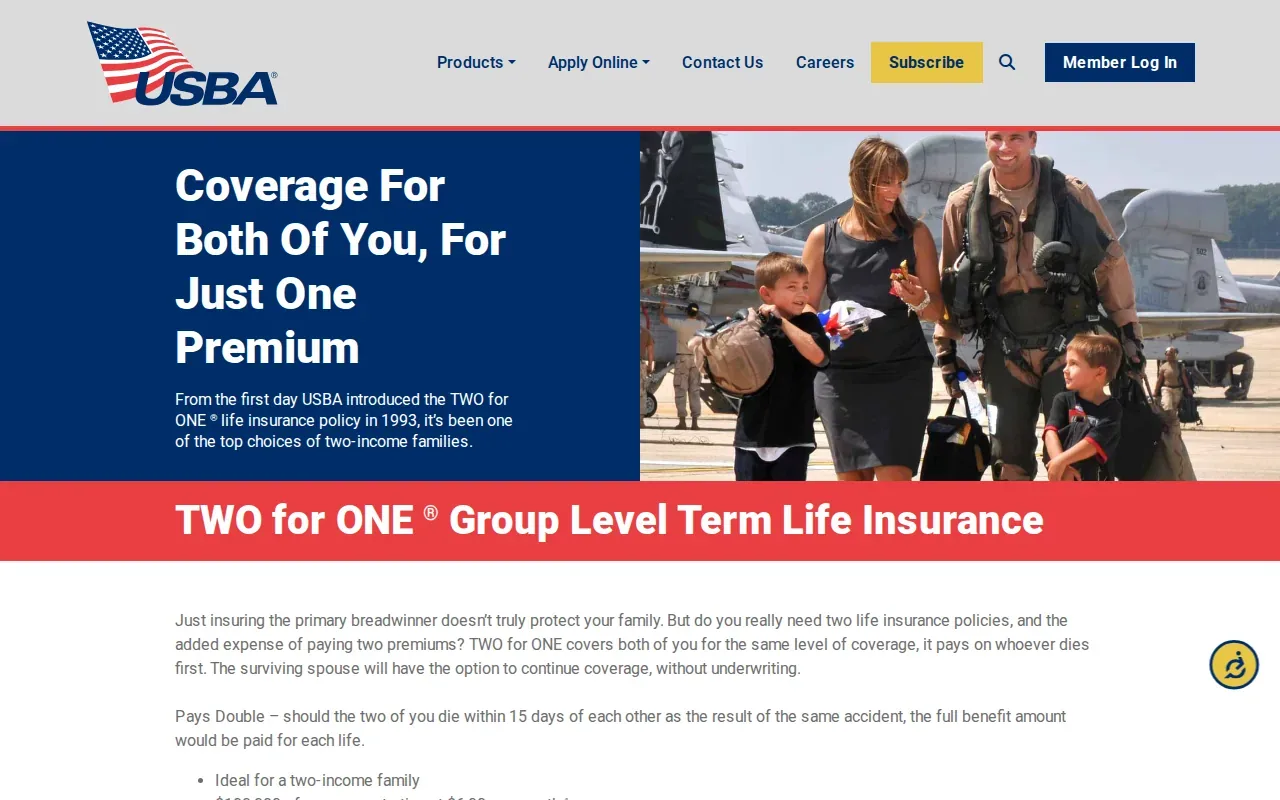
The policy pays when either covered spouse dies first. The surviving spouse has the option to continue coverage without underwriting. The policy also states that if both spouses die within 15 days of the same accident, it pays the full benefit for each life. Those details make it important to read how the policy defines eligibility and continued coverage.
One shared policy won’t fit every household. Compare the benefit with the income each spouse brings in, the debts left behind, and the cost of replacing unpaid work at home. If one spouse’s needs are much higher, a matching benefit for both may not provide the balance you want. Ask how the coverage works if a spouse’s status changes.
VA group coverage is a separate path. The VA describes SGLI, VGLI, and VA Life Insurance as distinct programs with their own eligibility rules. Review the VA’s life insurance program information before deciding whether private coverage should add to or replace a current benefit.
3. Guaranteed Acceptance+ Whole Life by AAFMAA: Guaranteed approval with no medical exam
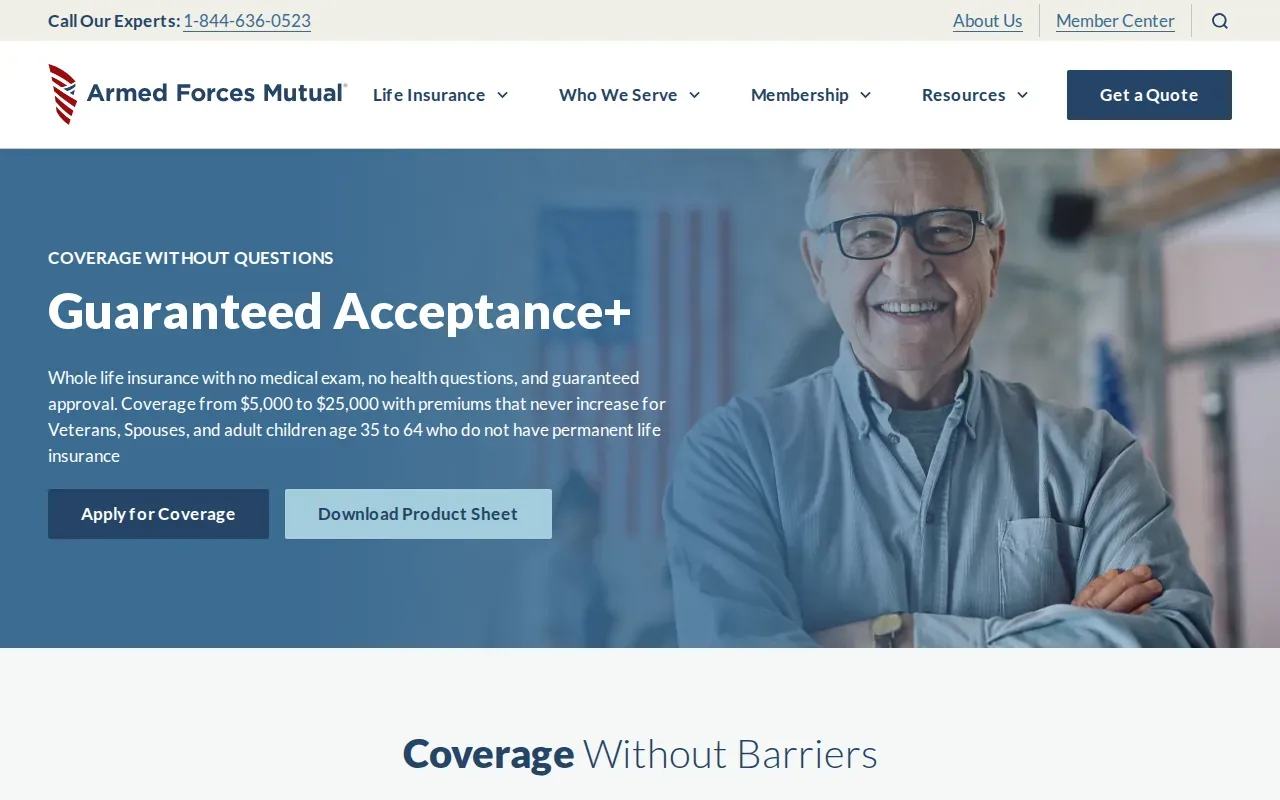
Guaranteed Acceptance+ Whole Life by AAFMAA is whole life insurance with no medical exam, no health questions, and guaranteed approval. Its stated coverage range is $5,000 to $25,000. It may suit a veteran who has trouble qualifying for other coverage and wants a smaller permanent benefit.
Whole life coverage is meant to last for the insured person’s lifetime, as long as the policy remains in force. That differs from term coverage, which ends after a set period. A smaller whole life benefit may help with final expenses or another limited goal, but it may not replace years of household income.
Set the job for the policy before you apply. If the aim is to leave money for funeral costs, compare the benefit with that need. If your family would need help with a mortgage or lost wages, calculate those needs separately. A guaranteed-approval policy can solve an access problem, but the stated coverage cap is a key part of the decision.
Also check the premium in the offer and how long you must pay it. Don’t assume that a permanent policy is the best answer just because it lasts longer. The useful comparison is the benefit your family needs against the total cost and the terms in the contract.
4. Term Life Insurance by Ethos: An online application without a medical exam
Term Life Insurance by Ethos uses an online application with health questions and no medical exam. It may suit a veteran who wants to apply online and compare a larger term benefit with VA group coverage.
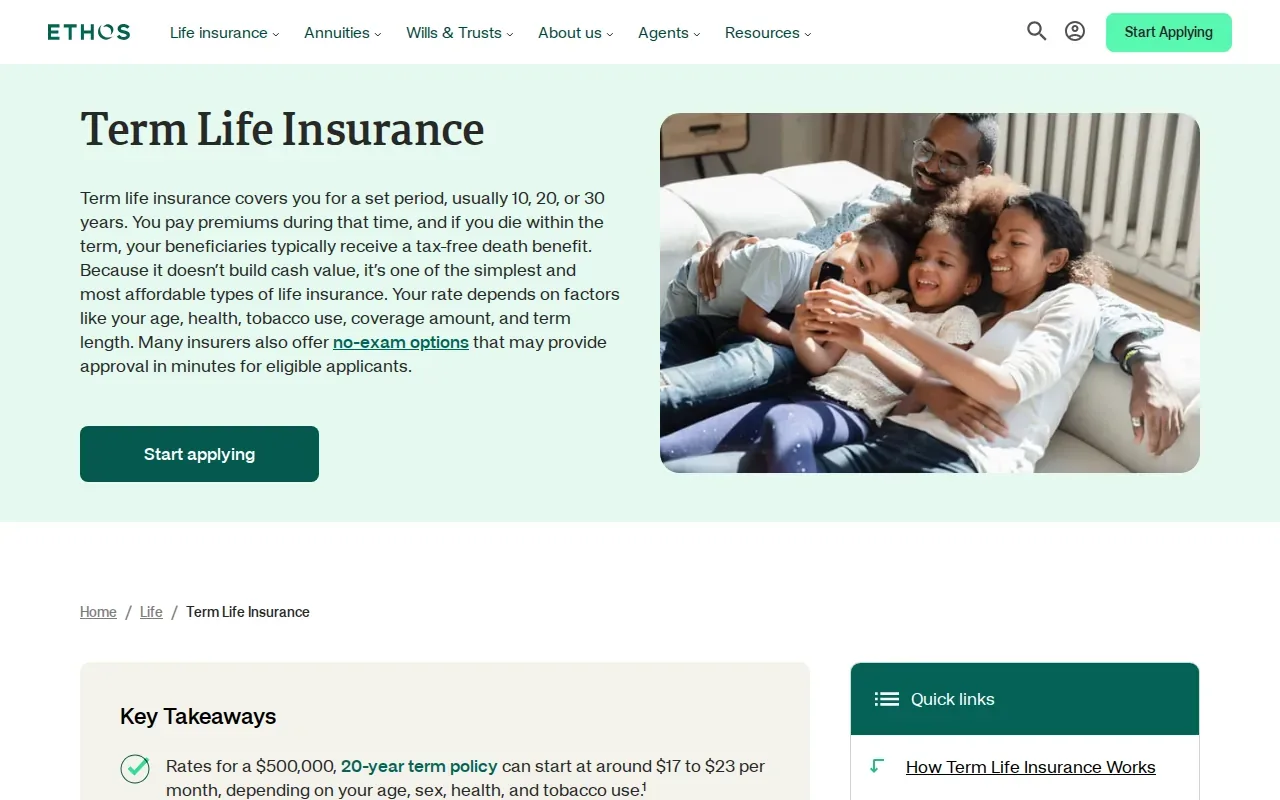
The company says its maximum term coverage is $2 million, compared with a $500,000 maximum for the VA group option described on its page. Your actual offer can depend on the details you provide and your health. Age, smoking status, and health can affect rates, so compare a personalized offer with the cost of keeping or adding VA coverage.
For an online application, Ethos says applicants should have identity details ready, including a driver’s license and Social Security number. It also asks for medical history and prescription information. Answer carefully. The information on an application can affect whether a claim is paid, and policy terms may vary by state.
5. Guaranteed Acceptance Life Insurance by Colonial Penn: Guaranteed acceptance with a limited-benefit period
Guaranteed Acceptance Life Insurance by Colonial Penn is whole life coverage with guaranteed acceptance, so an applicant can’t be turned down for a health reason. The stated starting premium is $9.95 per month. It may fit someone who has been declined elsewhere and needs a modest permanent benefit.
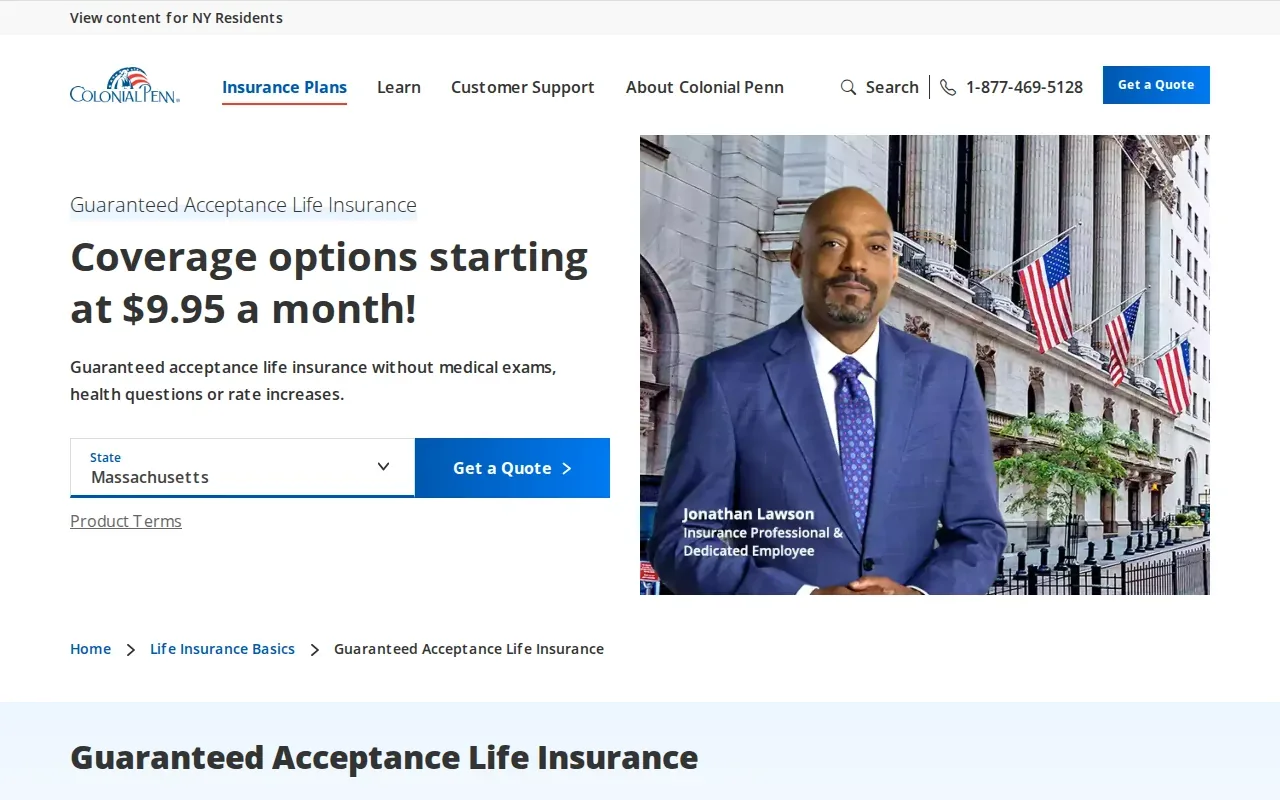
The trade-off is its two-year limited-benefit period. That term needs close attention. Read the policy to see how the benefit works during that period and what applies after it ends. Guaranteed acceptance doesn’t mean every condition or payout rule disappears.
Compare the premium with the amount of coverage you can get and the reason you need it. A fixed monthly payment may be easier to plan around, but the starting price alone doesn’t show how much benefit a particular applicant receives. Review the offer and contract together before making a choice.
This type of plan is different from term coverage built to protect income for a set span. If the main concern is a large debt or years of household support, compare the benefit needed with what a guaranteed-acceptance plan can provide. For a home loan, Life Care Benefit Services also explains mortgage protection insurance for veterans, another coverage question families may want to assess.
Compare the 5 life insurance options for veterans
Start with the job the policy must do. Term coverage is built for a set period, while whole life coverage is intended to last for life. Guaranteed acceptance can help when health makes standard approval difficult, but the coverage amounts and limits still need to fit your goal.
| Option | Coverage type | May fit when | Key detail to check |
|---|---|---|---|
| Level Term I by AAFMAA | Term | You want term coverage as a military member or veteran | Compare the available term and benefit with your time-bound needs |
| Two For One Level Term by USBA | Group level term for two spouses | Both spouses want the same benefit under one policy | Review survivor continuation and shared-benefit terms |
| Guaranteed Acceptance+ Whole Life by AAFMAA | Whole life | You want guaranteed approval and a smaller permanent benefit | Coverage is stated from $5,000 to $25,000 |
| Term Life Insurance by Ethos | Term | You prefer an online application and want to compare term amounts | Health answers and personal details affect the offer |
| Guaranteed Acceptance Life Insurance by Colonial Penn | Whole life | You need guaranteed acceptance | Check the two-year limited-benefit period and the offered benefit |
VA coverage deserves a separate comparison. SGLI is connected to service, VGLI is a continuation option for eligible veterans, and VA Life Insurance has its own rules. Eligibility and application steps can depend on your service and personal situation. Compare VMLI with other VA coverage options.
For an application, gather the facts the insurer or VA asks for, then compare the written offer with your current coverage. Keep existing coverage in force until replacement coverage is approved and active. Life Care Benefit Services can review options from insurance carriers with you and explain the pros and cons, including what to ask about living benefits. Confirm any rider in the policy itself before relying on it.
Frequently asked questions
Can veterans get life insurance if they have a service-connected disability?
Yes, veterans with service-connected disabilities may still have life insurance options, but eligibility depends on the specific program and policy. VA coverage and private insurance use different rules. Review the VA’s current program terms and answer private applications fully and accurately. If one insurer declines coverage, compare other eligible options before assuming no coverage is available.
What VA life insurance can veterans apply for?
Veterans may be able to use VGLI or VA Life Insurance, depending on eligibility. SGLI is service-related group coverage, while VGLI is a continuation option for eligible veterans. VA Life Insurance has separate program rules. Check the VA’s current information for deadlines, eligibility, and application steps because these details depend on the program and the veteran’s circumstances.
Is private life insurance better than VGLI?
Neither is automatically better. Compare the amount of coverage you can get, the premium, how long protection lasts, and whether health questions or underwriting apply. Some veterans may keep VA coverage and add a private policy. Don’t cancel current coverage until replacement coverage is approved and active, so your family isn’t left with a gap.
Does life insurance for veterans include living benefits?
Don’t assume a policy includes living benefits. A living benefit may let a policyholder access part of a death benefit under certain conditions, but availability and terms depend on the policy and any rider. Ask for the contract language, including qualifying events and how an early payment may affect what beneficiaries receive.
What should I have ready before applying?
Have your current policy details and the coverage amount you want nearby. Online applications may ask for identity information, health details, and prescription history. The exact requests vary by insurer. If you’re comparing a VA program with private coverage, check eligibility and timing rules first, then make sure any new policy is active before you change existing protection.
Conclusion
Choose based on the need first: term coverage for a defined period, or permanent coverage for a lifelong benefit. If health or VA eligibility makes the choice harder, ask Life Care Benefit Services to review your goals and compare available offers. Your next step is to gather your current policy details and request a side-by-side review.