

Indexed Universal Life Tax Advantages: A Practical Guide
Most people think an indexed universal life (IUL) policy is just another life‑insurance product. In reality it can act like a tax‑free retirement bucket, a flexible cash reserve, and a permanent protection plan all at once. This guide walks you through the four steps you need to turn those tax advantages into real‑world benefits.
By the end you’ll know how the tax rules work, how to map your personal tax picture, how to pull money out without a tax bill, and how to compare IULs to other options so you can build a plan that fits your family, your business, or your future retirement.
Step 1: Understand how IUL tax advantages work
First, let’s break down the three core tax perks that make an IUL stand out.
Tax‑free death benefit.When the insured passes, the death benefit goes straight to beneficiaries without any federal income‑tax levy. That’s a big deal for families who need to cover a mortgage, college tuition, or estate taxes.
Tax‑deferred cash‑value growth.The cash portion of the policy earns interest linked to a market index, but the gains stay inside the policy and aren’t taxed each year. Over 20‑30 years the compounding effect can dwarf what you’d see in a taxable brokerage account.
Tax‑free withdrawals and loans up to your basis.You can pull out the amount you’ve paid in premiums (your “basis”) without triggering income tax. Any amount above that is treated as a gain and is taxed as ordinary income.
These advantages only hold if the policy stays in force and doesn’t become a Modified Endowment Contract (MEC). A MEC flips the tax treatment, making even loans taxable.
To see the official wording on the death‑benefit tax rule, check out Western Southern’s overview of IUL tax benefits. It explains how the IRS treats the death benefit and why the cash value is sheltered.
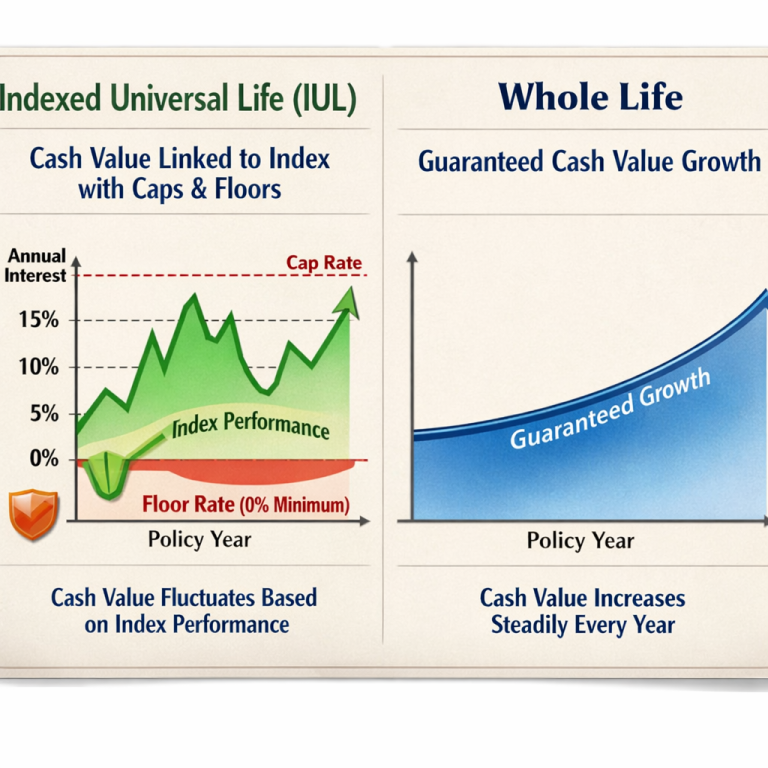
And here’s a quick reality check: the cash value isn’t a stock account. The insurer uses options to tie interest to an index, applies a cap (often 9‑12%) and a floor (usually 0%). If the market falls, you don’t lose cash value, but you also miss out on upside beyond the cap.
Because the policy blends insurance with an investment‑style component, you’ll need to review it regularly. Premiums must be enough to cover the cost of insurance (COI) and fees, or the policy can lapse and you’ll lose the tax shelter.
Imagine you start a policy at age 35 with a $10,000 premium each year. After 20 years, the cash value could be well over $300,000, all growing tax‑deferred. If you later take a loan for $50,000, the loan is tax‑free as long as the policy stays active.
Now that you know the three pillars, the next step is to line them up with your own tax picture.

Step 2: Map your tax picture with living benefits and policy loans
Living benefits are the extra riders that let you tap the policy while you’re still alive. Common riders include accelerated death benefits for chronic or critical illness, and long‑term‑care add‑ons.
When you trigger a rider, the payout is usually tax‑free if it’s used for qualified medical expenses. That can be a lifesaver if a sudden illness hits and you need cash fast.
Policy loans work a bit differently. You borrow against the cash value, pay interest to the insurer, and the loan amount reduces the death benefit until you repay it. The loan itself isn’t counted as taxable income , that’s the magic that keeps your retirement plan tax‑neutral.
Here’s a simple way to map it:
- Calculate your total premiums paid (your basis).
- Estimate the cash value you expect after 10‑15 years based on the cap and participation rate.
- Identify the living‑benefit riders you need , maybe a chronic‑illness rider that pays 20% of the death benefit.
- Run a “what‑if” scenario: if you took a $30,000 loan at age 55, would the remaining cash value still cover the COI?
Guardian Life breaks down these features nicely in its policy‑level overview of living benefits and loan mechanics. The page explains how the floor protects your cash value and how loans affect the death benefit.
Pro tip: keep the loan‑to‑value ratio under 80%. Going higher can push the policy into MEC territory, which would make the loan taxable.
Now embed the video that walks through a live illustration of a policy loan and living‑benefit trigger.
After watching, you’ll see how the cash value line on the illustration stays flat during a market dip because of the floor, and how the loan balance is subtracted from the death benefit.
Takeaway: map your own tax situation, decide which riders match your health risk, and keep loans modest to preserve the tax shelter.
Step 3: Plan withdrawals, loans, and distributions tax‑efficiently
When it’s time to use the cash, you have three main routes: a tax‑free withdrawal up to your basis, a policy loan, or a partial surrender that may be taxable.
Let’s walk through each option with a usable example. Suppose you’re 60, have paid $200,000 in premiums, and the cash value sits at $350,000.
- Withdrawal up to basis.You can pull $200,000 tax‑free. Anything above that is considered gain and taxed as ordinary income.
- Policy loan.Borrow $100,000, repay with interest over 10 years. The loan stays tax‑free as long as the policy stays in force.
- Partial surrender.Take $150,000 out, but the surrender charge in the early years can eat into the amount, and the excess over basis is taxable.
Which route is best depends on your cash‑flow needs and the health of the policy. If you need a steady stream of income, a loan works like a low‑interest line of credit. If you only need a lump sum to cover a large expense, a basis withdrawal avoids interest.
Keep an eye on the loan‑to‑value ratio. If the loan grows to 90% of cash value, the insurer may require you to add premium or the policy could lapse, turning the loan into a taxable event.
Another key point: the IRS looks at the policy’s “7‑pay test.” Overfunding early can push the policy into MEC status, which would tax even loans. So stay under the cap that your carrier provides for the first seven years.
Here’s a quick checklist before you take any distribution:
- Verify your current basis , the total premiums paid.
- Calculate the loan‑to‑value ratio.
- Confirm the policy has not become a MEC.
- Consider the impact on the death benefit for your heirs.
- Document the transaction for tax reporting.
By following this routine, you keep the tax‑free advantage alive and avoid surprises at tax time.
Finally, remember that any loan interest you pay goes back into the policy’s cash value, which can help offset the COI over time.

Step 4: Compare IUL tax advantages to alternatives and build a plan
Now that you’ve mapped the tax benefits and know how to pull money out, it’s time to see how IUL stacks up against other wealth‑building tools.
Below is a quick matrix that highlights the core differences.
The table draws from the comparison article on Western Southern’s IUL vs. Universal Life analysis. It shows that the IUL offers unique tax‑free death benefits and unlimited premium flexibility, which you don’t get with a 401(k) or Roth IRA.
When you build your plan, ask yourself three questions:
- Do I need a death benefit for my family’s security?
- Do I want a tax‑free way to supplement retirement income?
- Can I keep the policy funded enough to avoid MEC status?
If the answer is yes to all three, an IUL is likely the best fit. If you only need a retirement vehicle and have maxed out all employer plans, a Roth IRA may complement the IUL’s cash value.
Here’s a short decision rule: If your projected cash‑value growth after fees exceeds 4% net, the IUL can beat a taxable brokerage account over the long run. If the net growth is lower, you may be better off with a low‑cost index fund inside a Roth.
Don’t forget to involve a qualified tax professional. The IRS forms (like 1099‑R for policy loans) need precise handling.
Life Care Benefit Services can walk you through an illustration that matches your goals. Their team helps you choose the right cap, participation rate, and riders to fit your budget.
FAQ
What is the tax treatment of a death benefit from an IUL?
The death benefit is generally received by beneficiaries income‑tax free. That means the entire payout, whether it’s the face amount or the face amount plus cash value, does not appear on the beneficiary’s federal tax return. This rule holds as long as the policy remains a life‑insurance contract under IRS Section 7702.
Can I withdraw cash from an IUL without paying taxes?
Yes, you can withdraw up to the total amount of premiums you’ve paid (your basis) without triggering income tax. Any amount above that is considered a gain and is taxed as ordinary income. Keeping withdrawals under your basis preserves the tax‑free advantage.
How do policy loans differ from withdrawals?
A policy loan borrows against the cash value and does not count as taxable income, provided the policy stays in force. Interest accrues on the loan balance and reduces the death benefit until the loan is repaid. Withdrawals reduce both cash value and death benefit directly and may be taxable if they exceed your basis.
What is a Modified Endowment Contract (MEC) and why does it matter?
A MEC is a life‑insurance policy that fails the 7‑pay test, meaning you’ve paid too much too quickly. Once a policy is classified as a MEC, any distributions, including loans, are taxed as ordinary income and may incur a 10% early‑withdrawal penalty if you’re under 59½. Staying under the 7‑pay limits preserves the tax‑free loan feature.
Do I need a living‑benefit rider to access cash early?
Living‑benefit riders let you receive a portion of the death benefit while you’re alive if you meet a qualifying medical condition. The payout is typically tax‑free if used for qualified medical expenses. However, you can also access cash through policy loans or basis withdrawals without a rider.
How does an IUL compare to a Roth IRA for retirement?
An IUL offers a tax‑free death benefit and unlimited premium contributions, while a Roth IRA has contribution caps ($6,500 for 2026) and no death‑benefit protection. Roth withdrawals of earnings are tax‑free after age 59½ and a five‑year holding period, whereas IUL loans stay tax‑free as long as the policy remains active. The best approach is often to use both: the Roth for flexible, penalty‑free growth and the IUL for legacy protection and a supplemental tax‑free income stream.
Can I change my premium payments over time?
Yes. One of the IUL’s strengths is flexible premium scheduling. You can increase payments when you have extra cash (such as a bonus) or decrease them during lean years, as long as the cash value remains sufficient to cover the cost of insurance and fees. This flexibility helps you keep the policy alive without sacrificing the tax advantages.
Conclusion
Indexed universal life insurance packs three powerful tax advantages into a single product: a death benefit that bypasses income tax, cash‑value growth that builds tax‑deferred, and the ability to pull money out tax‑free up to your basis. Those benefits work best when you treat the policy as a long‑term financial engine, fund it enough to avoid MEC status, use living‑benefit riders wisely, and plan loans or withdrawals with a clear eye on ratios.
Start by mapping your personal tax picture, then run a side‑by‑side illustration of an IUL versus a 401(k) or Roth IRA. If the numbers line up, schedule a consultation with Life Care Benefit Services to get a customized quote and a detailed cash‑value projection.
When you blend protection with tax‑efficient growth, you create a safety net that can fund a mortgage, cover unexpected medical costs, and still leave a tax‑free legacy for the people you love. Take the first step today and see how an IUL can fit into your broader retirement and estate plan.





One Comment