
Best Life Insurance for Retirement: 5 Options
Life insurance for retirement can protect loved ones, support long-term care costs, or add a source of cash later in life. But policies work in very different ways, and some details can affect what you can use while living. Here are five options and the retirement goals each may fit.
We analyzed 63 comments and questions from YouTube, Quora and Reddit about life insurance for retirement and found that 43% mentioned the tax treatment of cash value withdrawals and loans.
1. Life Care Benefit Services
Life Care Benefit Services is an independent life and health insurance agency that helps people compare coverage and plan for retirement. Its clients include families, homeowners, teachers, self-employed people, and small business owners. The agency works with more than 50 insurance carriers and provides personalized insurance solutions.

That matters if you want to discuss protection and retirement goals in the same conversation. A licensed insurance advisor can review your goals, budget, and coverage needs, then explain the pros and cons of options from top-rated carriers. You can focus on the questions that affect your own plan, such as whether loved ones need a death benefit or whether you want to explore permanent coverage.
For a small business owner, personal protection may sit alongside business continuity and retirement planning. Life Care Benefit Services also works with small businesses on group health coverage. Its retirement planning and life insurance information for small business owners can help frame those connected needs.
This is an agency, not one named policy. That gives you a place to compare choices based on your situation instead of assuming one policy design fits every household. If your priority is clear guidance on protection and retirement planning, start by explaining what you want the coverage to do.
2. BrightLife Grow by Equitable: Indexed Growth Potential with Downside Protection
BrightLife Grow by Equitable is an indexed universal life policy. It’s designed for people seeking family protection alongside cash value growth potential and possible retirement income. The cash value can be tied to indexed options, while a 0% floor protects against negative index returns in those options.
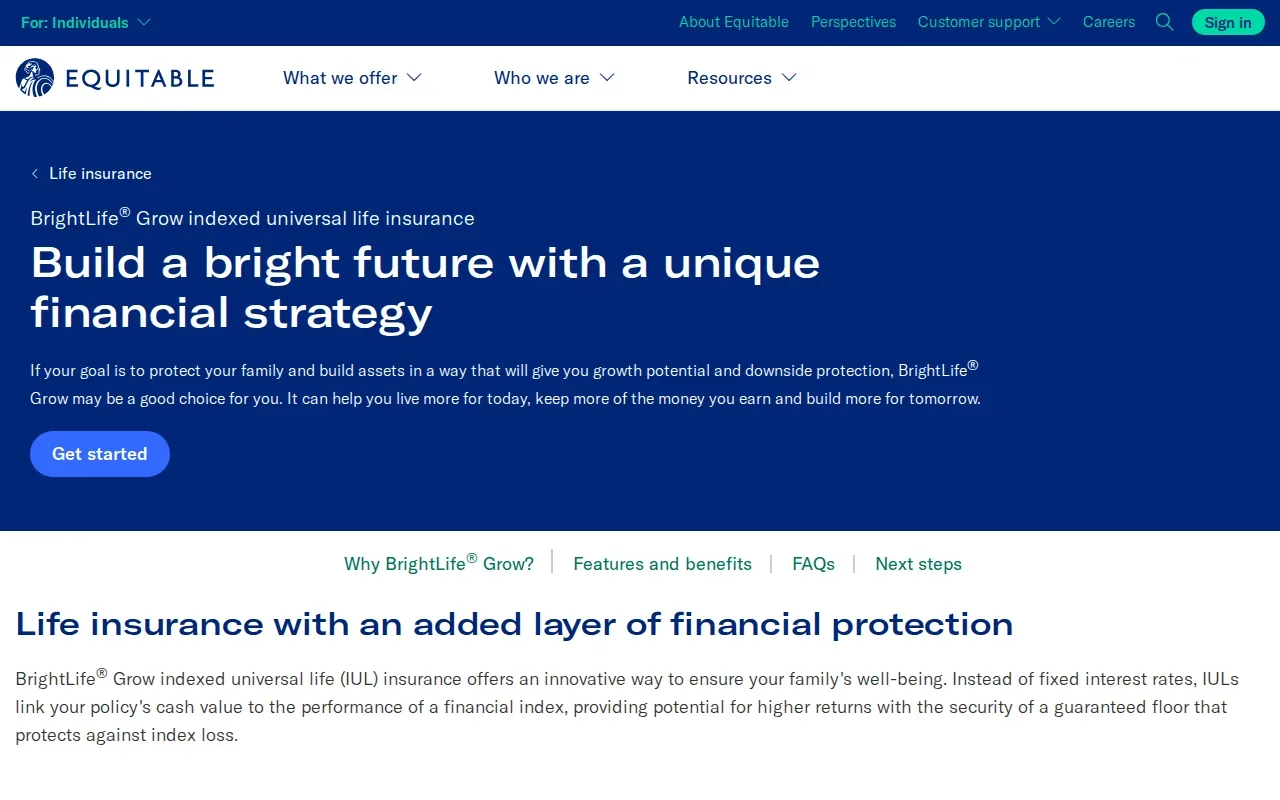
A floor isn’t a promise of investment-like growth. Positive index returns are subject to a performance cap, and policy costs affect the cash value.
Access may be available through withdrawals or policy loans, which some owners may use to supplement income or cover an emergency. But taking money out reduces cash value and the death benefit. Loans and withdrawals can also increase the chance the policy will lapse, so a lower premium later may not be enough to keep it active.
Timing matters, too. Surrender charges can affect access to cash value during the first several years. A buyer close to retirement should ask for illustrations showing how costs, funding, and withdrawals affect the policy over time. This may fit someone who wants indexed growth potential and accepts that policy values aren’t guaranteed.
3. Value Plus IUL by Ameritas: Flexible Indexed Universal Life Coverage
Value Plus IUL by Ameritas is an indexed universal life policy designed for permanent protection with cash value growth potential. Ameritas describes this product as focused on affordability. As with other IUL coverage, the cash value may be linked in part to an index, while a policy floor helps protect against negative index performance.

That can make this type of policy worth discussing if you want lifelong coverage and the possibility of building cash value over time. It isn’t the same as investing directly in an index. Policy charges apply, and credited interest won’t include dividends paid by companies in an index.
Loans and withdrawals can reduce available cash value and the death benefit. Excessive borrowing or withdrawals may cause a policy to lapse, and unpaid loans may lead to taxable income.
Ask to see how the policy is designed for your age and retirement timeline, including how much funding it needs to stay in force. If you’re counting on cash value for income, consider what happens when growth is lower than the illustration assumes. The product’s potential may appeal to a buyer seeking flexible permanent coverage, but the policy still needs ongoing review.
4. SmartCare by Brighthouse Financial: Life Insurance with Long-Term Care Benefits
SmartCare by Brighthouse Financial is a hybrid indexed universal life policy with long-term care benefits provided through riders. It combines a death benefit for loved ones with coverage that may help pay qualified long-term care expenses. That pairing can suit someone who wants life coverage and a way to address possible care costs.

SmartCare has a guaranteed death benefit when premiums are paid to keep the policy in force. If the indexed option is selected, its cash value is protected from market loss. The policy also has growth options that may increase policy values over time, and it lets the owner lock in long-term care benefits.
Using the long-term care benefit has a trade-off: benefits paid through the acceleration rider reduce the death benefit dollar for dollar. Other policy values also decrease proportionately. Any loans or distributions reduce policy values as well, so it’s important to review how a claim could affect the remaining coverage.
Life insurance with a long-term care feature can be structured in different ways. Life insurance with long-term care coverage may not be a health insurance policy, and availability may vary by state. Ask a licensed professional to explain the rider terms and likely effect on the benefit your family could receive.
5. Pacific Admiral VUL 2: Variable Life Coverage with Cash Value Potential
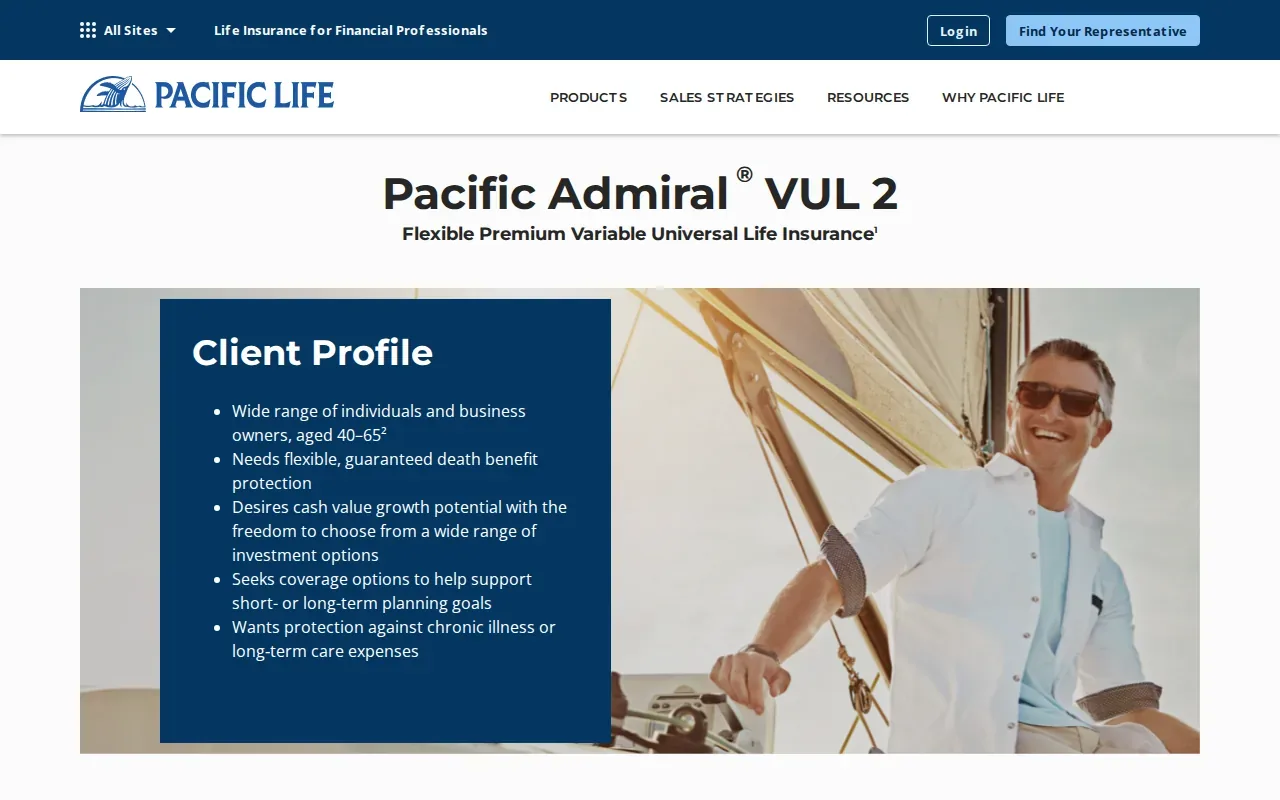
Pacific Admiral VUL 2 is variable universal life insurance for people seeking customizable death benefit protection and cash value growth potential. Its cash value can be allocated among variable investment options. That makes it a possible fit for buyers who understand that policy value can move with investment performance.
The policy has 66 variable investment options, including low-cost index funds. It also has two indexed accounts with a 0% guaranteed minimum interest crediting rate and a Fixed Account with a 1% guaranteed minimum interest crediting rate. The indexed accounts don’t directly invest in an index or the stock market.
Pacific Admiral VUL 2 is designed for consumers and business owners seeking competitively priced, customizable death benefit protection with cash value growth potential.
Optional chronic illness and long-term care riders may be available, subject to state availability, charges, and eligibility. For retirement planning, compare the policy illustration with different investment results and funding levels. This option may suit someone who wants investment choices inside a permanent life policy and can accept the risk that variable account values may fall.
Compare These Life Insurance Options for Retirement
The right fit depends on the job you need the policy to do. Term coverage is generally for a set period and doesn’t build cash value. Whole life and universal life are forms of permanent coverage, while indexed and variable universal life use different methods to determine potential cash value growth.
| Option | Retirement role to consider | Key point to review |
|---|---|---|
| Life Care Benefit Services | Compare carrier options for protection and retirement planning | Match the policy to your needs with an advisor |
| BrightLife Grow by Equitable | Potential cash value access through loans or withdrawals | Caps, costs, surrender charges, and lapse risk |
| Value Plus IUL by Ameritas | Permanent protection with cash value growth potential | Funding needs and effects of loans or withdrawals |
| SmartCare by Brighthouse Financial | Life coverage with long-term care benefits | Care benefits reduce the death benefit |
| Pacific Admiral VUL 2 | Cash value potential through variable investment options | Investment risk and guarantee conditions |
Keeping coverage after work may help protect a spouse or other dependent, support a legacy goal, or provide a benefit for qualifying care costs. But premiums and policy charges still matter on a fixed retirement income. Inflation can also reduce what a fixed death benefit buys in the future, so review the amount and purpose of coverage as your needs change.
If you have term insurance, ask whether your contract allows conversion to permanent coverage and when that right ends. Don’t assume a conversion is available without checking your policy. If you plan to use cash value for retirement income, model the amount you hope to draw, the years you’ll need it, and the effect on the death benefit. Loans and withdrawals can change both policy value and tax results. Get personal tax advice before taking distributions.
Frequently Asked Questions
Can life insurance pay retirement income?
Some permanent life policies may let the owner access cash value through loans or withdrawals. The amount available depends on policy performance, charges, funding, and prior access. Taking money out can reduce the cash value and death benefit, and a policy may lapse if it no longer has enough value. Ask for an illustration based on the income you hope to draw.
Is indexed universal life a good choice after retirement?
Indexed universal life may suit someone seeking permanent coverage with cash value growth potential, but it isn’t right for every retiree. Costs, funding needs, surrender charges, and loan risk can affect the result. If you’re buying late in life or need cash soon, ask a licensed advisor to compare the policy’s projected values with your timeline.
Can long-term care benefits reduce a life insurance death benefit?
Yes. With SmartCare, long-term care benefits paid through the acceleration rider reduce the death benefit dollar for dollar. Other policy values also decrease proportionately. That trade-off may be acceptable if care costs are a major concern, but review how a claim would affect the amount left for beneficiaries.
Should I keep life insurance after I retire?
Keep coverage if it still serves a clear need, such as protecting a dependent, supporting a legacy goal, or providing access to a long-term care benefit. Also weigh premiums against retirement income and check how inflation may affect the benefit over time. If the original need has ended, ask an advisor to review the policy before you make changes.
Conclusion
Life Care Benefit Services is a sensible place to start if you want help comparing protection and retirement goals across carriers. Bring your current coverage, retirement timeline, and main concern to a licensed advisor. Ask for a side-by-side policy illustration before deciding whether cash value or living benefits belong in your plan.