

Best No-Exam Mortgage Protection for Condo Owners
A condo mortgage is only part of your family’s housing cost. If you die, the loan may remain, and HOA dues or special assessments can still matter. These six named options are worth comparing, but public details on cost and coverage are sparse, so ask for the exact policy terms before you apply.
1. Life Care Benefit Services
Life Care Benefit Services is an independent life and health insurance agency. It works with more than 50 insurance carriers and helps families review life insurance, health coverage, and retirement planning options.

For condo owners looking for mortgage protection without an exam, the agency is a useful first stop when you want help comparing policies instead of relying on a single lender’s offer. Its public information doesn’t state which mortgage protection policies skip an exam, what coverage limits apply, or what premiums cost. Ask for those details in writing, including whether the application still requires health questions.
Mortgage protection insurance is generally life insurance meant to help cover the remaining mortgage if the insured person dies while the policy is active. The payout may go to the lender or to a named beneficiary, depending on the policy. Check the contract. A condo owner should also account for monthly HOA dues and any special assessments, since paying off the mortgage does not erase those costs.
Life Care Benefit Services can help you ask about exam requirements and compare policy details. Its mortgage protection options without a medical exam page is a useful starting point for that discussion.
2. Your Term by Foresters Financial: a stated non-medical coverage option
Your Term by Foresters Financial has initial terms of 10, 15, 20, 25, or 30 years. The stated non-medical coverage amounts range from $50,000 to $400,000.

That makes it worth asking about if your condo loan falls within the listed amount and you want a term that may line up with the years left on your mortgage. Non-medical coverage does not necessarily mean guaranteed approval or no health questions. Ask what the application requires and whether your age or health history affects eligibility.
Term life insurance can work differently from mortgage-specific coverage. With a level term policy, the death benefit generally stays the same during the term, while the loan balance falls as you make payments. If the policy pays a beneficiary, that person can use the money for the mortgage or other needs. Confirm the named beneficiary and payout terms before you buy.
A condo owner should compare the amount owed with the stated maximum. If your loan balance is above $400,000, ask whether another coverage amount or policy type is available. Also ask how the policy handles a refinance or a move to another home.
3. Trendsetter LB by Transamerica: term coverage to investigate for mortgage needs
Trendsetter LB by Transamerica is a term life option described as including living benefits. Transamerica also provides a broad range of life insurance solutions that may be used for mortgage protection.
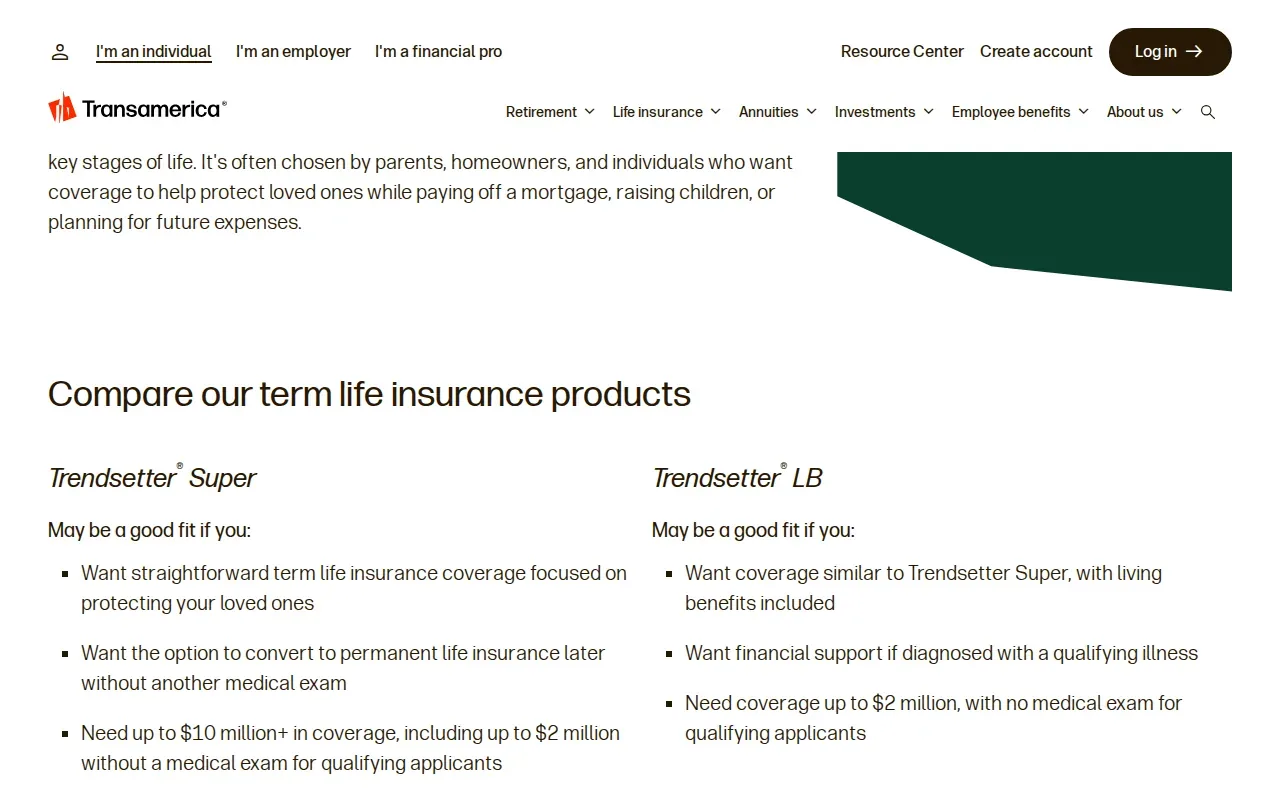
This option may be worth discussing if you want to compare mortgage-focused protection with term coverage that includes living benefits. Those benefits can affect when or how part of the policy may be available while you’re alive, but the details depend on the contract. Ask what events qualify, what limits apply, and whether using a benefit reduces the amount left for beneficiaries.
The available details don’t confirm that Trendsetter LB is a no-exam policy. Don’t assume that a fast or simplified application means no medical exam. Ask whether the insurer requires an exam for your requested benefit amount and whether it may ask health questions or request medical records instead.
For a condo mortgage, compare the policy term with the remaining loan term. If the coverage lasts longer than the mortgage, that may leave your family with money for other needs. If it ends sooner, you could still have a loan without this coverage. Get the full illustration and policy terms before judging the fit.
4. Term Life Insurance by Ethos: an online application option to compare
Term Life Insurance by Ethos is described as a way to provide financial protection during years when a family is paying down a mortgage or raising children.
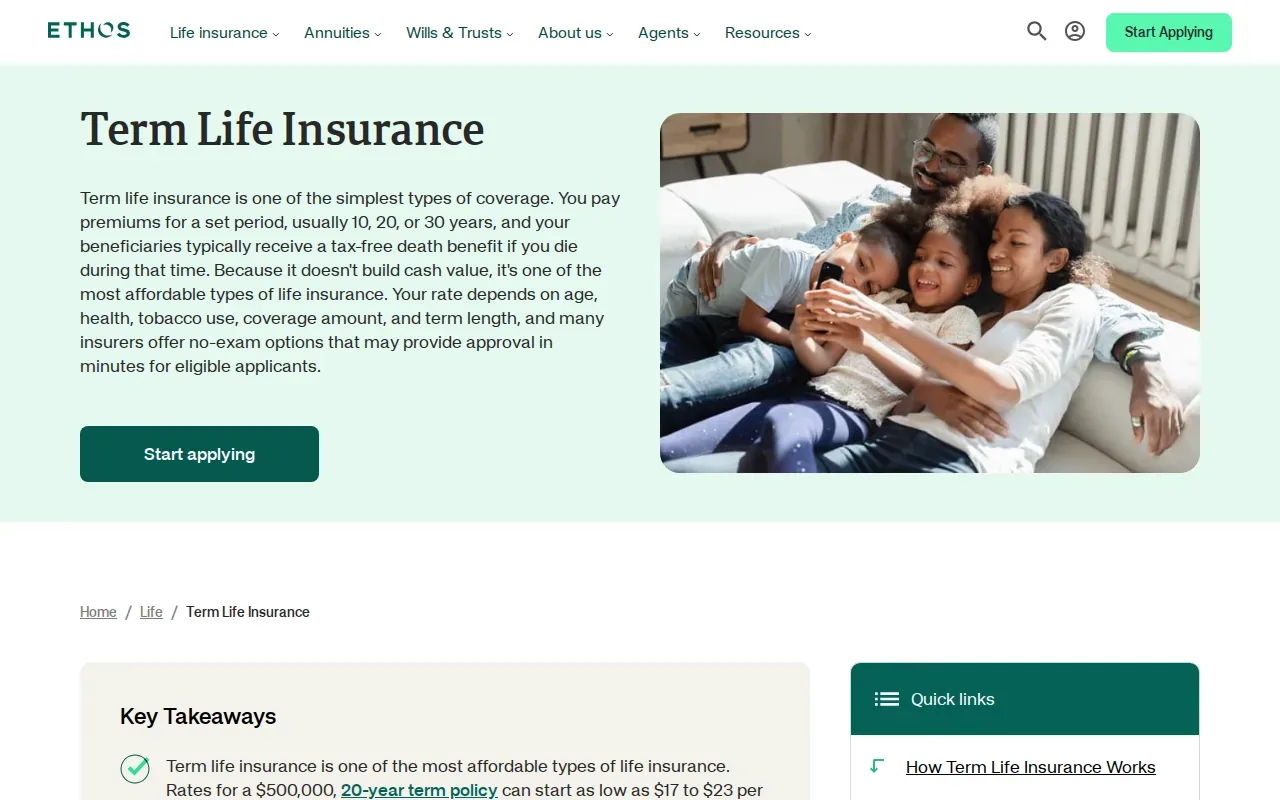
That focus fits condo owners who want to protect more than the unit itself. A life insurance payout may help loved ones keep up with the loan, HOA dues, or other household bills, depending on the benefit and who receives it. The policy’s specific payout rules matter, so ask whether the benefit goes to a named beneficiary or directly to the lender.
Treat Ethos as an option to investigate rather than a confirmed no-exam policy. Ask whether the application includes health questions and what happens if the insurer needs more information after you submit it.
When you request a quote, use your current mortgage balance and the number of years remaining as a starting point. Then consider whether your family would need extra funds beyond the loan payoff. For condo owners, the monthly housing bill can continue to include HOA dues even after a mortgage is paid.
5. Term Life Insurance by Fabric by Gerber Life: a range of term lengths to review
Simple term life insurance with term lengths from 10 to 30 years. A term in that range may fit different mortgage timelines. Match the term to the years you want coverage, not just the length of the loan. Your family may still need financial support after the mortgage is paid.

Consider how the coverage amount you choose aligns with your condo loan and other financial needs. A term between 10 and 30 years may also fit different mortgage timelines. Match the term to the years you want coverage, not just the length of the loan. Your family may still need financial support after the mortgage is paid.
Ask what underwriting applies and whether the quoted premium is level for the full term. Also ask what exclusions or waiting periods may apply, if any.
For a condo owner, write down the remaining principal and the number of years left on the loan before asking for a quote. Then decide whether you want a benefit sized only for the mortgage or a level amount that could also help with other costs.
6. RAPIDecision Life: a 10-year term option to assess
RAPIDecision Life by Fidelity Life is a 10-year term life insurance option. That fixed term could be relevant if you expect to pay off your condo mortgage within roughly that period, but the available details don’t confirm its exam rules or coverage amounts.

Start by checking the loan’s remaining term. If it is much longer than 10 years, this policy’s stated duration may leave a gap. If you refinance or move, the existing policy may not match the new loan timeline. Ask the insurer how changes to your mortgage affect your coverage, if at all.
Don’t treat “10-year term” as proof that the policy is mortgage protection insurance. It is described as term life coverage, so confirm who receives the death benefit and whether it stays level throughout the term. A beneficiary-paid benefit gives your family more choice than a payout limited to the mortgage, though the contract controls the result.
Request a quote that spells out the term, benefit amount, premium, and underwriting steps. If the insurer requires an exam, compare the time and cost of that process with other policies rather than assuming a no-exam route is automatically the better value.
7. SwiftTerm by Symetra: an online term policy to compare
SwiftTerm by Symetra is described as an online term life insurance policy. Its application process is presented as fast and easy, but the available details don’t confirm specific term lengths, benefit limits, premiums, or no-exam eligibility.

That makes SwiftTerm a comparison candidate, not a verified no-exam recommendation. Ask whether you can complete the application online without an exam, and whether the insurer may still ask health questions or request follow-up information. “Online” describes how you apply; it doesn’t tell you how the insurer will assess your application.
Condo owners should compare the benefit with the loan balance and the broader household budget. The mortgage may be the largest debt, but it isn’t the only expense that could remain after a death. HOA dues and assessments are separate from the mortgage balance. A family may need flexible funds rather than a benefit that only clears the loan.
Before applying, ask for a policy summary that shows the coverage amount and term. If either is missing from a quote, pause and get the details first.
Questions to ask before you apply
No-exam marketing can make policies seem easy to compare, but key details may be missing. A quote helps fill that gap, but only if it shows what you’ll pay and what the policy covers.
- Is a medical exam required, or does the application use health questions only?
- Who receives the benefit: the lender or a person you name?
- Does the death benefit stay level or decrease over time?
- Will premiums stay level for the full term?
- Does the benefit match the loan, or can it also help with HOA costs and other bills?
- What happens if you refinance, sell, or move?
Mortgage protection insurance is different from private mortgage insurance, often called PMI. PMI protects the lender against certain losses if a borrower defaults; it doesn’t pay a family’s mortgage after a death. Home warranties are different too. They relate to covered home repairs, not life insurance or mortgage repayment.
Frequently asked questions
Can condo owners get mortgage protection insurance without a medical exam?
Yes, some life insurance options use non-medical underwriting, but each insurer sets its own rules. For mortgage protection insurance for condo owners without an exam, ask whether health questions or other records are still required.
Does mortgage protection insurance pay off my condo loan?
It can, if the policy is active and the insured person dies under circumstances covered by the contract. The benefit may go to the lender or to a named beneficiary, depending on the policy. Condo owners should remember that a loan payoff won’t automatically cover HOA dues, assessments, taxes, or other household costs.
How much does no-exam mortgage protection insurance cost?
There isn’t enough verified pricing here to give a typical range for these options. One option lists a starting price of $7.85, but that figure isn’t an individualized quote. Cost can depend on the coverage and underwriting details. Ask each provider for a quote that shows the premium for the same term and benefit amount.
Is mortgage protection insurance the same as PMI?
No. Mortgage protection insurance is a life insurance option intended to help with a mortgage after a covered death. PMI is designed to protect the lender against certain losses if the borrower defaults. They have different purposes, and PMI does not provide a death benefit to your family.
Should I choose decreasing mortgage coverage or level term life?
It depends on what you want the benefit to do. Decreasing coverage may track a shrinking mortgage balance, while level term life generally keeps the same stated benefit during the term. A level benefit may leave funds for other needs, but compare premiums and policy terms before choosing. For condo owners, include ongoing HOA costs in your family’s needs.
Conclusion
Start by asking Life Care Benefit Services or another licensed professional for quotes that spell out the exam rules, benefit, term, and premium. Compare those terms against your mortgage balance and the housing costs your family would still face. Then choose coverage that fits your budget and the time your household needs protection.